
Spironolactone vs. Other Androgen Blockers
Spironolactone is a widely used medication for managing hormonal conditions like acne, hirsutism, and hair loss in women. It works by blocking androgen receptors, reducing testosterone production, and limiting the conversion of testosterone to DHT. While effective, it may cause side effects like menstrual irregularities, breast tenderness, and dizziness. Alternatives like cyproterone acetate, finasteride, and newer options such as bicalutamide or eplerenone offer different mechanisms and side effect profiles, making them suitable for specific needs. Choosing the right treatment depends on your condition, health history, and tolerance for side effects. Below is a quick comparison of these options:
Quick Comparison
| Medication | Mechanism | Common Uses | Key Side Effects | Pregnancy Safety |
|---|---|---|---|---|
| Spironolactone | Blocks androgen receptors, reduces DHT | Acne, hirsutism, hair loss | Menstrual changes, breast tenderness, dizziness | Not safe |
| Cyproterone Acetate | Blocks androgen receptors | Severe hirsutism, PCOS | Fatigue, weight gain, liver risks | Not safe |
| Finasteride | Inhibits DHT production | Hair loss (men), hirsutism | Fewer hormonal effects, birth defect risk | Not safe |
| Bicalutamide | Selectively blocks androgen receptors | Off-label for hirsutism, acne | Minimal hormonal side effects | Not well-studied |
| Eplerenone | Selective mineralocorticoid receptor blocker | Acne (off-label) | Low hormonal side effects, dizziness | Limited data |
Each treatment has unique benefits and risks. Consult a healthcare provider to determine the best option for your needs.
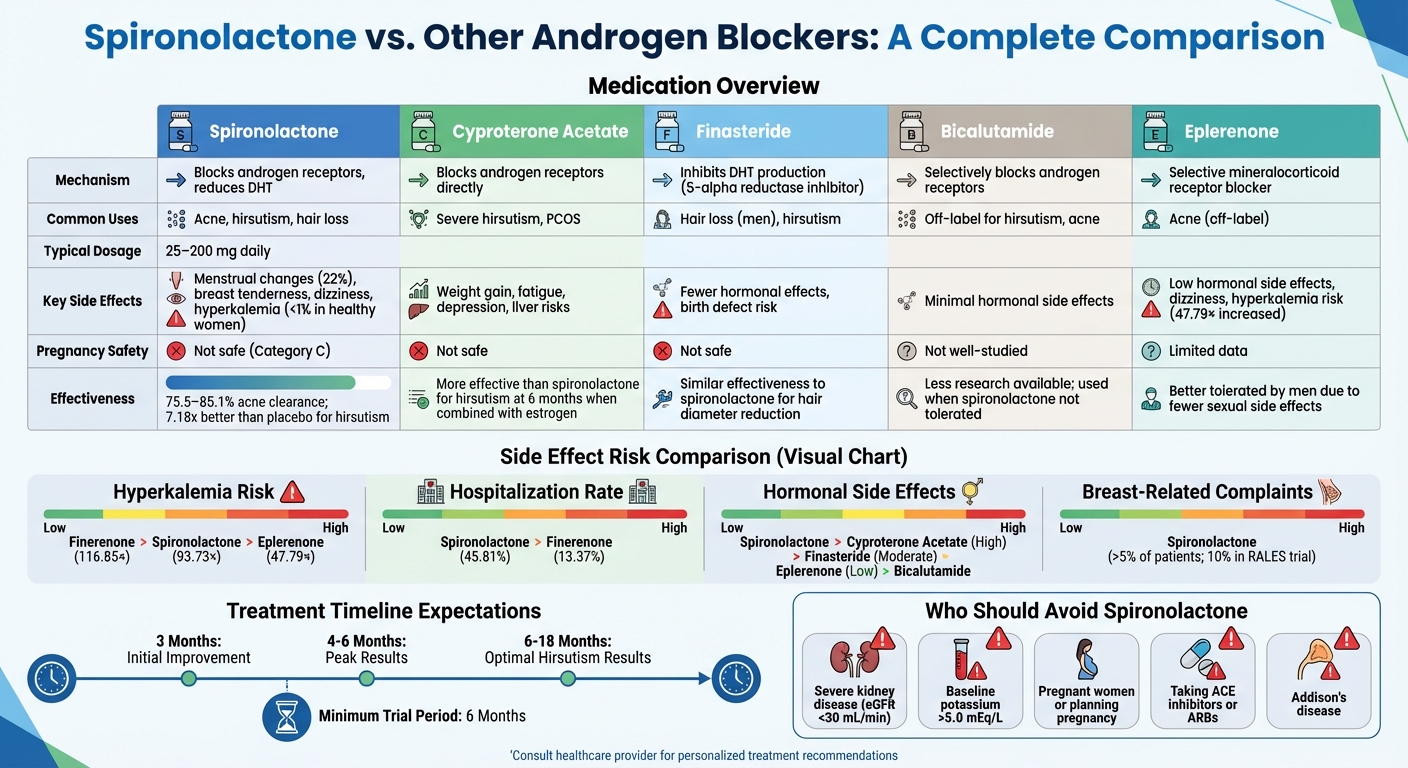
Comparison of Androgen Blockers: Side Effects and Mechanisms
The Top 5 'Oral' Hair Loss Treatments (Ranked for 2026)
How Spironolactone Works
Spironolactone is a mineralocorticoid receptor antagonist (MRA) originally developed to counteract aldosterone. However, its structure also gives it strong antiandrogen properties, which makes it effective for certain hormone-related conditions.
Here’s how it works:
- It competes with testosterone and DHT (dihydrotestosterone) for receptor sites in the skin, hair follicles, and sebaceous glands.
- It increases the production of sex hormone-binding globulin (SHBG) and decreases testosterone production.
- By boosting SHBG levels, it reduces the amount of free testosterone in the body.
- It inhibits the enzyme 5α-reductase, which is responsible for converting testosterone into the more potent DHT.
"The role of spironolactone in androgen excess syndromes such as hirsutism is to reduce the rate of testosterone production and increase the metabolic clearance of testosterone." – Saikrishna Patibandla, MD, StatPearls
For acne, spironolactone prevents DHT from binding to receptors in sebaceous glands, reducing both sebocyte activity and sebum production. While newer agents like eplerenone are more selective, spironolactone has a much higher binding affinity - 20 times stronger - for mineralocorticoid receptors. It also binds to progesterone and androgen receptors, contributing to its effectiveness but also increasing the likelihood of hormonal side effects.
These mechanisms explain why spironolactone is widely used to treat conditions like acne, hirsutism, and androgenetic alopecia.
Spironolactone's Effectiveness
Clinical studies highlight spironolactone’s success in managing androgen-related disorders. For hirsutism, it has been shown to improve hair growth significantly, with an odds ratio of 7.18 compared to placebo. Research also indicates it is more effective than alternatives like finasteride (5 mg/day), metformin, or low-dose cyproterone acetate.
In acne treatment, spironolactone has demonstrated impressive results. Large studies report that 75.5% to 85.1% of patients experience full or partial clearance of facial acne, while truncal acne sees clearance rates of approximately 84% on the chest and 80.2% on the back. The SAFA trial (Spironolactone for Adult Female Acne), conducted between June 2019 and August 2021 in England and Wales, found that 19% of participants achieved clear or nearly clear skin by 12 weeks compared to only 6% on placebo. By 24 weeks, 82% of participants reported acne improvement, compared to 63% in the placebo group.
"Spironolactone is a useful alternative to oral antibiotics for women with acne." – Miriam Santer, Professor of Primary Care Research, University of Southampton
Patients typically notice improvements after about three months, with peak results appearing after four to six months of consistent use. This makes spironolactone a strong option for long-term management of hormonal acne and related conditions.
Side Effects of Spironolactone
While spironolactone is effective, it’s important to understand its potential side effects. Common issues include menstrual irregularities (around 22% of users), headaches (about 20%), breast tenderness, and dizziness. The most serious concern is hyperkalemia, though this is rare - occurring in less than 1% of healthy women under 45. However, those with kidney problems, cardiovascular disease, or who are on medications like ACE inhibitors face a higher risk.
Routine potassium monitoring is generally unnecessary for young, healthy women but is recommended for individuals with reduced kidney function, such as those with an eGFR below 30 mL/min, serum creatinine over 2.0 mg/dL, or baseline potassium levels above 5.0 mEq/L. To minimize risks, patients should avoid potassium supplements and potassium-based salt substitutes. Consistency in taking the medication - with or without food - also helps ensure stable absorption.
Due to its antiandrogen effects, spironolactone poses a risk to male fetuses, as it may cause feminization. It is classified as a pregnancy category C drug, so women of childbearing age should use reliable contraception while on this medication.
In rare cases, spironolactone may elevate liver enzymes, though this typically resolves once the medication is stopped.
Who Should Use Spironolactone?
Spironolactone is particularly effective for women dealing with hyperandrogenism-related conditions like polycystic ovary syndrome (PCOS), hormonal acne, hirsutism, and androgenetic alopecia. It’s especially beneficial for adult women with persistent acne that hasn’t responded to topical treatments. Increasingly, it’s also being prescribed to adolescent females, with studies showing an improvement rate of around 80% in patients aged 14 to 20.
Dosages typically range from 25 mg to 200 mg daily, depending on the condition being treated. For acne, most women start within this range, while those with hirsutism may need higher doses. A healthcare provider will determine the exact dosage based on individual needs and response.
However, spironolactone isn’t suitable for everyone. It’s contraindicated for patients with significantly impaired kidney function (e.g., an eGFR below 30 mL/min, serum creatinine above 2.0 mg/dL, or baseline potassium levels exceeding 5.0 mEq/L). It’s also not recommended for pregnant women or those planning to conceive unless they are using reliable contraception. For these individuals, alternative androgen blockers may be a better choice.
Spironolactone vs. Other Androgen Blockers
Spironolactone is a popular choice for treating androgen-related conditions, but it’s not the only option. Other medications work through distinct mechanisms, and understanding these differences can help determine the most suitable treatment.
Each androgen blocker interacts with hormones in its own way. Spironolactone blocks androgen receptors and reduces testosterone production. Cyproterone acetate, on the other hand, directly blocks androgen receptors in tissues, such as hair follicles. Finasteride takes a more focused approach by inhibiting the conversion of testosterone into dihydrotestosterone (DHT) without interacting with androgen receptors. Meanwhile, bicalutamide selectively binds to androgen receptors while avoiding significant interaction with progesterone or mineralocorticoid receptors. These differences highlight the unique benefits and risks of each option.
Cyproterone Acetate
Cyproterone acetate (CPA) stands out with its specific profile. As a steroidal antiandrogen, it binds to intracellular androgen receptors, preventing androgens from acting on target tissues. The French Endocrine Society recommends CPA combined with estrogen as a first-line treatment for moderate to severe hirsutism. Spironolactone is considered a second-line option if CPA is not suitable. Research shows that CPA combined with ethinylestradiol can be more effective than spironolactone in reducing hirsutism after six months.
However, CPA has notable drawbacks. Side effects such as weight gain, depression, fatigue, and breast tenderness are common. More concerning is its potential for serious liver damage, which has prevented its FDA approval in the United States. While liver injury from spironolactone is rare and usually mild, CPA poses a higher risk of clinically significant liver damage.
Finasteride
Finasteride works differently from both spironolactone and CPA. As a 5-alpha reductase inhibitor, it blocks the enzyme responsible for converting testosterone into DHT, making it especially effective for conditions like male pattern baldness and benign prostatic hyperplasia.
Studies show that finasteride and spironolactone are similarly effective in reducing hair diameter. However, spironolactone may be more effective than finasteride (5 mg/day) for treating hirsutism. Finasteride is generally well-tolerated and causes fewer side effects, such as menstrual irregularities, compared to spironolactone. Its primary limitation is its strict contraindication during pregnancy due to the risk of birth defects in male fetuses. For women dealing with hormonal hair thinning, spironolactone is often the preferred choice, while finasteride remains the go-to option for male pattern baldness.
Newer Options: Bicalutamide and Others
Bicalutamide, a nonsteroidal antiandrogen (NSAA), selectively binds to androgen receptors with minimal interaction with progesterone or mineralocorticoid receptors. This selective action may reduce unwanted hormonal side effects, making it a potential alternative for individuals who struggle with spironolactone.
Although bicalutamide is primarily approved for prostate cancer, it is sometimes used off-label for androgen-related conditions like hirsutism and acne. However, its role in these areas is less studied than that of spironolactone, and it is typically considered when spironolactone is not well-tolerated.
Other emerging options include eplerenone and finerenone. These drugs are more selective mineralocorticoid receptor antagonists. Eplerenone has a significantly lower affinity for androgen and progesterone receptors compared to spironolactone, which may help reduce sexual side effects. Finerenone, a third-generation non-steroidal mineralocorticoid receptor antagonist, has minimal interaction with sex hormone receptors, making it one of the safest choices regarding hormone-related side effects. However, both medications are primarily used for cardiovascular conditions rather than for treating androgen-related disorders.
sbb-itb-6dba428
Comparing Side Effects and Tolerability
Side Effects Comparison Table
Here’s a breakdown of the common side effects associated with androgen blockers:
| Medication | Common Side Effects | Hormonal/Sexual Effects | Potassium Elevation Risk |
|---|---|---|---|
| Spironolactone | Hyperkalemia, hypotension, upset stomach, dizziness | High (gynecomastia, menstrual irregularities, decreased libido) | High (93.73× increased risk) |
| Cyproterone Acetate | Weight gain, fatigue, depression | Breast swelling/tenderness, sexual dysfunction | Low/Not a primary concern |
| Eplerenone | Acute kidney injury, hypotension, dizziness | Low (highly selective for mineralocorticoid receptors) | Moderate (47.79× increased risk) |
| Finerenone | Decreased GFR, hyponatremia, hypotension | Minimal to none | Very high (116.85× increased risk) |
These figures highlight the clinical impact of side effects for each medication. Between 2004 and 2024, spironolactone accounted for 8,625 reported adverse events, including 1,333 cases of hyperkalemia. Breast-related complaints, such as gynecomastia and tenderness, are among the most frequent non-electrolyte side effects, affecting over 5% of patients. In the RALES trial, 10% of participants reported gynecomastia or breast pain.
Hospitalization rates due to adverse events also vary. Spironolactone leads with a 45.81% hospitalization rate (median onset: 27 days), compared to 13.37% for finerenone (median onset: 21 days). Eplerenone has a slightly longer median onset of 38 days.
Tolerability by Patient Type
Tolerability often depends on individual factors like age, gender, and overall health. For example, men frequently struggle with spironolactone due to side effects like gynecomastia and sexual dysfunction. In these cases, eplerenone may be a better alternative when hormonal side effects become a concern. Women, on the other hand, generally tolerate spironolactone better, with fewer than 5% discontinuing treatment due to side effects. However, menstrual irregularities and breast tenderness remain relatively common complaints.
Older adults face increased risks when using mineralocorticoid receptor antagonists due to age-related declines in kidney function. For heart failure patients with kidney function in the range of 30–50 mL/min, a reduced starting dose of 25 mg every other day is recommended to minimize the risk of toxicity. Patients with type 2 diabetes or significant kidney impairment (eGFR below 30 mL/min) should avoid spironolactone entirely, as it poses a severe risk of hyperkalemia.
"Baseline patient characteristics also require assessment. Additional features that could also contribute to spironolactone-related hyperkalemia include advanced age, high-dose spironolactone use, decreased renal function, and diabetes mellitus type 2." – Saikrishna Patibandla
Frequent monitoring of potassium levels and kidney function is essential during treatment. For patients who develop hyperkalemia at a daily dose of 25 mg, reducing the frequency to every other day can help mitigate the risk.
Carefully considering these factors is crucial for selecting the most appropriate androgen blocker for each patient’s unique needs.
Choosing the Right Androgen Blocker
Matching Treatment to Your Goals
When selecting an androgen blocker, it’s essential to align the treatment with your specific goals. For instance, spironolactone is a go-to option for hormonal acne and is particularly effective for managing hirsutism compared to other treatments like finasteride, metformin, or low-dose cyproterone acetate. If you're concerned about systemic side effects, a topical solution such as clascoterone might be worth discussing with your healthcare provider. For faster results in hirsutism, flutamide has shown an 80% reduction in hair growth within just three months, though it carries a higher risk of liver toxicity.
For androgenetic alopecia, combining oral spironolactone with topical minoxidil can significantly improve results - 65.8% effectiveness compared to 43.2% with spironolactone alone. Typical doses for managing hair loss range between 80 mg and 110 mg daily. If you experience side effects, a topical formulation may help target hair follicles while reducing systemic exposure.
Your medical history also plays a key role in determining the right treatment. Spironolactone is not suitable for individuals with severe kidney disease, hyperkalemia, or Addison's disease. It should also be avoided if you're taking ACE inhibitors, ARBs, or potassium supplements. For those with PCOS - a condition linked to hyperandrogenism in 80% to 90% of cases - a combination of oral contraceptives and androgen blockers is often beneficial. It’s important to note that all antiandrogens are unsafe during pregnancy due to the risk of feminizing a male fetus, so reliable contraception is a must.
Consistency is critical for success. Commit to at least six months of therapy before assessing its impact. For hirsutism, achieving optimal results may take anywhere from 6 to 18 months. Regular blood tests are necessary to monitor potassium levels and kidney function, particularly for patients over 45 or those on doses exceeding 100 mg.
For a more tailored and simplified treatment experience, consider exploring options through Oana Health.
Getting Treatment Through Oana Health

Oana Health provides a convenient way to access spironolactone and other prescription androgen blockers through its telehealth platform. Licensed medical professionals review your health history, symptoms, and treatment goals to recommend the best option for you - whether you’re dealing with PCOS-related acne, unwanted facial hair, or thinning hair.
Here’s how it works: complete an online consultation, receive a personalized treatment plan, and have your prescription delivered to your doorstep with free shipping. Oana Health offers affordable options, such as oral spironolactone starting at $14/month and topical formulations from $43/month. They also provide combination therapies for hair loss, like Hair Plus Plus and oral minoxidil.
All prescriptions are handled by licensed providers and filled through FDA-regulated pharmacies. To learn more about spironolactone and begin your consultation, visit https://spironolactone.oanahealth.com.
Conclusion
Spironolactone has proven to be an effective option for treating hirsutism, showing better results compared to finasteride and metformin. However, its nonselective nature means it interacts with both androgen and progesterone receptors, which can lead to side effects like breast tenderness and menstrual irregularities. For those who experience these hormonal side effects, alternatives such as eplerenone and finerenone provide a more selective approach with fewer hormonal disruptions.
These differences highlight the importance of tailoring treatments to individual needs. As Dr. Allan Struthers points out, treatment decisions should be based on each patient’s unique health profile and concerns. Whether you’re addressing PCOS-related symptoms, androgenetic alopecia, or unwanted facial hair, personalized care is key.
Oana Health offers access to licensed professionals who provide science-backed, customized treatments. With options like oral spironolactone starting at $14/month and topical treatments from $43/month, you can receive affordable, prescription-based care delivered directly to your home with free shipping. Begin your consultation today at https://spironolactone.oanahealth.com and discover the treatment that’s right for you.
FAQs
How does spironolactone compare to other androgen blockers?
Spironolactone stands out from other androgen blockers due to its unique mechanism, effectiveness, and possible side effects. As a potassium-sparing diuretic, it works by blocking androgen receptors and reducing testosterone levels. This makes it particularly useful for managing conditions like hirsutism, acne, and hormonal imbalances. In contrast, medications like finasteride focus on lowering dihydrotestosterone (DHT) levels by inhibiting the enzyme 5-alpha reductase. Another option, eplerenone, is less likely to cause hormone-related side effects but may interact with other medications.
Selecting the right androgen blocker depends on factors such as the condition being treated, how well an individual tolerates the medication, and the potential side effects. For instance, spironolactone might lead to changes in menstrual cycles or require monitoring of potassium levels. On the other hand, finasteride is generally better tolerated but is not recommended for women of childbearing age due to associated risks. It's important to consult a healthcare provider to determine the most suitable choice for your specific needs.
Is spironolactone the right treatment for me?
Spironolactone can be a helpful option for managing conditions linked to excess androgens, like acne, unwanted facial hair (hirsutism), or certain hormonal imbalances. It works by blocking androgens and also acts as a potassium-sparing diuretic, which may alleviate symptoms tied to elevated male hormone levels.
Deciding if spironolactone is the right choice for you depends on factors like your specific symptoms, medical history, and treatment goals. A licensed healthcare provider can evaluate your hormone levels, underlying health conditions, and potential side effects - such as hormonal shifts or electrolyte imbalances - to determine if this medication aligns with your needs. Since individual responses to spironolactone can differ, a tailored approach is essential.
What side effects should I consider when choosing an androgen blocker?
When choosing an androgen blocker, it’s crucial to weigh the potential side effects, as these can vary depending on the medication. For instance, spironolactone is known to sometimes cause breast tenderness, reduced libido, or, in rare cases, gynecomastia in men. Additionally, it can raise potassium levels (hyperkalemia), making regular checks of potassium levels and kidney function a must.
Alternatives like eplerenone often come with fewer hormone-related side effects but still require monitoring potassium levels. The right medication depends on your individual health needs, how your body responds to treatment, and the possible side effects. Be sure to consult a licensed medical professional to determine the most suitable option for your situation.