
Strength Training Recovery: Androgen Regulation Tips
Struggling with recovery after strength training? Hormonal imbalances, especially high androgen levels in conditions like PCOS, can slow muscle repair, disrupt sleep, and reduce energy. Recovery isn’t just about easing soreness - it’s a key factor in balancing hormones like testosterone and cortisol, which directly impact muscle repair and overall health.
Key Takeaways:
- High androgens can impair muscle recovery, increase inflammation, and worsen fatigue.
- Sleep and nutrition play critical roles in regulating hormones and supporting recovery.
- Menstrual cycle phases affect recovery and training intensity - adjust your workouts accordingly.
- Recovery practices, like proper rest, protein intake, and stress management, help restore hormonal balance.
If you’re dealing with persistent symptoms like irregular cycles, unwanted hair, or fatigue, personalized care from licensed professionals can help. Services like Oana Health offer tailored hormonal health solutions delivered to your doorstep.
Read on to discover practical recovery strategies, from nutrition to sleep optimization, to improve your strength training results and hormonal health.
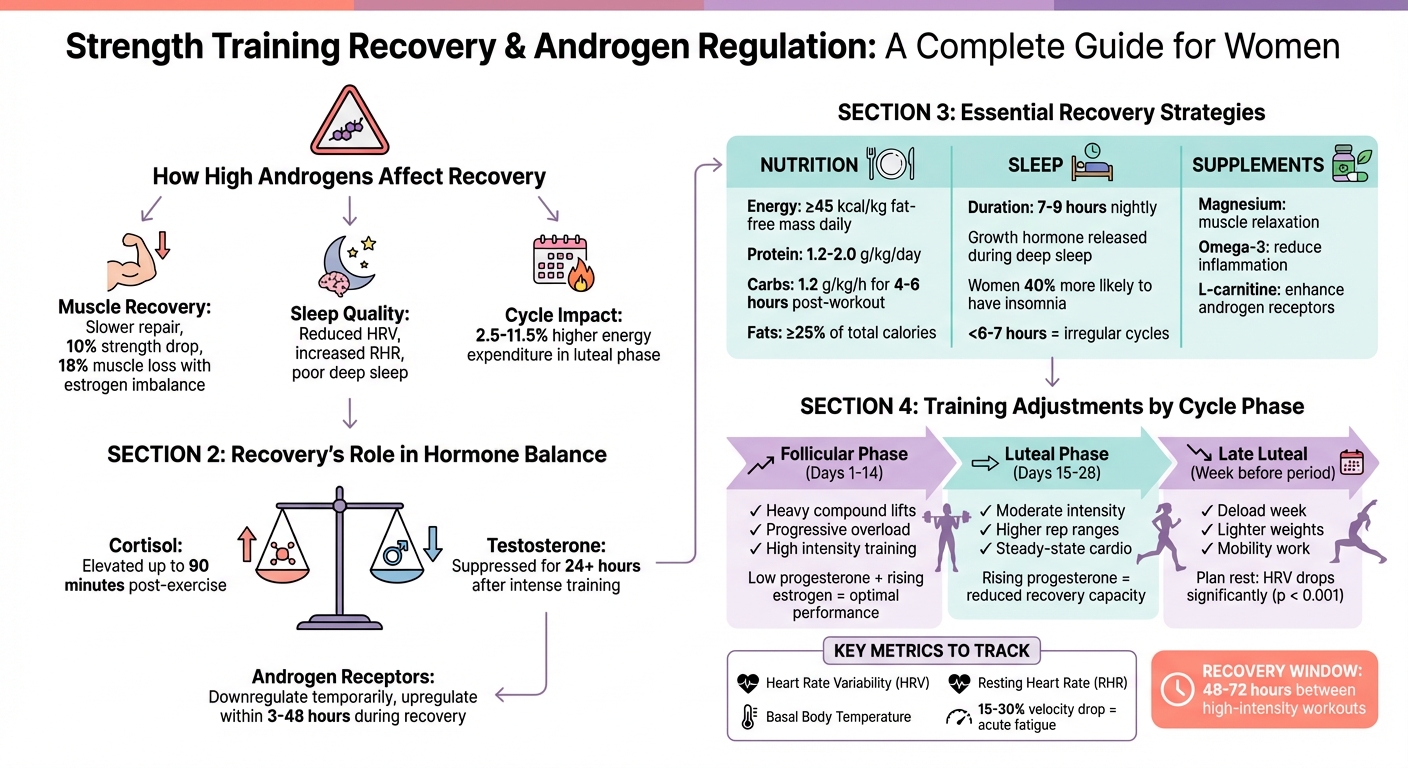
Strength Training Recovery and Androgen Regulation Guide for Women
Fasted vs Fueled Workouts: What Women Need to Know for Hormones, Muscle, and Recovery
How High Androgens Affect Recovery in Women
Elevated androgen levels can throw a wrench into your recovery process after strength training. By understanding how these hormonal shifts affect your body, you can make smarter adjustments to your training and recovery strategies.
Let’s break down how high androgens can slow muscle repair, disrupt sleep, and change the way your body handles training.
Muscle Soreness and Slower Recovery
When androgen levels are high, they often come hand-in-hand with insulin resistance and low-grade inflammation. This combination creates extra hurdles for your muscles to recover after workouts. Although androgens have anabolic properties, too much can upset your autonomic nervous system (ANS), making it harder for your body to bounce back after physical stress.
Estrogen plays a key role in muscle repair, helping satellite cells rebuild damaged muscle fibers. But when high androgen levels disrupt the balance, or when estrogen levels drop, this repair process takes a hit. Research in animals shows that a lack of estrogen can lead to a 10% drop in strength and an 18% loss in muscle cross-sectional area. Irregular menstrual cycles can also reduce repair efficiency during the follicular phase.
Poor Sleep and Increased Fatigue
Hormonal imbalances, especially elevated androgens, can wreak havoc on your sleep. Estrogen boosts parasympathetic activity (the "rest and digest" system), while progesterone and high cortisol levels push your body into sympathetic dominance (the "fight or flight" state), making it harder to get deep, restorative sleep. High androgen levels amplify this sympathetic dominance, reducing heart rate variability (HRV) and increasing resting heart rate (RHR), both of which are tied to poor recovery.
This imbalance can prevent you from entering the deep sleep stages that your body needs to repair muscles. On top of that, chronic cortisol elevation makes it even harder for your body to switch back to a parasympathetic state, leaving you feeling tired even after a full night’s sleep. Over time, this adds up, leaving you more fatigued and less capable of handling demanding workouts.
Menstrual Cycle Phases and Training Intensity
Recovery becomes even more challenging during the luteal phase, the two weeks leading up to your period. During this time, progesterone levels peak, creating a more catabolic state by increasing protein breakdown and reducing amino acid availability, slowing down muscle repair compared to the follicular phase. A large study analyzing over 13,000 menstrual cycles found significant drops in HRV and recovery metrics (p < 0.001) from the early follicular phase to the late luteal phase.
During the luteal phase, your resting energy expenditure rises by 2.5% to 11.5%, meaning your body is burning more energy just to keep basic functions going. If androgen levels are high during this phase, your recovery capacity takes another hit. Muscle activation also tends to decline about a week after ovulation, when progesterone peaks, making it harder to sustain high-intensity training.
"The recovery and reconstruction of the muscle have been shown to be quicker in the mid-FP (follicular phase) compared to the LP (luteal phase) after eccentric exercise, possibly due to greater satellite cell activation."
- Hannah E. Cabre et al.
How Recovery Helps Regulate Androgens
Recovery isn’t just about easing muscle soreness - it plays a key role in stabilizing hormones and preventing imbalances. This balance is particularly important as it directly affects cortisol and testosterone levels during the recovery process.
Cortisol, Overtraining, and Androgen Increases
Skipping proper rest after intense workouts can lead to an increase in cortisol, the body’s primary stress hormone. Cortisol levels can remain elevated for up to 90 minutes after exercise. When cortisol stays high for too long, it disrupts the balance of reproductive hormones by interfering with gonadal steroid production and the hypothalamic-pituitary-gonadal (HPG) axis.
Elevated cortisol also triggers the adrenal glands to release more androgens, which can worsen insulin resistance. This creates a cycle where high insulin levels stimulate the ovaries and adrenal glands to produce more testosterone while reducing Sex Hormone Binding Globulin (SHBG), the protein responsible for binding and regulating excess testosterone.
Overtraining syndrome (OTS) and non-functional overreaching (NFOR) occur when the stress from training consistently outweighs the body’s ability to recover. This can lead to hormonal and metabolic disruptions. Dr. Flavio A. Cadegiani of Escola Paulista de Medicina explains:
"The imbalance between training and recovery... leads to dysfunction of pathways and responses in immune, inflammatory, neurological, hormonal and metabolic systems as a maladaptation to chronic exposure to extreme metabolic and tissue environments."
Balancing Testosterone Levels Through Recovery
While high cortisol can disrupt recovery, proper recovery helps restore testosterone balance. After resistance training, androgen receptors temporarily downregulate as part of the body’s catabolic response. During recovery - typically within 3 to 48 hours post-exercise - these receptors upregulate, allowing testosterone to aid in muscle repair and protein synthesis.
Studies on well-trained women show that while testosterone and other androgens (like DHEA and DHEA-S) may temporarily spike during intense exercise, they remain suppressed for up to 24 hours afterward. This indicates the body needs more than a day to reestablish hormonal balance. Dr. Anthony C. Hackney from the University of North Carolina highlights this:
"Establishing a resting endocrine equilibrium requires a longer recovery period than 24 h."
Incorporating recovery practices that engage the parasympathetic nervous system - like deep breathing, consistent 7–8 hours of sleep, and stress management - can lower cortisol levels and help reset hormonal control systems. This is particularly important since testosterone follows a natural daily rhythm that thrives on consistent recovery.
For women managing PCOS or elevated androgen levels, combining structured aerobic exercise with proper recovery can enhance insulin sensitivity and reduce total testosterone levels. Striking the right balance between exercise intensity and recovery is critical to avoiding worsened insulin resistance or hormonal disruptions.
If you’re dealing with persistent hormonal challenges or PCOS symptoms, personalized guidance can make all the difference. Oana Health (https://oanahealth.com) provides telehealth consultations with licensed professionals specializing in female hormonal health, offering science-based, tailored care.
sbb-itb-6dba428
Recovery Tips for Androgen Regulation
Nutrition for Recovery and Hormonal Balance
Keeping your energy intake in check is essential for maintaining hormonal health. Women should aim for at least 45 kcal per kilogram of fat-free mass daily to support basic body functions and muscle growth. Falling below 30 kcal per kilogram can disrupt luteinizing hormone activity, which may suppress both testosterone and estrogen production. A study of 1,000 female athletes revealed that nearly half (47.3%) were at risk of low energy availability.
Protein is another key player. A daily intake of 1.2–2.0 g/kg helps repair muscles and prevents protein breakdown during exercise. During the luteal phase, when the body breaks down protein more rapidly, these needs might be even higher. Don’t overlook carbs either - consuming at least 1.2 g/kg/h for 4–6 hours after a workout replenishes glycogen stores and keeps cortisol levels in check.
When it comes to dietary fats, they should make up at least 25% of your total calories. Cholesterol from fats serves as a building block for testosterone. Foods like white button mushrooms, grape seed extract, green tea, and cruciferous vegetables may also help by inhibiting aromatase, the enzyme that converts testosterone into estrogen.
By following these nutrition guidelines, you can set the stage for effective recovery and hormonal balance.
Sleep and Rest Strategies
Good nutrition is just one piece of the puzzle - quality sleep is equally crucial. During deep sleep, the body releases growth hormone, which is vital for muscle repair and tissue regeneration. Adults generally need 7–9 hours of sleep per night to complete all sleep cycles and maintain healthy hormone levels. Women, however, are about 40% more likely to suffer from insomnia than men, and consistently getting fewer than 6–7 hours of sleep can lead to irregular menstrual cycles or ovulation issues.
Sleep deprivation doesn’t just leave you tired - it raises cortisol levels and reduces insulin sensitivity, which can worsen PCOS symptoms and other hormonal imbalances. As Island Reproductive Services explains:
"Growth hormone (GH) is essential for growth, cell repair, and tissue regeneration. It is primarily released during deep sleep, making rest vital for muscle recovery and overall healing."
To improve sleep quality, focus on practical strategies:
- Stick to a consistent sleep schedule, even on weekends.
- Keep your bedroom cool and dark.
- Avoid screens at least an hour before bed since blue light suppresses melatonin.
Other tips include exercising earlier in the day to allow endorphin levels to stabilize before bedtime, and limiting caffeine, alcohol, and heavy meals close to sleep.
Active recovery techniques like yoga, meditation, and deep breathing can also help by lowering stress hormones that disrupt sleep and contribute to anxiety. For women facing mental health challenges due to overtraining or hormonal shifts, Bupropion XL (150–300 mg, $25/month through Oana Health) offers support for mental well-being during recovery.
Supplements and Medical Treatments
In addition to nutrition and sleep, specific supplements and medical treatments can further aid androgen regulation. Magnesium and omega-3 fatty acids are particularly helpful. Magnesium promotes muscle relaxation and better sleep, while omega-3s reduce inflammation that can interfere with hormone levels.
L-carnitine, when taken after resistance training, enhances androgen receptor activity, allowing muscles to better utilize available androgens for repair. The Journal of Applied Physiology highlights:
"The upregulation [of androgen receptors] may be critical for mediating androgen-induced signaling of augmented protein synthesis or reduced protein breakdown during recovery."
For more severe hormonal imbalances, medical treatments can provide targeted support. Options include:
- Topical Spironolactone ($43/month): Blocks androgen receptors locally to reduce hair thinning and support regrowth.
- Metformin ER ($22/month): Improves metabolic health by lowering insulin levels, which can drive ovarian androgen production.
- Spironolactone (100–200 mg/day): Reduces unwanted hair growth by blocking androgen receptors.
- Oral contraceptives: Increase Sex Hormone Binding Globulin (SHBG), which binds free testosterone and lowers its levels.
The Endocrine Society advises:
"For the majority of women with hirsutism who are not seeking fertility, we suggest oral contraceptives as initial therapy for treating patient-important hirsutism."
For severe symptoms, combining therapies may be more effective than using a single treatment. However, it’s important to allow at least six months of treatment to properly evaluate its effectiveness. Women on antiandrogen therapy should monitor their electrolyte levels, particularly potassium, when using Spironolactone.
For a streamlined approach, Oana Health offers personalized, science-backed treatments prescribed by licensed professionals and delivered to your home with free shipping.
Adjusting Your Training for Better Recovery
Periodization and Rest Days
To allow your body to recover fully, aim for 48–72 hours between high-intensity workouts. This recovery window helps restore hormonal balance, as androgen receptors stay downregulated for 60–120 minutes after intense exercise. Additionally, heavy training can suppress testosterone, DHEA, and DHEA-S for at least 24 hours.
For those who menstruate, syncing training intensity with your menstrual cycle can make a big difference. During the follicular phase (days 1–14), low progesterone levels and rising estrogen create an ideal environment for heavy compound lifts and progressive overload. As Stacy Sims, PhD, puts it:
"From a physiological standpoint, when those hormones are low, we are able to really hit high intensities. We have more carbohydrates available for hitting those high intensities, and we have more water available for sweating so we have better thermal regulation."
After ovulation, in the luteal phase (days 15–28), rising progesterone shifts the focus to moderate-intensity exercises, higher-rep ranges, and steady-state cardio. During the late luteal phase (the week before your period), it’s a good idea to plan a deload week. Incorporate lighter weights and mobility exercises to manage inflammation and support recovery, as your capacity for recovery tends to decline during this time.
If you’re on combination oral contraceptives, your recovery patterns may differ. Studies show that heart rate variability (HRV) and recovery scores often peak during the withdrawal bleed and dip during active pill days.
Next, let’s look at how to track recovery metrics to refine your training plan.
Tracking Recovery Metrics
Pair your training adjustments with reliable recovery tracking tools. Two key indicators of your autonomic nervous system recovery are heart rate variability (HRV) and resting heart rate (RHR). A study analyzing 362,852 days of data from 4,594 female WHOOP users found that HRV and recovery scores dropped significantly as participants moved from the follicular to the late luteal phase. If you notice a drop in HRV or an increase in RHR, it’s a clear sign to scale back your training intensity or volume.
Another tool to consider is velocity-based training (VBT), which provides real-time feedback during your workouts. By tracking your mean propulsive velocity during lifts, you can identify acute fatigue when there’s a 15–30% drop in velocity. This helps prevent overtraining and keeps your sessions effective.
Monitoring basal body temperature can also give you insights. A slight dip followed by a rise indicates ovulation and the start of the luteal phase, a time when recovery resilience tends to decrease. Combining these objective metrics with subjective tracking - like noting your mood, energy levels, and physical symptoms - gives you a comprehensive view of how your body is handling stress. This way, you can make informed adjustments to your training before overtraining becomes an issue.
Conclusion
Recovery isn’t just about taking breaks between workouts - it’s a crucial process that helps your body restore hormonal balance. Intense exercise without sufficient recovery can suppress hormones like testosterone, DHEA, and DHEA-S for at least 24 hours. Achieving true hormonal balance, however, requires more than just a day of rest; it demands a more extended recovery period. Elements like proper nutrition and rest are essential pieces of this puzzle.
The strategies outlined earlier - consuming 1.2–2.0 g/kg/day of protein, scheduling rest days, prioritizing quality sleep, and tailoring your training to your menstrual cycle - work together to reduce cortisol levels and enhance androgen receptor activity. This combination not only supports muscle repair but also minimizes the risk of overtraining. Keeping track of recovery metrics can help you fine-tune your approach for better results.
However, if you’re still struggling with symptoms like unwanted facial hair, hair thinning, acne, or irregular menstrual cycles, these could signal deeper hormonal issues that may need medical intervention. Oana Health offers personalized telehealth consultations with licensed professionals who specialize in female hormones and PCOS. Their treatments - such as spironolactone for managing androgens, oral minoxidil for hair loss, and eflornithine for unwanted hair - are scientifically backed and conveniently delivered to your doorstep with free shipping.
FAQs
How do elevated androgen levels impact muscle recovery in women?
Higher androgen levels can play a role in improving muscle recovery for women by boosting protein synthesis and encouraging muscle growth. Androgens interact with receptors in muscle tissue, gradually contributing to increased muscle mass and strength.
Although elevated androgen levels can enhance recovery and athletic performance, maintaining a proper hormonal balance is key. If you’re facing issues related to hormonal imbalances, seeking personalized care could be a valuable step toward improving your recovery and overall well-being.
How does the menstrual cycle affect recovery from strength training?
The menstrual cycle can impact recovery in strength training, primarily due to hormonal shifts, especially changes in estrogen and progesterone levels. These hormones are involved in muscle protein synthesis and recovery, with some studies indicating that muscle strength might be at its highest during the follicular phase when estrogen levels peak.
That said, research shows the menstrual cycle doesn't have a major effect on short-term strength performance or long-term progress in resistance training. Since everyone responds differently, paying attention to your body's signals and adjusting training intensity as needed can help you recover effectively and achieve better results.
How do nutrition and sleep help regulate hormones for better strength training recovery?
Nutrition and sleep are essential for maintaining hormonal balance and speeding up recovery after strength training. A well-rounded diet that includes protein, healthy fats, vitamins, and minerals provides the raw materials your body needs to produce and regulate hormones. For instance, keeping blood sugar levels steady through smart food choices can boost insulin sensitivity and support androgen balance - both of which are crucial for muscle repair and growth. Adding nutrient-packed foods and supplements that support hormonal health can take your recovery to the next level.
Sleep is equally critical. During deep sleep, your body releases growth hormone and testosterone, both of which are key players in muscle repair and recovery. Skimping on sleep - getting less than 7 hours - can throw these processes off, elevate cortisol levels, and weaken muscle strength. By focusing on a nutrient-rich diet and prioritizing quality rest, women can better manage their hormones and maximize recovery from strength training.