
Study: Psychological Barriers in Lifestyle Change for PCOS
Women with Polycystic Ovary Syndrome (PCOS) often struggle to make lifestyle changes due to psychological barriers like depression, anxiety, and weight stigma. These challenges can undermine motivation and make it harder to manage symptoms effectively. Here’s what you need to know:
- PCOS affects 6%-13% of women of reproductive age and can lead to symptoms like irregular periods, weight gain, and acne. Lifestyle changes, such as improving diet and exercise, are key to managing the condition.
- Women with PCOS are 2.79 times more likely to experience depression and face a six times higher prevalence of anxiety disorders, making it harder to stick to healthy routines.
- Weight stigma and negative self-image, often worsened by healthcare settings, further complicate efforts to adopt and maintain lifestyle changes.
- High dropout rates (up to 46%) in lifestyle programs for PCOS highlight the need for better emotional and physical support.
Solutions include:
- Shifting to weight-neutral approaches that focus on health improvements rather than weight loss.
- Building multidisciplinary care teams with dietitians, psychologists, and exercise specialists.
- Encouraging self-efficacy by setting manageable goals and promoting enjoyable activities.
Telehealth platforms like Oana Health are addressing these barriers by offering personalized treatments, mental health support, and accessible care options. This dual focus on mental and physical health can help women overcome obstacles and achieve lasting progress.
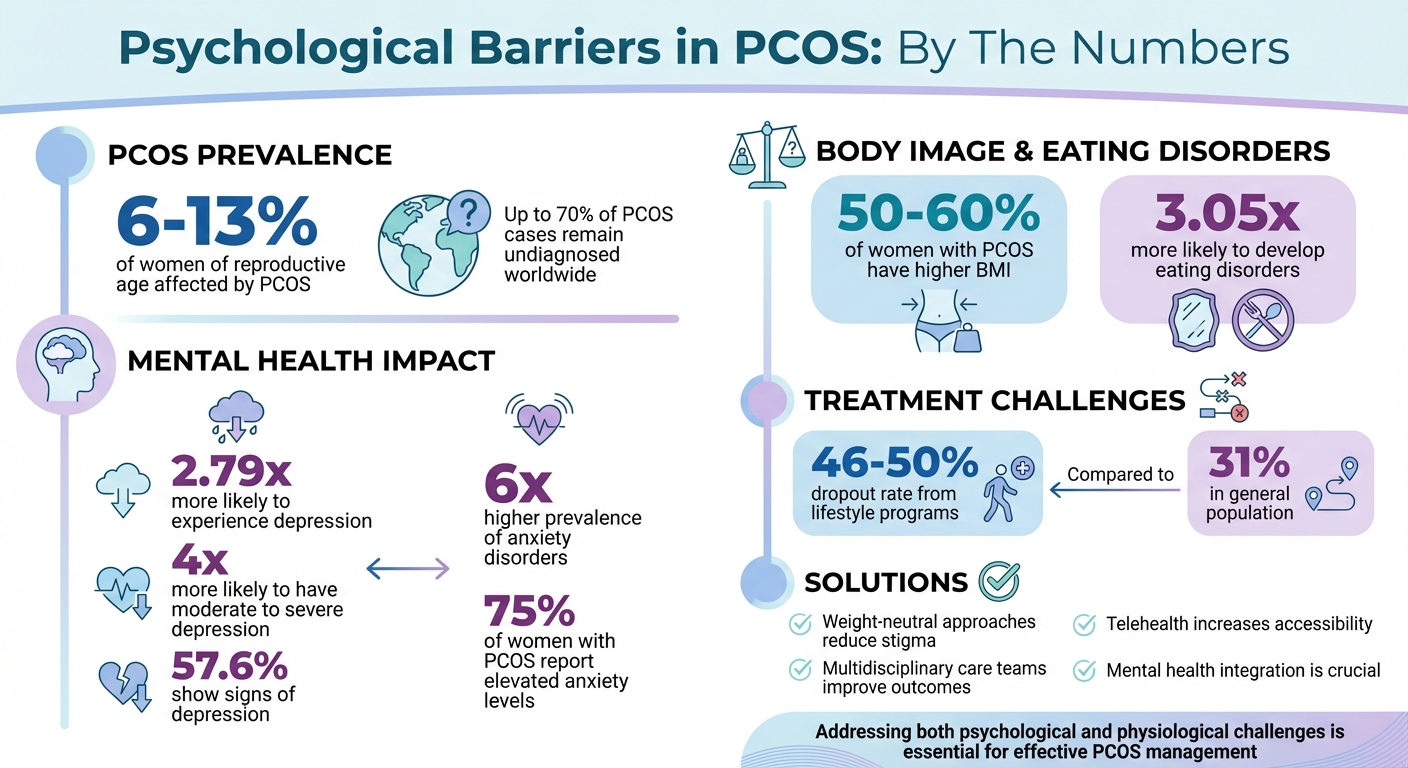
PCOS Psychological Barriers: Key Statistics and Mental Health Impact
Main Psychological Barriers Women with PCOS Face
Weight Stigma and Negative Self-Image
For many women with PCOS, dealing with weight stigma is a significant emotional challenge. This stigma often comes from societal biases or even within healthcare settings. With studies showing that 50% to 60% of women with PCOS have a higher BMI, the judgment they face about their bodies can be overwhelming. But it’s important to note that weight stigma doesn’t just affect women with larger bodies - it impacts women across all sizes.
"Weight stigma was identified as negatively impacting both those in larger and smaller bodies with PCOS, reducing the quality of care and affecting self-perception and mental health." – Margaret McGowan
The problem becomes even more pronounced when medical care focuses narrowly on weight loss or fertility, leaving little room for other personal health goals. This hyper-focus can make women feel "less than" and discourage them from engaging in activities like exercise or seeking support in public settings. When healthcare advice feels judgmental or lacks compassion, it can damage the patient-provider relationship, making it harder for women to stay engaged in their care. These weight-related struggles often overlap with broader mental health challenges, creating a complex web of emotional and physical barriers.
Mental Health Issues: Anxiety and Depression
The mental health toll of PCOS is staggering. Research reveals that women with PCOS are four times more likely to experience moderate to severe depression and up to six times more likely to struggle with moderate to severe anxiety compared to women without the condition. In one study, a whopping 75% of participants reported elevated anxiety levels, and 57.6% showed signs of depression.
Depression can erode a woman’s sense of self-worth, while anxiety - especially social anxiety - can lead to isolation. This isolation often prevents women from participating in activities that could help manage their symptoms, such as exercise or social support groups. It creates a vicious cycle: PCOS symptoms trigger psychological distress, and that distress makes it harder to take steps to manage the condition effectively.
"The absence of appropriate intervention may lead to unresolved anxiety and depression symptoms, hindering affected individuals from initiating and/or sustaining the requisite lifestyle adjustments and medical adherence required to manage this multifaceted ailment." – Bridging the Gap: Integrating Awareness of Polycystic Ovary Syndrome Into Mental Health Practice
Without proper mental health support, these challenges can feel insurmountable, especially when combined with gaps in healthcare tailored to PCOS.
Limited PCOS-Specific Healthcare Support
Managing PCOS successfully often requires more than just a diagnosis - it demands ongoing, tailored support. Unfortunately, many women face a long and frustrating journey before even receiving a proper diagnosis. This "diagnostic odyssey" can leave them feeling powerless and disheartened.
Even after diagnosis, the care women receive is often inadequate. Many report being given generic dietary advice that doesn’t address the specific needs of PCOS, leaving them feeling dismissed and unsupported. Additionally, the lack of routine access to registered dietitian nutritionists and mental health professionals as part of standard PCOS care creates significant gaps. These professionals are crucial for addressing both the physical and emotional aspects of the condition, yet they are rarely part of the care team.
One study highlighted this issue starkly: none of the participants credited their past successes in managing PCOS to strong partnerships with healthcare providers. Without a collaborative, multidisciplinary approach, many women are left to navigate the complex challenges of PCOS - both metabolic and mental - largely on their own.
Research on Strategies to Overcome Psychological Barriers
Weight-Neutral Approaches to Health
Recent studies highlight the importance of shifting the focus from weight loss to overall health for women with PCOS. Weight-neutral approaches prioritize improvements in energy levels, menstrual regularity, and insulin sensitivity, moving away from weight-focused care to reduce stigma and encourage better engagement with treatment.
"Systemic changes, including... reducing the use of weight-centric care are necessary for long-term sustainable changes and improvements in health outcomes in people with PCOS." – Margaret McGowan, Monash Centre of Health Research Implementation
This approach goes beyond emotional well-being. By steering away from restrictive diets that often fail, weight-neutral strategies encourage women to adopt lasting habits. For adolescents, this method not only addresses PCOS symptoms but also protects mental health and lowers the risk of disordered eating, which is over three times more common in women with PCOS compared to those without it. Celebrating non-scale victories, like clearer skin or more regular menstrual cycles, helps build momentum without the frustration that can come with slow or inconsistent weight loss. Multidisciplinary support teams play a key role in reinforcing these strategies, offering a solid framework for maintaining behavior changes.
Creating Multidisciplinary Support Teams
Integrated care teams are a powerful complement to weight-neutral approaches, tackling the physical, nutritional, and mental health challenges of PCOS. Research consistently shows the benefits of multidisciplinary teams that include general practitioners, registered dietitian nutritionists (RDNs), psychologists, and exercise physiologists. These teams address the complex metabolic, reproductive, and psychological needs of women with PCOS, which is crucial given that dropout rates for lifestyle interventions among this group can climb to 50%, compared to 31% in the general population.
A notable example is the MAPP clinic, a multidisciplinary PCOS-adolescent medicine clinic in the Midwest. Between 2015 and 2020, the clinic incorporated dietitian counseling that emphasized the "MyPlate" model and carbohydrate modification rather than strict weight loss, empowering patients to take control of their care. Research indicates that setting more than three goals at a time increases the likelihood of dropping out.
In another study, nearly 70% of adolescents with PCOS either maintained or lost weight when supported by a team that included a psychologist and a dietitian. These integrated care teams also address mental health challenges like depression, anxiety, and disordered eating, which contribute to high dropout rates. Psychologists in these teams use behavioral tools like goal setting, self-monitoring, and problem-solving to help women stay motivated over time.
Increasing Self-Efficacy and Motivation
While external support is essential, building personal motivation is equally important for long-term success. Confidence in one's ability to make changes - known as self-efficacy - is a key factor in overcoming psychological barriers. One effective method is to limit the number of goals pursued at once. For instance, research from the MAPP clinic found that setting more than three goals at a time hindered progress for many participants.
"Too many goals was identified as barrier for 50% of the adolescent non-completers surveyed." – Frontiers in Nutrition
Intrinsic motivation, or finding joy in the activity itself, plays a big role in maintaining healthy habits. Encouraging women to choose activities they enjoy, rather than forcing themselves through workouts they dislike, can make all the difference. Digital tools such as mobile apps and email-based mentoring also provide valuable support and accountability, with over half of women with PCOS expressing interest in these resources. For adolescents, involving parents as supportive role models rather than strict enforcers can further encourage the adoption of healthy habits. Together, these strategies help dismantle the psychological barriers that often stand in the way of sustainable lifestyle changes.
sbb-itb-6dba428
How Oana Health Helps Women Overcome PCOS Psychological Barriers
Personalized Treatment Plans for PCOS Symptoms
Oana Health addresses the physical and emotional challenges of PCOS with treatments rooted in evidence-based medicine. For instance, Metformin ER (priced at $22/month) is used to manage insulin resistance - a condition that affects 75% of lean individuals and 95% of women with obesity who have PCOS. When paired with lifestyle changes, Metformin ER has been shown to reduce the likelihood of major depression by 70%.
To further support mental health, Oana Health provides Bupropion XL for $25/month. This medication is particularly important because women with PCOS are over 2.5 times more likely to experience depression compared to those without the condition. By addressing both metabolic and mental health concerns, Oana Health offers a dual approach to managing PCOS symptoms.
Accessible Telehealth Services
Beyond personalized medications, Oana Health makes quality care more accessible through its telehealth platform. Traditional PCOS care often faces obstacles like time constraints, high costs, and a lack of mental health integration[6,7]. Oana Health removes these barriers by connecting women with licensed medical professionals via online consultations. Treatments are shipped directly to patients at no additional cost, eliminating the stress that can come with in-person visits.
This model of care is especially critical, considering that up to 70% of PCOS cases go undiagnosed globally. Limited access to PCOS-specific healthcare providers contributes to this issue[3,7,21]. Additionally, telehealth offers a private and stigma-free environment, which is essential given the negative impact of weight stigma on the quality of care and self-esteem among women with PCOS, as highlighted by research in Obesity Reviews. By streamlining access to care, Oana Health ensures women receive the comprehensive support they need.
Supporting Women with Complete PCOS Care
Oana Health’s approach aligns with research emphasizing the importance of symptom-focused, holistic care for PCOS[8,10]. The platform goes beyond addressing insulin resistance and mental health by also tackling other concerns like unwanted facial hair and hair loss, helping women improve their overall well-being. This integrated approach mirrors the benefits of multidisciplinary care programs and is particularly important given that dropout rates for lifestyle interventions in women with PCOS can reach 50% - significantly higher than the 31% seen in the general population. These higher dropout rates are often linked to programs that focus solely on weight loss without addressing deeper issues.
By combining accessible telehealth services, targeted medications, and expert guidance, Oana Health empowers women to make lasting changes. Nafissa Ismail, writing for Frontiers in Neuroendocrinology, underscores this need:
"addressing both physiological and psychological challenges is crucial for developing targeted, personalized interventions that improve outcomes for individuals diagnosed with PCOS"
Oana Health’s comprehensive care model gives women the tools and support they need to overcome psychological barriers and achieve meaningful, long-term progress.
Conclusion: Addressing Psychological Barriers for Lasting Change
Main Findings from Research
Studies reveal that women with PCOS are significantly more vulnerable to mental health challenges. They are 2.79 times more likely to experience depression and 3.05 times more likely to develop eating disorders compared to women without the condition. This creates what experts call a "self-perpetuating cycle" - PCOS symptoms lead to psychological distress, which then weakens the motivation and ability to adopt healthier habits, further aggravating physical symptoms.
Lifestyle programs aimed at managing PCOS face high dropout rates, with attrition reaching 46% in some cases. Factors like weight stigma, dissatisfaction with body image, and low self-confidence not only make it harder for women to stick to these programs but also push many to turn to online advice. Unfortunately, this often results in exposure to misinformation and delays in proper diagnosis. Alarmingly, up to 70% of PCOS cases remain undiagnosed worldwide. These statistics highlight the critical need for solutions that address both the psychological and physical aspects of the condition.
How Solutions Like Oana Health Can Help
Effectively tackling these challenges requires a combined focus on mental and metabolic health, a strategy central to Oana Health's approach. As Nafissa Ismail explains:
"addressing both physiological and psychological challenges is crucial for developing targeted, personalized interventions that improve outcomes for individuals diagnosed with PCOS".
Telehealth platforms play a vital role in closing care gaps, especially in areas where access to specialized care is limited, such as rural communities. Adopting weight-neutral strategies that promote healthy behaviors over rigid weight-loss goals can help reduce stigma and prevent disordered eating. By integrating mental health support - like screening and behavioral tools such as goal-setting and self-monitoring - alongside tailored medical treatments, these platforms empower women to break through psychological barriers. The ultimate goal is to move beyond generic advice and deliver care that addresses the unique physical and emotional needs of each individual.
FAQs
How does weight stigma impact women with PCOS in healthcare?
Weight stigma can have a profound impact on women with PCOS, often leading to emotional and psychological hurdles that make managing the condition even more challenging. Many women report facing biases in healthcare settings, where their symptoms are either dismissed or overly attributed to weight. This kind of treatment can leave them feeling ashamed, frustrated, and less inclined to trust their medical providers.
Such stigma can also discourage women from seeking the care they need, sticking to treatment plans, or making lifestyle changes that could help manage their symptoms. To improve outcomes, healthcare providers need to approach PCOS treatment with empathy and a well-rounded perspective - one that prioritizes both physical and mental well-being.
How can a weight-neutral approach help women manage PCOS?
A weight-neutral approach prioritizes overall health and well-being rather than making weight loss the central focus. This perspective can be particularly beneficial for women with PCOS, who often grapple with challenges like negative body image, low self-esteem, and emotional stress. By concentrating on sustainable habits - such as balanced eating, consistent physical activity, and effective stress management - this approach promotes lasting, positive lifestyle changes.
Studies suggest that weight-focused strategies can sometimes trigger feelings of shame, guilt, or frustration, which may undermine motivation. A weight-neutral mindset takes a different path, reducing this pressure while focusing on improving symptoms like insulin resistance and hormonal imbalances. At the same time, it supports mental health and enhances overall quality of life. By shifting the narrative, this approach empowers women to feel more confident and actively engaged in managing their PCOS.
How can telehealth improve support for women managing PCOS?
Telehealth platforms are transforming how women with PCOS manage their condition by addressing both emotional and practical hurdles. These platforms offer customized, science-backed care that women can access right from home, making it easier to stay committed to lifestyle changes like improving nutrition and incorporating regular exercise.
What’s more, telehealth removes common roadblocks such as tight schedules, geographic challenges, and difficulty finding time for appointments. With tools like continuous monitoring, behavioral coaching, and tailored educational resources, these services tackle issues like low motivation, body image struggles, and gaps in health knowledge. By promoting consistency and delivering focused support, telehealth helps women with PCOS work toward better health outcomes and lasting progress.