
Checklist: Symptoms of Insulin Resistance in Women
Insulin resistance can quietly develop over time, often without noticeable symptoms. For women, it’s linked to conditions like PCOS, hormonal changes during pregnancy or menopause, and increased risks of prediabetes or type 2 diabetes. Identifying early signs is crucial to managing health and preventing complications. Here’s what to watch for:
- Body Changes: Weight gain around the abdomen (waist over 35 inches) and an "apple-shaped" body.
- Skin Symptoms: Dark, velvety patches (acanthosis nigricans) on the neck, armpits, or groin; clusters of skin tags.
- Hormonal Clues: Irregular periods, excess facial or body hair, thinning scalp hair, and persistent acne.
- Energy & Appetite Patterns: Fatigue after meals, sugar cravings, frequent hunger, and shakiness if meals are delayed.
- Health Markers: High fasting glucose (≥100 mg/dL), low HDL (<50 mg/dL), high triglycerides (>150 mg/dL), and blood pressure ≥130/80 mm Hg.
- Medical History: PCOS, gestational diabetes, delivering a baby over 9 pounds, or a family history of type 2 diabetes.
Tracking symptoms over time is key. If you notice multiple signs, consult a healthcare provider for testing and guidance. Early action - like lifestyle changes or medical treatments - can improve insulin sensitivity and reduce long-term risks. Services like Oana Health offer telehealth support tailored to women’s metabolic health.
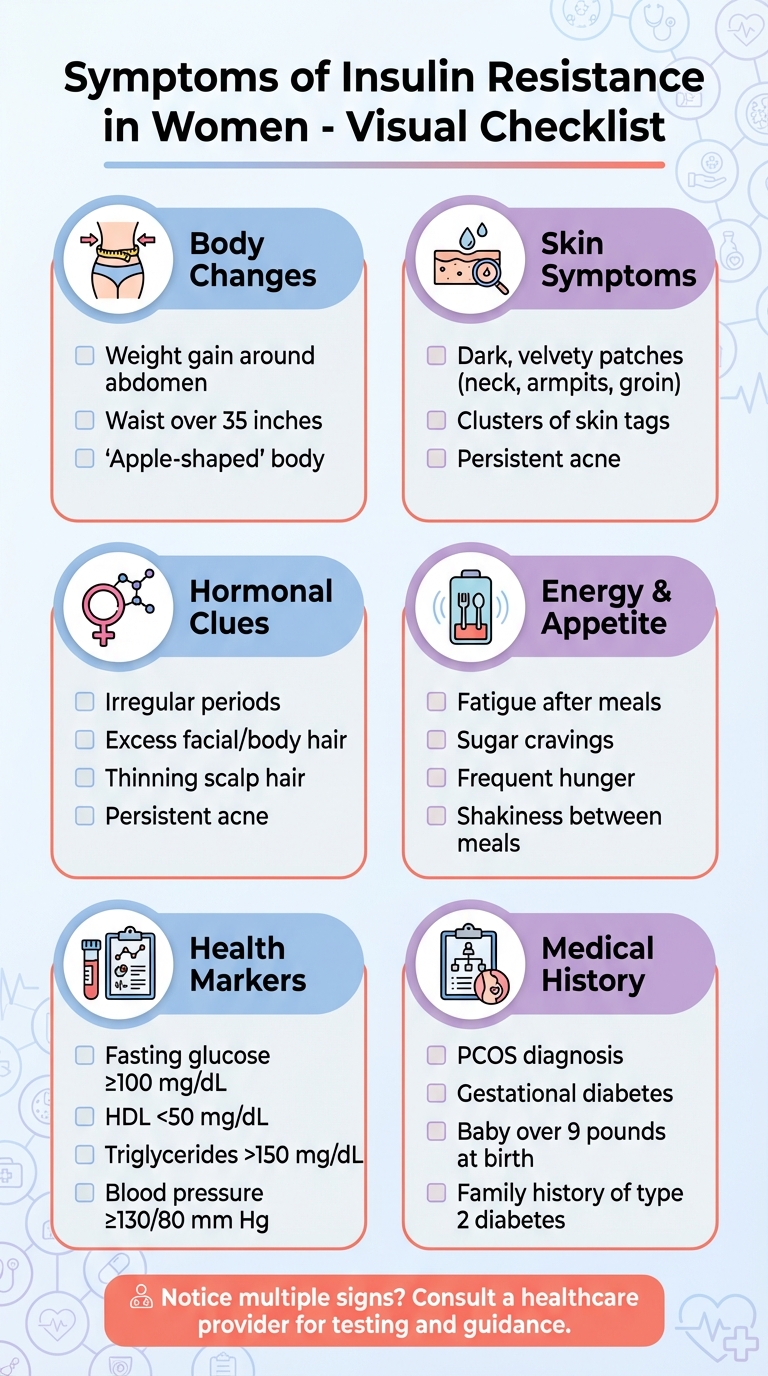
6 Key Symptom Categories of Insulin Resistance in Women
Insulin Resistance Symptoms in Females (Don't Ignore These)
How to Use This Checklist
This checklist is designed to help you observe patterns and track potential signs of insulin resistance. It’s not a replacement for a professional diagnosis, but it can be a useful tool for self-awareness. Insulin resistance often develops gradually, and many people may not notice symptoms in their day-to-day lives. By keeping track of changes over weeks or months, you can spot subtle trends.
Start by establishing a baseline. Weigh yourself in the morning, once or twice a week, using the same scale and conditions for consistency. Measure your waist at the belly-button level with a soft tape measure. For women, a waist measurement over 35 inches is often considered a risk factor for insulin resistance. If applicable, track your menstrual cycle length and note any conditions like PCOS or gestational diabetes. Use a reliable method to record this data, whether it’s an app, journal, or spreadsheet. Once you’ve gathered these baseline numbers, monitor daily and monthly changes to identify patterns.
Focus on tracking regularly and looking at long-term trends. Rate your daily energy levels on a scale of 1 to 10, especially after meals. Pay attention to cravings for sugar or carbs, feelings of hunger shortly after eating, or symptoms like shakiness or irritability before meals. With each menstrual cycle, record the start date, cycle length, missed periods, and any changes such as new facial hair, thinning scalp hair, or acne. Once a month, check areas like your neck, armpits, and groin for dark, velvety patches of skin or clusters of skin tags.
Instead of reacting to daily fluctuations, look for patterns over three to six months. For example, gradual weight gain of 5–10 pounds, increasing abdominal fat, more irregular menstrual cycles (shorter than 21 days, longer than 35 days, or frequently skipped), and consistently low energy after meals are trends worth noting.
If you notice several symptoms persisting for more than four to six weeks, it’s time to consult a healthcare provider. This is especially important if your waist measurement exceeds the recommended size, your periods become irregular or stop altogether, you develop dark skin patches, or you experience high blood sugar symptoms like excessive thirst, frequent urination, blurred vision, or unexplained weight loss. Bring a summary of your tracking data to your appointment. Include average weekly weight, your latest waist measurement, key symptoms with approximate start dates, menstrual cycle patterns, and any family history of diabetes or PCOS. Ask your provider about tests like fasting glucose, A1C, and cholesterol, which can help assess your risk for insulin resistance.
If you’re looking for specialized care, Oana Health offers telehealth services tailored to women’s health, focusing on hormones, PCOS, and insulin resistance. They also provide prescription-based treatments delivered directly to your home.
Physical and Metabolic Signs
Insulin resistance often develops subtly, with few noticeable symptoms in daily life. That’s why keeping an eye on specific physical changes and metabolic markers is crucial - they can reveal hidden risks.
Body Shape and Weight Changes
When it comes to insulin resistance, where you carry weight matters more than how much you weigh. Women with insulin resistance often develop an "apple-shaped" body, where fat accumulates around the abdomen instead of the hips and thighs. This type of fat, known as visceral fat, plays a significant role in increasing metabolic risk and worsening insulin resistance.
Pay attention to your waist measurements. A waist circumference over 35 inches signals a higher risk of insulin resistance and metabolic syndrome. You might also notice your clothes feeling tighter around your midsection, even if your overall weight hasn’t changed much. This pattern of weight gain around the belly is worth noting and tracking over time.
Beyond physical changes, reviewing your lab results can provide deeper insights into your metabolic health.
Metabolic Health Markers
Certain lab tests and vital signs can indicate insulin resistance, even before diabetes develops. If you’ve had recent blood work or track your health at home, compare your numbers to these thresholds:
| Marker | Threshold (Women) | What to Do |
|---|---|---|
| Blood pressure | ≥130/80 mm Hg (repeated readings) | Use a home blood pressure monitor. Sit quietly for 5 minutes with your feet flat and arm supported at heart level. Take 2–3 readings, waiting one minute between each. |
| Fasting glucose | ≥100 mg/dL | Requires fasting blood work (no food for 8–12 hours). This level suggests impaired fasting glucose. |
| Triglycerides | >150 mg/dL | High triglycerides on a lipid panel point to metabolic syndrome. |
| HDL cholesterol | <50 mg/dL | Low HDL cholesterol (below 50 mg/dL) is a risk factor. |
Keep a log of your lab results, noting the dates they were taken. If any of these numbers consistently meet or exceed the thresholds, it’s a good idea to discuss them with your healthcare provider. For those using telehealth services like Oana Health - which focuses on weight management, female hormones, PCOS, and insulin resistance - you can review these trends remotely with licensed clinicians to create a tailored treatment plan.
Pregnancy and Medical History
Your reproductive history can also offer valuable clues about your risk for insulin resistance. Review your medical history and consider these factors:
- Gestational diabetes: If you’ve had gestational diabetes, your risk for future insulin resistance is higher.
- Delivering a baby over 9 pounds: This could point to undetected high blood sugar levels during pregnancy.
- Prediabetes diagnosis: A fasting glucose level of 100–125 mg/dL or an A1C between 5.7–6.4% suggests a prediabetic state.
- Polycystic ovary syndrome (PCOS): PCOS is a major risk factor for insulin resistance and should be flagged during health discussions with your doctor.
Skin, Hair, and Hormonal Signs
Insulin resistance often reveals itself through noticeable changes in skin, hair, and menstrual cycles, hinting at early hormonal shifts. These signs go hand in hand with the metabolic and physical markers discussed earlier.
Skin Changes
One of the most recognizable signs of insulin resistance is acanthosis nigricans - dark, velvety patches of skin that feel thicker or rougher than the surrounding areas. These patches typically appear on the neck, armpits, groin, or under the breasts and are not caused by dirt, so they won’t wash off.
Another skin-related clue is the sudden appearance of multiple skin tags. These small, soft growths, either flesh-colored or slightly darker, tend to develop in skin folds like the neck, underarms, or eyelids. If you notice a cluster of new skin tags, especially alongside weight gain around the midsection, it’s worth bringing this up with your doctor.
Persistent acne, particularly along the jawline, chin, and neck, can also be tied to insulin resistance. This type of acne is often resistant to typical treatments, can be cystic, and may worsen around your menstrual cycle.
Hair and Hormonal Changes
Hormonal imbalances linked to insulin resistance can also show up in changes to hair and menstrual patterns. You might notice the growth of coarse, dark hair in areas like the upper lip, chin, chest, or lower abdomen - places typically associated with male-pattern hair growth. At the same time, thinning scalp hair, particularly along the crown or part line, can occur even as facial and body hair growth becomes more pronounced. These changes often suggest elevated androgen levels.
Menstrual irregularities are another key warning sign. Cycles that stretch beyond 35 days, skipped periods, or unusually light or heavy bleeding may all point to hormonal imbalances. Many women with polycystic ovary syndrome (PCOS) - a condition affecting up to 12% of women in the U.S. - experience a mix of these symptoms. This may include irregular periods, excess hair growth, persistent acne, and central weight gain. If you spot several of these signs, it’s essential to discuss them with your healthcare provider to explore potential links to insulin resistance and PCOS.
sbb-itb-6dba428
Energy and Appetite Patterns
Your daily energy levels and appetite shifts can offer valuable insights into how your body handles blood sugar. While many women with insulin resistance might not notice obvious symptoms, others experience recurring cycles of fatigue, cravings, and constant hunger throughout the day.
Fatigue and Low Energy
Pay attention if you find yourself feeling sleepy or sluggish one to three hours after eating, especially after meals rich in carbohydrates. Even with a full night's rest, you might feel like you need a nap or another cup of coffee to stay alert. Some women describe "hitting a wall" in the afternoon or feeling unusually drained during simple, everyday activities. Another red flag is if your energy noticeably improves after eating, only to crash again a few hours later. If you frequently feel this way, it could hint at blood sugar and insulin fluctuations. Keeping track of these energy dips can help you identify patterns tied to insulin resistance. Hunger patterns can also shed light on potential blood sugar imbalances.
Hunger and Blood Sugar Signs
Do you find yourself hungry again just an hour or two after eating a large meal? Or maybe you crave sweets or refined carbs to keep going? Many women report needing frequent snacks to avoid feeling shaky or drained. Other symptoms like irritability, headaches, or dizziness when meals are delayed might also surface. As insulin resistance progresses toward prediabetes or diabetes, you might notice additional signs like excessive thirst, more frequent urination (even waking up at night to go), or feeling persistently hungry even after eating. If you spot several of these symptoms together, it’s a good idea to consult a healthcare provider for blood sugar testing and further guidance.
Risk Factors and Medical History
After monitoring your physical and hormonal symptoms, it’s essential to factor in your personal and family medical history to get a clearer picture of your risk for insulin resistance. While daily symptoms can provide clues, certain underlying factors can significantly increase your chances of developing this condition. Taking a closer look at your medical background can help you determine if further testing or medical advice is necessary.
Personal and Family History
If a close relative, like a parent or sibling, has type 2 diabetes, your likelihood of developing insulin resistance or prediabetes goes up significantly. A family history of conditions like metabolic syndrome or gestational diabetes can also heighten your risk.
Your personal medical history matters just as much. For example, if you’ve been diagnosed with PCOS, your chances of developing type 2 diabetes nearly double by the time you reach 40. Additionally, a waist measurement exceeding 35 inches could signal a higher risk, especially when combined with other warning signs like elevated blood pressure (130/80 mm Hg or higher), high fasting glucose (100 mg/dL or more), increased triglycerides (150 mg/dL or above), or low HDL cholesterol (under 50 mg/dL). Together, these markers define metabolic syndrome. Beyond genetics and medical history, your current lifestyle plays a crucial role in shaping your risk.
Lifestyle and Background Factors
Your daily habits can directly impact insulin sensitivity and increase the likelihood of resistance. A sedentary lifestyle, for instance, limits your muscles’ ability to effectively process glucose, raising your risk. Diets rich in refined carbs, added sugars, and ultra-processed foods contribute to weight gain and metabolic strain. Smoking and heavy alcohol consumption further increase your cardiometabolic risks.
Chronic stress and poor sleep habits can also disrupt your body’s ability to regulate glucose. Elevated cortisol levels from stress prompt the liver to release more glucose, while poor sleep - getting less than seven hours regularly - can interfere with insulin function. Conditions like obstructive sleep apnea, which often cause loud snoring, frequent nighttime awakenings, or persistent fatigue despite a full night’s rest, can further disrupt hormonal balance. If these sleep issues sound familiar, it’s worth discussing a sleep evaluation with your healthcare provider.
Certain racial and ethnic groups in the U.S. also face a higher baseline risk for insulin resistance. Women who identify as Black or African American, Hispanic or Latina, Native American, Alaska Native, Native Hawaiian, or from some Asian American backgrounds experience higher rates of insulin resistance, prediabetes, and type 2 diabetes compared to non-Hispanic White populations. If you belong to one of these groups and also have other risk factors - like a family history of diabetes or a waist measurement over 35 inches - early screening becomes even more critical. Recognizing these risk factors can guide you in seeking timely medical advice and support.
For personalized care and testing, services like Oana Health focus on women’s metabolic health, offering guidance for managing insulin resistance and PCOS.
Understanding Your Results and Next Steps
If you've noticed several positive indicators - such as metabolic markers (waist size of 35 inches or more, blood pressure at or above 130/80 mm Hg), visible skin changes (like dark velvety patches or skin tags), or energy patterns (such as fatigue after meals or intense carb cravings) - it’s time to schedule a medical evaluation. Aim to do this within 1–3 months. Keep in mind that insulin resistance often doesn’t cause clear symptoms and is usually detected through blood work rather than how you feel day-to-day. This step connects your self-monitoring efforts with professional medical guidance.
When meeting with your healthcare provider, bring along your checklist and ask about testing for insulin resistance, prediabetes, and metabolic syndrome. Specifically, request tests like fasting plasma glucose (levels of 100 mg/dL or higher indicate impaired fasting glucose), hemoglobin A1C (which reflects your average blood sugar over three months), and a fasting lipid panel (triglycerides of 150 mg/dL or higher, or HDL levels below 50 mg/dL in women).
In the meantime, while waiting for your appointment, revisit the tracking tips from the "How to Use This Checklist" section. Start incorporating small but impactful changes - take daily brisk walks, cut back on sugary drinks and refined carbs, and aim for at least seven hours of quality sleep each night. These steps can help improve insulin sensitivity and may enhance the effectiveness of any medical treatments you pursue later on.
For additional support, women who suspect insulin resistance or related conditions like PCOS can explore Oana Health. This platform offers telehealth consultations with licensed professionals specializing in weight management, hormonal health, and PCOS. During a virtual visit, you can discuss your checklist findings, address risk factors like irregular menstrual cycles or a history of gestational diabetes, and determine whether further lab work is necessary. Oana Health clinicians provide customized, evidence-based treatment plans, which may include medications to support weight loss or improve insulin sensitivity. These treatments are shipped directly to your home with free delivery.
You can also revisit your checklist every three to six months to track any changes in key indicators like waist size, post-meal energy levels, cravings, skin changes, or weight. Regularly reassessing helps you stay informed about how insulin resistance may be progressing. If symptoms persist or worsen - such as the appearance of new dark skin patches or rapid weight gain - reach out to your healthcare provider or a telehealth service like Oana Health. They can help you update your lab tests, refine your treatment plan, and make any necessary adjustments.
FAQs
What are the early symptoms of insulin resistance in women?
Recognizing insulin resistance early can make a big difference in managing your health. For women, some red flags to watch for include unexplained weight gain, particularly around the belly, intense cravings for sugar or carbs, persistent fatigue, and struggling to lose weight despite eating healthy and staying active. You might also notice darkened patches of skin - commonly on the neck, armpits, or groin - irregular menstrual cycles, or the appearance of skin tags.
If these symptoms sound familiar, it’s a good idea to bring them up with your healthcare provider. Identifying and addressing insulin resistance early can help reduce the risk of developing more serious issues like type 2 diabetes.
Why is tracking symptoms important for managing insulin resistance?
Monitoring your symptoms plays a key role in managing insulin resistance. It allows you to spot patterns and track changes in your health over time. Symptoms like fatigue, unexplained weight gain, or changes in your skin can serve as early warning signs, helping you address potential concerns before they escalate.
By paying close attention and working alongside your healthcare provider, you can fine-tune your treatment plan as needed. This kind of active involvement helps you stay on top of your health, make smarter lifestyle choices, and improve your overall well-being.
What are some lifestyle changes that can help improve insulin sensitivity?
Improving how your body responds to insulin often comes down to a few important lifestyle adjustments that promote better blood sugar control and overall well-being. Here are some practical steps to consider:
- Stay active: Engage in a mix of aerobic exercises (like walking, jogging, or biking) and strength training. These activities can help your muscles use insulin more efficiently.
- Choose nourishing foods: Build meals around whole, minimally processed ingredients. Include lean proteins, healthy fats, and fiber-rich carbs, while cutting back on added sugars and refined carbohydrates.
- Aim for a healthy weight: Shedding even a small amount of extra weight can make a noticeable difference in how your body handles insulin.
- Manage stress effectively: Long-term stress can disrupt insulin levels. Practices like meditation, yoga, or mindfulness can help you keep stress in check.
- Get enough sleep: Strive for 7–9 hours of good-quality sleep each night. Poor sleep habits can interfere with insulin sensitivity.
For women dealing with conditions like PCOS or insulin resistance, tailored medical treatments can be an important part of the solution. Oana Health provides prescription-based care designed specifically for your needs, delivered straight to your doorstep for added ease.