
5 Tips for Adjusting Spironolactone Dosage Safely
Spironolactone is widely used to treat hormonal acne and PCOS-related skin issues. However, adjusting your dosage requires careful medical supervision to avoid risks like potassium imbalances or kidney problems. Here's what you need to know:
- Start Low: Begin with 25–50 mg daily to minimize side effects. Gradual increases can follow after 8–12 weeks, based on your progress.
- Medical Supervision: Always consult your doctor before making dosage changes. Blood tests are vital to monitor potassium and kidney function.
- Regular Check-Ups: Lab tests help track your health and prevent complications. Share all medications you're taking to avoid harmful interactions.
- Monitor Side Effects: Watch for dizziness, fatigue, or irregular periods. Report serious symptoms like muscle weakness or irregular heartbeat immediately.
- Individual Factors Matter: Dosage may vary based on weight, PCOS, or other health conditions. Personalized care ensures safer treatment.
Consistency and patience are key, as results often take 2–3 months to appear. Always work closely with your healthcare provider for safe and effective adjustments.
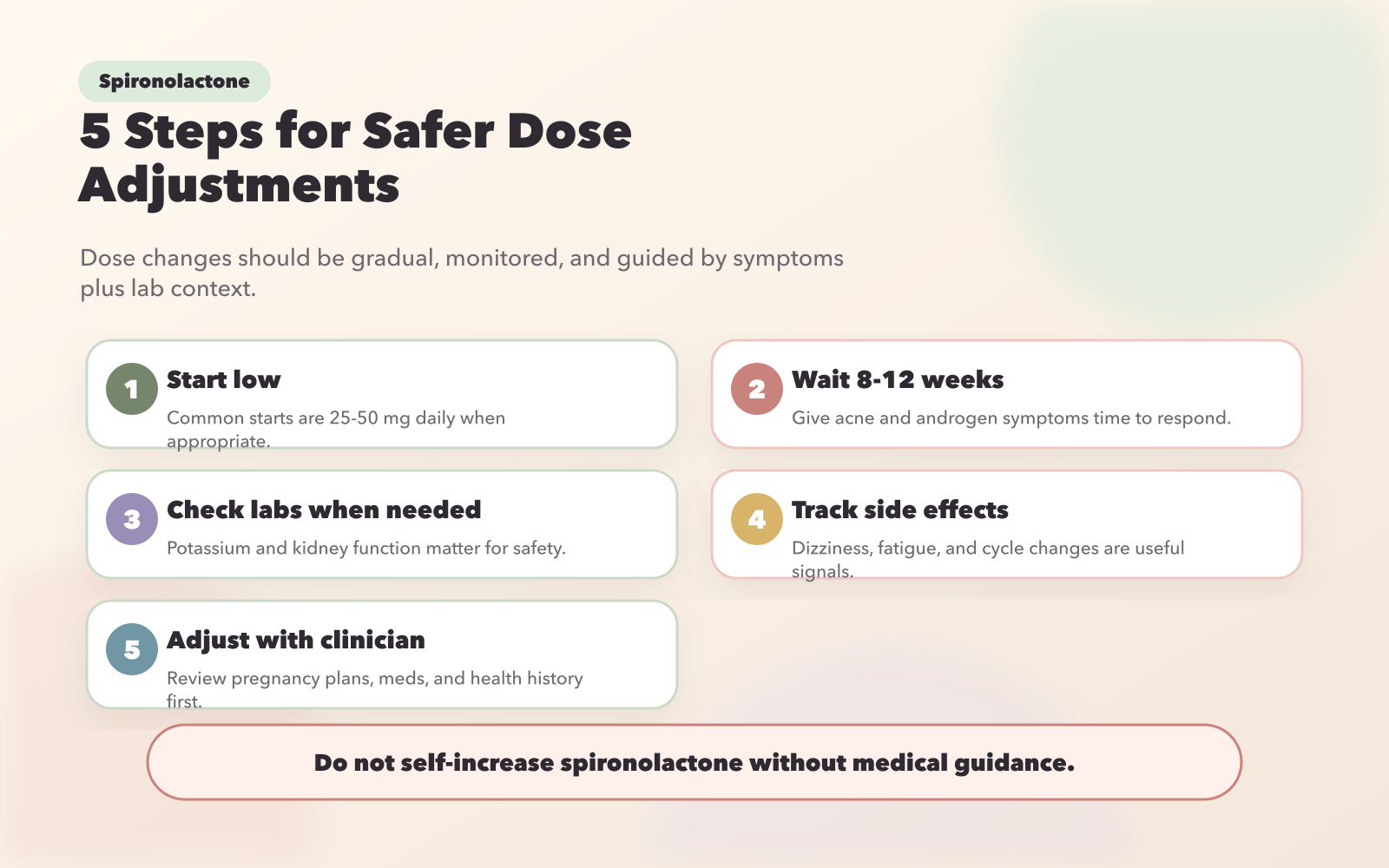
5 Essential Steps for Safe Spironolactone Dosage Adjustment
How to treat hormonal acne with spironolactone in 2026: dermatologist and acne expert explains
1. Start with the Lowest Effective Dose
When starting spironolactone, your healthcare provider will typically prescribe a daily dose of 25–50 mg. This cautious approach helps your body adapt to the medication while keeping side effects, such as increased urination, dizziness, and breast tenderness, to a minimum.
Research indicates that a daily dose of 25–50 mg is effective for managing adult female acne, with about two-thirds of patients seeing full improvement at an average dose of 100 mg per day.
To ease into treatment, take your first dose with food to reduce the chance of stomach upset. If you feel dizzy, try standing up slowly from sitting or lying down. Staying well-hydrated - especially during exercise or in hot weather - can also help counteract the medication’s diuretic effects. Once your body adjusts, you and your healthcare provider can evaluate your progress before making any changes to the dosage.
Be patient, as spironolactone takes time to show results. Wait at least 8 to 12 weeks before considering a dose increase. The medication works by gradually blocking androgen receptors and reducing oil production, so noticeable improvements usually take 2–3 months. Additionally, your provider will likely order blood tests about a week after starting treatment to check potassium levels and kidney function.
2. Increase Dosage Gradually with Medical Supervision
When treating hormonal acne, finding the right dosage is all about balance. Doctors typically start with a low dose and gradually adjust it over time. This method helps pinpoint the smallest effective dose while keeping risks in check. For acne treatments, dosage adjustments are usually assessed every four weeks to ensure the therapy remains both safe and effective.
"It is important to start with a lower dose and escalate gradually, if needed, depending on how the patient is doing." - Adam J. Friedman, MD, Associate Professor of Dermatology
Never adjust your dosage on your own - even if results seem slower than expected. Side effects like frequent urination, dizziness, or breast tenderness are more likely with higher doses, so increasing the dose without guidance can lead to unnecessary complications.
After any dosage increase, your doctor will likely recommend blood tests within a week to monitor potassium and creatinine levels. If there’s any concern about kidney function, adjustments might proceed more cautiously, such as switching to an every-other-day schedule rather than daily dosing.
Stick to a consistent daily medication routine and be vigilant about side effects. If you notice symptoms like muscle weakness, an irregular heartbeat, or tingling sensations in your hands or feet, notify your doctor immediately. These signs may require prompt changes to your treatment plan.
3. Schedule Regular Check-Ups and Lab Tests
Keeping up with regular lab tests is a must when adjusting your medication dosage. Your healthcare provider will likely recommend monitoring kidney function, blood counts, and electrolytes - especially potassium levels. Research shows that, with proper oversight, the risks are minimal.
For example, a study involving nearly 1,000 women found only 13 instances of potassium irregularities across 1,800 lab tests. Interestingly, half of these normalized upon retesting. Dr. Joshua Zeichner, MD, FAAD, Assistant Professor and Director of Cosmetic and Clinical Research at Mount Sinai Medical Center, explains:
"The incidence of developing hyperkalemia in young, healthy women on spironolactone is equivalent to the baseline rate of hyperkalemia in the general population".
Dr. Zeichner also emphasizes that:
"Regular potassium checks are not always necessary, and best clinical judgment should be exercised for each individual patient".
Your doctor will tailor a monitoring schedule based on your health needs, particularly if you're on medications like ACE inhibitors or NSAIDs. It's crucial to share all medications and supplements you're taking, as certain combinations can heighten risks. For those using telehealth services like Oana Health, licensed professionals handle lab coordination and follow-ups, ensuring your dosage is adjusted safely.
Beyond scheduled testing, stay vigilant for any warning signs between visits. Symptoms such as a slow or irregular heartbeat, muscle weakness, shortness of breath, or tingling sensations should prompt an immediate call to your healthcare provider.
sbb-itb-6dba428
4. Watch for Side Effects and Report Changes
Keeping an eye on how your body reacts to treatment is just as important as regular lab tests. Paying attention to side effects can help catch potential issues early. Some common side effects to watch for include increased urination (reported by about 29% of patients), menstrual irregularities (22%), fatigue (17%), breast tenderness (17%), headache (14%), and dizziness (12%). Keeping a record of these symptoms can assist your doctor in evaluating whether your dosage is working as intended.
Certain side effects, however, need immediate medical attention. If you experience difficulty breathing, chest pain, an irregular heartbeat, or swelling in your face or throat, contact your doctor right away. While these symptoms are rare, they could indicate serious complications that require urgent care.
Menstrual changes are particularly common, especially at higher doses. Between 13% and 33% of women experience these side effects, but for those taking 200 mg or more daily, the percentage climbs to over 70%. If you notice your menstrual irregularities worsening, particularly at higher doses, talk to your doctor. They might suggest adjusting your dosage or pairing spironolactone with oral contraceptives to help manage your cycle. Keeping track of these changes can help your doctor refine your treatment plan.
If side effects like dizziness, fatigue, or headaches persist, don’t hesitate to reach out to your healthcare provider. These ongoing symptoms might indicate the need for a dosage adjustment.
5. Account for Individual Factors Like PCOS or Weight
When it comes to spironolactone, individual factors play a big role in determining the right dosage. One key aspect is body weight, which often influences how much of the medication is needed to achieve the desired results. For people with a higher body weight, a larger dose may be necessary. Having an open conversation with your doctor about your weight can help them tailor the starting dose to suit your specific needs. This personalized approach is especially important for addressing conditions like PCOS.
PCOS, which affects between 6% and 12% of women of reproductive age, often requires careful dosing adjustments. Spironolactone helps by targeting the hormonal imbalances behind common PCOS symptoms like acne and excess hair growth. It works by blocking androgen receptors, which reduces oil production and, in turn, helps clear up acne. Clinical data shows that women taking daily doses of 75–150 mg experienced a 50% improvement in facial acne and a 37.5% improvement in body acne.
"By addressing the underlying hormonal issues, spironolactone can help women with PCOS regain control over their skin and boost their self-esteem." – Piction Health
For those managing PCOS alongside conditions like insulin resistance or diabetes, extra care is needed. Spironolactone can increase potassium levels, and diabetes may raise the risk of hyperkalemia. That’s why frequent potassium checks are essential - both before starting the medication and during treatment. If you also have kidney or liver concerns, your doctor might recommend a lower dose to minimize potential risks.
If you're looking for a personalized approach to treating PCOS and hormonal acne, Oana Health offers telehealth consultations with licensed professionals. Their treatments, starting at $14 per month, are delivered straight to your door. Learn more at Oana Health.
Conclusion
When it comes to adjusting spironolactone dosages, slow and steady wins the race. Making gradual changes under the guidance of a healthcare professional is crucial. This approach helps manage potential side effects, keeps potassium levels in check, and ensures the medication is tailored to your specific needs. Keep in mind that spironolactone often takes about 4 to 6 months to deliver its full benefits, so staying patient and consistent is essential.
Research shows that with proper supervision, side effects are typically manageable. This makes spironolactone a reliable option for addressing hormonal acne and skin concerns related to PCOS.
For added convenience, telehealth services can make managing your treatment easier. Platforms like Oana Health connect you with licensed medical professionals who provide personalized care and support. Interested in learning more? Visit Oana Health.
FAQs
What’s the safest way to adjust my spironolactone dosage for acne treatment?
To adjust your spironolactone dosage safely, it’s crucial to begin with the lowest prescribed amount - usually 25–50 mg daily - and consult your healthcare provider before making any changes. If you’re not seeing improvements in your acne after 2–4 weeks and are tolerating the medication well, your provider might suggest gradually increasing the dose by 25 mg at a time. For acne treatment, the typical range is 50–100 mg per day.
Regular blood tests are a must to check potassium levels and kidney function, especially before and after adjusting your dosage. Take spironolactone with food at the same time each day. If your daily dose goes above 100 mg, consider splitting it into two smaller doses to reduce the chance of nighttime urination. Keep track of your skin’s progress and note any side effects like menstrual changes or fatigue. If you experience severe symptoms such as an irregular heartbeat or muscle weakness, contact your provider immediately. Collaborating closely with your clinician will help you find the most effective and safe dosage for your needs.
What side effects should I look out for when taking spironolactone?
While taking spironolactone, you might notice common side effects such as changes in your menstrual cycle, fatigue, frequent urination, breast tenderness, nausea, dizziness, muscle cramps, or a lower libido. These effects are generally mild but should still be observed.
On the other hand, there are serious side effects that need immediate medical attention. These include signs of high potassium levels (like an irregular heartbeat or muscle weakness), kidney issues, allergic reactions, blood in your urine, hair loss on the scalp, confusion, or yellowing of your skin or eyes. If you experience any of these, reach out to your healthcare provider without delay.
Your doctor will help you keep an eye on these potential effects and may adjust your dosage to ensure your treatment remains safe and effective.
Does body weight impact the dosage of spironolactone for PCOS treatment?
When it comes to spironolactone dosage for PCOS, there’s no solid proof that body weight plays a direct role. Instead, dosage decisions usually depend on factors like how severe the symptoms are, how well the treatment is working, and any side effects that might occur. It’s crucial to talk to a licensed medical professional to figure out the dosage that’s best suited to your individual situation.