
Ultimate Guide to Spearmint Tea for Hormonal Health
Spearmint tea, made from the leaves of the Mentha spicata plant, has gained attention for its potential to support hormonal health, particularly in women with conditions like PCOS. Studies suggest that drinking 2 cups daily may help lower testosterone levels, increase reproductive hormones (LH, FSH, estradiol), and alleviate symptoms like excessive hair growth and acne. While not a standalone solution, it can complement medical treatments and lifestyle changes.
Quick Takeaways:
- Hormonal Effects: Reduces testosterone and boosts LH, FSH, and estradiol.
- PCOS Support: May help with symptoms like hirsutism and acne over time.
- Usage: 2 cups/day (about 5g of dried spearmint or 3–4 tea bags).
- Precautions: Avoid if pregnant, breastfeeding, or with hormone-sensitive conditions. Consult a healthcare provider before use.
Spearmint tea is a simple addition to your routine, but for best results, pair it with a healthy lifestyle and professional guidance.
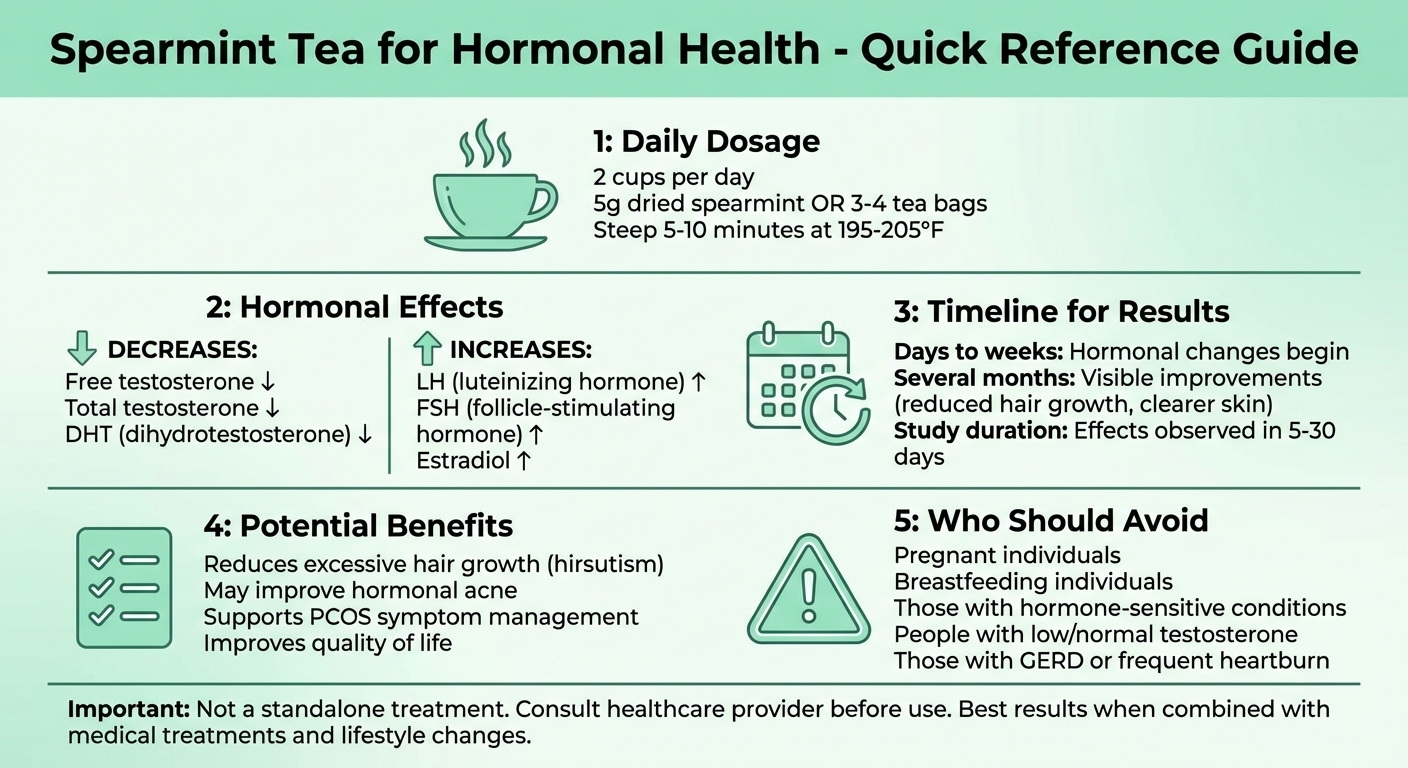
Spearmint Tea Benefits for Hormonal Health: Dosage, Effects, and Timeline
Research on Spearmint Tea for Hormonal Health
How Spearmint Tea Affects Hormones
Spearmint tea has been shown to influence hormone levels, particularly by reducing androgens like testosterone. Elevated testosterone levels in women are often linked to issues such as unwanted hair growth, acne, and irregular menstrual cycles. Research suggests that spearmint tea not only lowers testosterone but may also boost reproductive hormones, including luteinizing hormone (LH), follicle-stimulating hormone (FSH), and estradiol. These effects are thought to occur due to the tea's ability to inhibit the enzyme 5-alpha-reductase, which converts testosterone into the more potent dihydrotestosterone (DHT). These biochemical shifts offer a foundation for further clinical investigation.
Clinical Studies on Spearmint Tea
Two key studies shed light on how spearmint tea impacts hormone levels. A 2007 study demonstrated that drinking spearmint tea for just five days led to a decrease in free testosterone and an increase in LH, FSH, and estradiol.
In a more extensive 30-day randomized controlled trial, 42 women with PCOS-related hirsutism were divided into two groups. One group consumed two cups of spearmint tea daily, while the other drank a placebo herbal tea. By the end of the trial, the spearmint tea group experienced reductions in both free and total testosterone, alongside increases in LH and FSH. While objective measures of hirsutism, such as Ferriman–Gallwey scores, did not show significant changes - likely due to the slow nature of hair growth cycles - participants reported feeling less bothered by hirsutism and noted improvements in their quality of life.
These findings highlight spearmint tea's potential to influence hormonal balance and pave the way for exploring its broader effects on PCOS symptoms.
Effects on PCOS Symptoms
The hormonal shifts observed in these studies suggest that spearmint tea could help alleviate some symptoms of PCOS. By lowering testosterone levels, it may gradually reduce the severity of excess hair growth and hormonal acne. Supporting this, an animal study conducted on rats with PCOS-like conditions found that spearmint essential oil decreased testosterone levels, reduced ovarian cysts, and increased the number of healthy ovarian follicles. While these results are promising, they have yet to be confirmed in human studies.
Although hormonal changes can occur relatively quickly - within days to weeks - visible improvements, such as reduced unwanted hair, may take months due to the slow nature of hair growth. However, the current body of research is limited by small sample sizes and short study durations. Larger, long-term studies are needed to fully understand how spearmint tea might help manage PCOS symptoms.
Are there benefits to drinking spearmint tea for PCOS?
How to Use Spearmint Tea
If you're considering spearmint tea for its hormonal benefits, here’s a practical guide to making it a part of your daily routine.
Choosing Quality Spearmint Tea
Start by selecting 100% pure spearmint leaf (Mentha spicata), free of additives. Organic options are a good choice if you want to minimize pesticide exposure. Look for dried leaves that are bright green and have a fresh, minty aroma. Avoid leaves that appear dull or smell musty, as these may have lost their potency. Opt for airtight packaging with a clear "best by" date to ensure freshness.
You can choose between loose-leaf tea, tea bags, or fresh spearmint leaves:
- Loose-leaf tea offers better quality and allows precise measurement. For example, you can measure about 2.5 grams per cup using a kitchen scale.
- Tea bags are convenient and pre-portioned. According to Cleveland Clinic, 5 grams per day of spearmint tea - the amount commonly used in studies - is about 3–4 standard tea bags.
- Fresh spearmint leaves are another option, though the levels of active compounds can vary.
Preparation and Dosage Guidelines
Most studies recommend drinking two cups of spearmint tea daily. Here’s how to prepare it:
- Steep one tea bag or 1–2 teaspoons of loose-leaf tea in 8–12 ounces of water heated to 195–205°F.
- Cover the cup while steeping for 5–10 minutes to preserve its active compounds.
- If you prefer iced tea, brew a stronger batch and pour it over ice.
While some hormonal changes may occur within days, noticeable improvements - like reduced unwanted hair growth - can take several months due to the natural hair growth cycle.
Adding Spearmint Tea to Your Daily Routine
To build a habit, try drinking one cup in the morning and another later in the day. For a relaxing evening ritual, enjoy it about 60–90 minutes before bedtime - this may also help with stress and sleep.
Here are some tips to make it easier to stick to your routine:
- Set phone reminders or place your tea somewhere visible.
- Brew a larger batch in the morning and reheat it later for convenience.
Lastly, consult your healthcare provider - or a telehealth expert at Oana Health - to ensure spearmint tea complements your current treatments. Avoid sweeteners, especially if you're managing insulin sensitivity, and discuss how it might work alongside medications like metformin or hormonal contraceptives. A thoughtful approach ensures spearmint tea supports your overall hormonal health effectively.
sbb-itb-6dba428
Safety and Precautions
When adding spearmint tea to your routine, it’s important to understand any potential risks and take appropriate precautions.
Possible Side Effects
For most people, drinking 1–2 cups of spearmint tea daily is well-tolerated. However, some may experience mild digestive issues such as heartburn, stomach discomfort, nausea, or even headaches, especially if consumed on an empty stomach. If you have gastroesophageal reflux disease (GERD) or frequent heartburn, spearmint tea might aggravate symptoms by relaxing the lower esophageal sphincter. To play it safe, start with a single 8-ounce cup alongside food to gauge your tolerance, and only increase to 2 cups per day if no issues arise.
Animal studies involving high doses have shown possible liver and kidney stress, but clinical trials using typical amounts (about 5 grams of dried herb daily, equal to 3–4 tea bags) for up to 30 days found no serious adverse effects. Be alert for any severe symptoms, such as intense heartburn, chest pain, unexplained fatigue, dark urine, or signs of an allergic reaction like facial swelling, difficulty breathing, or a widespread rash. If these occur, stop drinking the tea immediately and consult a healthcare provider.
Who Should Avoid Spearmint Tea
Certain groups should approach spearmint tea with caution or avoid it altogether. Research shows that spearmint tea can significantly lower testosterone levels and influence hormones like luteinizing hormone (LH), follicle-stimulating hormone (FSH), and estradiol.
Pregnant individuals should avoid medicinal doses due to limited safety data, and breastfeeding individuals should steer clear of higher amounts as hormonal changes may impact milk supply. If you’re trying to conceive or dealing with unexplained infertility, the tea’s anti-androgen effects could work against you unless you have high androgen levels linked to conditions like PCOS. For people with normal or low testosterone, spearmint tea could lead to reduced libido, fatigue, or mood changes. Additionally, anyone with hormone-sensitive conditions, liver or kidney disease, or those taking hormonal medications should consult a healthcare provider before introducing spearmint tea into their routine.
Working with Medical Professionals
Navigating these precautions is easier with expert guidance. Consulting a healthcare professional ensures that spearmint tea fits safely into your overall health plan. Telehealth services like Oana Health offer personalized support by reviewing your medical history and lab results to create a tailored plan for using spearmint tea. This approach helps you integrate the tea into your routine without interfering with existing treatments, while ongoing monitoring can catch any hormonal changes or side effects early.
Key Takeaways
Here’s a closer look at the main points we’ve covered:
Benefits of Spearmint Tea for Hormones
Spearmint tea has been shown to have anti-androgen effects, which can be especially helpful for women dealing with high testosterone levels. A 30-day randomized controlled trial involving 42 women with PCOS and hirsutism found that drinking spearmint tea twice daily significantly reduced both free and total testosterone levels. It also increased luteinizing hormone (LH) and follicle-stimulating hormone (FSH). These hormonal changes may help manage symptoms like excessive facial and body hair and could also improve hormonal acne over time. A Cleveland Clinic dietitian explained:
"helps bring testosterone levels back into the normal range, which may improve some of the symptoms associated with high testosterone"
in PCOS. Keep in mind, though, that noticeable results may take a few months.
Combining Spearmint Tea with Medical Treatments
While spearmint tea offers hormonal benefits, it works best as a supplement to professional medical treatments rather than as a replacement. For those with moderate-to-severe PCOS, significant hirsutism, or other hormone-related symptoms, medical treatments like oral contraceptives, anti-androgens (such as spironolactone), or metformin remain crucial. Spearmint tea can be safely included alongside these treatments to support overall results. For personalized care, platforms like Oana Health provide prescription-based solutions for PCOS, unwanted hair, acne, insulin resistance, and weight management, which can complement regular spearmint tea use.
Practical Tips for Daily Use
To incorporate spearmint tea into your routine, aim for about 2 cups a day - this equates to roughly 5 grams of dried spearmint or 3–4 standard tea bags. Try having one cup in the morning and another in the evening for consistency. Pair your evening tea with a calming habit like journaling or your skincare routine to make it part of your daily ritual. Track your symptoms over a three-month period to gauge its effects. Remember, spearmint tea is just one piece of the puzzle - pair it with a balanced diet, regular exercise, good sleep, stress management, and any necessary medical treatments for the best results.
FAQs
Can spearmint tea be used as a substitute for medical treatments for PCOS?
Spearmint tea may help alleviate certain symptoms of PCOS, like reducing unwanted facial hair and supporting hormonal balance. However, it’s essential to remember that this tea isn’t a substitute for medical treatments recommended by healthcare professionals.
If you’re managing PCOS, working with a licensed medical provider is crucial to develop a treatment plan that suits your specific needs. While spearmint tea can be a beneficial part of your routine, its effects are most effective when paired with evidence-based medical care designed for you.
How quickly can you expect results from drinking spearmint tea for hormonal health?
The time it takes to see changes from drinking spearmint tea can differ from person to person, depending on factors like hormonal balance and how consistently you drink it. Many individuals notice improvements in issues like acne or unwanted facial hair after having 1–2 cups daily for a few weeks. It’s worth remembering that natural remedies often take time, so patience is key.
To maximize the benefits, pair spearmint tea with a healthy diet, regular physical activity, and other positive lifestyle choices. If you’re dealing with conditions such as PCOS or hormonal imbalances, it’s a good idea to consult a healthcare professional for tailored guidance.
Can drinking spearmint tea every day cause any side effects?
Drinking spearmint tea every day is usually safe for most people, as long as it’s consumed in moderation. That said, some may experience minor side effects like an upset stomach or, in rare cases, allergic reactions. There's also evidence suggesting that drinking too much spearmint tea might lower testosterone levels, which could be a concern for some men.
If you have existing health conditions or are on any medications, it’s a good idea to check with a healthcare professional before making spearmint tea a regular part of your routine.