
Zinc and Magnesium for PCOS: Benefits and Dosage
Polycystic Ovary Syndrome (PCOS) affects up to 20% of women of reproductive age in the U.S., often causing insulin resistance, inflammation, and hormonal imbalances. Zinc and magnesium are two nutrients that can help manage PCOS symptoms by improving insulin sensitivity, reducing inflammation, and addressing hormonal issues like elevated androgens.
Key Takeaways:
- Zinc: Supports insulin function, reduces androgen levels, and helps with acne, hair loss, and menstrual irregularities. Recommended dose: 30-50 mg/day.
- Magnesium: Improves insulin sensitivity, lowers inflammation, and promotes regular cycles. Recommended dose: 200-400 mg/day.
- Combination Benefits: Together, they can amplify effects, improving metabolic health and reducing inflammation.
Food Sources:
- Zinc: Oysters, red meat, poultry, pumpkin seeds, lentils, chickpeas.
- Magnesium: Spinach, almonds, quinoa, black beans, dark chocolate.
Safe supplementation requires proper dosing to avoid side effects like nausea (zinc) or digestive issues (magnesium). Always consult a healthcare provider for personalized advice.
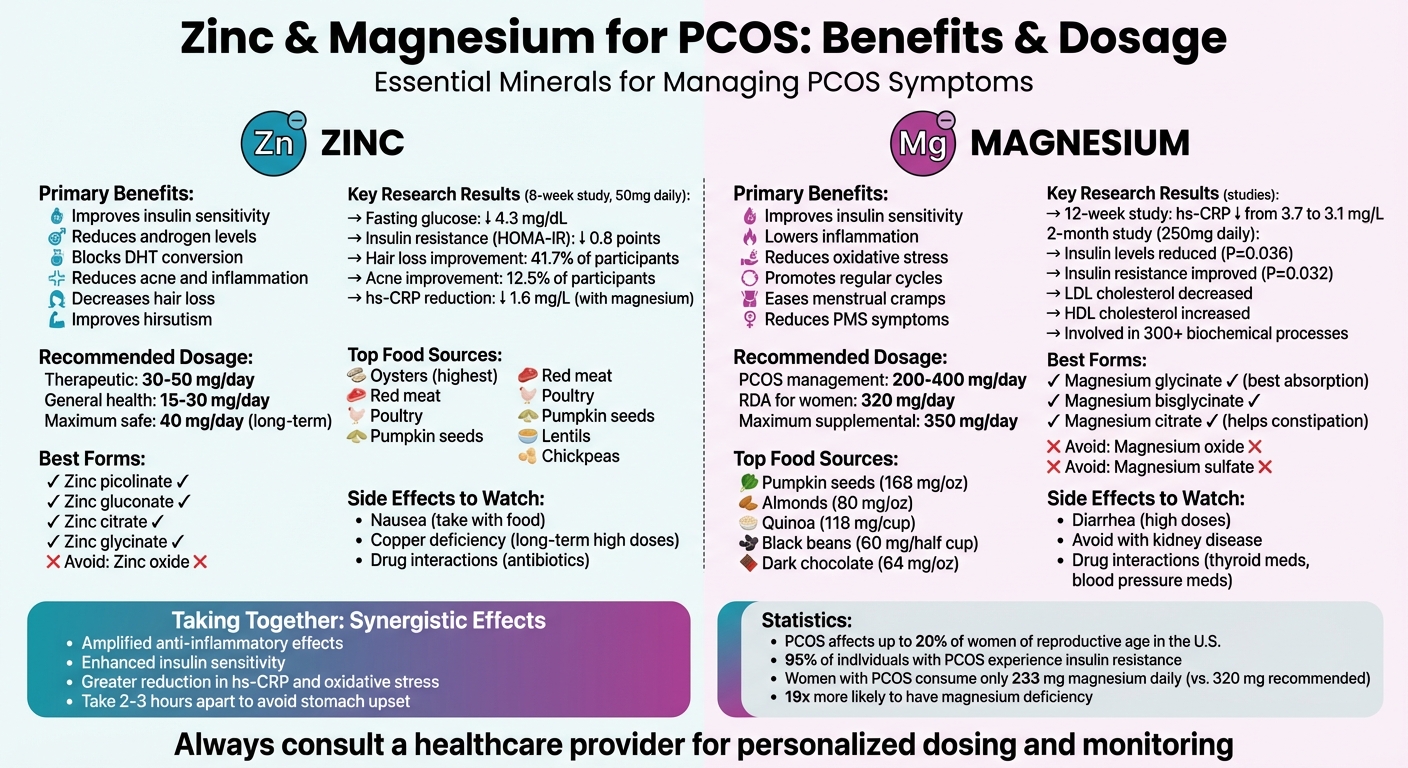
Zinc vs Magnesium Benefits and Dosage for PCOS Management
Minerals for PCOS
How Zinc Helps Manage PCOS Symptoms
Zinc tackles several underlying issues of PCOS, including insulin resistance and elevated androgen levels. Studies show that women with PCOS who struggle with insulin resistance often have lower zinc levels compared to those without this condition. This is crucial because zinc plays a key role in how the body processes glucose and responds to insulin.
Better Insulin Sensitivity
Zinc improves how insulin works by enhancing insulin receptor activity, which helps the body use glucose effectively. Angela Grassi, MS, RDN, LDN from the PCOS Nutrition Center, explains:
"It is believed that insulin binds to zinc to help it attach to cell insulin receptors to allow glucose to enter cells."
In a randomized, double-blind study with 52 women with PCOS, 8 weeks of taking 50 mg of elemental zinc led to measurable improvements in metabolic health. The zinc group saw fasting plasma glucose levels drop by 4.3 mg/dL, while the placebo group experienced a slight increase of 0.5 mg/dL. Insulin resistance, measured by the HOMA-IR score, improved by 0.8 points in the zinc group, compared to a 0.3-point increase in the placebo group.
| Metabolic Marker | Zinc Group Change (8 Weeks) | Placebo Group Change (8 Weeks) | P-value |
|---|---|---|---|
| Fasting Plasma Glucose (FPG) | -4.3 ± 9.6 mg/dL | +0.5 ± 6.0 mg/dL | 0.03 |
| Serum Insulin | -3.0 ± 2.9 µIU/mL | +1.5 ± 8.4 µIU/mL | 0.01 |
| HOMA-IR (Insulin Resistance) | -0.8 ± 0.8 | +0.3 ± 1.9 | 0.006 |
| QUICKI (Insulin Sensitivity) | +0.02 ± 0.02 | -0.004 ± 0.05 | 0.03 |
Zinc also acts as an antioxidant, reducing oxidative stress - a major factor in insulin resistance for people with PCOS. This is especially important since around 95% of individuals with PCOS experience some level of insulin resistance. Additionally, zinc's anti-inflammatory properties contribute to its ability to ease PCOS symptoms.
Lower Inflammation and Clearer Skin
Zinc's anti-inflammatory effects not only improve insulin sensitivity but also promote healthier skin. In a 12-week study, women with PCOS who took 50 mg of zinc along with 250 mg of magnesium saw their hs-CRP levels (a marker of inflammation) drop by 1.6 mg/L, while the placebo group showed a slight increase of 0.1 mg/L. The same group also experienced a 60.7 mmol/L boost in total antioxidant capacity and reduced expression of inflammatory cytokines like IL-1 and TNF-α.
For acne, zinc helps by blocking the enzyme that converts testosterone into DHT, a hormone linked to breakouts. In clinical studies, 12.5% of women taking 50 mg of zinc daily for 8 weeks reported acne improvement, compared to 8.3% in the placebo group. Zinc also lowered oxidative stress markers, such as malondialdehyde, by 0.09 µmol/L after 8 weeks.
For those dealing with hidradenitis suppurativa (painful skin bumps sometimes linked to PCOS), higher doses of 90 mg per day of zinc gluconate for at least 3 months have shown promising results. These benefits extend to overall hormonal balance.
Less Hair Loss and Unwanted Hair Growth
Zinc naturally blocks androgens by inhibiting 5-alpha reductase, the enzyme responsible for converting testosterone into DHT. Since DHT contributes to both hair thinning (androgenic alopecia) and unwanted hair growth (hirsutism), zinc helps manage both issues.
"Zinc works to inhibit the enzyme that converts testosterone into its non-aromatizable form, dihydrotestosterone (DHT), which is how it can reduce hair loss as well as other symptoms associated with high testosterone levels in women with PCOS like acne and unwanted hair growth."
In a study conducted by Arak University of Medical Sciences, 48 women with PCOS aged 18–40 were given either 220 mg of zinc sulfate (50 mg of elemental zinc) or a placebo daily for 8 weeks. 41.7% of women in the zinc group reported less hair loss, compared to only 12.5% in the placebo group. Hirsutism scores also improved significantly, with an average reduction of 1.71 points in the zinc group versus 0.29 points in the placebo group.
Better Fertility and Regular Ovulation
Zinc supports reproductive health by addressing hormonal imbalances that disrupt ovulation in PCOS. By improving insulin sensitivity and lowering androgen levels, zinc helps tackle two major obstacles to regular ovulation. It's also essential for the health of hair follicles and reproductive tissues, aiding in cell division and hormone production.
With better metabolic markers, hormonal balance improves - lower fasting insulin levels and enhanced insulin sensitivity create the right conditions for natural ovulation. As insulin resistance decreases, the ovaries are less likely to overproduce androgens, leading to more regular menstrual cycles and improved fertility outcomes.
How Magnesium Helps Manage PCOS Symptoms
Magnesium plays a crucial role in our bodies, yet many women with PCOS don’t get enough of it. This is important because magnesium is involved in over 300 biochemical processes, including those tied to insulin function and inflammation control.
Lower Inflammation and Oxidative Stress
Magnesium helps reduce chronic inflammation by lowering markers like high-sensitivity C-reactive protein (hs-CRP) and nitric oxide. Angela Grassi, MS, RDN, LDN from the PCOS Nutrition Center, explains:
"A big benefit of magnesium for PCOS is its ability to lower inflammation... The Magnesium-Zinc group saw significantly beneficial effects on inflammation by lower serum hs-CRP and greater total antioxidant status."
In a 12-week study conducted at Kashan University of Medical Sciences, 60 women with PCOS took 250 mg of magnesium oxide and 220 mg of zinc sulfate twice daily. The results? hs-CRP levels dropped from 3.7 mg/L to 3.1 mg/L, antioxidant capacity increased, and protein carbonyl levels decreased. Magnesium also helps regulate inflammatory cytokines like IL-1 and TNF-α, shielding cells from oxidative damage. Beyond tackling inflammation, magnesium plays a key role in improving insulin function.
Better Insulin Sensitivity and Metabolism
Magnesium aids insulin receptors, allowing glucose to enter cells more efficiently. Without enough magnesium, this process falters, leading to impaired glucose uptake.
A triple-blind randomized trial published in July 2023 by Zanjan University of Medical Sciences studied 40 women with PCOS, aged 15–35. Participants were given either 250 mg of magnesium oxide daily or a placebo for two months. The group taking magnesium experienced notable reductions in serum insulin levels (P=0.036) and insulin resistance (P=0.032). They also saw improvements in cholesterol, with lower LDL and higher HDL levels.
More Regular Menstrual Cycles
By enhancing insulin sensitivity and reducing inflammation, magnesium can also promote more regular menstrual cycles. Additionally, it acts as a muscle relaxant, easing menstrual cramps, uterine contractions, and PMS symptoms like bloating and mood swings. Research shows that taking 250 mg of magnesium daily can significantly reduce bloating, cravings, and anxiety linked to PMS.
Recommended Doses and Supplement Types
When it comes to zinc and magnesium, choosing the right doses and supplement forms is key to managing PCOS symptoms effectively. For zinc, a daily dose of 30 to 50 mg of elemental zinc is commonly recommended for therapeutic purposes in PCOS, while general health needs typically fall between 15 and 30 mg. However, if you're using zinc long-term, it’s important to keep the intake below 40 mg daily to avoid copper deficiency.
Zinc Dosage and Forms
Some zinc supplements are better suited for PCOS management due to their high bioavailability. Options like zinc picolinate, gluconate, citrate, and glycinate are often recommended. Angela Grassi, MS, RDN, LDN, from the PCOS Nutrition Center, highlights:
"Therapeutic amounts are 30 mg to 50 mg daily. Types of zinc to look for include zinc glycinate, citrate, and picolinate".
On the other hand, zinc oxide is less effective and should be avoided. To minimize the risk of nausea, always take zinc with food.
Magnesium Dosage and Forms
For managing PCOS, a daily dose of 200–400 mg of magnesium is suggested. While the recommended daily allowance for adult women is around 320 mg, many experts believe this may not be adequate for those with PCOS. Among the best options are magnesium glycinate (or bisglycinate), known for its excellent absorption, stomach-friendly nature, and calming effects that can improve sleep and reduce stress. Magnesium citrate is another good choice, especially if constipation is a concern.
However, forms like magnesium oxide and magnesium sulfate are less absorbable and more likely to cause diarrhea. To avoid this side effect, keep supplemental magnesium under 350 mg per day. Taking it in the evening can also maximize its muscle-relaxing benefits.
Taking Zinc and Magnesium Together
Pairing zinc and magnesium can amplify their benefits for PCOS management. Research shows that taking these nutrients together helps reduce inflammation and improves insulin sensitivity. To get the best results, take them 2–3 hours apart to avoid potential stomach upset. This combination can provide a synergistic boost to your PCOS management efforts.
sbb-itb-6dba428
Food Sources of Zinc and Magnesium
While supplements can help, whole foods are a fantastic way to increase your zinc and magnesium intake, especially for managing PCOS. Not only do they provide these essential minerals, but they also come packed with other nutrients that support overall health. Below are some of the best food sources to help you meet your daily requirements.
Foods High in Zinc
If you're looking to boost your zinc levels, consider adding oysters to your plate - they're the richest source of zinc. Other great options include red meat, poultry (like chicken and pork), shellfish, cashews, pumpkin seeds, hemp seeds, chickpeas, lentils, kidney beans, soybeans, and tofu. For those following a plant-based diet, keep in mind that zinc from plant sources is less easily absorbed by the body. This means vegetarians may need to consume larger portions or diversify their sources. The recommended daily intake for adult women is about 6.8–8 mg, increasing to 12 mg during pregnancy or breastfeeding. Including these foods in your meals can help regulate hormones and enhance insulin sensitivity.
Foods High in Magnesium
Magnesium-rich foods are another key part of a PCOS-friendly diet. Leafy greens like spinach, Swiss chard, and kale are excellent choices. For example, a single cup of cooked spinach delivers 157 mg of magnesium - almost half the daily recommended amount for adult women. Pumpkin seeds are another powerhouse, with 168 mg per ounce. Other magnesium-packed options include:
- Almonds: 80 mg per ounce
- Cashews
- Quinoa: 118 mg per cup
- Brown rice
- Black beans: 60 mg per half-cup
- Lentils
- Avocados: 58 mg per medium fruit
- Bananas
- Yogurt
- Dark chocolate: 64 mg per ounce
"Chocolate is one of the most common foods women crave right before they start their periods. Chocolate is one of the highest food sources of magnesium. Coincidence?"
To retain magnesium when cooking, try steaming or sautéing vegetables instead of boiling them, as boiling can cause mineral loss. It's also worth noting that compounds like phytic acid in seeds and grains or oxalic acid in spinach and chard can interfere with magnesium absorption. Still, these foods remain excellent for their overall nutrient value. Studies show that women with PCOS often consume just 233 mg of magnesium daily - far below the recommended 320 mg - and are 19 times more likely to face a magnesium deficiency compared to those without PCOS. Adding these foods to your diet can help support hormonal balance and better insulin sensitivity.
Side Effects and Safety Precautions
While zinc and magnesium supplements can be helpful for managing PCOS, improper use can lead to complications. Being aware of potential side effects and following safe usage guidelines is essential to avoid unnecessary health risks.
Zinc Supplement Risks
Taking too much zinc can lead to unpleasant side effects like nausea, vomiting, diarrhea, stomach pain, appetite loss, and headaches. These issues are more common when zinc is taken on an empty stomach, so it's a good idea to take it with a meal to reduce discomfort.
Long-term use of high doses of zinc can cause copper deficiency, which may result in anemia, weakened immunity, and a reduction in white blood cells. For adults, the maximum safe daily intake of zinc is generally 40 mg. If you're using therapeutic doses (30–50 mg daily) to address PCOS symptoms, it's crucial to have your copper levels monitored by a healthcare professional.
Zinc can also interfere with the absorption of certain medications. For instance, if you're taking quinolone or tetracycline antibiotics, make sure to space them at least two hours before or four to six hours after taking your zinc supplement. The same rule applies to penicillamine, a medication used for rheumatoid arthritis. Additionally, individuals with hemochromatosis, a condition that leads to excessive iron levels, should avoid zinc supplements.
Now, let’s take a closer look at magnesium supplements, which are generally easier on the body but still require careful use.
Magnesium Supplement Risks
Magnesium is usually safe, but high doses can cause digestive issues. Less absorbable forms of magnesium may lead to diarrhea, cramps, nausea, and vomiting. For this reason, magnesium glycinate is often recommended for PCOS, as it is gentler on the stomach and less likely to cause gastrointestinal discomfort.
The maximum recommended daily intake of supplemental magnesium for women over 14 is 350 mg. Consuming excessive amounts - especially between 3 and 5 grams daily - can lead to more severe issues. Angela Grassi, MS, RDN, LDN, explains:
"Excessive consumption of magnesium (3 to 5 grams daily), can result in side effects such as diarrhea and dehydration and rarely, more serious issues such as hypotension, weakness, and confusion".
Severe cases of magnesium overdose, or hypermagnesemia, can cause irregular heartbeat, reduced lung function, coma, or even death.
Certain health conditions increase the risks associated with magnesium supplements. People with kidney disease, kidney failure, or a condition called "heart block" should avoid magnesium supplements. Additionally, magnesium can interact with medications such as bisphosphonates, calcium channel blockers for blood pressure, and diabetes medications like sulfonylureas. To avoid interactions, it's important to space doses appropriately - for example, keeping thyroid medications two to four hours apart from magnesium.
To reduce risks, always consult with a healthcare provider before starting magnesium supplementation.
Working with a Healthcare Provider
Because of these potential risks, professional guidance is essential. A personalized approach to supplementation ensures safe and effective PCOS management. Working with a licensed medical professional can help you determine the right dosages, monitor for side effects, and adjust your treatment plan as needed. This is especially important if you're managing PCOS alongside other health conditions or medications.
Oana Health (https://oanahealth.com) provides telehealth services tailored to PCOS treatments. Their team of medical professionals offers science-backed, personalized care, including prescription-based solutions. They can help you determine the appropriate dosages, monitor your zinc, magnesium, and copper levels through blood tests, and adjust your plan to ensure safety. Starting with lower doses and gradually increasing them under medical supervision can also help you gauge your tolerance while minimizing side effects.
Conclusion
Zinc and magnesium play a key role in managing PCOS symptoms by addressing specific underlying issues. Zinc works by blocking the enzyme responsible for converting testosterone into DHT, which helps reduce hair loss, acne, and unwanted hair growth. Meanwhile, magnesium supports better insulin function and lowers inflammation, both of which are crucial for managing PCOS.
When used together, these two minerals offer even greater benefits. Studies have shown that combining zinc and magnesium can significantly lower inflammatory markers like high-sensitivity C-reactive protein (hs-CRP) and regulate cytokines such as IL-1 and TNF-α. This makes them a powerful duo for tackling the inflammation and hormonal imbalances associated with PCOS.
Getting the right dose is essential to see results. Research-backed amounts - 30 to 50 mg of zinc and about 320 mg of magnesium per day - can make a noticeable difference. Opting for highly absorbable forms, such as zinc picolinate and magnesium glycinate, ensures better effectiveness while reducing the risk of stomach upset. It’s always a good idea to consult with a healthcare professional to ensure safe and tailored supplementation, especially if you have other health conditions or are on medication.
For a more comprehensive approach, Oana Health (https://oanahealth.com) offers personalized telehealth services for PCOS management. Their licensed medical professionals can create a treatment plan that combines supplements with prescription options, all grounded in science and delivered conveniently to your home.
Managing PCOS effectively starts with understanding what works best for your body. With the right combination of supplements and expert guidance, you can address the root causes of your symptoms and take meaningful steps toward improving your overall well-being.
FAQs
Can zinc and magnesium supplements fully replace food sources for managing PCOS?
No, zinc and magnesium supplements shouldn't take the place of dietary sources entirely. While they can help correct deficiencies and support managing PCOS symptoms, they are most effective when paired with a balanced diet that includes foods naturally rich in these minerals. Options like nuts, seeds, leafy greens, and lean proteins not only provide zinc and magnesium but also deliver a range of other nutrients that supplements simply can't replicate.
Supplements can be a useful complement, but it's important to consult a healthcare provider to find the best plan tailored to your individual needs.
Are there any health conditions that could make zinc and magnesium supplements unsafe for managing PCOS?
Yes, certain health conditions can influence the safety of taking zinc and magnesium supplements for managing PCOS. While these minerals are generally considered safe, individuals with specific medical issues should proceed with caution and consult a healthcare provider before starting supplementation.
For instance, if you have kidney disease or impaired kidney function, magnesium can accumulate in the body, potentially leading to serious side effects. Pregnant or breastfeeding individuals may need to adjust zinc intake to avoid interfering with copper absorption or affecting fetal development. Those with type 2 diabetes or severe insulin resistance should also seek medical advice, as magnesium can enhance insulin sensitivity but might interact with low magnesium levels or unstable blood sugar. Similarly, individuals with gastrointestinal disorders or chronic diarrhea should be cautious, as high doses of zinc can worsen symptoms, potentially causing nausea or stomach cramps.
To use these supplements safely and effectively, it’s essential to consult a licensed healthcare professional, especially if you have any of these conditions or other underlying health concerns.
What are the best forms of zinc and magnesium for PCOS, and how can I ensure proper absorption?
To maximize the benefits of zinc and magnesium for managing PCOS, it's important to pick forms that are easier for your body to absorb and follow a few helpful tips. For magnesium, go with magnesium citrate, glycinate, or malate, as these are absorbed more effectively than options like magnesium oxide. When it comes to zinc, zinc picolinate, citrate, or gluconate are better choices due to their higher bioavailability.
Always check the supplement label for the amount of elemental zinc or magnesium to ensure you're taking the correct dosage. Take magnesium with meals to improve absorption, but avoid consuming zinc alongside high-fiber or phytate-rich foods, as these can interfere with how well your body absorbs it. Additionally, space out zinc from supplements like calcium, iron, or copper by at least 2 hours, as they can compete for absorption.
For guidance tailored to your specific needs, especially since factors like insulin resistance can play a role in PCOS, consult a healthcare professional. Opting for high-quality supplements from reputable brands can further ensure you're getting safe and effective products.