
Zinc Supplements for Acne: Types and Benefits
Zinc supplements are often used to help manage hormonal acne by addressing three key triggers: bacteria, inflammation, and excess oil production. Research shows that people with acne tend to have lower zinc levels in their blood. Supplementing with zinc can help regulate oil production, fight acne-causing bacteria, and reduce redness and swelling.
Here are the main types of zinc supplements and how they work:
- Zinc Gluconate: Moderately absorbed, reduces inflammation, and can improve acne linked to insulin resistance. Recommended dose: 30 mg daily.
- Zinc Picolinate: Known for high absorption, it helps lower oil production and targets acne-causing bacteria. Typical dose: 25–45 mg daily.
- Zinc Sulfate: Effective for severe acne but may cause stomach discomfort. Suggested dose: 400–600 mg daily (90–150 mg elemental zinc).
- Zinc Acetate and Zinc Octoate: Used in topical treatments, often combined with antibiotics for mild to moderate acne.
- Zinc Oxide: Poorly absorbed orally but still reduces oil production and inflammation when taken in higher doses.
Key Takeaways:
- Recommended daily zinc intake for acne: 30–45 mg.
- Higher doses can lead to side effects like nausea or copper deficiency.
- Choose a form with good absorption (like zinc picolinate or gluconate) for better results.
Always consult a healthcare provider before starting zinc supplements, especially if you're on other medications or have dietary restrictions.
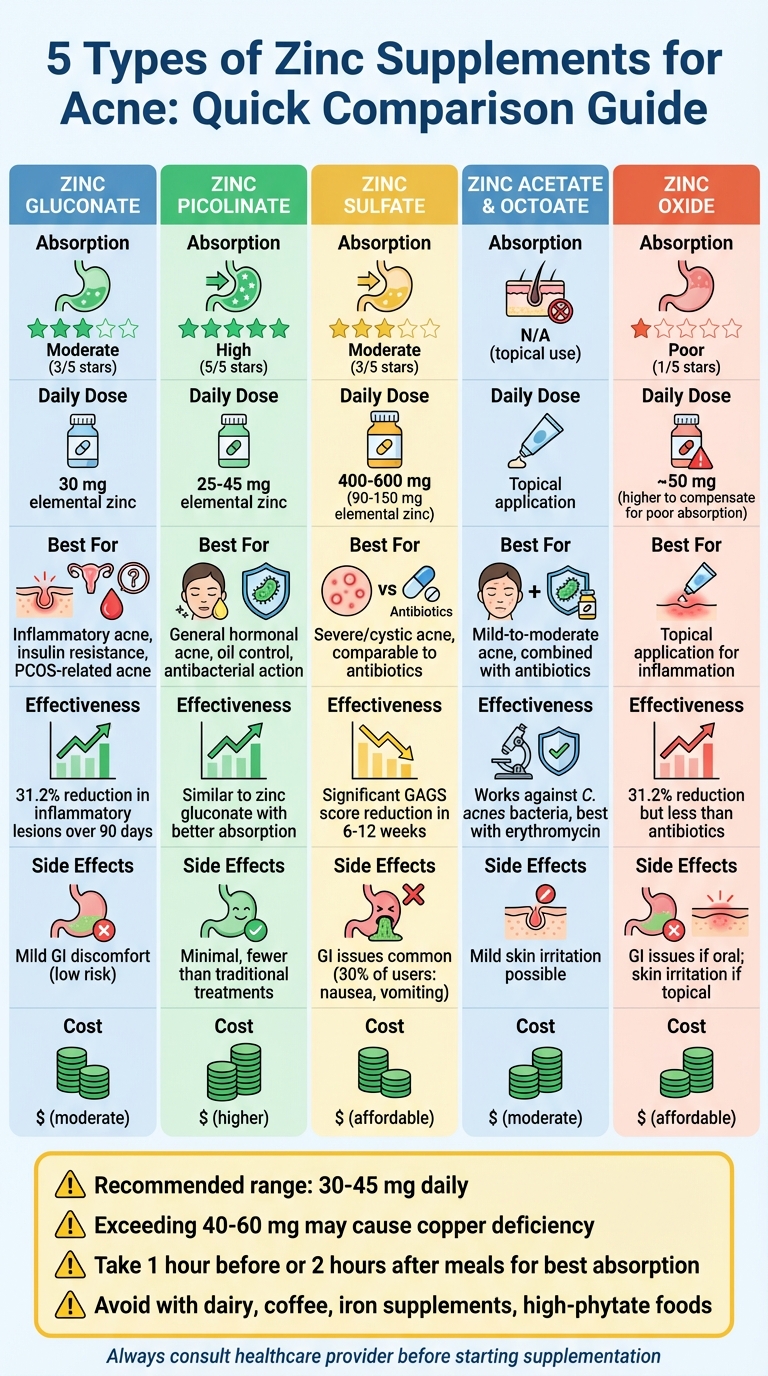
Comparison of 5 Zinc Supplement Types for Acne Treatment
Zinc for Skin Health: Acne, Aging & More | Science-Backed
1. Zinc Gluconate
Zinc gluconate has been widely researched for its role in managing inflammatory acne. It works by inhibiting type I 5-alpha-reductase, an enzyme that converts testosterone into DHT - a more potent androgen responsible for stimulating excess oil production. Knowing how this form of zinc is absorbed and utilized by the body can help optimize its effectiveness.
Absorption and Bioavailability
Several factors can influence how well zinc is absorbed. Things like oral contraceptives, doxycycline, high sugar consumption, gastrointestinal inflammation, and phytates (found in grains) can interfere with absorption. On the other hand, animal-based foods like oysters, red meat, and poultry can enhance zinc absorption. These factors are not unique to zinc gluconate but apply to other zinc forms as well.
Effectiveness for Hormonal Acne
Research shows that zinc gluconate can significantly reduce inflammatory acne lesions and improve insulin sensitivity, earning it a SORT grade of B. It appears particularly useful for acne linked to insulin resistance, such as in cases of PCOS. One clinical study even compared zinc gluconate to minocycline hydrochloride for inflammatory acne vulgaris and found their effectiveness to be similar. Its moderate bioavailability, combined with its ability to target both inflammation and insulin sensitivity, makes zinc gluconate a strong option for treating hormonal acne.
"Zinc is a promising alternative to other acne treatments owing to its low cost, efficacy, and lack of systemic side effects." – Jessica Cervantes, University of Miami Miller School of Medicine
Dosage Recommendations
For inflammatory acne, a daily dose of 30 mg of elemental zinc in the form of zinc gluconate is recommended. However, prolonged use of high doses should be avoided to prevent nutrient imbalances.
Common Side Effects
Zinc gluconate is generally well-tolerated, but some people may experience mild gastrointestinal discomfort. At very high doses, it can lead to side effects like anemia, muscle cramps, or suppressed immune function. If symptoms like nausea or vomiting occur, it could indicate sensitivity to zinc or an excessive dose. In such cases, consulting a healthcare professional is advisable.
Next, we’ll explore zinc picolinate, another form of zinc known for its high bioavailability.
2. Zinc Picolinate
Zinc picolinate is created by combining zinc with picolinic acid, which helps improve its absorption. This form of zinc has been studied for its ability to increase serum zinc levels, particularly in individuals prone to acne who often show lower zinc levels. Compared to zinc gluconate, zinc picolinate offers similar benefits, with some research suggesting it may have better absorption. This enhanced bioavailability might give it an edge over other zinc forms we've previously discussed.
Absorption and Bioavailability
Different zinc formulations are continually being studied to understand their absorption rates and impacts on skin health. Like other forms of zinc, the absorption of zinc picolinate can be reduced by foods high in phytates, such as legumes and grains, as well as proteins and dairy products. To make the most of supplementation, it's essential to consider these dietary interactions and time your intake accordingly.
Effectiveness for Hormonal Acne
Zinc picolinate’s strong absorption profile makes it an effective option for addressing hormonal acne. It works by reducing sebum production through the inhibition of type I 5-alpha-reductase, a key contributor to acne. Additionally, it has antibacterial properties that target P. acnes, a bacteria linked to acne development. Research indicates that zinc picolinate can be used on its own or alongside other acne treatments, offering flexibility in managing breakouts.
"Zinc is effective for the treatment of acne, particularly at decreasing the number of inflammatory papules, when used as monotherapy or as an adjunctive treatment." – Brittany E. Yee et al.
Dosage Recommendations
For acne treatment, clinical trials typically use 25–45 mg of elemental zinc daily. While studies on zinc picolinate vary in their specific dosages, these amounts have shown noticeable improvements in reducing inflammatory acne. However, it’s important to avoid prolonged high doses, as they may lead to secondary copper deficiency.
Common Side Effects
Zinc picolinate has a safety profile comparable to other forms of zinc, with fewer severe side effects than many traditional acne treatments. This makes it an appealing option for those looking for a gentler approach to managing acne. Still, it’s always wise to monitor how your body responds and consult a healthcare provider before starting any supplementation.
3. Zinc Sulfate
Zinc sulfate is often recognized as one of the more effective zinc supplements for addressing acne, particularly inflammatory lesions. It works by regulating sebum production, inhibiting the growth of P. acnes bacteria, and modulating 5α-reductase activity to reduce oil production linked to hormonal changes .
Effectiveness for Hormonal Acne
Research shows that zinc sulfate can be as effective as antibiotics for managing mild to moderate acne. For instance, a study revealed that taking 400 mg of zinc sulfate daily for 12 weeks significantly reduced Global Acne Grading System (GAGS) scores, with results comparable to lymecycline.
Dr. Ersilia Tolino from Sapienza University of Rome highlighted:
"Our study suggests that zinc sulphate is a valid alternative therapeutic approach in the treatment of mild to moderate papulopustular acne relative to lymecycline in terms of clinical efficacy, tolerability, and the occurrence of side effects."
Unlike antibiotics, zinc sulfate does not contribute to bacterial resistance and is considered safe for use during pregnancy. Most users notice visible improvement within 6–8 weeks, with maximum benefits typically seen around 10–12 weeks. To achieve the best results, following proper dosage guidelines is essential.
Dosage Recommendations
The recommended dosage for zinc sulfate ranges from 400 to 600 mg daily, which provides approximately 90 to 150 mg of elemental zinc. Dr. Erum N. Ilyas, MD, CEO and Founder of Amber Moon, advises this dosage range for optimal outcomes.
For better absorption, take zinc sulfate on an empty stomach - at least 1 hour before or 2 hours after meals. Avoid pairing it with dairy, coffee, or iron supplements, as these can interfere with absorption. Following these instructions ensures both effectiveness and safety.
Common Side Effects
While zinc sulfate offers many benefits, it can cause gastrointestinal side effects more frequently than other forms, like zinc gluconate. Around 30% of users report symptoms such as nausea, vomiting, diarrhea, stomach cramps, or a metallic taste. If these issues arise, taking zinc sulfate with food may help, though it could slightly reduce absorption. Starting with a lower dose and gradually increasing it can also ease discomfort. Additionally, prolonged high doses of zinc may interfere with copper absorption, so it’s important to monitor overall mineral intake.
sbb-itb-6dba428
4. Zinc Acetate and Zinc Octoate
Zinc acetate and zinc octoate are designed primarily for topical application, unlike other zinc forms commonly taken orally. These topical versions are often combined with antibiotics like erythromycin to manage mild-to-moderate inflammatory acne. Let’s explore how these forms address hormonal factors contributing to acne.
Effectiveness for Hormonal Acne
Both zinc acetate and zinc octoate play a role in regulating acne-related hormones. They inhibit Type I 5-alpha-reductase, which helps lower DHT-driven sebum production. Zinc ions also act directly in the skin to block this enzyme. Additionally, they reduce pore blockages by suppressing the IGF-1 pathway, much like other zinc forms.
Topical zinc acetate has shown effectiveness against Cutibacterium acnes, the bacteria linked to acne. It works well on its own and even better when combined with erythromycin. Staci Brandt, PA-C MSMR MBA from Galderma Laboratories, highlights zinc’s benefits:
"The preponderance of evidence suggests zinc has antibacterial and anti-inflammatory effects and that it may decrease sebum production."
While these mechanisms are promising, it’s essential to consider potential side effects.
Common Side Effects
Topical use of zinc acetate may lead to mild skin irritation in some cases. When taken orally, zinc can cause nausea, vomiting, or diarrhea. Exceeding 40 mg daily increases the risk of copper deficiency and other health concerns.
If taking zinc orally, avoid combining it with foods high in phytates and ensure at least a 4-hour gap between zinc and antibiotics.
5. Zinc Oxide
Absorption/Bioavailability
When it comes to absorption, zinc oxide doesn't perform as well as chelated forms like zinc picolinate. Dr. Bryan Do, D.O., sheds light on this limitation:
"Zinc oxide is a mineral form of zinc which is poorly absorbed. There are two ways to overcome this problem... The first is to simply provide an excess of zinc oxide - a portion of the poorly absorbed zinc will end up getting absorbed."
To address this, many zinc oxide supplements are formulated with higher doses - often around 50 mg - to compensate for its lower absorption rate. However, this reduced bioavailability can affect how effective it is in treating acne.
Effectiveness for Hormonal Acne
Despite absorption challenges, zinc oxide still plays a role in managing hormonal acne. It works by targeting the IGF-1 pathway and inhibiting 5-alpha-reductase, actions that help reduce pore clogging and control sebum production.
While oral zinc oxide has shown potential, topical zinc oxide creams haven't been as effective for acne treatment. Clinical trials reveal that zinc supplementation led to a 31.2% reduction in inflammatory lesions over 90 days. However, this improvement was less pronounced compared to antibiotics. Jessica Cervantes from the University of Miami Miller School of Medicine highlights its benefits:
"Zinc is a promising alternative to other acne treatments owing to its low cost, efficacy, and lack of systemic side effects."
Common Side Effects
Oral zinc oxide can cause some gastrointestinal issues, such as nausea, vomiting, diarrhea, and abdominal pain. Taking more than 40 mg per day may also lead to copper deficiency. For topical use, mild skin irritation or redness can occur.
To minimize these side effects, stick to the recommended dosages and avoid foods high in phytates - like beans and whole grains - which can interfere with zinc absorption.
Pros and Cons of Each Zinc Type
When deciding on a zinc supplement for hormonal acne, it’s important to weigh the benefits and drawbacks of each type. Every form of zinc comes with its own strengths and limitations that can influence how effective it is for your needs.
Starting with zinc picolinate, this form is known for its excellent absorption due to its combination with picolinic acid. That said, its higher bioavailability also means it tends to cost more to produce. Zinc gluconate provides a good balance - it’s moderately absorbed and has been shown to reduce inflammatory acne lesions by 31.2% over three months, though this is less effective compared to minocycline, which achieves a 63.4% reduction. Zinc sulfate, on the other hand, is often recommended for severe or cystic acne but can lead to unpleasant gastrointestinal issues like nausea, vomiting, and diarrhea.
Zinc oxide isn’t absorbed well by the body, so it requires higher doses to achieve its intended effects when taken orally. Meanwhile, zinc acetate is mostly used in topical treatments and often combined with antibiotics like erythromycin. However, it usually needs to be paired with other agents to deliver noticeable results.
The recommended daily intake of elemental zinc is 25–45 mg, but exceeding 60 mg can lead to copper deficiency, which may lower HDL cholesterol levels and weaken the immune system. To reduce the likelihood of side effects - especially with zinc sulfate - it’s best to take these supplements with food.
For those dealing with PCOS or insulin resistance-related hormonal acne, zinc’s ability to regulate hormones can be particularly helpful. However, keep in mind that certain medications, like oral contraceptives and doxycycline, can interfere with zinc absorption and may worsen a deficiency.
Conclusion
Selecting the right zinc supplement for managing hormonal acne largely depends on your individual needs and how well you tolerate different forms of zinc. Zinc gluconate is often a go-to option for general acne management, thanks to its good absorption and a lower likelihood of causing stomach discomfort. If you're dealing with severe inflammatory acne, zinc sulfate might be more effective, although it does come with a higher chance of nausea. For those looking for topical relief, zinc oxide can be applied directly to inflamed areas to help soothe the skin. These choices align with the comparisons discussed earlier.
A daily intake of 30–45 mg of zinc is commonly recommended for acne support. Research has shown that people with acne often have lower zinc levels, making supplementation helpful. It's important to stick to this dosage range to ensure effectiveness while avoiding side effects like reduced copper absorption or weakened immune function, which can occur with higher doses.
For acne linked to PCOS or insulin resistance, zinc's ability to inhibit 5-alpha-reductase can help reduce DHT levels and improve insulin sensitivity. It can also work alongside prescription treatments. For more information on evidence-based approaches to PCOS-related acne, check out Oana Health.
Before starting any zinc supplement, make sure to consult your healthcare provider - especially if you're taking medications that might interfere with zinc absorption.
FAQs
What are the possible side effects of using zinc supplements to treat acne?
Zinc supplements are often used to address acne, but they can sometimes come with side effects. You might experience nausea, stomach upset, or even a metallic taste lingering in your mouth. Additionally, taking high doses over a long period can potentially cause a copper deficiency, which could impact your overall well-being.
To stay safe, stick to recommended dosages and check in with a healthcare provider before adding zinc to your routine. This way, you can ensure it’s both safe and suited to your individual needs.
What are the different types of zinc supplements, and how do they help with acne?
Zinc supplements are available in different forms, with zinc gluconate and zinc picolinate being two popular choices for addressing acne. Zinc gluconate is often recognized for its antibacterial and anti-inflammatory effects, which can help diminish acne lesions. Meanwhile, zinc picolinate is frequently noted for its higher absorption rate, making it a potentially better option for those looking to maximize zinc's benefits.
Research indicates that zinc, whether taken as a supplement or applied to the skin, may help combat acne by reducing inflammation and fighting bacteria. However, individual responses can vary, and the scientific understanding of its effectiveness continues to develop. If you're thinking about using zinc supplements for acne, it's a good idea to consult a healthcare provider to find the option that works best for you.
Can zinc supplements affect other medications or your diet?
Yes, zinc supplements can interact with certain medications and dietary factors, so it’s important to use them carefully, especially if you're taking them for acne or other health concerns. For instance, zinc can compete with some antibiotics, like tetracyclines and quinolones, reducing their absorption and effectiveness. Long-term use of high doses of zinc can also interfere with copper absorption, which might lead to a copper deficiency over time.
Your diet plays a role too. Foods like whole grains and legumes contain phytates - compounds that can bind to zinc and make it harder for your body to absorb. To maximize the benefits of your zinc supplement, it’s a good idea to take it separately from these foods or medications. Always consult your healthcare provider for personalized advice to avoid any potential complications.