
AI Tools for Early Alopecia Detection
Early detection of hair loss is now possible with AI tools that analyze scalp images with high precision. These tools identify subtle changes, such as follicle miniaturization, often missed by the human eye. Here's what you need to know:
- Why it matters: Androgenetic alopecia (AGA) affects 50% of women and often goes unnoticed until significant hair thinning occurs.
- How AI helps: AI systems use machine learning to detect early signs of hair loss, achieving up to 99.2% accuracy.
- Top tools: Smartphone apps like Hairscope and Alopexia offer quick evaluations, while professional systems provide detailed, clinical-grade diagnostics.
- Limitations: Smartphone tools are convenient but lack the resolution of professional-grade systems, which can detect microscopic changes.
AI-powered platforms are transforming hair loss detection, making it easier to start early treatment and track progress over time.
HairMetrix™: Artificial Intelligence for Hair Loss Diagnosis and Tracking
How AI Improves Early Detection of Alopecia
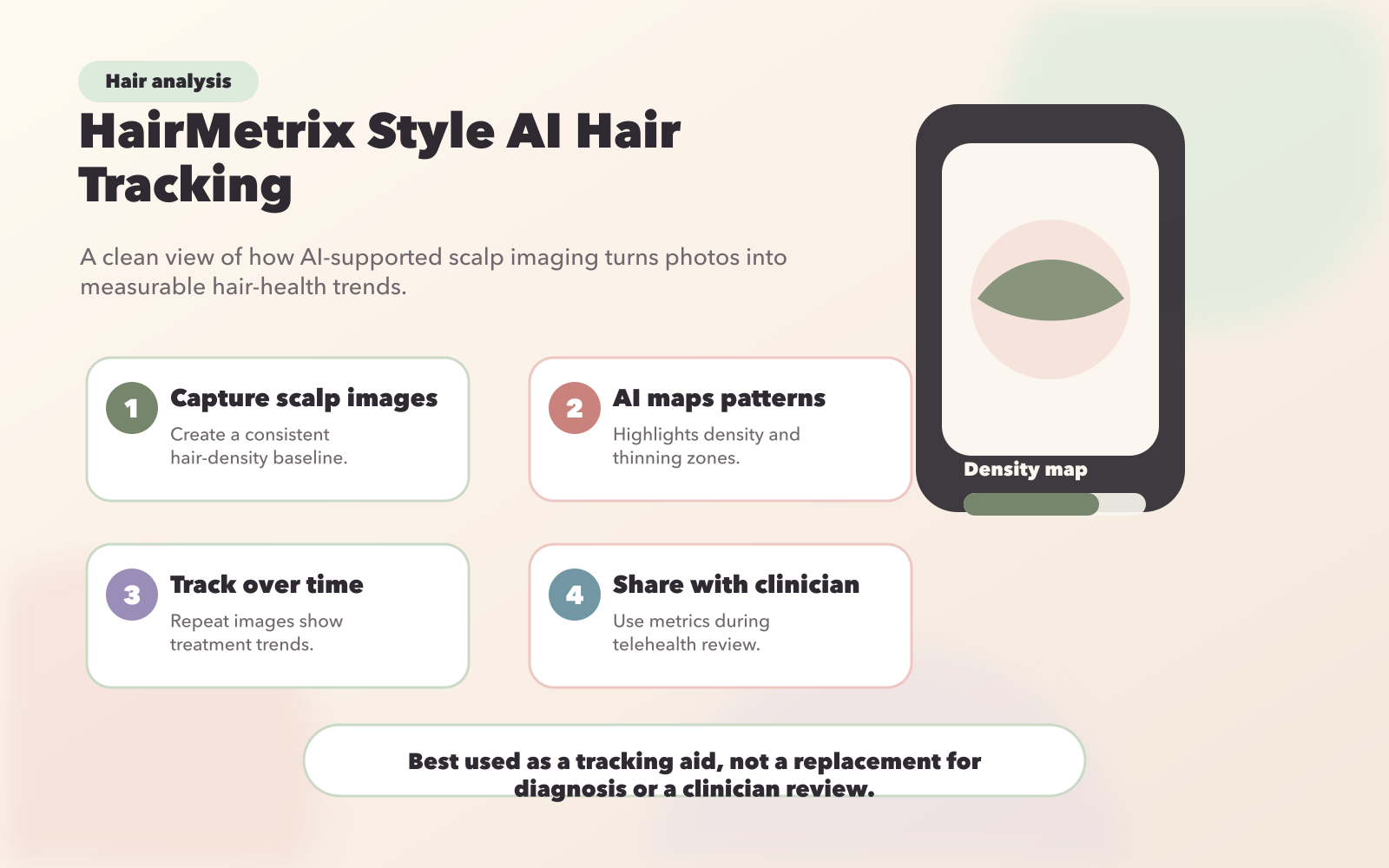
AI-driven tools are changing how androgenic alopecia is detected by automating tasks that go beyond the limits of manual assessments. These tools use machine learning to analyze scalp images, identifying microscopic features like vellus hairs (miniaturized follicles), empty follicles, and single hair follicular units - details too subtle and numerous for manual evaluation.
AI-Powered Scalp Imaging and Analysis
Modern AI platforms can process vast amounts of visual data from a single image, comparing it against reference databases containing over 50,000 examples of hair-coverage variations. This pixel-level analysis creates detailed maps of hair density and coverage patterns, often detecting thinning that isn’t noticeable in a mirror. Machine learning algorithms then classify the severity of hair loss, enabling precise, data-backed diagnoses.
In July 2023, researchers at the Sapienza University of Rome introduced an SVM algorithm that used Trichoscale Pro® software to analyze images from 200 androgenic alopecia patients. By measuring vellus hair and empty follicles, the system distinguished between mild and moderate-to-severe cases with 90.0% accuracy in test datasets. It also generated a severity index (ranging from 50% to 100%) to guide treatment planning. This kind of detailed imaging lays the groundwork for continuous and accurate monitoring of hair loss.
AI Algorithms for Tracking Hair Loss Over Time
AI doesn’t just provide a one-time analysis - it tracks changes over time. Advanced systems like Mask R-CNN use area ratio metrics to compare hair loss regions against healthy scalp areas, moving away from traditional length-based measurements. This method has achieved a 97.6% precision rate in identifying hair loss regions. Digital dashboards allow patients and clinicians to view time-stamped snapshots, making it easier to evaluate treatment effectiveness and adjust androgen management therapies accordingly. By identifying early changes, these tools help ensure timely and effective interventions.
"We believe our SVM model could be of great support for dermatologists in the management of AGA, especially in better assessing disease severity and, thus, in prescribing a more appropriate therapy." - Marco Di Fraia, Dermatology Clinic, Sapienza University of Rome
Better Accuracy in Diagnosis
AI also improves diagnostic accuracy. Traditional grading methods yield reproducibility rates of 65–78%, while AI systems consistently achieve higher precision. For example, machine learning models for staging androgenic alopecia have shown a 94.3% accuracy during training and 90.0% accuracy in testing. Some smartphone-based AI tools have reached a 92% detection accuracy, while ensemble deep learning models have achieved 95.75% accuracy with an F1 score of 87.05% in diagnosing hair diseases. By replacing subjective visual assessments with data-driven analysis, AI minimizes variability between observers and identifies follicle miniaturization early - when treatment can be most effective.
Top AI Tools for Early Alopecia Detection
AI is making significant strides in the early detection of alopecia, offering tools that combine advanced imaging and data analysis. From simple smartphone apps to more complex clinical systems, these tools provide quick, data-driven insights that are changing the way hair loss is identified and monitored.
Hairscope takes advantage of AI-powered image analysis to measure hair density and scalp visibility using just a smartphone camera. With over 25,000 hair scans analyzed and adoption by more than 100 clinics nationwide, it's becoming a trusted tool. Users simply photograph their scalp, and the platform quickly evaluates density loss and thinning areas. Interestingly, it highlights that by the time thinning is visible in a mirror, a significant amount of hair density may already be lost.
Alopexia uses a highly detailed approach, extracting more than 100,000 data points from each scalp photo and comparing them against a reference dataset of 50,000 examples. It generates a free cosmetic report that identifies thinning patterns, which users can share with licensed doctors. To ensure privacy, the system automatically masks facial features during analysis.
TrichoAI relies on a database of over 20,000 images to assess hair loss stages in less than 10 seconds. It provides users with an evaluation and treatment guidance at no cost. Dr. Ahsan Khan, a dermatologist involved in developing the tool, shared his experience:
"I was skeptical that an AI could match a dermatologist. However, as I developed this tool, I found its accuracy rivals that of a skilled dermatologist".
Órga Trichology offers a "Living Profile" feature that tracks scalp health over time. By combining AI analysis with professional trichoscopy, it enables users to monitor treatment progress with measurable data. Dr. Sarah, a user of the platform, shared her perspective:
"The accuracy and consistency of Órga Trichology's platform has transformed my practice. My clients love seeing their progress tracked objectively with real data, not guesswork".
These platforms are equipping both clinicians and patients with powerful diagnostic tools, making early alopecia detection more accessible and precise.
Accessibility and Limitations of AI Tools
Smartphone vs Professional AI Tools for Alopecia Detection Comparison
Smartphone-Based vs. Professional-Grade Tools
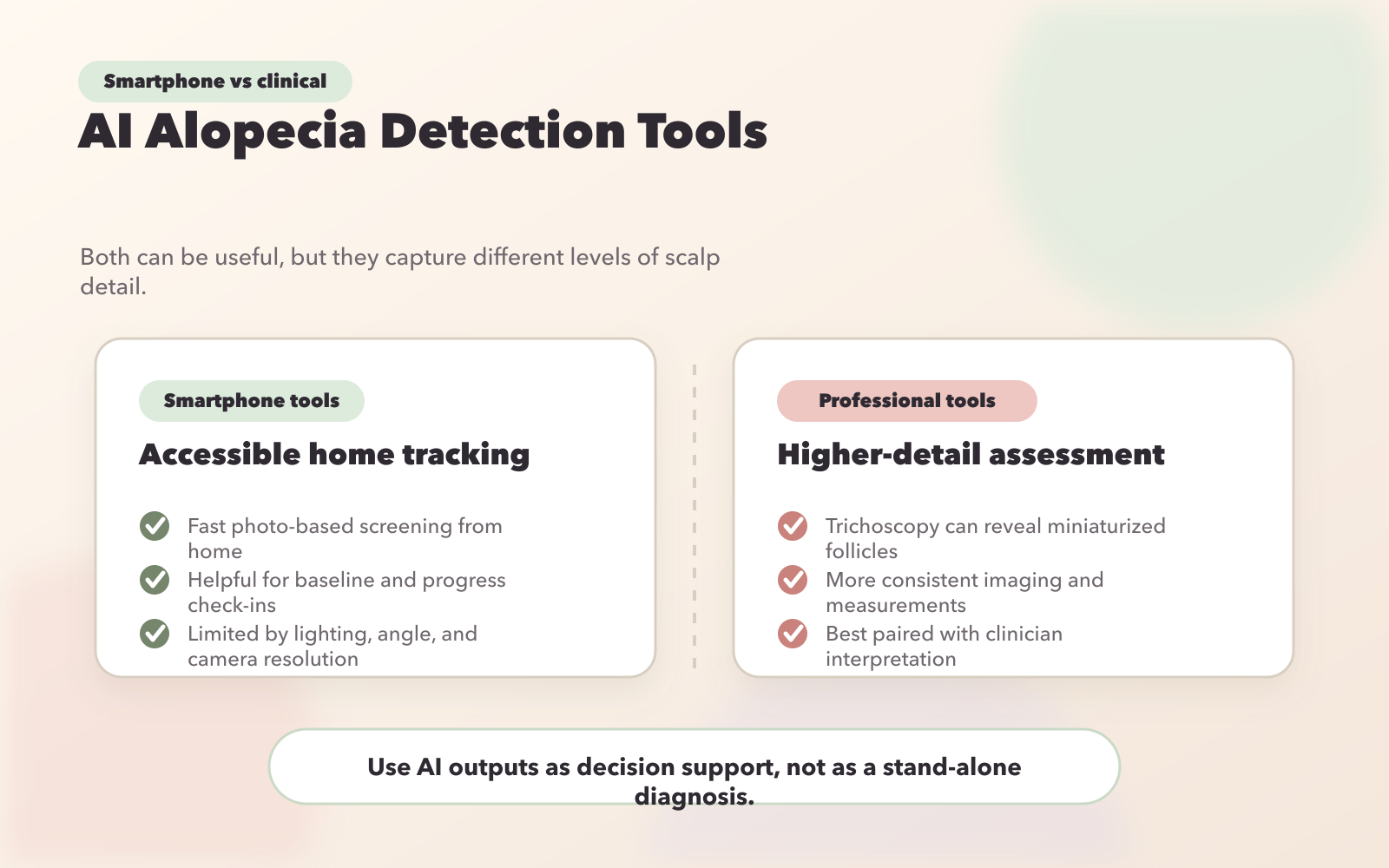
AI tools for detecting hair loss generally fall into two categories: smartphone-based apps for home use and professional-grade systems requiring clinical equipment. The gap between the two isn't just about convenience - it’s about how much detail they can capture.
Smartphone apps like Hairscope and Alopexia make hair loss detection incredibly easy. With just your phone's camera, you can scan your scalp in seconds, and many apps even offer free reports. However, smartphone cameras have their limits. They can’t capture structures smaller than 200 μm, while early signs of hair loss - like follicular miniaturization - require a resolution between 20–50 μm to detect. This means smartphone tools are great for spotting thinning patterns but might miss the earliest, microscopic changes of alopecia. Here’s a quick comparison:
| Feature | Smartphone-Based AI | Professional-Grade AI |
|---|---|---|
| Equipment Needed | Standard smartphone | 32.5 MP camera, specialized lenses, LED lighting |
| Resolution Limit | >200 μm | 20–50 μm (detects early changes) |
| Accuracy | ~92% detection | ~97% operator agreement |
| Cost | Free to low-cost | High (equipment + professional fees) |
| Primary Use | Pattern awareness and tracking | Diagnostic support and quantification |
On the other hand, professional-grade AI systems use advanced equipment like 32.5 MP cameras with 60 mm lenses and controlled LED lighting. These tools are highly precise, offering approximately 97% operator agreement in clinical settings. They can measure exact biological details like hair shaft diameter and follicular density, making them ideal for accurate diagnostics. Of course, this level of accuracy comes with the need for clinical visits and specialized hardware, which aren’t accessible to most people at home.
Barriers to Adoption
Even with these advancements, several factors limit the widespread use of AI for hair loss detection. For at-home tools, the biggest hurdle is image quality. Smartphone AI relies entirely on user-controlled conditions - bright lighting, steady hands, and preparing for a telehealth visit by ensuring hair is clean and free of styling products. Poor lighting or shaky cameras can throw off results, and without standardized imaging protocols, consistency becomes a challenge.
Cost is another significant barrier when moving beyond basic scans. While apps like Alopexia provide free AI visualization and consultations with doctors, accessing professional-grade analysis or the latest clinical research often comes with a hefty price tag. For example, institutional subscriptions for advanced AI dermatology research start at around $130 per month. Additionally, patients using direct-to-consumer platforms may face higher medication costs; treatments like finasteride can be 1.5 to 2.3 times more expensive than through traditional pharmacies.
Perhaps the most important limitation is that most consumer AI tools are classified as "observational" rather than diagnostic. As Alopexia explains, "Alopexia AI is an observational assessment tool for users, not a diagnostic or therapeutic system". This means users still need a licensed physician for a formal diagnosis and treatment. Interestingly, 55.4% of patients using direct-to-consumer platforms for hair loss had never consulted a physician about their condition before. This raises concerns about people relying on these tools without proper medical guidance, potentially missing underlying health issues that require different treatments.
These challenges highlight the need for ongoing improvements to make hair loss detection more accurate, accessible, and reliable for everyone.
sbb-itb-6dba428
Comparison of AI Tools for Alopecia Detection
Comparison Table
The following table provides a clear comparison of some of the most prominent AI tools for detecting alopecia. These tools vary significantly in terms of accuracy, equipment requirements, and practical use, making it essential to weigh their pros and cons before selecting the right one for your needs.
Today’s options range from user-friendly smartphone apps that can be used at home to advanced systems requiring professional-grade cameras and clinical environments. Understanding these differences is key to setting realistic expectations.
A study conducted at Shenzhen People's Hospital (Sept 2023–Feb 2024) used Mask R-CNN on 761 images from 257 patients, captured with a Canon EOS 90D camera. The results? A 97.6% precision rate in identifying hair loss regions by calculating the ratio of hair loss to healthy hair areas. Published in Scientific Reports, the study noted, "The area ratio metric outperformed the BASP length ratio, particularly in higher MPHL grades, offering a more reliable and objective framework for hair loss classification". This finding highlights the balance between diagnostic accuracy and accessibility, paving the way for more tailored care. This is particularly relevant for women exploring emerging therapies for menopause hair loss that require precise monitoring.
Here’s a detailed comparison of the leading tools:
| AI Tool / Framework | Accuracy Metric | Required Device | Measured Metric | Limitations |
|---|---|---|---|---|
| Hairscope | 92% Accuracy | Smartphone | Density, thinning, scalp visibility | Sensitive to lighting and hair products, which can affect early detection consistency. |
| ASI Framework (Mask R-CNN) | 97.6% Precision | Professional DSLR | Area ratio (Loss vs. Healthy) | Limited resolution compared to microscopic imaging. |
| AI-ScalpGrader | 87.3%–91.3% Accuracy | Portable device + App | 10 scalp conditions | Requires specific portable imaging hardware, restricting home accessibility. |
| Alopexia AI | Observational (N/A) | Smartphone | Pattern recognition/Coverage | Non-diagnostic; requires doctor review for clinical decisions. |
| Mittal et al. (CNN) | 98% Accuracy | Digital Imaging | Alopecia Areata detection | Focused solely on Alopecia Areata, limiting application to general thinning. |
One key challenge for AI models is a 10–19% confusion rate when distinguishing between intermediate hair loss stages (e.g., Grade III versus IV), largely due to overlapping recession patterns. Additionally, most tools exclude the most advanced stage (Hamilton-Norwood Grade VII) because such cases are underrepresented in clinical datasets, reducing their effectiveness for late-stage patients.
Modern AI tools, especially those using Convolutional Neural Networks (CNNs), have significantly improved accuracy compared to older algorithms. This shift toward deep learning has enhanced pattern recognition in scalp imaging, making these tools more reliable for detecting hair loss.
Combining AI Detection with Telehealth Services
AI's ability to accurately diagnose alopecia becomes even more impactful when paired with professional medical oversight. With over 80 million Americans experiencing hair loss, many hesitate to seek treatment due to concerns about cost or embarrassment. Telehealth platforms are stepping up, offering private and convenient access to licensed physicians who can prescribe treatments based on AI-generated insights.
Here’s how it works: AI tools analyze key metrics like temple recession or vertex thinning, providing an objective baseline that patients can share during virtual consultations. Armed with this data, doctors can better understand the patient's condition and recommend tailored treatments. The process typically involves an hormonal hair loss symptom assessment, a virtual consultation with a licensed physician, and a digital prescription sent directly to a local pharmacy. Platforms like Oana Health are leading the way, streamlining this integration into their telehealth services.
Oana Health's Approach to Hair Loss Treatment
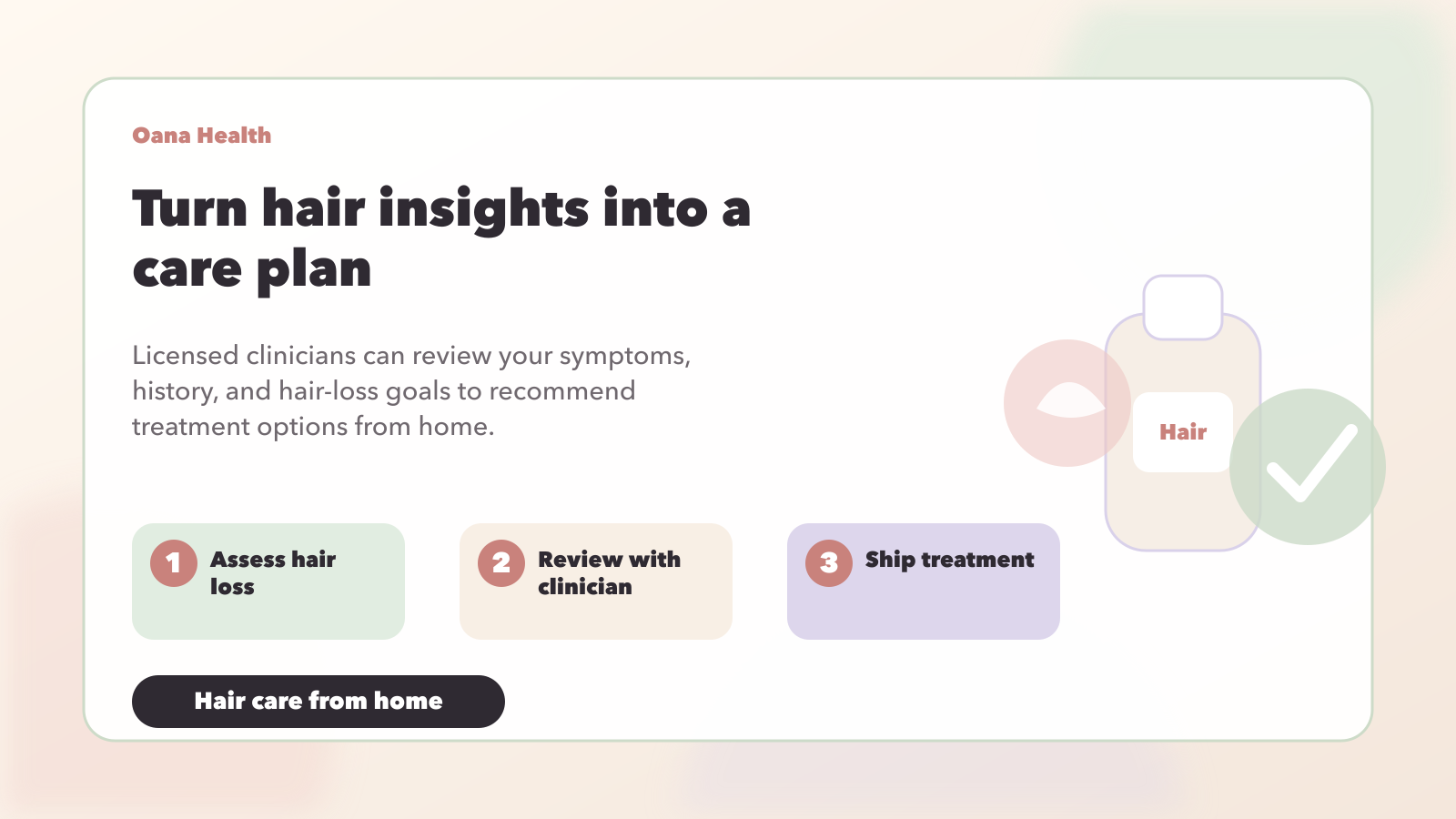
Oana Health uses AI-generated metrics to personalize hair loss treatments for each patient. Their telehealth platform connects patients with licensed physicians who review digital health data to prescribe treatments tailored to individual needs. The platform is particularly adept at addressing conditions like PCOS, a common cause of hair thinning, by linking patients with providers experienced in managing hormonal imbalances.
Oana Health offers a range of treatments, including:
- Oral Minoxidil ($25/month)
- Spironolactone ($14/month)
- Topical Spironolactone ($43/month)
- Hair Plus Plus ($40/month)
All medications are shipped directly to patients at no additional cost, with prescriptions fulfilled by FDA-regulated, independently owned medical practices.
The Role of Personalized Care in Hair Loss Management
Combining AI diagnostics with telehealth creates a long-term, data-driven approach to hair recovery. For example, tools like Hairloss AI generate a Hair Health Score (on a scale of 0–100), giving patients a measurable baseline to monitor their progress before and during treatment.
This method is especially important because medications like Finasteride and Minoxidil often take 3–6 months to produce visible results. Consistency is key, with 90% of treatment success relying on sticking to the prescribed regimen. Telehealth platforms make this easier by offering automated refills and regular follow-ups. Meanwhile, AI tools provide detailed reports and heatmaps, offering insights far beyond what a standard video consultation can achieve. To ensure accurate results when using AI scanners, patients should always scan clean, dry hair free of any styling products.
Conclusion
AI tools are changing the game when it comes to detecting alopecia early. These advanced systems can analyze over 100,000 data points from a single image, achieving detection accuracy rates as high as 92%. They excel at spotting follicle miniaturization - exactly when treatments like Minoxidil and Spironolactone are most effective.
The impact grows even stronger when AI teams up with telehealth services. AI delivers precise metrics like hair density counts and area ratio analysis, while licensed physicians review this data to confirm diagnoses and prescribe custom treatments. This partnership addresses common hurdles that prevent 55.4% of hair loss patients from seeking medical help, such as embarrassment, high costs, and inconvenient appointment scheduling.
"In modern medicine, awareness is the first step toward better outcomes - and that's exactly what we aim to provide along with a professional diagnosis." - Dr. Josette B. Murard, Medical Doctor, Alopexia
Platforms like Oana Health showcase how AI-powered scalp analysis, combined with medical expertise, can provide solutions tailored to individual needs. For instance, hormonal conditions like PCOS and hair thinning, can be addressed with targeted treatments. Options such as Oral Minoxidil at $25/month or Topical Spironolactone at $43/month are shipped directly to patients’ homes, making the process both private and convenient.
This combination of AI and telehealth is reshaping hair loss management. AI offers early detection and objective tracking that traditional methods often overlook, while telehealth platforms ensure personalized care and continuous monitoring. Together, they pave the way for timely intervention, improved outcomes, and seamless treatment experiences.
FAQs
How can I take scalp photos that AI can analyze accurately?
To get precise AI analysis of your scalp photos, follow these tips:
- Use proper lighting: Take pictures in a well-lit setting to minimize shadows and ensure clear visibility.
- Capture multiple angles: Include shots of the front, back, sides, hairline, crown, and temples for a complete view.
- Be consistent: Keep your head steady and stick to the same angles for every photo session.
- Use a clear camera: Make sure your images are sharp and not blurry, so scalp details are easy to see.
- Avoid obstructions: Remove hats, scarves, or any styling products that could block your scalp.
Can an AI hair-loss scan replace a dermatologist’s diagnosis?
AI-powered hair-loss scans offer a quick way to spot early signs of hair thinning and track changes over time. These tools work by analyzing images to assess hair density and detect potential issues. However, their accuracy can be influenced by factors like lighting and image quality. While they’re useful for gaining initial insights, they’re no substitute for a dermatologist. A licensed healthcare professional is still essential for a thorough diagnosis and creating a personalized treatment plan.
How often should I rescan to track treatment progress?
It’s a good idea to rescan your scalp every 3 to 6 months. This interval gives enough time to notice any changes in hair density or scalp condition, making it easier to track how well your treatment is working.