
Best Oral Contraceptives for PCOS Management
Polycystic Ovary Syndrome (PCOS) affects 6% to 10% of women of reproductive age in the U.S., causing symptoms like irregular periods, acne, and excess hair growth due to hormonal imbalances. Combined oral contraceptives (COCs) are a common treatment to regulate these hormones, improve menstrual cycles, and reduce androgen-related symptoms. Here’s a quick look at five commonly prescribed options:
- Yaz: Contains drospirenone and ethinyl estradiol; effective for acne and hirsutism but has a higher risk of blood clots.
- Yasmin: Similar to Yaz but with a 21/7 dosing schedule; reduces bloating and balances hormones effectively.
- Estrostep: Uses norethindrone acetate; moderate results for acne and hair growth but lower clotting risks.
- Ortho-Novum: Includes norethindrone; less effective for acne but safer for those at higher cardiovascular risk.
- Mircette: Features desogestrel; effective for skin issues but has the highest clotting risk.
Quick Tip: Choose based on your priorities - skin improvement, hormonal balance, or minimizing risks. Consult a healthcare provider for a tailored approach.
Birth Control Pills in PCOS Treatment – Benefits, Risks & All You Need to Know
1. Yaz (Drospirenone/Ethinyl Estradiol)
Yaz is often highlighted in managing PCOS due to its unique formulation, which includes 3 mg of drospirenone and 0.02 mg of ethinyl estradiol in a 24/4 regimen - 24 active pills followed by 4 inactive ones. This combination is FDA-approved for contraception, as well as for treating moderate acne and premenstrual dysphoric disorder (PMDD) in women aged 14 and older. Let’s break down how Yaz works to regulate hormones and address PCOS symptoms.
Hormonal Regulation
The key ingredient, drospirenone, is derived from spironolactone and works by blocking androgen receptors while also exhibiting anti-mineralocorticoid activity. Combined with the estrogen component, it increases SHBG (sex hormone-binding globulin) production, suppresses LH secretion, and reduces free testosterone levels. Drospirenone’s anti-androgenic effects are estimated to be about 30% as strong as cyproterone acetate, and a 3 mg dose offers anti-mineralocorticoid benefits equivalent to 25 mg of spironolactone. These hormonal changes are at the heart of Yaz’s effectiveness.
Impact on Acne and Hirsutism
For acne, improvements are usually noticeable within a few months, while hirsutism may take up to six months to show significant changes. The 24/4 dosing schedule can also provide more consistent hormonal levels compared to the traditional 21/7 regimen, potentially enhancing its effectiveness.
Side Effects and Risks
Like any medication, Yaz comes with potential side effects. Common ones include nausea, breast tenderness, headaches, and mood changes, particularly during the first few months of use. However, there are more serious risks to consider. Drospirenone-containing pills, such as Yaz, have been linked to a higher risk of venous thromboembolism (VTE), approximately 1.58 times greater than that of levonorgestrel-based pills. Additionally, drospirenone may increase potassium levels, so potassium levels should be monitored in patients taking ACE inhibitors, NSAIDs, or potassium-sparing diuretics. Women over 35 who smoke are advised to avoid Yaz due to an elevated risk of cardiovascular issues.
These attributes make Yaz a key option in the lineup of oral contraceptives for managing PCOS symptoms.
2. Yasmin (Drospirenone/Ethinyl Estradiol)
Yasmin contains 3 mg of drospirenone and 0.03 mg of ethinyl estradiol in a 21/7 dosing schedule - 21 active pills followed by 7 inactive ones. This setup makes Yasmin a strong option for managing PCOS symptoms, especially when hormonal regulation and anti-androgenic effects are key goals. It offers an alternative to Yaz, with a slightly different regimen that may suit some individuals better.
Hormonal Regulation
Yasmin, like Yaz, helps balance hormones, but its 21/7 format provides a unique dosing structure. The drospirenone in Yasmin works by suppressing LH peaks, boosting SHBG production, and offering anti-mineralocorticoid effects to address hormonal imbalances linked to PCOS. According to Seda Hanife Oguz and Bulent Okan Yildiz from Hacettepe University:
"Drospirenone has anti-mineralocorticoid activity antagonizing the EE-related angiotensinogen increase, in addition to its anti-androgenic effects."
This anti-mineralocorticoid effect can also help reduce water retention and bloating, which are common side effects of other birth control pills.
Benefits for Acne and Hirsutism
Yasmin's anti-androgenic properties make it effective in improving acne and reducing hirsutism. Drospirenone works by blocking androgen receptors and inhibiting the 5-alpha reductase enzyme, which converts testosterone into dihydrotestosterone, a more potent androgen. To see significant improvements in hirsutism, clinical guidelines typically recommend sticking with treatment for at least six months.
Side Effects and Risks
As with other drospirenone-containing pills, Yasmin has a higher risk of VTE, about 1.58 times greater than pills containing levonorgestrel. Monitoring potassium levels is essential if the patient is taking other medications that elevate potassium. Women over 35 who smoke should steer clear of Yasmin due to the heightened cardiovascular risks.
In adolescents with PCOS, a study found that oral contraceptive use led to a 39.7% increase in C-reactive protein and a 14% rise in LDL cholesterol. This highlights the importance of pairing hormonal treatments with lifestyle changes to maintain better metabolic health.
3. Estrostep (Norethindrone Acetate/Ethinyl Estradiol)
Estrostep stands out with its triphasic formulation, offering a different hormonal approach compared to drospirenone-based pills. However, its impact on acne and hirsutism may be less pronounced. This oral contraceptive combines norethindrone acetate and ethinyl estradiol, delivering varying hormone levels throughout the cycle. Despite these fluctuations, overall androgen production remains largely unaffected.
Hormonal Regulation
Estrostep addresses hormonal imbalances in PCOS by leveraging norethindrone acetate to suppress GnRH and prevent LH surges, which reduces ovarian androgen production. Meanwhile, ethinyl estradiol increases SHBG synthesis, effectively lowering free testosterone levels . Additionally, norethindrone may contribute to a reduction in DHT levels by inhibiting 5α-reductase activity.
Efficacy on Acne and Hirsutism
These hormonal shifts can lead to improvements in PCOS symptoms like acne and hirsutism. However, due to its medium androgenic activity, Estrostep’s effectiveness in addressing these issues may be less significant compared to pills with lower-androgenic progestins . Visible benefits often take several months to appear. While Estrostep effectively regulates hormones, its dermatological advantages are moderate when weighed against its risk profile.
Side Effects and Risks
Though Estrostep offers hormonal benefits, it comes with potential metabolic and cardiovascular concerns. Research indicates it may double the risk of metabolic syndrome within just 16 weeks of use. Dr. Legro, a leading researcher, highlighted this finding:
"The risk for developing metabolic syndrome during the 16 weeks of treatment more than doubled in the oral contraceptives group."
In adolescents with PCOS, combined oral contraceptives like Estrostep have been linked to a 39.7% increase in C-reactive protein levels and a 14% rise in LDL cholesterol. Common side effects include nausea, weight gain, headaches, and breast tenderness . Additionally, the risk of venous thromboembolism (VTE) for combined oral contraceptive users is estimated at 8–10 cases per 10,000 woman-years. Women with PCOS already face a 1.5- to 2-fold higher baseline risk of VTE. Those over 35 who smoke should avoid Estrostep due to heightened cardiovascular risks .
Dr. Legro also emphasized the importance of adopting healthy lifestyle habits alongside treatment:
"Lifestyle modification should be recommended for overweight or obese women with PCOS who are taking oral contraceptives, whether or not they are seeking fertility treatment."
sbb-itb-6dba428
4. Ortho-Novum (Norethindrone/Ethinyl Estradiol)
Ortho-Novum combines norethindrone, a first-generation progestin with a relatively higher affinity for androgen receptors, and ethinyl estradiol. Together, these hormones help regulate menstrual cycles by balancing hormone levels.
Hormonal Regulation
Norethindrone works by suppressing the pulsatile release of gonadotropin-releasing hormone (GnRH) from the hypothalamus. This, in turn, reduces the secretion of both follicle-stimulating hormone (FSH) and luteinizing hormone (LH). By suppressing LH, Ortho-Novum limits ovarian androgen production. Ethinyl estradiol further supports hormonal balance by increasing sex hormone-binding globulin (SHBG) levels, which lowers free testosterone. This combination gives Ortho-Novum a hormonal profile distinct from drospirenone-based contraceptives, influencing its effects on skin conditions.
Efficacy on Acne and Hirsutism
Due to norethindrone’s higher androgen receptor activity, Ortho-Novum is less effective for treating acne and hirsutism. Women seeking relief from these symptoms may find this option less suitable. Medical professionals often avoid first- and second-generation progestins for managing hyperandrogenism associated with PCOS. Side effects like weight gain, acne, and increased facial hair are commonly reported, and noticeable improvements may take at least six months of treatment. These variations in response highlight the importance of tailoring contraceptive choices, a topic discussed further in the comparison section.
Side Effects and Risks
Some common side effects include nausea, vomiting, bloating, cramps, breast tenderness, and occasional breakthrough bleeding, which usually subsides within three months. The risk of venous thromboembolism increases to about 8–10 events per 10,000 woman-years. Women over 35 who smoke face heightened cardiovascular risks, including heart attack and stroke. Additionally, Ortho-Novum may cause a slight rise in blood pressure (around 3 to 5 mmHg) and could impact glucose tolerance. This is particularly relevant for PCOS patients who may already be at risk for metabolic syndrome. Given these considerations, choosing Ortho-Novum should involve a thorough evaluation to ensure it aligns with the overall goals of PCOS management.
5. Mircette (Desogestrel/Ethinyl Estradiol)
Mircette combines the third-generation progestin desogestrel with ethinyl estradiol, making it a reliable option for addressing hyperandrogenism.
Hormonal Regulation
Desogestrel works by suppressing gonadotropin-releasing hormone (GnRH), which leads to a reduction in luteinizing hormone (LH) and follicle-stimulating hormone (FSH) levels. This decrease helps limit ovarian androgen production, reducing the risk of ovarian cysts and dominant follicles. At the same time, ethinyl estradiol boosts sex hormone-binding globulin (SHBG) levels, which lowers free testosterone in the body. Desogestrel’s minimal interaction with androgen receptors helps avoid unwanted androgenic side effects.
"Third-generation progestins desogestrel and gestodene are more specific to the progesterone receptor and have neglectable androgen receptor affinity." - Seda Hanife Oguz and Bulent Okan Yildiz
This unique mechanism distinguishes Mircette from other combined oral contraceptives (COCs) mentioned earlier.
Efficacy on Acne and Hirsutism
Thanks to its low androgenic activity, Mircette is effective in treating acne and managing excessive hair growth. Studies show that contraceptives containing desogestrel can reduce hirsutism scores on the Ferriman-Gallwey scale. However, noticeable improvements typically require at least six months of consistent use. For those considering cost, the generic version, often sold as Apri, is priced at approximately $31 per month.
Side Effects and Risks
Like other COCs, Mircette may cause side effects such as nausea, headaches, breast tenderness, and irregular spotting, which usually subside within the first few months. A more serious concern is the increased risk of venous thromboembolism (VTE). Desogestrel is linked to a relative VTE risk of 1.55 to 1.83 compared to second-generation progestins, with an incidence rate of about 8–10 events per 10,000 woman-years. This risk is compounded for individuals with PCOS, as the condition itself raises baseline VTE risk by 1.5 to 2 times.
Additionally, a study on adolescents with PCOS found that oral contraceptive use led to a 14% increase in LDL cholesterol and a 39.7% rise in C-reactive protein levels. Women over 35 who smoke should avoid Mircette due to significantly elevated cardiovascular risks. Ultimately, choosing Mircette should involve a careful evaluation of personal health goals and PCOS management needs.
Comparison of Benefits and Drawbacks
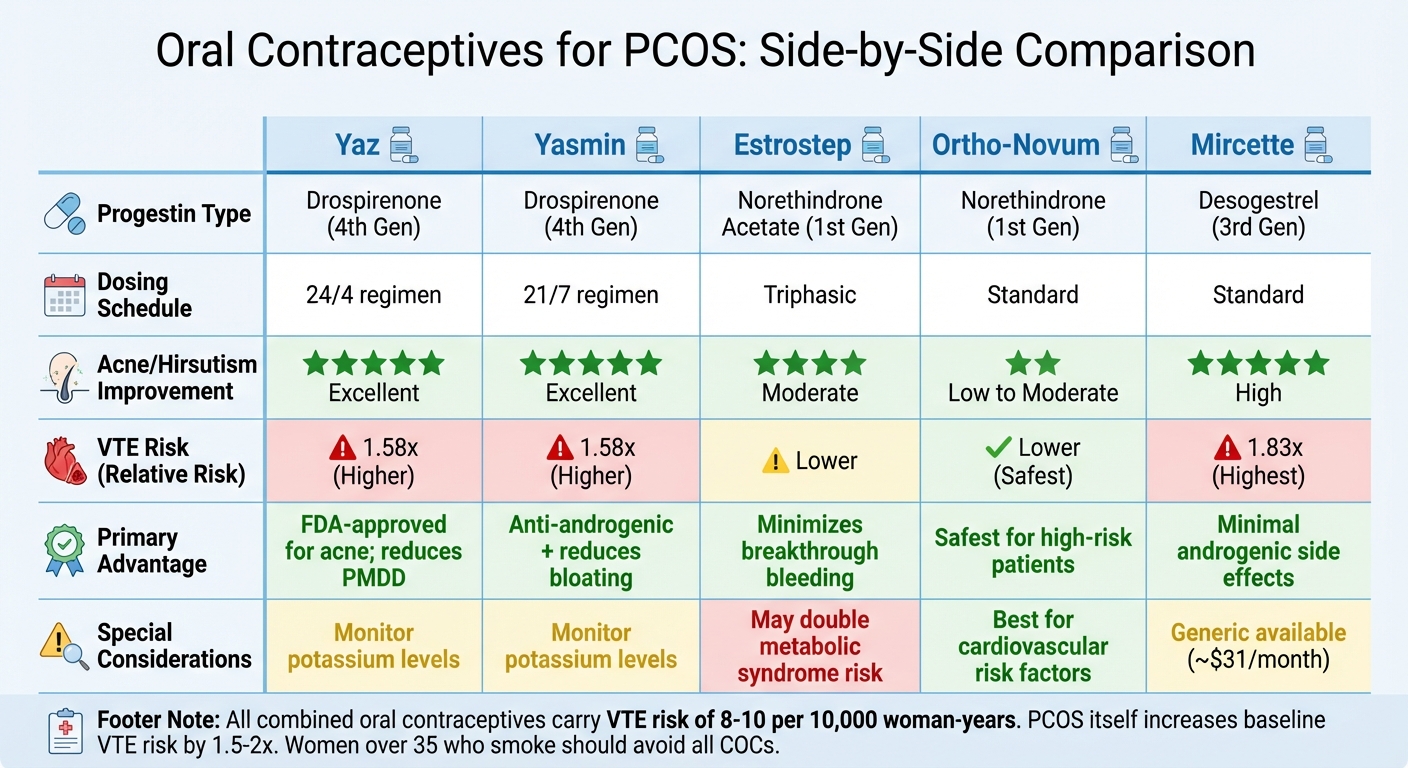
Comparison of 5 Oral Contraceptives for PCOS: Benefits, Risks, and Effectiveness
Choosing the right oral contraceptive involves weighing both the benefits and risks. Yaz and Yasmin are particularly effective for treating acne and hirsutism due to their anti-androgenic ingredient, drospirenone. However, they come with a higher risk of venous thromboembolism (VTE), with a relative risk of 1.58 compared to second-generation pills. Mircette, which contains the low-androgenic progestin desogestrel, also performs well in reducing unwanted hair growth but has the highest VTE risk among the options, with a relative risk of 1.83. On the other hand, Estrostep and Ortho-Novum have safer VTE profiles but offer more modest results for acne and hirsutism due to their androgenic norethindrone content. The table below provides a clear summary of these differences:
| Contraceptive | Progestin Type | Acne/Hirsutism Improvement | Cycle Control | VTE Risk | Primary Advantage |
|---|---|---|---|---|---|
| Yaz | Drospirenone (4th Gen) | Excellent | Good | Higher (RR 1.58) | FDA-approved for acne; 24/4 regimen reduces PMDD |
| Yasmin | Drospirenone (4th Gen) | Excellent | Good | Higher (RR 1.58) | Anti-androgenic with reduced bloating |
| Estrostep | Norethindrone Acetate (1st Gen) | Moderate | Excellent | Lower | Triphasic design minimizes breakthrough bleeding |
| Ortho-Novum | Norethindrone (1st Gen) | Low to Moderate | Good | Lower | Safest VTE profile for high-risk patients |
| Mircette | Desogestrel (3rd Gen) | High | Good | Higher (RR 1.83) | Minimal androgenic side effects |
These comparisons can help guide treatment decisions based on individual needs and health considerations. It's important to remember that PCOS itself increases VTE risk by 1.5 to 2 times the baseline. Additionally, women over 35 who smoke face significantly higher cardiovascular risks and should avoid combined oral contraceptives altogether. Screening for conditions like obesity, hypertension, and glucose intolerance is essential before starting any contraceptive.
For those focused on improving skin and hair symptoms, formulations containing drospirenone or desogestrel are the most effective choices. However, noticeable improvements in hirsutism often require at least six months of consistent use. Women with elevated cardiovascular risks may find first-generation options like Estrostep or Ortho-Novum more suitable, even though they are less effective for hyperandrogenism. It's also worth noting that drospirenone's potassium-sparing properties require caution when used alongside NSAIDs, ACE inhibitors, or spironolactone.
The metabolic effects of these contraceptives also vary. While combined oral contraceptives can raise LDL cholesterol and triglycerides, they generally do not negatively impact glucose metabolism over the short term in patients with PCOS. Considering these factors alongside your specific PCOS profile can help in selecting the most appropriate contraceptive.
Conclusion
The best oral contraceptive for managing PCOS symptoms depends heavily on your specific health needs and concerns. If acne or unwanted hair growth is a priority, contraceptives containing drospirenone, like Yaz or Yasmin, are known for their strong anti-androgenic properties. On the other hand, if you're sensitive to higher estrogen levels, options like Mircette, which includes desogestrel, are considered androgen-neutral and may be a better fit.
For individuals with cardiovascular risk factors - such as obesity, high blood pressure, or a family history of blood clots - it's essential to prioritize contraceptives with a lower VTE (venous thromboembolism) risk, even if they don't provide as many skin-related benefits.
"PCOS is not a simple pathophysiologic process for which one treatment addresses all manifestations... treatment should be tailored to your specific PCOS manifestations."
– Lee Radosh, MD, FAAFP
This underscores the importance of personalized care. Regular screenings for BMI, blood pressure, and glucose tolerance are vital to ensure your treatment is both safe and effective.
If you're looking for tailored support, Oana Health provides telehealth consultations with licensed medical professionals. They can develop customized treatment plans that may include oral contraceptives alongside other therapies, such as Metformin for insulin resistance, Spironolactone for managing unwanted hair, or Oral Minoxidil for addressing hair loss. Medications are conveniently delivered to your home with free shipping.
A skilled healthcare provider will take your hormonal and metabolic profile into account to create a plan that balances symptom relief with risk management. This personalized approach is essential for achieving effective and comprehensive PCOS care.
FAQs
What are the benefits of taking Yaz for managing PCOS symptoms?
Yaz is often considered a helpful choice for managing symptoms of PCOS. One of its key benefits is its ability to regulate menstrual cycles, which can be a game-changer for those dealing with irregular periods. It also works to lower androgen levels, which can help alleviate issues like acne and excessive hair growth on the face or body (hirsutism). By targeting these hormonal imbalances, Yaz can play a significant role in improving overall symptom control for people with PCOS.
Do oral contraceptives for PCOS increase the risk of blood clots?
Some oral contraceptives prescribed for managing PCOS symptoms, particularly those containing estrogen, can slightly raise the risk of blood clots. This risk varies depending on the specific formulation, with certain combined hormonal contraceptives being more closely associated with a higher chance of venous thromboembolism.
If this is a concern, it’s essential to discuss your options with a healthcare provider. They can guide you toward the safest and most effective choice based on your individual health needs. Providers like Oana Health focus on personalized care, tailoring treatments to your unique health profile to help manage PCOS symptoms while reducing potential risks.
What is the best birth control pill for reducing acne and unwanted hair in women with PCOS?
For women dealing with PCOS, combined oral contraceptive pills are a commonly recommended choice to address acne and unwanted hair growth (hirsutism). These pills help regulate hormone levels, which can reduce the effects of excess androgens - hormones that contribute to both acne and hair growth.
Beyond improving skin and hair concerns, these contraceptives can also help regulate menstrual cycles, offering a well-rounded approach to managing several PCOS symptoms. It's important to consult a healthcare provider to find the option that best suits your individual needs and overall health.