
Cardio and Resistance Training for PCOS
Managing PCOS symptoms with exercise is achievable. Combining cardio and resistance training can help improve insulin sensitivity, regulate hormones, and reduce common symptoms like irregular periods, acne, and weight gain. Here's why this approach works:
- Cardio: Activities like jogging, cycling, or swimming improve how your body uses insulin, lower testosterone levels, and reduce visceral fat.
- Resistance Training: Strength exercises (e.g., squats, bench presses) enhance muscle growth, improve glucose metabolism, and balance hormone levels.
- Combined Approach: Research shows pairing cardio with resistance training is more effective than doing either alone, improving metabolic and hormonal health.
Key Recommendations:
- Do at least 120 minutes of vigorous cardio per week or start with moderate activities like brisk walking.
- Include 2-3 strength training sessions weekly, focusing on major muscle groups.
- For maximum results, combine both exercise types in 60–80 minute sessions, three times a week.
Even modest weight loss (5–10% of body weight) can lead to better insulin sensitivity, regular cycles, and lower androgen levels. Start small, stay consistent, and focus on building a routine that works for you.
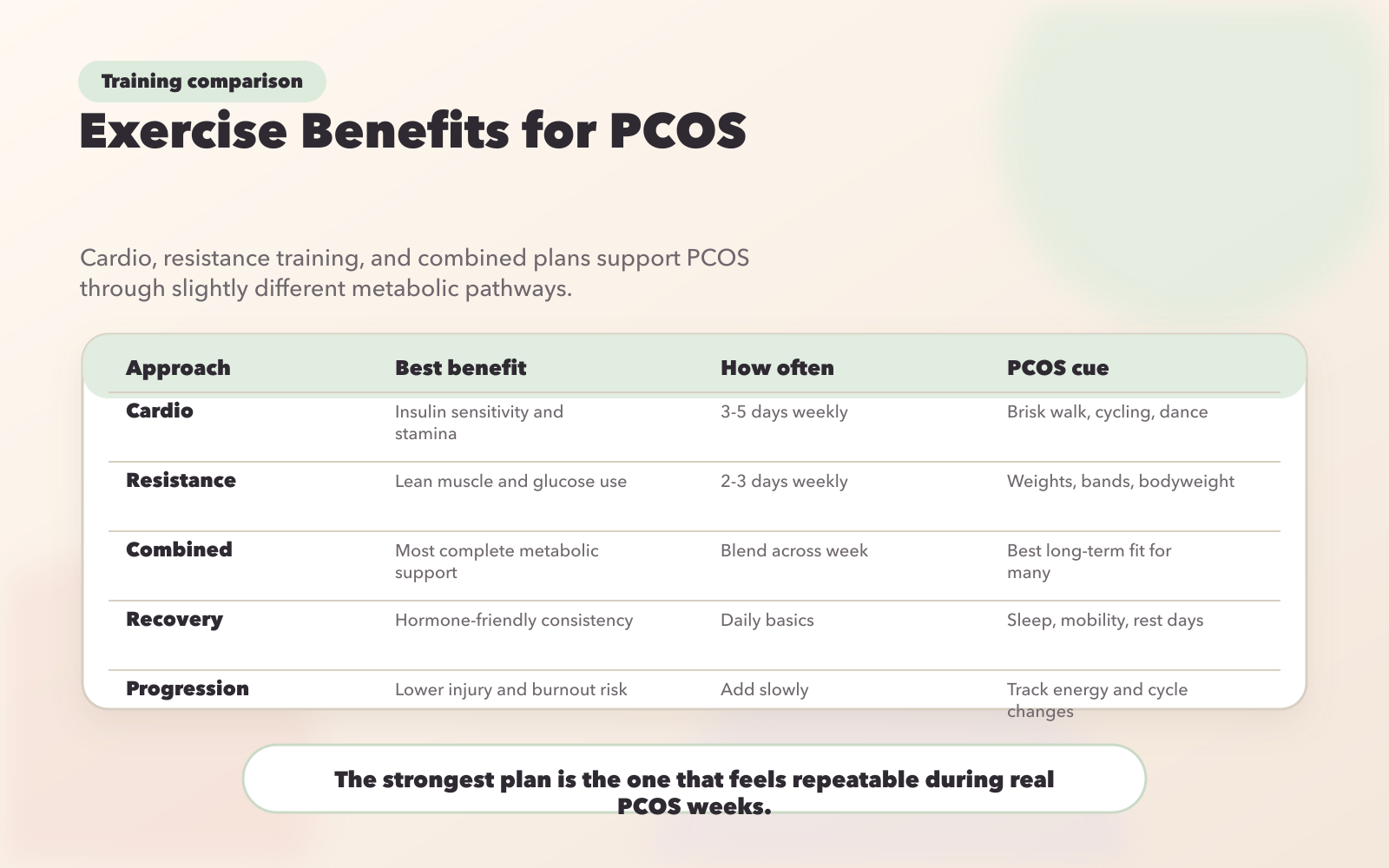
Exercise Benefits for PCOS: Cardio vs Resistance Training vs Combined Approach
PCOS Weight Loss & Strengthening | Hormonal Imbalances, Irregular Periods, Amenorrhea
How Exercise Affects PCOS Symptoms
Exercise tackles the core issues of PCOS by improving how your cells respond to insulin and influencing hormone production in the ovaries. These effects make physical activity one of the most effective ways to manage PCOS. Let’s break down how exercise helps with insulin sensitivity and hormonal regulation.
Insulin Sensitivity and Blood Sugar Control
Exercise plays a critical role in improving insulin resistance. Even a single workout can enhance insulin sensitivity for anywhere between 2 and 72 hours. This happens because physical activity encourages glucose uptake and metabolism in essential tissues.
For women with PCOS, this is a game-changer. Insulin resistance impacts about 80% of obese women and 30–40% of lean women with PCOS. Elevated insulin levels can lead to increased androgen production, which further disrupts both metabolic and hormonal balance.
Interestingly, research suggests that exercise intensity matters more than the total workout duration when it comes to addressing insulin resistance. Vigorous exercise has been shown to reduce HOMA-IR (a marker of insulin resistance) by 36.2%. Additionally, an eight-week program combining different types of exercise significantly lowered fasting insulin and HOMA-IR while boosting the Quantitative Insulin Sensitivity Check Index (QUICKI), which measures insulin efficiency.
"Exercise training in the management of PCOS is becoming more common... vigorous intensity exercise may have the greatest impact on cardiorespiratory fitness, body composition, and insulin resistance." - Nigel K. Stepto, Professor of Clinical Exercise Science
For the best results, aim for at least 120 minutes of vigorous-intensity exercise per week. If you’re new to exercise, starting with moderate activities like brisk walking can help with insulin control. Consistency is key - any benefits to fasting insulin levels may fade if you stop exercising.
By improving insulin sensitivity, exercise also lays the groundwork for better hormonal balance.
Hormonal Regulation Through Exercise
Exercise doesn’t just help with insulin - it also helps regulate hormones. Lower insulin levels reduce ovarian androgen production, while exercise increases Sex Hormone Binding Globulin (SHBG), which binds free testosterone and lowers its active levels.
Resistance training, in particular, has a strong impact on androgen levels. Following an 8-week program combining resistance training (at 50–70% of 1RM) and endurance training (at 60–70% THR), performed three times weekly, participants saw significant reductions in total testosterone and the Free Androgen Index. This is partly because building muscle helps the body utilize testosterone more effectively in glycolytic and fast-twitch muscle fibers.
While high-intensity exercise offers numerous benefits, it’s important to limit HIIT sessions to about two per week. Overdoing it can raise cortisol levels, which might worsen PCOS symptoms.
Cardiovascular Exercise for PCOS
Cardiovascular exercises like walking, running, cycling, and swimming play a key role in addressing the insulin-androgen cycle that fuels PCOS symptoms. Aerobic activities enhance insulin sensitivity, which helps lower insulin-triggered ovarian androgen production. This reduction in insulin levels translates to fewer and less severe PCOS symptoms.
Cycling at 60–70% of VO2max for 30–40 minutes has been shown to significantly lower total testosterone and Free Androgen Index (FAI) levels within 12 to 24 weeks. Swimming and brisk walking, on the other hand, help prevent cholesterol buildup in the arteries, which reduces the cardiovascular risks often associated with PCOS. Vigorous aerobic exercises are especially effective in reducing Anti-Müllerian hormone (AMH) levels, a common marker that's elevated in women with PCOS.
Cardio also targets visceral fat, the firm fat stored around internal organs that significantly contributes to insulin resistance. Research shows that vigorous exercise can reduce waist circumference by an average of 4.2% while boosting cardiorespiratory fitness (VO2peak) by 24.2%. Dr. Yolanda Thigpen, an Ob/Gyn at Cleveland Clinic, explains, "A PCOS belly is typically a round midsection that's firm, not soft or fluffy. This is due to carrying more fat around the internal organs (visceral fat)". These insights shape effective cardio strategies for managing PCOS.
Recommended Cardio Guidelines
To maximize the benefits of cardio for PCOS, aim for at least 120 minutes of vigorous-intensity exercise per week. This involves working at 70–90% of your maximum heart rate during activities like jogging, cycling, or swimming. If you're new to exercise, start with moderate-intensity cardio, such as brisk walking for 30 minutes a day, five days a week, to build a strong foundation.
High-intensity interval training (HIIT) is another excellent option for improving insulin resistance. Studies report a 17% improvement in HOMA-IR after 10 weeks of HIIT. A typical session might include 4-minute intervals at 90–95% of your maximum heart rate, followed by 3-minute recovery periods at 70%. However, to prevent cortisol spikes that can worsen symptoms, it’s best to limit HIIT to two sessions per week.
"Daily activity is important in glycaemic control and vigorous aerobic exercise can help to also increase insulin sensitivity", says Olivia Tyler, Personal Trainer and Fitness Manager at Nuffield Health.
Resistance Training for PCOS
Although cardio often takes center stage, resistance training plays a key role in managing PCOS by building muscle and improving insulin sensitivity. A study conducted between April and October 2020 by Kermanshah University of Medical Sciences followed 30 women with PCOS who participated in 24 resistance training sessions over eight weeks. The results were impressive: total testosterone levels dropped significantly (P < 0.001), along with the Free Androgen Index (P < 0.001) and Anti-Müllerian Hormone levels (P = 0.02). These findings highlight how resistance training can positively impact both metabolic and hormonal health in individuals with PCOS.
The most effective approach involved performing exercises with 50%–70% of one-repetition maximum (1RM) for three sets of 10–16 repetitions. Key exercises included the bench press, leg press, lat pull-downs, and lying leg curls.
Muscle Building and Glucose Utilization
Muscle is your body’s main site for glucose disposal. By increasing muscle mass through resistance training, your body can clear glucose from the bloodstream more effectively, which helps reduce the need for elevated insulin levels. This is particularly crucial since 50–70% of women with PCOS experience insulin resistance and hyperinsulinemia.
One study combining resistance and endurance training over eight weeks showed a significant reduction in fasting insulin levels and HOMA-IR (P < 0.001), alongside a notable increase in the Quantitative Insulin Sensitivity Check Index (QUICKI) (P = 0.002).
Hormonal and Reproductive Health Benefits
Resistance training also helps balance androgen levels by improving insulin sensitivity and increasing SHBG (sex hormone-binding globulin). Better insulin sensitivity reduces hyperinsulinemia, which in turn raises SHBG levels. This process lowers active testosterone, helping to ease PCOS symptoms.
"Combined resistance and endurance training may lead to improvements in testosterone levels. This proposes that exercises that improve muscle growth, mainly of glycolytic, and fast-twitch muscle fibers may increase the application of testosterone lowering its blood levels." – BMC Endocrine Disorders
For practical implementation, aim for two to three resistance training sessions per week. If you’re new to strength training, start with bodyweight exercises like squats, lunges, and push-ups to focus on proper form before adding weights. A simple full-body circuit might include 10 goblet squats, 8 bicep curls, 10 reverse lunges, 8 push-ups, 10 dumbbell rows, 8 shoulder presses, and a 30-second plank. Resistance training works hand in hand with cardio to create a well-rounded exercise plan for managing PCOS.
sbb-itb-6dba428
Combining Cardio and Resistance Training
Research Comparing Exercise Types
Cardio and resistance training each offer unique benefits for managing PCOS, but recent research highlights that combining the two can deliver even better results. A randomized controlled trial conducted at Imam Reza Hospital in Kermanshah, Iran, between April and October 2020, explored this idea. The study involved 30 women with PCOS (average BMI of 30.3 kg/m²) who participated in an 8-week program. They trained three times a week, performing resistance exercises at 50–70% of their one-rep max, immediately followed by cardio at 60–70% of their target heart rate. The results? Significant improvements across the board: reduced insulin levels, lower HOMA-IR scores, decreased total testosterone (all P < 0.001), and enhanced insulin sensitivity as shown by higher QUICKI scores (P = 0.002).
This combined approach works so well because it tackles multiple aspects of PCOS - metabolic, hormonal, and oxidative stress - at the same time. While moderate-intensity cardio is great for reducing BMI, it doesn’t do as much for regulating hormones or improving menstrual cycles. On the other hand, resistance training boosts muscle strength and glucose utilization but doesn’t provide the cardiovascular perks of aerobic exercise. Together, they create a well-rounded strategy for managing PCOS effectively. This study underscores the value of blending both exercise types for a more comprehensive approach.
Creating a Balanced Exercise Plan
Based on these findings, here’s a practical way to structure a combined training routine. Aim for three sessions per week, each lasting 60–80 minutes. Start with 30–40 minutes of resistance training - three sets of 10–16 reps at 50–70% of your one-rep max. Focus on moves like bench presses, leg presses, and lat pull-downs. Follow that with 25–40 minutes of moderate-intensity cardio, such as treadmill running, brisk walking, or cycling.
If you’re just starting out, begin conservatively in the first week. For example, do 30 minutes of resistance exercises at 50% intensity, paired with 25 minutes of cardio. Gradually increase the duration and intensity over the eight weeks until you’re doing 40 minutes of each segment at 70% intensity. Don’t forget to include a 5-minute warm-up and cool-down to reduce the risk of injury.
For those aiming to maximize metabolic benefits, try to reach 120 minutes of vigorous exercise per week. This level of activity has been linked to a 36.2% reduction in insulin resistance (HOMA-IR) and a 4.2% decrease in waist circumference. Using a heart rate monitor can help you stay in the optimal intensity zone for the best results.
Weight Loss and PCOS Improvement
When it comes to managing PCOS, combining cardio and resistance training is a game-changer. But there’s another key factor that can make a big difference: modest weight loss.
Losing just 5–10% of your body weight can lead to noticeable improvements in PCOS symptoms. For instance, if you weigh 180 lbs, shedding just 9–18 lbs can bring significant benefits - and that’s a goal within reach.
Here’s how it works: Dropping excess weight helps reduce insulin resistance and the related hyperinsulinemia, which are major contributors to PCOS symptoms. Lowering insulin levels prompts the liver to produce more Sex Hormone-Binding Globulin (SHBG). This protein binds to testosterone in the bloodstream, lowering the amount of free androgens that can disrupt hormonal balance. Additionally, losing visceral fat helps decrease ovarian androgen production, creating a healthier hormonal environment.
Exercise is essential for making weight loss stick. Resistance training builds lean muscle, which increases your basal metabolic rate, meaning your body burns more calories even when you’re at rest. Pairing cardio with resistance training is especially effective because it not only burns calories during the workout but also helps your body keep burning them throughout the day. To support weight loss and improve PCOS symptoms, aim for at least 250 minutes of moderate-intensity aerobic exercise or 150 minutes of vigorous activity each week. Don’t forget to include muscle-strengthening exercises on at least two non-consecutive days. This combination not only aids in weight loss but also sets the stage for better metabolic health.
Improving body composition through exercise further enhances insulin sensitivity and cardiovascular health. In fact, one study showed that 63% of women with PCOS who followed a regular exercise routine saw improvements in their symptoms. Exercise helps by reducing fat and building muscle, which is particularly important given that insulin resistance affects about 75% of lean women with PCOS and up to 95% of those with obesity.
| Benefit Category | Impact of Modest Weight Loss (5-10%) |
|---|---|
| Hormonal | Increased SHBG; decreased free testosterone and androstenedione |
| Metabolic | Improved insulin sensitivity; reduced fasting insulin and HOMA-IR |
| Reproductive | Increased ovulation rates; improved menstrual cycle regularity |
| Cardiovascular | Reduced waist circumference and visceral fat; improved lipid profiles |
To create a sustainable plan for weight loss and PCOS management, consult medical professionals at Oana Health.
Conclusion
As highlighted earlier, targeted exercise programs can play a key role in managing PCOS. A combination of cardio and resistance training has been shown to deliver benefits that go beyond what either type of exercise can achieve on its own.
"Combined aerobic and resistance exercise have been reported to be more beneficial than each one of them alone in ameliorating insulin sensitivity and glucose lowering as well as in decreasing abdominal fat in obese PCOS patients."
Taking a dual approach - pairing resistance training with cardiovascular workouts - addresses PCOS on multiple fronts. Research indicates this method can improve insulin sensitivity, with reductions in HOMA-IR by as much as 36.2%. It also helps rebalance hormones, lowering total testosterone and the Free Androgen Index while increasing SHBG levels. Cardiovascular health benefits as well, with better cholesterol profiles and reduced oxidative stress markers. This creates a clear link between metabolic improvements and practical exercise routines.
Even a short-term commitment can deliver results. For instance, an eight-week program combining resistance training (performed at 50–70% of your one-repetition maximum) with endurance exercises (at 60–70% of your target heart rate), done three times a week, has been shown to improve metabolic and hormonal markers. These benefits occur regardless of significant weight changes.
For tailored exercise plans and expert guidance, the team at Oana Health can help you craft a personalized, evidence-based approach to managing PCOS.
FAQs
What are the benefits of combining cardio and resistance training for women with PCOS?
Combining cardio and resistance training can be a game-changer for managing PCOS symptoms. Studies highlight that this duo can help lower androgen levels, enhance insulin sensitivity, and promote healthy weight management. Women who stick to a mixed workout routine often report better hormonal balance, reduced inflammation, and improved heart health.
Why does this combination work so well? Cardio exercises, like brisk walking or cycling, are great for burning visceral fat and easing inflammation. On the other hand, resistance training ramps up muscle-driven glucose uptake and boosts metabolism, helping to regulate insulin and androgen levels. A solid weekly plan might look like this: three 30-minute cardio sessions paired with two 45-minute resistance workouts focusing on major muscle groups.
For tailored support, Oana Health offers telehealth services that blend exercise guidance with treatments for PCOS challenges, including weight management, insulin resistance, and hormonal imbalances.
What types of exercises can help improve insulin sensitivity in women with PCOS?
Combining high-intensity interval training (HIIT) with resistance exercises can make a big difference in improving insulin sensitivity for women with PCOS. HIIT involves short bursts of intense effort - think 30-second sprints on a treadmill or stationary bike - followed by 1–2 minutes of slower-paced recovery. Research shows that doing this type of workout 2–3 times a week can help regulate glucose levels effectively.
Incorporating resistance training into your routine takes things a step further by working major muscle groups. Exercises like squats, lunges, deadlifts, bench presses, and dumbbell rows are great options. Aim to do these 2–3 times a week, completing 2–3 sets of 8–12 reps for each exercise. To round out your plan, consider adding moderate-intensity cardio, such as brisk walking, jogging, or cycling, for 30–45 minutes on the days you’re not doing HIIT.
For a more tailored approach to managing insulin resistance and other PCOS symptoms, Oana Health offers telehealth services grounded in science. Their licensed professionals design custom plans that include exercise, nutrition guidance, and prescription treatments - all delivered to your doorstep with free shipping.
Why is the intensity of exercise more important than the duration for managing PCOS symptoms?
Research highlights that high-intensity interval training (HIIT) can be more effective than longer, moderate-intensity workouts when it comes to managing PCOS symptoms. HIIT has been shown to significantly reduce insulin resistance and help regulate androgen levels, both of which play a crucial role in addressing PCOS.
This suggests that prioritizing the intensity and quality of your workouts can deliver better outcomes than just focusing on longer exercise sessions. Adding a mix of cardio and resistance training to your routine can amplify these benefits, supporting improved hormone balance and metabolic health.