
Clinical Trials for PCOS: Anti-Androgen Innovations
Polycystic ovary syndrome (PCOS) affects millions of women and often leads to symptoms like excessive hair growth, acne, and irregular periods. Anti-androgen medications, such as spironolactone and flutamide, are commonly used to manage these symptoms by reducing the effects of male hormones. However, evidence supporting their effectiveness is still limited, and ongoing clinical trials aim to refine these treatments.
Here’s what you need to know:
- Flutamide: Highly effective for reducing hirsutism and acne but requires liver monitoring due to potential risks.
- Cyproterone Acetate (CPA): Often combined with oral contraceptives for better hair reduction but may impact lipid profiles negatively.
- Spironolactone: Improves acne and hirsutism but has limited effects on BMI or insulin resistance.
- Emerging Therapies: New drugs like SGLT2 inhibitors and GLP-1 receptor agonists are being studied to address both hormonal and metabolic issues.
Research highlights the need for personalized treatment plans, combining medications with lifestyle changes for better results. While anti-androgens are effective second-line treatments, combined oral contraceptives remain the first choice for managing PCOS-related hyperandrogenism.
Key Findings from Recent Anti-Androgen Clinical Trials
Flutamide Trial Results and Outcomes
Flutamide has shown strong results in addressing visible PCOS symptoms. In clinical trials, patients taking 250 mg twice daily experienced a mean reduction of 7.60 points on the Ferriman-Gallwey hirsutism scale compared to those on a placebo. Another study revealed that flutamide reduced acne, seborrhea, and hair loss scores by an impressive 80% after just three months.
By the six-month mark, flutamide normalized hirsutism scores, outperforming spironolactone, which achieved only a 30% reduction. A 2025 network meta-analysis further highlighted flutamide's effectiveness, ranking it highly when combined with standard therapy. It achieved a SUCRA score of 65.6% for reducing insulin resistance and 58.7% for lowering body weight.
"The pure antiandrogen flutamide is superior to spironolactone in the treatment of female hirsutism and its related androgen-dependent symptoms and signs in women." - Leonello Cusan, M.D., Medical Research Council Group in Molecular Endocrinology
While flutamide is effective, it comes with crucial safety considerations. Regular liver function monitoring is essential due to the risk of hepatotoxicity. Common side effects include dry skin, gastrointestinal discomfort, and reduced libido. Additionally, because flutamide can lead to feminization of a male fetus, participants must use reliable contraception during treatment.
Similar progress has been noted with cyproterone acetate combinations.
Cyproterone Acetate Combined with Other Treatments
Cyproterone acetate (CPA) is often paired with ethinyl estradiol in oral contraceptives to manage PCOS symptoms. This combination significantly enhances hair reduction. Standard regimens typically include 2 mg CPA with 35 μg ethinyl estradiol, sometimes supplemented with an additional 10 mg CPA.
When combined with metformin, oral contraceptives with CPA have shown greater effectiveness in improving hirsutism compared to using either medication alone. This triple-combination approach (OCP + CPA + Metformin) delivers superior results for hair reduction but may increase the likelihood of gastrointestinal side effects such as nausea, diarrhea, and bloating.
However, meta-analyses of two trials revealed a potential downside: combining anti-androgens like CPA with birth control pills led to poorer lipid profiles compared to contraceptives alone or with a placebo. This means that while visible symptoms like acne and excess hair improve, cholesterol and triglyceride levels may worsen.
"The addition of cyproterone acetate (an antiandrogen) to OCP seemed to enhance the beneficial effect of OCPs on hair reduction." - Cochrane Systematic Review
Spironolactone for Managing PCOS Symptoms
Spironolactone has also demonstrated promising results in managing PCOS symptoms, complementing findings from flutamide and CPA studies. In clinical trials, spironolactone improved acne in 82% of women after 24 weeks, compared to 63% in the placebo group. Benefits were noticeable as early as 12 weeks.
For hirsutism, spironolactone combined with lifestyle changes outperformed metformin paired with lifestyle changes, with a weighted mean difference of -1.59 in hirsutism scores. However, research shows that spironolactone does not significantly affect BMI, insulin resistance, or menstrual regularity in women with PCOS.
The medication is generally well-tolerated, though some side effects like headaches and dizziness are more common compared to placebo. About 20% of participants reported headaches, compared to 12% in control groups. Daily dosing of spironolactone has proven more effective than intermittent use for managing hirsutism.
"Spironolactone is a useful alternative to oral antibiotics for women with acne." - The BMJ
New Developments in Anti-Androgen Research
Experimental Anti-Androgen Medications Under Study
Researchers are exploring new treatments aimed at addressing both hormonal and metabolic dysfunctions in PCOS. Current investigations include drug classes such as GnRH antagonists, SGLT1/2 inhibitors, GLP-1 receptor agonists, and NK3 receptor antagonists. Notably, Neurokinin 3 receptor antagonists like Fezolinetant, along with Kisspeptin and Artemisinins, are being studied for their potential to manage endocrine dysfunctions. These advancements could help overcome the limitations of traditional treatments. Additionally, combining anti-androgen therapy with metabolic interventions is being examined as a way to achieve better outcomes for patients.
Combining Anti-Androgens with Lifestyle Changes or Metformin
A growing approach involves pairing anti-androgens with lifestyle changes or medications like metformin. This combination targets both insulin resistance and hyperandrogenism, two major contributors to PCOS. It’s an especially useful option for patients who cannot use combined oral contraceptives or who face higher risks of thromboembolic events due to obesity.
For example, a trial conducted at Shengjing Hospital studied 51 overweight or obese PCOS patients. Participants were assigned to either a combination of Canagliflozin (100 mg/day) and Metformin (2,000 mg/day) or Metformin alone. Results showed that the combination group experienced lower testosterone levels and improved glucose metabolism compared to the Metformin-only group. Another analysis in 2025, which reviewed 29 randomized controlled trials, found that adding GLP-1 receptor agonists to standard therapy led to an average weight loss of about 7.6 pounds (3.44 kg).
For those dealing with symptoms like excessive hair growth or hair loss, services such as Oana Health offer telehealth consultations. They provide treatments including Spironolactone and Oral Minoxidil.
Research Gaps and Future Study Priorities
While progress is being made, there are still notable gaps in the research. The evidence supporting anti-androgen use remains incomplete, making it difficult to determine the best treatment options for patients of varying ages and body types. Most studies focus on short-term outcomes, typically lasting six months or less, which is insufficient for addressing a chronic condition like PCOS.
"Differences in the efficacy and side effects of different anti-androgens and their effectiveness across various PCOS features, ages and anthropometric characteristics could not be accurately determined." - Selma Feldman Witchel, MD, eClinicalMedicine
Another challenge is the lack of differentiation between PCOS phenotypes, such as hyperandrogenic versus normoandrogenic types, leading to mixed and inconclusive findings. Future research needs to include direct comparisons of anti-androgen medications, extend follow-up periods beyond 12 months, and involve diverse populations across ethnicities and age groups. Additionally, the recent retractions of major network meta-analyses due to unreliable data highlight the urgent need for more rigorous and verifiable primary research.
sbb-itb-6dba428
Comparing Clinical Trial Results Across Anti-Androgens
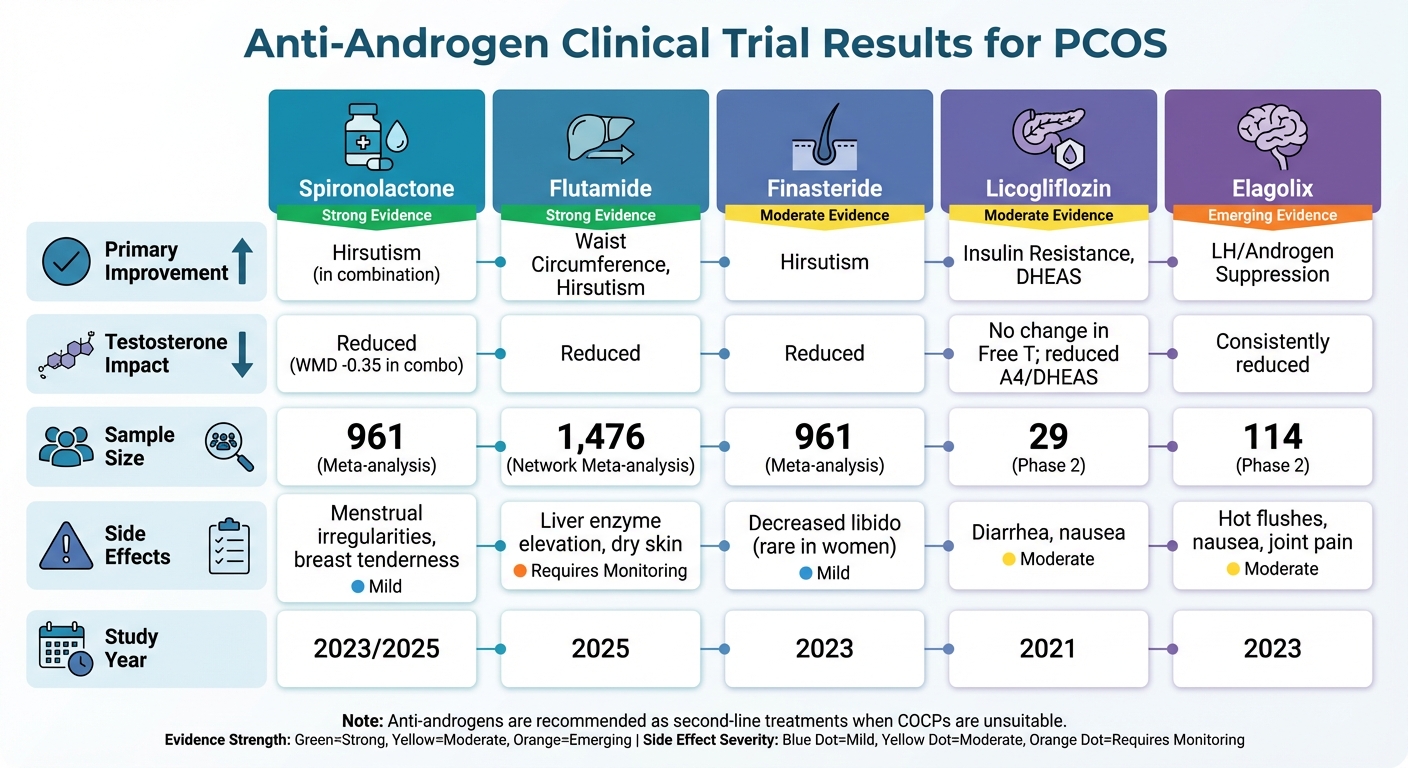
Anti-Androgen Medications for PCOS: Clinical Trial Results Comparison
Anti-Androgen Trial Data Comparison Table
Clinical trials have evaluated several anti-androgen medications for managing PCOS, each with its own benefits and drawbacks. Here's a summary of key findings from recent studies:
| Anti-Androgen | Primary Symptom Improvement | Testosterone Impact | Sample Size (Pooled/Trial) | Common Side Effects | Publication Year |
|---|---|---|---|---|---|
| Spironolactone | Hirsutism (in combination) | Reduced (WMD -0.35 in combo) | 961 (Meta-analysis) | Menstrual irregularities, breast tenderness | 2023/2025 |
| Flutamide | Waist Circumference, Hirsutism | Reduced | 1,476 (Network Meta-analysis) | Liver enzyme elevation, dry skin | 2025 |
| Finasteride | Hirsutism | Reduced | 961 (Meta-analysis) | Decreased libido (rare in women) | 2023 |
| Licogliflozin | Insulin Resistance, DHEAS | No change in Free T; reduced A4/DHEAS | 29 (Phase 2) | Diarrhea, nausea | 2021 |
| Elagolix | LH/Androgen Suppression | Consistently reduced | 114 (Phase 2) | Hot flushes, nausea, joint pain | 2023 |
What the Evidence Shows About Each Treatment
The table offers a snapshot of trial data, but here’s a closer look at how each treatment performs:
When used alongside metformin, spironolactone reduces testosterone levels by –0.35 nmol/L compared to metformin alone. On its own, spironolactone shows limited benefits for BMI or hirsutism but is generally well-tolerated without major adverse events.
Flutamide demonstrates notable improvements in waist circumference (SUCRA 64.9%) and hirsutism. Daily dosing is more effective than intermittent use, though regular liver function monitoring is essential due to potential risks.
Elagolix consistently reduces testosterone and LH levels, but only 2.6% of participants in a Phase 2 trial achieved menstrual regulation. Side effects included hot flushes, nausea, and joint pain.
"Current evidence does not support the use of anti-androgens preferentially to COCPs to treat hyperandrogenism in PCOS." - eClinicalMedicine
Research suggests that anti-androgens should not replace combined oral contraceptive pills (COCPs) as the primary treatment for hyperandrogenism in PCOS. Instead, anti-androgens are considered when COCPs are not an option, poorly tolerated, or ineffective after six months. However, combining anti-androgens with COCPs may negatively impact lipid profiles compared to using COCPs alone. For those exploring treatment options, platforms like Oana Health provide telehealth access to medications such as Spironolactone under professional guidance.
Conclusion: The Future of Anti-Androgen Treatment for PCOS
Recent research highlights that anti-androgens are now being used as effective second-line treatments for managing hirsutism, especially when first-line therapies are unsuitable.
These treatments show the best results when combined with lifestyle modifications. For example, one study revealed that pairing anti-androgens with lifestyle changes led to a weighted mean improvement of 1.59 points on hirsutism scales, outperforming a regimen of metformin plus lifestyle interventions. Building on this, new dual-action medications are expanding the range of treatment options.
Emerging therapies aim to address both hormonal and metabolic issues simultaneously. For instance, SGLT2 inhibitors like Licogliflozin demonstrated a 70% reduction in hyperinsulinemia and a 24% decrease in dehydroepiandrosterone sulfate (DHEAS) levels during Phase 2 trials. Similarly, combining standard treatments with GLP-1 receptor agonists resulted in an average weight loss of about 7.6 pounds (3.44 kg) compared to standard therapy alone.
"Licogliflozin may represent a promising novel treatment option" for PCOS patients. - Susanne Tan, University of Duisburg-Essen
The future of PCOS management is moving toward personalized treatment plans. These tailored regimens will address individual needs, whether it's managing insulin resistance, lowering androgen levels, or supporting weight loss. For patients who cannot use hormonal contraceptives due to risks like thromboembolism or obesity, emerging non-hormonal therapies may provide new alternatives.
Specialized telehealth services, such as Oana Health, are already integrating the latest PCOS research into their offerings. They provide personalized treatment plans, including medications like Spironolactone for managing unwanted hair and weight management solutions. All treatments are prescribed by licensed medical professionals and delivered directly to patients' homes with free shipping.
FAQs
What are the key safety concerns when using flutamide to treat PCOS?
Flutamide is sometimes prescribed to help manage symptoms of PCOS, but it comes with notable safety concerns. The most serious of these is hepatotoxicity, which means it has the potential to cause liver damage. Because of this, regular liver function tests are crucial during treatment to catch and address any problems early.
Although flutamide can help reduce symptoms like unwanted facial hair, it should only be used under the supervision of a licensed healthcare provider to ensure it’s both safe and effective.
How do anti-androgens compare to birth control pills for managing PCOS symptoms?
Birth control pills and anti-androgens are two common treatments for managing PCOS symptoms linked to high androgen levels, but they tackle the issue in different ways.
Birth control pills help regulate hormones, which in turn lowers androgen production. This can improve irregular periods, reduce acne, and minimize unwanted hair growth. They're often the go-to option for managing PCOS symptoms because they also serve as a form of contraception.
Anti-androgens, on the other hand, work by blocking androgen receptors or reducing the activity of androgens in the body. These are particularly effective for addressing issues like hirsutism (excessive hair growth) and acne. However, they may require closer monitoring due to the potential for side effects and are typically used when other treatments fall short or aren’t suitable.
Choosing the right treatment depends on your specific symptoms, overall health, and personal goals. A healthcare provider can guide you in deciding the best approach for your needs.
What are the benefits of combining anti-androgens with healthy lifestyle changes for managing PCOS?
Combining anti-androgens with healthy lifestyle habits can make a big difference in managing PCOS. Anti-androgens work by lowering androgen levels, which helps reduce symptoms like acne and unwanted facial hair. Pairing these treatments with balanced eating, regular exercise, and maintaining a healthy weight can amplify their benefits, offering more relief and supporting long-term well-being.
Even losing as little as 5% of body weight can lead to noticeable improvements in PCOS symptoms and metabolic health. Lifestyle changes also enhance insulin sensitivity - something often reduced in women with PCOS - further complementing the effects of anti-androgens. Together, this approach tackles both the physical symptoms and the underlying hormonal and metabolic challenges, improving overall quality of life.