
Clomiphene Citrate Success Rates for Ovulation
Clomiphene Citrate is a widely used medication for treating infertility caused by irregular ovulation, especially in women with PCOS. It works by stimulating the production of hormones necessary for ovulation. Here’s what you need to know:
- Ovulation Success: About 70–80% of women taking Clomiphene Citrate ovulate, typically during the first treatment cycle.
- Pregnancy Rates: Approximately 40% of those who ovulate go on to conceive, with live birth rates ranging from 20% to 40% over six months.
- Effectiveness in PCOS: Women with PCOS often respond well, but around 25% may experience resistance to the drug.
- Side Effects: Common issues include hot flashes, abdominal discomfort, and, less frequently, visual disturbances. Rare but serious complications like ovarian hyperstimulation syndrome (OHSS) can occur.
- Alternatives: Letrozole has shown higher success rates in some studies. Other options include gonadotropins or surgical treatments for resistant cases.
Clomiphene Citrate remains a first-line treatment for many women, but success depends on factors like age, BMI, and underlying health conditions. For those who don’t respond, alternative therapies or combination treatments may offer better outcomes.
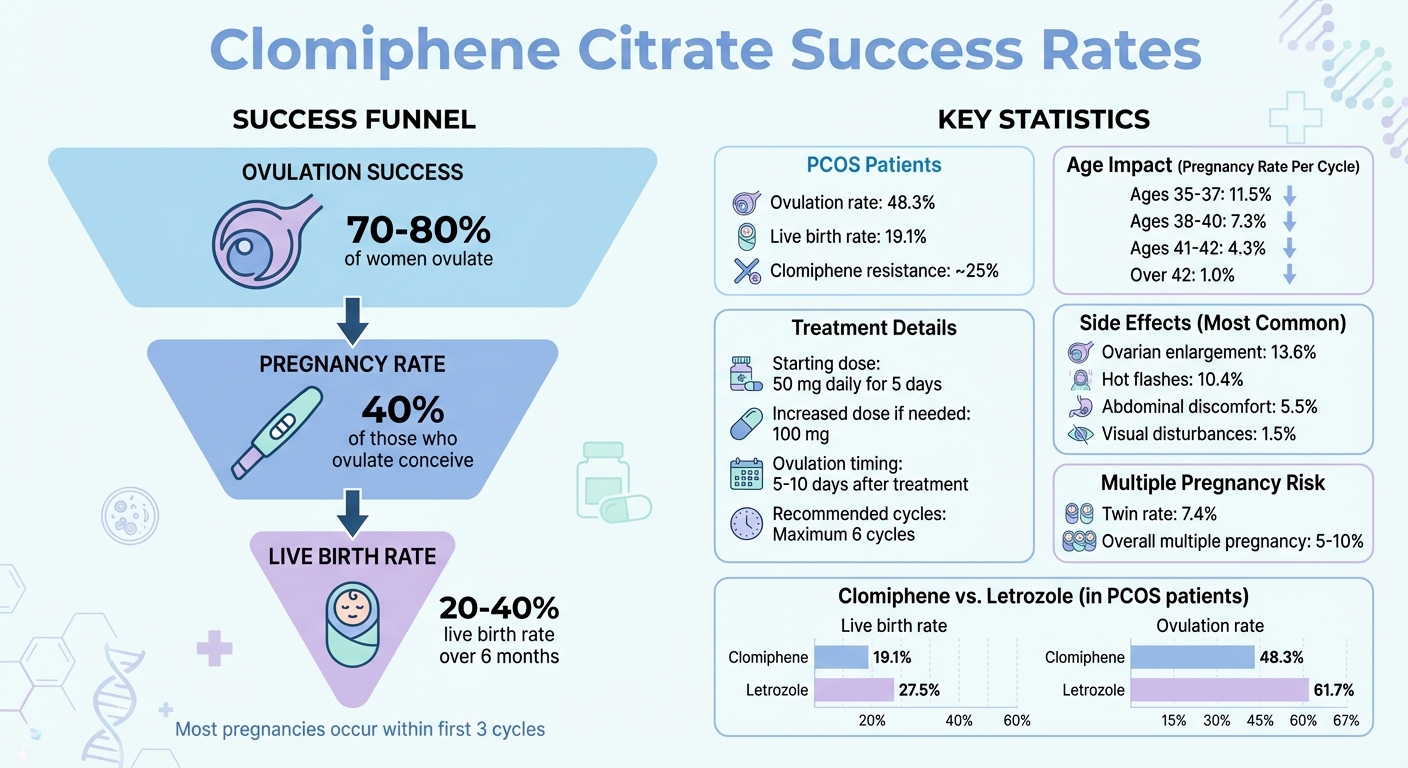
Clomiphene Citrate Success Rates: Ovulation, Pregnancy and Live Birth Statistics
Ovulation Success Rates with Clomiphene Citrate
Overall Ovulation Success Rates
Research shows that 70% to 80% of patients treated with Clomiphene Citrate successfully ovulate, with most responding during their first treatment cycle. However, while ovulation rates are encouraging, clinical pregnancy rates hover around 40%.
Typically, treatment begins with a daily dose of 50 mg for five days. If ovulation doesn’t occur, the dosage may be increased to 100 mg. It’s worth noting that about 25% of patients experience clomiphene resistance, and extending treatment beyond three cycles is generally not recommended. Results can differ among various groups, particularly for women with PCOS, as outlined below.
Success Rates in PCOS Patients
For women with PCOS, the outcomes with Clomiphene Citrate are more nuanced. In the PPCOS II Trial (conducted from February 2009 to January 2012 by Richard S. Legro and the NICHD Reproductive Medicine Network), 376 infertile women with PCOS were treated with Clomiphene Citrate. The trial reported a cumulative ovulation rate of 48.3% (688 out of 1,425 treatment cycles) and a live birth rate of 19.1%. Other studies have shown that Clomiphene has lower live birth and ovulation rates compared to Letrozole.
In another study involving 626 infertile women with PCOS, three treatment methods were compared: Clomiphene alone, Metformin alone, and a combination of the two. The Clomiphene-only group achieved a live birth rate of 22.5%, which was significantly higher than Metformin’s 7.2% and similar to the 26.8% seen with combination therapy. These results highlight that while Clomiphene is effective for many PCOS patients, approximately one in four may not respond to the medication.
How Dosage Affects Success Rates
Clomiphene treatment usually starts at 50 mg daily for five days, with an increase to 100 mg if ovulation does not occur. Clinical recommendations advise against exceeding 100 mg, as higher doses provide minimal additional benefits while increasing the likelihood of side effects. Ovulation generally happens 5–10 days after completing the treatment course. Following these dosage guidelines plays a key role in optimizing treatment outcomes and improving ovulation success rates.
PCOS & Ovulation Induction: How Can You Ovulate With PCOS?
Pregnancy and Live Birth Outcomes with Clomiphene Citrate
This section shifts focus from ovulation success to the subsequent pregnancy and live birth outcomes associated with Clomiphene Citrate.
Pregnancy Success Rates
While Clomiphene Citrate successfully induces ovulation in about 80% of women, only roughly 40% of those who ovulate go on to conceive.
Age plays a major role in pregnancy rates. The likelihood of pregnancy per cycle decreases significantly with age: 11.5% for women aged 35–37, 7.3% for ages 38–40, 4.3% for ages 41–42, and just 1.0% for women over 42.
Live birth rates after Clomiphene treatment are also telling. Over a four-month period, the live birth rate is approximately 23%. Over six months, live birth rates typically range between 20% and 40%.
These figures provide context for evaluating overall live birth outcomes.
Live Birth Rates and Treatment Comparisons
The PPCOS II Trial, conducted between February 2009 and January 2012 by Dr. Richard S. Legro and the NICHD Reproductive Medicine Network, studied 750 infertile women with PCOS. Participants were randomly assigned to receive either Letrozole or Clomiphene for up to five cycles. The results showed a cumulative live birth rate of 19.1% for the Clomiphene group, compared to 27.5% for the Letrozole group. Among women with PCOS who conceived using Clomiphene, the pregnancy loss rate was approximately 29.1%.
"Letrozole was associated with higher live-birth and ovulation rates among infertile women with the polycystic ovary syndrome." – Richard S. Legro, M.D., et al.
Clomiphene also carries a risk of multiple pregnancies. The twin pregnancy rate is about 7.4%, with the overall risk of multiple pregnancies ranging from 5% to 10% [11, 13].
Factors That Affect Pregnancy Outcomes
Several factors influence live birth outcomes beyond the basic rates. One key factor is Body Mass Index (BMI). Research indicates that women with lower BMI levels have higher chances of conception, with BMI showing a statistically significant impact on live birth outcomes (P < 0.001). For obese women with PCOS who are resistant to Clomiphene, combining it with Metformin has been shown to increase pregnancy rates compared to Clomiphene alone.
Hormonal markers also play a role. Higher levels of sex hormone-binding globulin (SHBG) and a lower free androgen index are linked to better live birth outcomes. Additionally, a woman’s age and history of prior pregnancies remain critical factors, with the best results observed in cases where infertility stems from ovulation issues rather than complications like fallopian tube damage or severe endometriosis.
Interestingly, emerging data suggests that extending the treatment course to a 10-day regimen may yield better results compared to the standard 5-day protocol. However, treatment is generally limited to six menstrual cycles. If pregnancy does not occur within this period, alternative therapies are typically recommended.
sbb-itb-6dba428
Clomiphene Citrate Resistance and Side Effects
About 25% of patients, particularly those with PCOS complicated by obesity or insulin resistance, fail to ovulate despite standard treatment.
Understanding Clomiphene Citrate Resistance
Clomiphene resistance occurs when ovulation does not happen after taking an adequate dose for at least three cycles. This issue is especially common in women with PCOS who are also dealing with obesity or insulin resistance.
When the standard 50 mg dose doesn’t work, doctors might increase the dosage (up to 200 mg/day) or extend the treatment duration to 10 days at 100 mg per day. If these adjustments, along with additional therapies like Metformin, Dexamethasone, or Bromocriptine, don’t succeed, alternative treatments such as gonadotropins, Letrozole, or laparoscopic ovarian drilling may be considered.
"If the patient does not ovulate after 3 cycles of clomiphene citrate therapy, further treatment with clomiphene citrate is not recommended." – StatPearls
Beyond resistance, keeping an eye on side effects is essential for ensuring the best possible outcomes.
Common Side Effects of Clomiphene Citrate
Clinical studies involving over 8,000 patients have highlighted several side effects. The most frequently reported include ovarian enlargement (13.6%), hot flashes (10.4%), and abdominal discomfort or bloating (5.5%). Other side effects include nausea and vomiting (2.2%), breast discomfort (2.1%), and headaches (1.3%).
Visual symptoms require particular attention. Around 1.5% of patients experience issues like blurred vision, spots, or flashes. These problems tend to worsen with higher doses or prolonged use and can make activities like driving unsafe, especially in poorly lit conditions. If you notice any visual disturbances, stop taking the medication immediately and consult your doctor.
A rare but serious side effect is ovarian hyperstimulation syndrome (OHSS), which can cause severe ovarian enlargement, pelvic pain, rapid weight gain, nausea, and vomiting. This condition demands urgent medical attention.
Interestingly, Clomiphene can sometimes reduce fertility despite inducing ovulation. Its anti-estrogenic effects may make cervical mucus less receptive to sperm and cause changes in the uterine lining that hinder implantation.
When to Consider Other Treatment Options
Doctors typically recommend limiting Clomiphene treatment to a maximum of six cycles. This is because most successful pregnancies occur within the first few ovulatory cycles, and extended use may increase certain risks.
Letrozole has gained attention as a strong alternative, particularly for women with PCOS. A major multicenter study found that Letrozole achieved a higher cumulative live birth rate (27.5%) compared to Clomiphene (19.1%). It also had a better ovulation rate - 61.7% versus 48.3%.
Other options include gonadotropins, which are injectable hormones that tend to be more effective but come with higher costs and a greater risk of multiple pregnancies. Another alternative is Tamoxifen, which has shown similar pregnancy rates to Clomiphene. For women with PCOS who don’t respond to medication, laparoscopic ovarian drilling offers a surgical solution that avoids the risk of multiple pregnancies associated with fertility drugs.
Before switching treatments, it’s crucial for doctors to address any underlying conditions, such as thyroid disorders, adrenal dysfunction, or elevated prolactin levels, which could be interfering with fertility.
Conclusion
Success Rates at a Glance
Clomiphene Citrate is highly effective at inducing ovulation, with 80% of treated women ovulating successfully. However, ovulation itself doesn't always lead to pregnancy - approximately 40% of women who use Clomiphene will conceive. The live birth rate over six months of treatment typically falls between 20% and 40%, with most pregnancies occurring during the first three cycles. For women with PCOS, Clomiphene significantly improves the chances of clinical pregnancy, showing an odds ratio of 5.91 compared to a placebo. These statistics highlight the importance of tailoring treatment to maximize success.
Steps to Boost Treatment Success
Several factors can influence how well Clomiphene works, and addressing them can make a big difference. Achieving a healthy BMI is a key starting point since extremes in weight can disrupt the hormonal balance needed for ovulation. For women with PCOS and insulin resistance, adding Metformin (1,000–2,000 mg/day) can improve the likelihood of regular ovulation when Clomiphene alone isn't enough.
Tracking ovulation is also essential. Tools like basal body temperature charts, ovulation predictor kits, or testing mid-luteal progesterone levels (with results above 10 ng/mL) can confirm whether ovulation is occurring. For couples facing unexplained infertility or issues like cervical mucus thickening caused by Clomiphene, combining it with intrauterine insemination (IUI) can double the chances of conception per cycle compared to no treatment. Incorporating these strategies into a personalized plan can significantly improve outcomes.
How Oana Health Supports Women’s Fertility Journeys

Oana Health offers tailored, science-driven solutions for women managing PCOS and other hormonal conditions through easy-to-access telehealth services. Their focus on addressing key factors - like insulin resistance and weight management - directly supports the success of Clomiphene treatments. For women requiring additional therapies, Oana Health provides options such as Metformin and combination treatments like Metformin with Spironolactone.
Every patient’s medical history is carefully reviewed by healthcare professionals to ensure that underlying issues, such as thyroid imbalances or elevated prolactin levels, are addressed before starting fertility treatments. With medications delivered straight to your doorstep and free shipping, Oana Health simplifies the process of receiving comprehensive care, helping you take the steps needed to improve ovulation and increase your chances of pregnancy.
FAQs
What should I do if Clomiphene Citrate doesn’t work for me?
If Clomiphene Citrate doesn’t result in ovulation, it’s crucial to consult your healthcare provider. They can assess your specific situation and explore other treatment options or make changes to your current plan.
Sometimes, factors like underlying health issues, the dosage of the medication, or other hormonal imbalances could be influencing the outcome. A medical professional can help identify these factors and provide guidance that’s personalized to your needs.
Which is more effective for PCOS treatment: Clomiphene Citrate or Letrozole?
Both Clomiphene Citrate and Letrozole are widely used to help women with PCOS achieve ovulation. However, research suggests that Letrozole may offer better results. Studies indicate that women treated with Letrozole experience higher pregnancy and live birth rates compared to those using Clomiphene Citrate. For example, a major trial reported a 27.5% live birth rate with Letrozole, compared to 19.1% with Clomiphene Citrate.
Another advantage of Letrozole is its association with fewer side effects. It carries a lower risk of multiple pregnancies and miscarriage, making it a safer option for many. Because of these benefits, many healthcare providers now recommend Letrozole as the preferred first-line treatment for ovulation induction in women with PCOS.
What is the likelihood of having twins or triplets when using Clomiphene Citrate?
When using Clomiphene Citrate, there's around a 10% chance of conceiving multiples, like twins or triplets. The medication works by boosting ovulation, which can slightly increase the odds of releasing more than one egg in a cycle. While the idea of multiples may be thrilling for some, it’s crucial to weigh the additional medical risks that come with such pregnancies. Be sure to talk with your healthcare provider to fully understand these risks and determine if this treatment aligns with your needs.