
Cold Medicine vs. Birth Control: Interaction Risks
If you’re taking birth control pills to manage PCOS, some cold medications might interfere with their effectiveness. Most over-the-counter remedies are safe, but certain ingredients can disrupt hormone levels by affecting how your liver processes the medication. This can lead to unintended pregnancy, breakthrough bleeding, or a return of PCOS symptoms.
Key points to keep in mind:
- Decongestants (like pseudoephedrine) and antihistamines (like diphenhydramine) don’t affect birth control but may cause side effects like drowsiness or increased blood pressure.
- Pain relievers (like acetaminophen and ibuprofen) are safe to use with birth control.
- Only specific antibiotics, such as rifampin, can reduce birth control effectiveness. Most common antibiotics like amoxicillin and azithromycin are safe.
- Always read medication labels and consult your doctor if you’re unsure about interactions.
For PCOS patients, maintaining steady hormone levels is essential. If in doubt, using backup contraception (like condoms) can provide extra protection.
How Combined Oral Contraceptives Work for PCOS
Combined oral contraceptives (COCs) function by suppressing the hormonal signals that initiate ovulation. The progestin component inhibits the release of GnRH, which in turn lowers FSH and LH levels, effectively halting the cycle that leads to ovulation.
For women with PCOS, COCs provide benefits beyond preventing pregnancy. They reduce the development of follicles and cysts while increasing SHBG (sex hormone-binding globulin), which helps neutralize excess testosterone. This addresses the elevated androgen levels that are responsible for many PCOS symptoms.
"Seven days of continuous CHC use is deemed necessary to reliably prevent ovulation." - CDC
The estrogen in COCs plays a key role in stabilizing the uterine lining, helping regulate menstrual cycles. However, missed pills or interactions that disrupt hormone levels can lead to breakthrough bleeding and a resurgence of PCOS symptoms. These hormonal adjustments are what make COCs a valuable tool in managing PCOS.
Benefits of Oral Contraceptives for PCOS
COCs tackle several symptoms of PCOS. By lowering androgen levels, they reduce sebum production, which helps treat hormonal acne. They also slow unwanted hair growth (hirsutism), though noticeable improvements in hair texture and growth speed typically require 6–12 months of consistent use.
In addition to symptom relief, COCs offer important long-term health benefits. Studies show that COC use is linked to a 50% lower risk of endometrial cancer and a 27% reduction in ovarian cancer risk. These protective effects are especially significant for women with PCOS, who are already at a higher risk for these cancers. Interestingly, about 14% of women use oral contraceptives primarily to manage non-contraceptive issues like PCOS symptoms.
Why Interactions Matter for PCOS Patients
Maintaining hormonal balance is critical for managing PCOS, and any disruption can undo progress. Certain drug interactions can interfere with the effectiveness of COCs. For example, medications that speed up liver enzymes (like CYP3A4) can accelerate the breakdown of hormones, reducing their levels. This can lead to breakthrough bleeding and a return of PCOS symptoms.
"Reduced concentrations of estrogens and progestins may lead to unintended pregnancy, and decreased exposures of estrogen can result in irregular (unscheduled) bleeding, which may adversely affect patient compliance." - Li Li et al., Office of Clinical Pharmacology, FDA
For those managing PCOS, keeping hormone levels steady is about more than avoiding pregnancy - it's essential for controlling symptoms like hirsutism and severe acne. A disruption in hormone balance can set back months of progress, which is why knowing which medications, even over-the-counter ones like cold remedies, are safe becomes particularly important during flu season.
Cold Medicine Ingredients and Their Effects on Birth Control
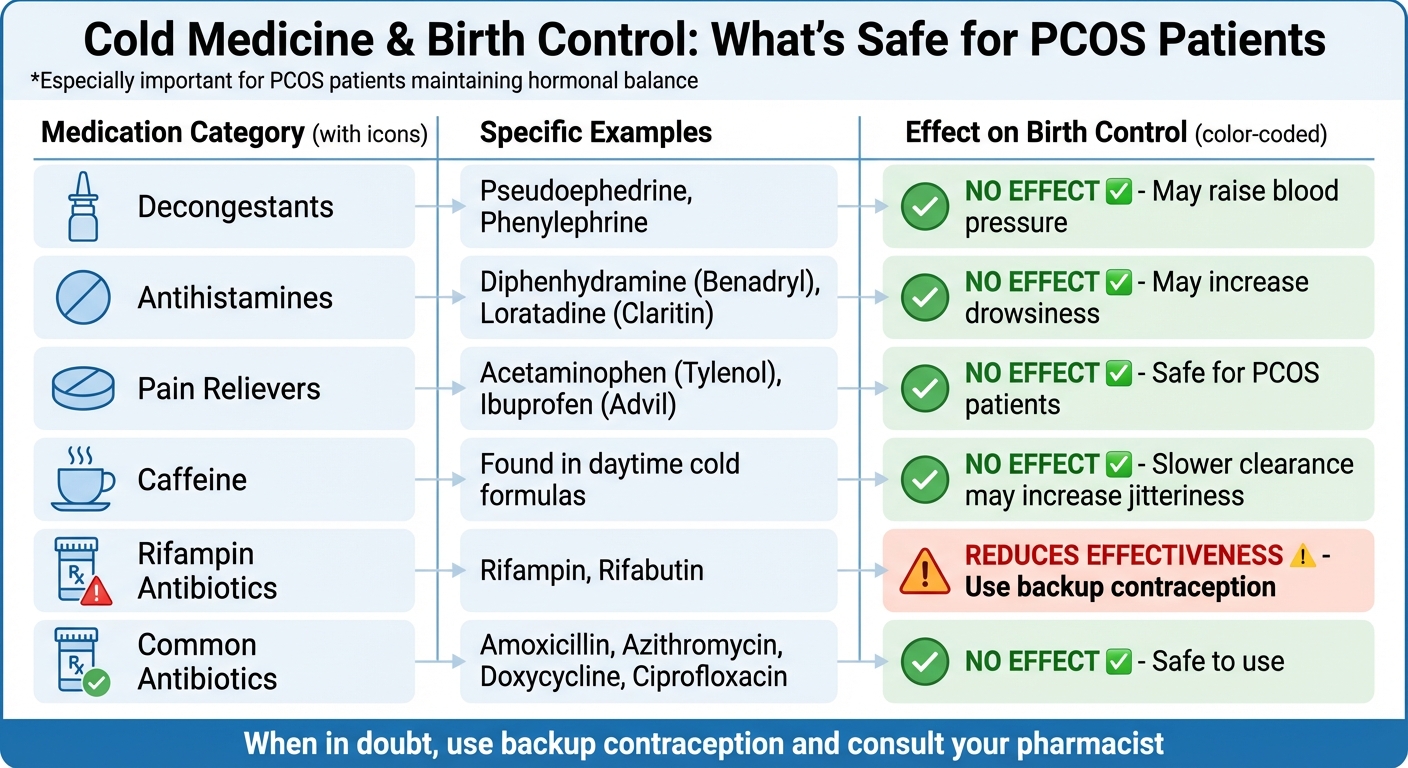
Cold Medicine Ingredients and Birth Control Interactions Guide
Over-the-counter cold medicines generally don’t interfere with the effectiveness of birth control. As Dr. Emily Freeman, DO, from Cleveland Clinic, explains:
"Most prescribed and over-the-counter medications won't interact with hormonal birth control".
This means that the majority of cold remedies won’t compromise contraceptive protection. Let’s dive into specific cold medicine ingredients to see how they interact with birth control.
Birth control pills are processed by liver enzymes, primarily CYP3A4, and most cold medicine ingredients don’t interfere with these pathways. For those with PCOS, reducing potential interactions is especially important to maintain hormonal stability.
Decongestants and Birth Control Effectiveness
Decongestants like pseudoephedrine and phenylephrine don’t impact hormonal contraceptives. These medications work by narrowing blood vessels in the nasal passages, which doesn’t affect how contraceptive hormones are metabolized. However, the FDA notes that nasal decongestants can raise blood pressure, and since individuals with PCOS might already have a higher risk of hypertension, it’s a good idea to check with a healthcare provider before using these medications.
Antihistamines and Birth Control
Antihistamines such as diphenhydramine (Benadryl) and loratadine (Claritin) also don’t interfere with birth control. However, hormonal contraceptives can amplify the sedative effects of older antihistamines, potentially causing more drowsiness. Additionally, since birth control slows caffeine metabolism, using daytime cold medicines that include caffeine might lead to heightened jitteriness or anxiety.
Pain Relievers and NSAIDs
Pain relievers commonly found in cold medicines, such as acetaminophen (Tylenol) and ibuprofen (Advil), don’t affect the effectiveness of birth control. While acetaminophen shares some metabolic pathways (like UGT1A1), it doesn’t reduce contraceptive protection.
| Cold Medicine Ingredient | Effect on Birth Control | Special Considerations |
|---|---|---|
| Pseudoephedrine | No effect | May raise blood pressure |
| Antihistamines | No effect | May cause drowsiness |
| Acetaminophen/Ibuprofen | No effect | Safe for PCOS patients |
| Caffeine | No effect | Slower clearance may increase jitteriness |
Antibiotics in Cold Remedies: What You Need to Know
Most cold medicines won’t interfere with birth control, but antibiotics prescribed for secondary infections like sinusitis or bronchitis require a closer look. Generally, antibiotics don’t affect hormonal contraceptives. However, for individuals with PCOS, ensuring contraceptive effectiveness is critical to maintaining hormonal balance.
Rifampin is the only antibiotic known to reduce the effectiveness of birth control. Dr. Sophia Yen, MD, MPH, clarifies:
"Only 2 antibiotics have been shown to have an effect on birth control pills: Rifampin and Griseofulvin".
Rifampin is rarely prescribed for common illnesses - it’s typically used for conditions like tuberculosis or meningitis. This drug speeds up liver enzymes that metabolize estrogen and progestin, reducing hormone levels in the body. If you’re taking rifampin, it’s essential to use backup contraception (like condoms) during treatment and for one month after stopping the medication.
For those with PCOS, maintaining steady hormone levels is especially important to avoid breakthrough bleeding and symptoms like acne. Let’s explore why rifampin stands out as the only antibiotic with a significant impact on birth control.
Which Antibiotics Can Affect Birth Control?
Antibiotics commonly prescribed for secondary infections, such as amoxicillin, azithromycin, doxycycline, and ciprofloxacin, do not reduce contraceptive effectiveness. A systematic review of 29 studies supports this, with Dr. Simmons KB, MD, MPH, noting:
"Evidence from clinical and pharmacokinetic outcomes studies does not support the existence of drug interactions between hormonal contraception and non-rifamycin antibiotics".
In one study of 356 women, there was no significant difference in pregnancy rates between those using oral contraceptives alone (0.96 per 100 women-years) and those using them alongside antibiotics (1.6 per 100 women-years). Concerns that antibiotics might disrupt gut bacteria and interfere with estrogen recirculation have not been supported by clinical evidence.
Here’s a breakdown of how different antibiotic classes interact with birth control:
| Antibiotic Type | Examples | Effect on Birth Control |
|---|---|---|
| Rifamycins | Rifampin, Rifabutin | Significant reduction in effectiveness |
| Penicillins | Amoxicillin, Ampicillin | No effect on contraception |
| Macrolides | Azithromycin, Clarithromycin | No effect on contraception |
| Tetracyclines | Doxycycline | No effect on contraception |
| Fluoroquinolones | Ciprofloxacin | No effect on contraception |
Despite these findings, some healthcare providers still suggest using backup contraception as a precaution due to individual differences in how medications are metabolized. If you’re uncertain about an antibiotic’s impact on your birth control, ask your pharmacist for a drug interaction review.
sbb-itb-6dba428
Recommendations for PCOS Patients
When managing PCOS with birth control, it's essential to be cautious about the medications you take for a cold. While most over-the-counter cold remedies won’t interfere with contraceptive effectiveness, taking a few precautions can help you navigate cold season safely while managing your condition.
Make it a habit to read the "Drug Facts" label on any medication. Pay close attention to the Active Ingredients, Warnings, and Directions sections for any safety updates. If you have PCOS-related high blood pressure, steer clear of nasal decongestants like pseudoephedrine or phenylephrine, as these can elevate blood pressure.
Keep a detailed list of all the medications you use - this includes prescriptions, over-the-counter drugs, vitamins, and herbal supplements. This makes it easier to check for potential interactions. For example, herbal remedies containing St. John's wort can reduce the effectiveness of birth control pills. If you’re taking drospirenone-containing birth control, consult your doctor before using NSAIDs (like ibuprofen or naproxen), as these can raise potassium levels.
When to Consult a Healthcare Professional
If you’re uncertain about whether a new medication might interact with your birth control, it’s always wise to consult your healthcare provider. This is especially important if you notice breakthrough bleeding or spotting while taking cold medicine, as it could indicate reduced contraceptive effectiveness.
Don’t hesitate to ask your pharmacist questions like, “Can I take this with my current birth control?” or “Do I need a backup contraceptive method?”. Dr. Emily Freeman, DO, an Ob/Gyn at Cleveland Clinic, emphasizes:
"When in doubt, use a backup method of birth control".
Using condoms as a backup during the time you’re taking cold medication can provide additional peace of mind.
If you experience unexpected side effects - such as feeling jittery from the caffeine in daytime cold formulas (since birth control can slow caffeine metabolism) or changes in your PCOS symptoms - reach out to your healthcare provider. The FDA also advises:
"Reading the label every time you use a nonprescription or prescription drug and taking the time to learn about drug interactions may be critical to your health".
Oana Health: Personalized PCOS Care

Effectively managing PCOS often requires expert advice, especially when it comes to medication interactions. Oana Health offers telehealth services tailored to PCOS and hormonal health, providing science-backed treatments prescribed by licensed professionals.
Through Oana Health’s user-friendly platform, you can get personalized guidance on how your hormonal treatments interact with other medications, including cold remedies, without needing to visit a clinic for every minor illness. Their approach also addresses PCOS symptoms like acne, unwanted facial hair, hair thinning, insulin resistance, and weight management. With treatments delivered directly to your door (with free shipping), staying consistent with your care becomes much easier - even during cold season. For women managing PCOS alongside multiple medications, having a healthcare team that truly understands the complexities of hormonal contraception can make a world of difference.
Conclusion
Managing PCOS with combined oral contraceptives during the colder months requires careful attention to potential drug interactions. The good news? Most over-the-counter cold and flu medications won’t interfere with your birth control. Common options like antihistamines, acetaminophen, and even most antibiotics are usually safe to take alongside hormonal treatments.
That said, it’s always wise to stay informed. Check medication labels, keep an updated list of everything you’re taking, and consult your pharmacist if you’re unsure. For women with PCOS, maintaining steady hormone levels is especially important - not just for contraceptive effectiveness but also to avoid issues like breakthrough bleeding, irregular cycles, or acne flare-ups. When in doubt about a medication’s safety, using backup protection is a smart precaution.
These steps highlight the importance of personalized medical advice. Managing PCOS alongside other health concerns can be tricky, but tailored care makes a difference. Platforms like Oana Health provide specialized telehealth support, offering guidance that understands the nuances of hormonal treatments and their interactions with everyday medications. With 46% of women aged 18–44 using at least one prescription drug, having a reliable healthcare team ensures your treatment stays consistent and effective.
Your health deserves thoughtful, uncomplicated care. Armed with the right resources and expert support, you can confidently manage cold symptoms without disrupting your PCOS treatment.
FAQs
Can cold medicine affect how well birth control works for women with PCOS?
Most over-the-counter cold medicines, such as decongestants or pain relievers, typically don’t affect the effectiveness of birth control pills for women with PCOS. However, a few specific medications, like certain antibiotics or herbal supplements, might interfere with hormonal contraceptives and reduce their effectiveness. These interactions are uncommon and depend on the particular medication involved.
If you’re managing PCOS and using birth control, it’s wise to check with your healthcare provider before starting any new cold remedies. This ensures there won’t be any unexpected interactions that could compromise your contraceptive protection.
Why is it important to keep hormone levels stable when using birth control to manage PCOS?
Keeping hormone levels steady is a crucial part of managing PCOS with birth control. Even small hormone shifts can impact how well symptoms are controlled and how effective the treatment is. Stable hormone levels help regulate ovulation, lower excess androgens, and improve symptoms like irregular periods, acne, and unwanted facial hair.
However, certain medications - like some cold and flu remedies or antibiotics - can interfere with hormonal balance. This might make birth control less effective or worsen PCOS symptoms. To get the best results from your treatment, it’s important to avoid medications that could disrupt hormone levels and carefully follow your healthcare provider’s instructions for using birth control. Consistency is key to keeping symptoms in check and managing PCOS effectively.
Are there antibiotics that can affect the effectiveness of birth control for PCOS?
Yes, some antibiotics, such as rifampin, can interfere with the effectiveness of combined oral contraceptives. Rifampin affects the hormones in birth control, which might increase the chances of an unintended pregnancy. However, the majority of other antibiotics don’t significantly impact how well contraceptives work.
If you're taking antibiotics, it’s wise to talk to your healthcare provider to see if you need to use a backup contraception method. This is particularly important for women using birth control to manage PCOS, as understanding how medications interact can help ensure consistent and effective treatment.