
How Compounded Medications Improve Adherence
Struggling to stick with your medication plan? Compounded medications might be the solution. These are custom-made treatments designed to meet your specific needs, especially for conditions like PCOS or hormonal imbalances. Unlike standard medications, compounded options can adjust dosages, remove allergens, or change forms (like turning a pill into a cream) to make them easier to use.
Key Takeaways:
- What are compounded medications? Tailored drugs crafted by licensed pharmacists to address individual needs, such as allergies or difficulty swallowing pills.
- Why does adherence matter? Chronic conditions like PCOS require consistent treatment. Poor adherence can worsen symptoms and increase healthcare costs.
- How do compounded medications help?
- Offer custom forms (e.g., topical creams, gummies) for easier use.
- Remove allergens like peanut oil or gluten.
- Combine multiple medications into one to reduce pill burden.
- Provide extended-release and topical options to minimize side effects.
For example, topical Metformin eliminates stomach issues common with the oral version, making it easier to stay consistent with treatment. With options like telehealth services and home delivery, compounded medications simplify care and improve health outcomes.
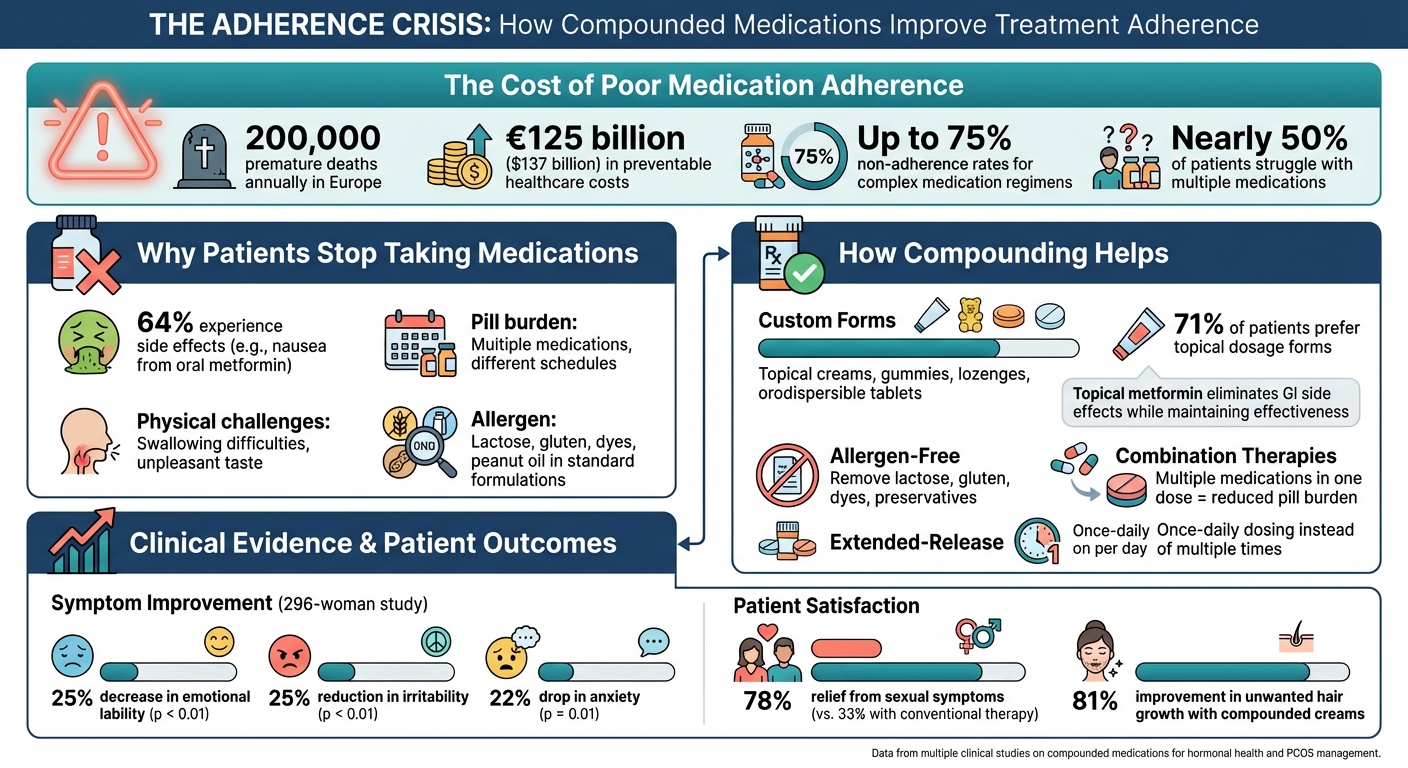
How Compounded Medications Improve Treatment Adherence: Key Statistics and Benefits
Common Barriers to Medication Adherence
Problems with Standard Medications
For many patients, standard medications create hurdles that make sticking to treatment plans difficult. Side effects are a major culprit. Take oral metformin, often prescribed for managing insulin resistance in PCOS - it frequently causes nausea and stomach discomfort, leading some to stop taking it altogether.
Another issue is the sheer number of pills. Treating PCOS often involves juggling multiple medications with different dosing schedules, which can feel overwhelming. Nearly half of patients report struggling with this, and in some cases, non-adherence rates soar to as high as 75%.
Physical challenges also play a role. Swallowing large pills, dealing with unpleasant tastes or textures, and reacting to inactive ingredients like dyes, preservatives, lactose, or gluten add extra layers of complexity. For instance, standard progesterone is commonly prepared using peanut oil, which poses a serious risk for those with peanut allergies.
These challenges not only disrupt daily routines but also create ripple effects that impact overall health and well-being.
Health Consequences of Poor Adherence
Skipping medications or stopping treatments altogether doesn’t just cause inconvenience - it can worsen health conditions. For hormonal disorders like PCOS, inconsistent medication use can lead to intensified symptoms such as acne, unwanted facial hair, irregular periods, hair thinning, and worsening insulin resistance.
The effects extend beyond individual health. Poor adherence drives up healthcare costs and complications. In Europe alone, nearly 200,000 premature deaths and $137 billion in avoidable expenses are linked to medication non-adherence every year. When patients don’t take their medications as prescribed, their health declines, and the healthcare system struggles with the added burden of preventable complications and hospitalizations.
Medication Non-Adherence Costs Lives | How MTM Improves Outcomes | Mega Aid Compounding Pharmacy
How Compounded Medications Improve Adherence
Compounded medications address the challenges of sticking to standard prescriptions by replacing generic, one-size-fits-all options with personalized formulations. This approach allows compounding pharmacies to adjust medication forms, strengths, or even combine multiple treatments into one, tailoring solutions to meet unique patient needs. By addressing individual barriers, compounded medications create a smoother path to adherence.
Custom Dosage Forms and Delivery Methods
Compounding pharmacies offer medication forms that simply don’t exist in commercial pharmacies. For patients who struggle with swallowing pills, pharmacists can craft alternatives like orodispersible tablets, gummies, lollipops, or troches that dissolve easily in the mouth. They can also enhance palatability by adding flavoring agents to mask bitter tastes.
Beyond making medications easier to take, compounding can also eliminate allergens and irritants found in standard drugs. Many commercial medications contain lactose, gluten, dyes, or preservatives that can trigger adverse reactions. Compounding pharmacists can create allergen-free versions, such as substituting peanut oil in progesterone formulations for individuals with peanut allergies. Additionally, they can customize medication strengths to precise doses based on factors like body weight or specific therapeutic requirements, avoiding the limitations of fixed-dose commercial options.
"One size does not fit all - patients are individuals, respond as individuals, and must be treated as individuals." - Maria Carvalho, Department of R&D, PCCA
By removing physical and practical obstacles, these personalized dosage forms encourage patients to stick to their treatment plans.
Combination Therapies to Reduce Pill Burden
Compounding also simplifies complex treatment regimens by combining multiple active ingredients into a single dose. For example, patients managing conditions like PCOS or hormonal imbalances may need separate medications like metformin and spironolactone, often taken multiple times daily. A compounding pharmacy can merge these into one capsule or topical cream, drastically reducing the number of doses required.
This streamlined approach significantly reduces "pill fatigue", a common reason patients skip doses. Research shows that combining medications into a single formulation improves adherence compared to juggling several separate pills. By simplifying regimens, compounded medications align treatments with patients' lifestyles, making it easier to stay consistent.
Extended-Release and Topical Options
Extended-release formulations and topical delivery methods offer even more options for improving adherence. Extended-release medications reduce the frequency of doses - patients can take their medication just once a day instead of several times. These formulations also help maintain steady drug levels throughout the day, avoiding the rapid peaks and troughs that can lead to side effects.
Topical alternatives, like Metformin HCL Lotion 20%, bypass the gastrointestinal system entirely, reducing systemic absorption and minimizing side effects like stomach upset. For patients who’ve struggled with traditional oral medications, these options can mean the difference between abandoning treatment and staying on track.
"Extended-release formulations have many advantages... including simplification of dosing regimens, reduction in pill burden, and reduction in the peak-to-trough fluctuations... These advantages have the potential to increase adherence." - James W. Wheless, MD
sbb-itb-6dba428
Evidence Supporting Compounded Medications
Research on Compounded Medications for Hormonal Health
Personalized compounded medications have shown promise in improving symptom management and treatment adherence, particularly in hormonal health. A study conducted at Oakdell Pharmacy in San Antonio, Texas, between January 2003 and April 2010 tracked 296 women using compounded bioidentical hormone therapy (BHRT). Led by Andres D. Ruiz and his team, the research focused on customized topical and oral regimens tailored to individual hormone levels and symptoms. Within 3 to 6 months, participants reported a 25% decrease in emotional lability (p < 0.01), a 25% reduction in irritability (p < 0.01), and a 22% drop in anxiety (p = 0.01).
Interestingly, about 71% of the women preferred topical dosage forms for their compounded hormones, highlighting a strong inclination toward non-oral delivery methods. This aligns with the core philosophy of compounding, as Ruiz explained:
"Compounded BHRT is a form of personalized medicine whereby the dose, regimen, and dosage forms are customized based on the patient's symptoms, hormone levels, and preferences".
Another noteworthy finding was that 78% of compounded hormone therapy users reported relief from sexual symptoms, compared to only 33% among those using conventional therapies. These results emphasize the potential clinical advantages of personalized formulations.
Patient Satisfaction and Convenience Factors
Beyond clinical outcomes, patient satisfaction plays a critical role in validating the use of compounded medications. Many patients appreciate the practical benefits of compounding, such as the ability to eliminate allergens, customize delivery methods, and reduce the number of pills they need to take. These adjustments make treatments more manageable in the long term. The American College of Obstetricians and Gynecologists highlighted this flexibility, stating:
"Traditionally, compounding is used to provide treatment for patients when the exact products needed are not commercially available or when different ingredients, preservatives, or routes of administration are required because of patient intolerances".
This adaptability can lead to better treatment persistence, as patients are less likely to face the dilemma of enduring unpleasant side effects or abandoning their therapy altogether.
How Oana Health Supports Medication Adherence
Personalized Treatments for PCOS and Hormonal Conditions
Oana Health takes a tailored approach to treating PCOS and hormonal conditions, focusing on personalized compounded formulations to improve medication adherence. For example, many patients struggle with standard oral metformin due to side effects like diarrhea, which affects over 64% of users. To address this, Oana Health offers a topical alternative, Metformin HCL Lotion 20%, priced at $43/month. This lotion bypasses the digestive system entirely, minimizing side effects and helping patients stick to their treatment plans.
Other available treatments include Oral Minoxidil ($25/month) and Topical Spironolactone ($43/month) for hair loss, as well as Spironolactone ($14/month) and Eflornithine 12% ($69/month) for managing unwanted facial hair. For added convenience, combination therapies like Metformin & Spironolactone ($32/month) are available, reducing the number of medications patients need to manage.
All of Oana Health’s medications are made with pharmaceutical-grade ingredients in regulated facilities. Additionally, formulations can be customized to exclude common allergens such as dyes, preservatives, lactose, or gluten, ensuring they are suitable for a wide range of patients.
Telehealth Services with Home Delivery
Beyond personalized medications, Oana Health prioritizes accessibility to further support adherence. Their telehealth platform removes logistical hurdles that often prevent patients from staying on track. Through an online medical consultation, licensed professionals review a patient’s health history and prescribe treatments - no in-person visits required.
Prescriptions are shipped directly to the patient’s home at no extra cost, ensuring a steady supply of medication without the hassle of pharmacy trips. By combining custom compounded treatments with the convenience of telehealth and free delivery, Oana Health addresses both the physical and logistical challenges that often lead to non-adherence. This integrated approach makes it easier for patients to stay consistent with their care plans.
Conclusion
Medication adherence poses a major challenge in managing PCOS and other hormonal conditions, with nearly 200,000 premature deaths and around €125 billion in preventable healthcare costs reported annually in Europe alone. These figures highlight the need for more personalized and accessible treatment options.
Compounded medications address this need by transforming standard treatments into customized solutions. They offer alternatives like topical formulations to minimize gastrointestinal side effects, combination therapies to reduce the number of pills patients need to take, and allergen-free options for those with sensitivities. For example, clinical studies show that 81% of women using compounded triple-ingredient creams experienced significant improvement in unwanted hair growth within a year.
Patients’ stories further emphasize the value of this approach:
"I used to struggle a lot with the side effects for oral metformin and this is a great alternative for me. I get the same benefits but no more upset stomach and nausea, and this helps me stick with it a lot more consistently." - Carrie S., Patient, Oana Health
When paired with telehealth services and home delivery, these personalized treatments form a comprehensive, patient-first model. This approach ensures support from the start of treatment through long-term management. For women navigating PCOS and hormonal conditions, compounded medications provide a practical and effective way to stay consistent with treatment and achieve lasting health benefits.
FAQs
What are the advantages of compounded medications compared to standard prescriptions?
Compounded medications provide some distinct benefits compared to standard prescriptions. One major advantage is personalized dosing, which allows treatments to be specifically tailored to meet the unique needs of each patient. This level of customization can help reduce side effects and make the treatment process more comfortable.
They’re also a great option for individuals facing specific challenges, like allergies to certain ingredients or difficulty swallowing traditional pills. By addressing these obstacles, compounded medications can make it easier for patients to stick to their treatment plans, ultimately supporting better health results.
How can compounded medications help manage PCOS symptoms more effectively?
Compounded medications can be an important part of managing PCOS, as they offer customized treatments designed to meet your specific hormonal and metabolic needs. Unlike off-the-shelf medications, these formulations are tailored to target symptoms like insulin resistance, hormonal imbalances, and other PCOS-related challenges.
By aligning the treatment with your body's unique requirements, compounded medications can boost effectiveness and make it easier to follow your prescribed plan. This tailored approach not only addresses symptoms more effectively but also encourages better adherence to your treatment regimen.
Can compounded medications be tailored to avoid allergens or sensitivities?
Compounded medications can be tailored to remove allergens or inactive ingredients that could cause sensitivities. This level of customization allows treatments to better suit individual needs, offering a safer option for patients who might have adverse reactions to standard drug formulations.
This personalization also plays a key role in improving treatment adherence. Patients are more likely to stick with their prescribed medications when they’re not only effective but also free from ingredients that could lead to unwanted side effects.