
Cortisol and Metformin: Latest Research Insights
Cortisol and metformin interact in ways that can influence treatment outcomes for conditions like PCOS and insulin resistance. High cortisol levels - often linked to stress - can diminish metformin's effectiveness by counteracting its blood sugar-lowering effects. This is due to cortisol’s role in raising blood sugar and reducing insulin sensitivity, while metformin improves these metabolic functions. Recent studies suggest metformin may also increase cortisol regeneration through specific enzymes, adding complexity to its benefits.
Key Takeaways:
- Cortisol: Stress hormone that raises blood sugar and disrupts hormonal balance, especially in women with PCOS.
- Metformin: Improves insulin sensitivity, lowers blood sugar, and helps regulate hormones in PCOS.
- Interaction: Elevated cortisol may reduce metformin's benefits, but personalized dosing and lifestyle changes can optimize results.
Practical Tips:
- Monitor cortisol levels and symptoms like weight gain, fatigue, and irregular cycles.
- Gradually increase metformin dosage to minimize side effects.
- Incorporate stress-reducing habits like better sleep, exercise, and a balanced diet.
By addressing cortisol levels alongside metformin therapy, patients can achieve better metabolic and hormonal health outcomes.
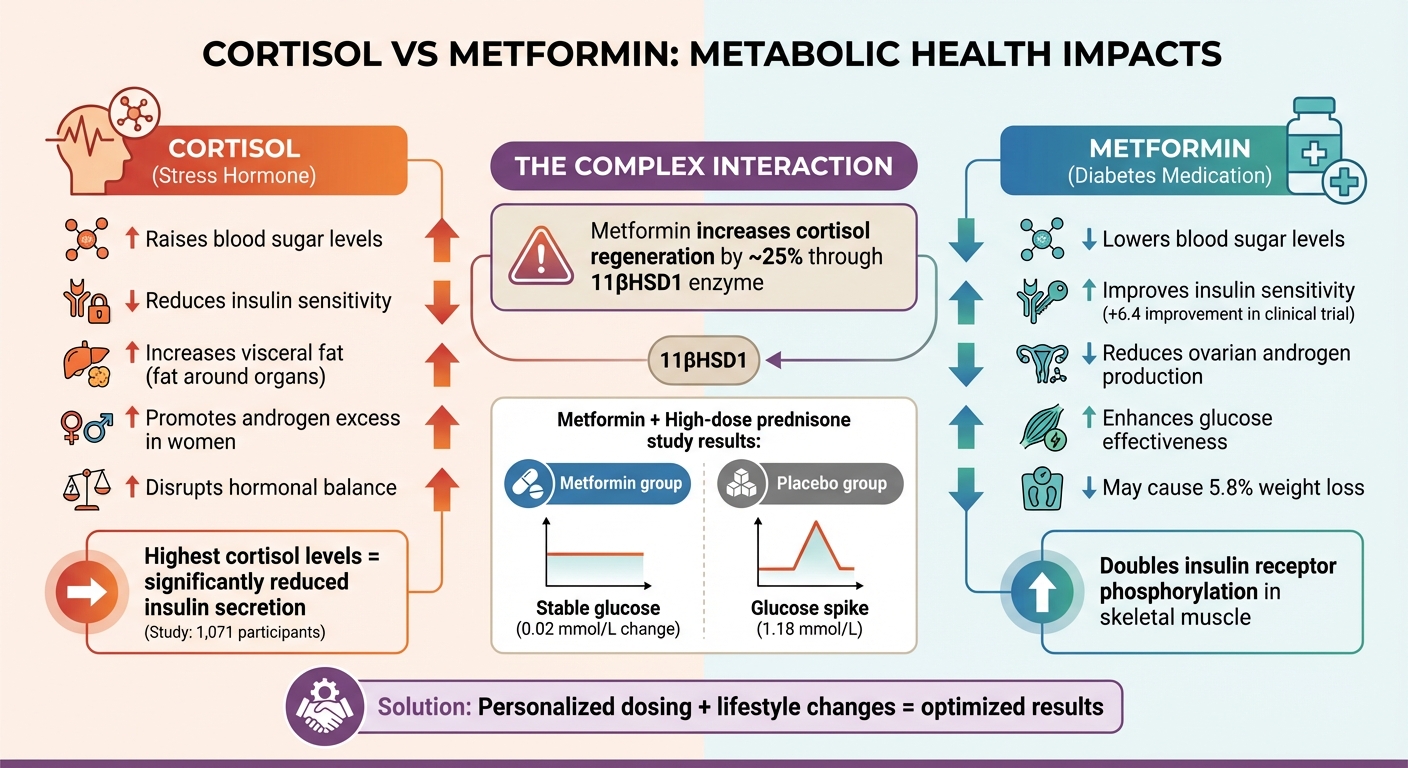
How Cortisol and Metformin Interact: Effects on Blood Sugar and Insulin Sensitivity
How Cortisol Affects Metabolic and Hormonal Health
Cortisol and Stress Response
When the body faces stress, cortisol kicks into gear, prioritizing immediate energy needs over long-term stability. It raises blood sugar levels by activating liver enzymes that increase gluconeogenesis (the production of glucose) while simultaneously limiting glucose uptake in muscles and fat tissue. Essentially, cortisol works against insulin, the hormone responsible for lowering blood sugar and storing energy. Over time, chronic cortisol elevation can impair insulin production, compounding metabolic difficulties.
Another significant impact of prolonged cortisol exposure is the increase in visceral fat (fat around the organs) and the reduction of subcutaneous fat (fat beneath the skin). This happens partly because of an enzyme called 11β-HSD1 in fat tissue, which converts inactive cortisone into active cortisol. This localized increase in cortisol disrupts hormonal balance in the body. These metabolic changes can pave the way for further hormonal imbalances, particularly in women.
Cortisol and Hormonal Imbalances in Women
Cortisol doesn’t just affect metabolism - it also disrupts hormonal health, especially in women. For individuals with PCOS, elevated cortisol levels can lead to hormonal imbalances that promote androgen excess, a key feature of the condition. This results in symptoms like hirsutism (excessive hair growth), irregular menstrual cycles, and acne. Insulin also plays a surprising role here: it can act alongside luteinizing hormone (LH) to increase ovarian androgen production, worsening insulin resistance and fueling further androgen production.
The connection between cortisol, visceral fat, and hormonal issues is particularly concerning. Increased visceral fat heightens insulin resistance and androgen excess in women. One study involving 1,071 participants found that those with the highest cortisol levels were significantly more likely to have reduced insulin secretion. Women noticing symptoms such as weight gain concentrated in the face and abdomen, purple stretch marks, or muscle weakness should consider seeking medical advice. These could be signs of Cushing syndrome, a condition characterized by prolonged cortisol excess that shares many features with PCOS.
How Metformin Works and Its Benefits
Metformin tackles metabolic dysfunction by targeting several key pathways, offering a range of benefits for those dealing with insulin resistance and hormonal imbalances.
How Metformin Improves Insulin Sensitivity
Metformin works by reducing glucose production in the liver. It does this by inhibiting mitochondrial respiratory complex I and activating AMPK, which enhances how cells process glucose. In skeletal muscle - where over 80% of insulin-stimulated glucose uptake occurs - it restores critical signaling pathways, significantly improving glucose absorption. This includes doubling the phosphorylation of insulin receptors and IRS-1, which are essential for proper insulin signaling.
A study conducted at Massachusetts General Hospital demonstrated the impact of metformin when taken at 1,500 mg/day in an extended-release form over 12 weeks. The results showed improved glucose effectiveness (P = .002) and a reduction in basal glucose levels (P = .001), highlighting its ability to work independently of insulin sensitivity.
"Metformin improves glucose effectiveness, not insulin sensitivity"
- Dr. Cindy T. Pau
Metformin's Effects on Hormonal Balance
For women with PCOS, metformin helps by reducing ovarian androgen production, which can alleviate symptoms like hirsutism, acne, and irregular menstrual cycles. It also helps regulate the hypothalamic-pituitary-ovarian axis by lowering pulsatile luteinizing hormone secretion and restoring the LH/FSH ratio.
"Metformin plays a crucial role in PCOS by reducing insulin levels, which leads to decreased luteinizing hormone and androgen levels"
Beyond reproductive hormones, metformin supports endometrial health. It enhances GLUT4 expression and modulates hormone receptors such as HOXA10, creating a more favorable environment for embryo implantation and improving fertility outcomes.
Interestingly, metformin is generally weight-neutral but may lead to modest weight loss in some cases. Studies have reported an average weight reduction of 5.8%, which can be particularly beneficial for managing waist circumference. Emerging research also indicates that metformin might lower ACTH and cortisol levels via the AMPK/LXRα/POMC pathway in the pituitary, adding another layer of potential metabolic benefits.
Current Research on Cortisol and Metformin Interaction
How Cortisol Affects Metformin Effectiveness
Recent studies suggest that the relationship between cortisol and metformin is more intricate than initially thought. Elevated cortisol levels can reduce pancreatic insulin secretion, making it harder for the body to regulate blood sugar even before insulin resistance becomes apparent. Interestingly, metformin increases whole-body cortisol regeneration by about 25% through its effect on 11β‐hydroxysteroid dehydrogenase type 1 (11βHSD1). This creates a unique challenge: while metformin improves insulin sensitivity, its role in boosting cortisol regeneration might counteract some of its metabolic advantages.
Despite this, metformin still provides protective effects against the harmful impact of cortisol. A clinical trial conducted at Universitätsspital Basel demonstrated this clearly. Patients on high-dose prednisone (30 mg/day) who were given metformin maintained stable glucose levels during meal tests (0.02 ± 1.25 mmol/L change), while those on a placebo experienced significant glucose spikes (1.18 ± 1.12 mmol/L). Furthermore, the metformin group showed improved whole-body insulin sensitivity (6.4 ± 11.8), whereas the placebo group saw a decline (–8.2 ± 10.65). These findings highlight the importance of tailoring metformin dosing to individual cortisol profiles.
Why Personalized Dosage Matters
Responses to metformin can vary widely, particularly in individuals with elevated cortisol levels. Machine learning analysis has identified baseline factors like insulin resistance, BMI, and LDL cholesterol as predictors of metformin's effectiveness in women with PCOS. For instance, in women with high insulin resistance before treatment, researchers found a strong correlation between glucocorticoid receptor density (which binds cortisol) and both insulin levels (r = 0.94) and BMI (r = 0.88). However, after 16 weeks of metformin therapy paired with a low-glycemic diet, these correlations disappeared. This suggests that personalized treatment can help reset the body's regulation of cortisol and insulin.
Practical adjustments to metformin dosing are also critical. Around 25% of patients report gastrointestinal side effects, and roughly 5% are unable to tolerate the drug at all. Starting with a lower dose, such as 500 mg once daily, and gradually increasing it allows healthcare providers to balance effectiveness with minimal side effects.
Recent Studies and Results
New research continues to emphasize the importance of personalized metformin regimens to address cortisol-driven metabolic issues. For patients on high-dose glucocorticoids (≥20 mg/day prednisolone), those taking metformin experienced significantly fewer complications - just 2 moderate-to-severe infections and 1 hospital admission compared to 11 infections and 9 admissions in the placebo group. Additionally, these patients lost more truncal subcutaneous fat (–3,835 mm²) despite receiving similar cumulative steroid doses.
In women with PCOS, an intriguing protective mechanism has been observed. Normal-weight women with PCOS showed a trend toward reduced 11βHSD1 activity, which might act as a natural response to prevent excessive abdominal fat accumulation when cortisol levels are lower. This underscores the importance of managing cortisol levels effectively alongside metformin therapy.
"Metformin prevents the detrimental effects of glucocorticoids on glucose homeostasis by improving insulin sensitivity."
- Susanne Thierry et al., Universitätsspital Basel
Given that metformin increases cortisol regeneration through 11βHSD1, researchers are now investigating whether combining metformin with selective 11βHSD1 inhibitors could enhance its glucose-lowering benefits without the cortisol-related drawbacks. This combination approach could open new doors for personalized treatments, especially for women dealing with high cortisol levels and hormonal imbalances.
sbb-itb-6dba428
Practical Guidance for Women Managing Hormonal Imbalances
Monitoring Cortisol and Insulin Resistance
Cortisol plays a key role in how well metformin works, making it important to keep an eye on both cortisol levels and insulin resistance. Cortisol levels naturally peak in the morning just before you wake up and drop to their lowest in the evening. To get accurate results, schedule your cortisol tests in the morning with your healthcare provider. Alongside lab tests, pay attention to physical signs of elevated cortisol, such as weight gain focused around the face and belly, high blood pressure, and excessive hair growth.
When tracking insulin resistance, weight loss can be a helpful indicator. Aim for a 1–2% reduction at three months, 5% at six months, and 5–6% after a year. Keep a record of symptoms like muscle weakness, disrupted sleep, and food cravings to help fine-tune your dosage. Also, be aware that long-term metformin use can lead to Vitamin B12 depletion, which may cause fatigue, weakness, or tingling in your hands and feet. Staying on top of these factors can help ensure your treatment and lifestyle adjustments are on the right track.
Lifestyle Changes to Lower Cortisol
Since metformin can increase cortisol regeneration by about 25%, incorporating cortisol-lowering habits into your routine is crucial. A Mediterranean or whole-food, plant-based diet filled with fiber-rich foods like beans, nuts, seeds, fruits, and vegetables can help manage cortisol levels. Pair this with 30–50 minutes of moderate outdoor exercise daily, such as walking in a natural setting, which has been shown to reduce cortisol more effectively than exercising in urban environments.
Getting enough sleep is just as important. Aim for 7 to 8 hours of sleep each night by keeping your bedroom cool and dark, reducing screen time before bed, and sticking to a consistent sleep schedule.
"When cortisol levels remain high for long periods of time, this can lead to weight gain, often referred to as cortisol belly or cortisol face." - Amy Zacharias, MD, Family Medicine Provider, OSF HealthCare
To further minimize cortisol spikes, limit caffeine intake to just one cup of coffee per day or switch to decaf. Supplements like magnesium, omega-3 fatty acids, and Vitamin D may also support cortisol metabolism, but always consult your healthcare provider before adding these to your regimen.
Partnering with Medical Professionals for Personalized Treatment
While lifestyle changes are a great way to support hormonal balance, working with medical professionals is key to optimizing your metformin treatment. Since metformin has complex effects on cortisol, your doctor may need to adjust your dosage to find the right balance. Typically, starting with 500 mg once daily and increasing by 500 mg each week can help improve both effectiveness and tolerance. Your provider will also decide whether immediate-release (IR) metformin, taken twice daily with meals, or extended-release (ER) metformin, taken once daily (usually in the evening), is better suited for you.
| Metformin Type | Typical Frequency | Primary Benefit |
|---|---|---|
| Immediate-Release (IR) | Twice daily with meals | Standard treatment; split dosing |
| Extended-Release (ER) | Once daily (evening) | Easier on the stomach; better adherence |
Regular testing for cortisol levels, insulin resistance markers, and Vitamin B12 levels is essential to ensure metformin isn’t causing unintended hormonal imbalances. If you experience persistent side effects like a metallic taste, stomach discomfort, or if your blood sugar levels aren’t where they need to be, your doctor can adjust your treatment plan. Platforms like Oana Health offer specialized hormonal treatments, including consultations that take your unique cortisol and insulin profiles into account. They even provide convenient options like having Oral Metformin ER delivered directly to your home.
Lastly, always inform your doctor about metformin use before any medical procedures involving contrast dye, as you may need to temporarily stop the medication. And if you notice severe symptoms like muscle pain, extreme fatigue, or difficulty breathing, seek immediate medical attention, as these could be signs of rare lactic acid buildup.
Conclusion
Research has shown that while metformin enhances insulin sensitivity, it also increases cortisol regeneration by approximately 25% through the enzyme 11βHSD1. This highlights the need for personalized treatment plans that carefully monitor cortisol levels alongside insulin resistance markers to optimize the drug's benefits while minimizing potential hormonal side effects.
"Metformin increases whole‐body cortisol generation by 11βHSD1 probably through an indirect mechanism, potentially offsetting other metabolic benefits of metformin." - Journal of Clinical Endocrinology & Metabolism
Further evidence from clinical trials in the UK suggests that combining metformin with high-dose glucocorticoids significantly reduced infections and hospitalizations. These findings point to metformin's ability to counteract some of the negative metabolic effects linked to elevated cortisol, such as weakened bone health, muscle loss, and a higher risk of infections.
To achieve the best outcomes, gradual dose adjustments - typically increasing by 500 mg per week - are recommended, along with lifestyle measures like stress management, adequate sleep, and a balanced diet. Regular monitoring of kidney function, vitamin B12 levels, and markers for both cortisol and insulin is crucial to ensure the treatment remains effective and safe. Services such as Oana Health provide tailored treatment plans and convenient home delivery of medications, including Oral Metformin ER, to support individualized care.
FAQs
Can cortisol levels affect how well metformin works for PCOS treatment?
Yes, cortisol levels can play a role in how well metformin works for treating PCOS. High cortisol levels, often tied to increased adrenal activity, can make insulin resistance and androgen production worse - two key factors in PCOS. Studies show that women with PCOS often have elevated cortisol and adrenal steroid levels, which may contribute to abdominal weight gain and other metabolic challenges.
Interestingly, metformin might interact with cortisol metabolism. In some cases, particularly in individuals with obesity, it could increase cortisol regeneration. This interaction might affect how well metformin addresses insulin resistance and high androgen levels. High cortisol could potentially reduce metformin's effectiveness. Keeping cortisol levels in check might enhance metformin's benefits for women with PCOS, though more research is needed to clarify this connection.
What lifestyle changes can help manage cortisol levels while taking metformin?
Managing cortisol levels while on metformin therapy can be complemented by incorporating certain lifestyle changes. Engaging in regular aerobic exercise, practicing mindfulness meditation, and using deep breathing techniques are excellent ways to reduce cortisol levels and manage stress. These activities can also play a role in improving blood sugar regulation, particularly for women dealing with conditions like type 2 diabetes.
Pairing these practices with a low-glycemic, calorie-conscious diet can further aid in balancing cortisol and supporting healthy glucose metabolism. When combined with metformin, these habits may contribute to better overall health. For tailored advice, it’s always a good idea to consult a healthcare provider who specializes in women’s health and hormonal well-being.
Why is it important to adjust metformin doses for individuals with high cortisol levels?
Personalizing the dosage of metformin is especially important for individuals dealing with elevated cortisol levels. Cortisol plays a major role in regulating metabolism and maintaining hormonal balance, and research indicates that metformin can impact cortisol metabolism and adrenal steroid production. This is particularly significant for women with conditions like PCOS, where hormonal imbalances are a common challenge.
By fine-tuning the dosage, it’s possible to reduce potential side effects, such as heightened cortisol regeneration, while ensuring metformin effectively targets insulin resistance and metabolic issues without upsetting cortisol levels. This individualized approach can lead to better treatment results, especially for women managing stress, hormonal imbalances, or cortisol-related health concerns.