
How Healthy Fats Improve Insulin Sensitivity
Healthy fats can significantly improve insulin sensitivity, a critical factor for managing PCOS symptoms and reducing long-term risks like Type 2 diabetes. Here's how:
- Replacing refined carbs and saturated fats with healthy fats (like those from fish, walnuts, and olive oil) can lower insulin levels by up to 30%, even without weight loss.
- Polyunsaturated and monounsaturated fats improve how cells respond to insulin by enhancing cell membrane fluidity and reducing inflammation.
- Omega-3 fatty acids, found in fish and flaxseeds, reduce inflammation and support better hormone balance, while saturated fats can worsen insulin resistance.
- Simple swaps, like using olive oil instead of butter or adding avocados and nuts to meals, can make a measurable difference in blood sugar control and hormonal health.
Key takeaway: Incorporating healthy fats into your diet is a practical way to manage PCOS, improve metabolic health, and lower the risk of diabetes. Pair these changes with medical treatments like Metformin or semaglutide for even better results.
Insulin Resistance and PCOS
What Is Insulin Resistance?
Insulin resistance happens when your body’s cells - especially those in the liver, muscles, and fat tissue - stop responding effectively to insulin. Insulin’s main job is to help glucose enter cells to be used for energy, but when cells resist, the pancreas works overtime, producing even more insulin. This results in hyperinsulinemia, a condition where there’s an excess of insulin circulating in your bloodstream.
The process often starts in skeletal muscles, which typically handle about 70% of glucose disposal. When muscles are overloaded with fatty acids, certain proteins are activated that block insulin signaling, reducing glucose uptake. The liver, instead of shutting down its glucose production, keeps making glucose and ramps up fat production. Meanwhile, fat cells, also resistant to insulin, release a surge of free fatty acids into the bloodstream, worsening the situation.
Why does this matter? 40% of U.S. adults aged 18 to 44 are insulin resistant, and this condition often develops 10 to 15 years before the onset of Type 2 diabetes. Next, let’s look at how insulin resistance worsens PCOS symptoms.
How Insulin Resistance Affects PCOS Symptoms
High insulin levels don’t just disrupt blood sugar - they also wreak havoc on reproductive hormones. Insulin acts as a "co-gonadotropin", working alongside other hormones to stimulate the ovaries to produce too much testosterone. At the same time, it signals the liver to produce less Sex Hormone-Binding Globulin (SHBG), the protein responsible for keeping testosterone levels in balance. The result? Higher levels of free, active testosterone circulating in the body.
This hormonal imbalance triggers a domino effect of symptoms. Elevated insulin also increases the release of Luteinizing Hormone (LH) from the pituitary gland, disrupting ovulation and causing irregular or missed periods. Excess androgens (male hormones) drive fat accumulation around the abdomen, which in turn produces inflammatory proteins called cytokines. These cytokines further damage insulin receptors, creating a vicious cycle: weight gain worsens insulin resistance, and insulin resistance amplifies PCOS symptoms.
The risks are serious. Women with PCOS are 4 to 9 times more likely to develop Type 2 diabetes compared to women without the condition, and over 50% will be diagnosed with Type 2 diabetes by age 40. For women with PCOS who are also obese, insulin resistance rates soar to 70% to 80%.
| System Affected | How Insulin Acts | Resulting Symptom |
|---|---|---|
| Ovaries | Stimulates testosterone production | Excess facial hair, acne, hair thinning |
| Liver | Reduces SHBG production | Increased free testosterone levels |
| Pituitary | Boosts LH secretion | Irregular periods, infertility |
| Abdomen | Encourages fat storage | Weight gain, inflammation |
Dr. Ben Bikman: How To Reverse Insulin Resistance Through Diet, Exercise, & Sleep
How Healthy Fats Improve Insulin Sensitivity
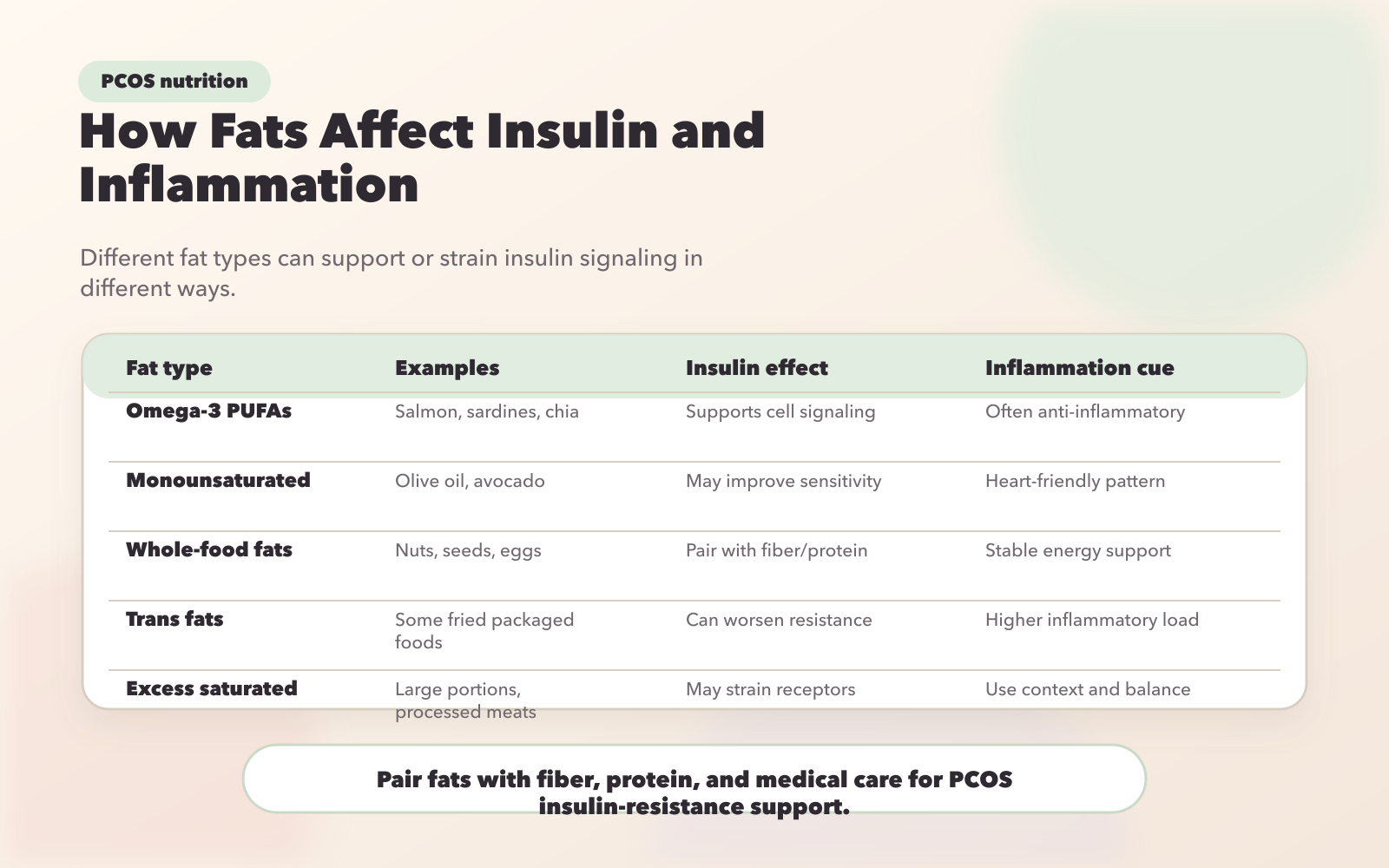
How Different Fats Affect Insulin Sensitivity and Inflammation in PCOS
The Science Behind Healthy Fats and Insulin Function
Healthy fats play a critical role in restoring insulin's ability to move glucose from the bloodstream into cells. When you consume polyunsaturated fatty acids (PUFAs), they become part of the cell membranes, improving their fluidity. This enhancement allows insulin receptors and GLUT4 glucose transporters to function more effectively, making it easier for sugar to enter cells.
The benefits of this process are well-documented. A 2015 study conducted at Stanford University School of Medicine, led by Dr. T. McLaughlin, examined six obese, insulin-resistant women with PCOS. Participants followed two different isocaloric diets for three weeks each: one high in carbohydrates (60% carbs, 25% fat) and another moderately low in carbohydrates but enriched with healthy fats (40% carbs, 45% fat). The diet rich in healthy fats lowered day-long insulin levels by 30% (450 ± 140 vs. 644 ± 174 μU/mL over 8 hours), even without any weight loss.
Small dietary changes can make a big difference. Replacing just 5% of calories from carbohydrates or saturated fats with polyunsaturated fats can lower HbA1c levels by about 0.1%. This seemingly small reduction is linked to a 22% decrease in the risk of developing type 2 diabetes and a 6.8% reduction in cardiovascular disease risk. Further supporting this, a meta-analysis of 102 randomized controlled trials involving 4,660 participants found that PUFAs consistently improved blood sugar control, insulin resistance, and insulin secretion.
In contrast, saturated fats can cause lipotoxicity and harm cells in the muscles and pancreas, disrupting insulin function. Unsaturated fats, on the other hand, prevent the buildup of harmful lipid byproducts and trigger gene expression changes that increase fat burning while reducing fat storage.
How Healthy Fats Reduce Inflammation
Inflammation is a major factor in insulin resistance. Proteins like TNFα and enzymes such as JNK and IKK interfere with insulin signaling by breaking down Insulin Receptor Substrate-1 (IRS-1). Healthy fats counteract these effects, providing anti-inflammatory benefits that support better insulin sensitivity.
Omega-3 fatty acids, such as EPA and DHA, are particularly effective. They help resolve inflammation by forming molecules called resolvins and binding to GPR120 receptors, which reduce cellular inflammation. Monounsaturated fats, like oleic acid found in olive oil, also play a protective role. They redirect harmful fatty acids like palmitate into less inflammatory triglyceride stores, preventing the formation of damaging compounds like diacylglycerol (DAG) and ceramides.
Saturated fats, especially palmitic acid, can trigger inflammation in the hypothalamus within just 24 hours of consumption. This inflammation disrupts the brain's ability to respond to insulin and leptin, hormones that regulate hunger and metabolism. In one study, replacing saturated fats with monounsaturated fats improved insulin sensitivity by 12.5%.
| Fatty Acid Type | Common Sources | Effect on Inflammation | Effect on Insulin Sensitivity |
|---|---|---|---|
| MUFA (Oleic Acid) | Olive oil, avocados, nuts | Reduces harmful lipid byproducts | Enhances insulin signaling and prevents resistance |
| Omega-3 PUFA | Fish oil, flaxseeds, walnuts | Produces resolvins to resolve inflammation | Improves sensitivity and reduces hypothalamic inflammation |
| Saturated Fat | Butter, palm oil, cream | Activates pro-inflammatory pathways (e.g., TLR-4) | Impairs sensitivity and promotes visceral fat storage |
To minimize inflammation and support metabolic health, limit saturated fat intake to no more than 7% of your daily calories. Adding omega-3-rich foods like fish or fish oil can further reduce inflammation and improve overall insulin function.
Best Food Sources of Healthy Fats
When it comes to managing PCOS symptoms and boosting insulin sensitivity, incorporating the right types of healthy fats into your diet can make a big difference. Let’s explore some of the top food choices that can help.
Monounsaturated Fats: Avocados and Olive Oil
Avocados and extra virgin olive oil are standout options for improving insulin function. Packed with oleic acid, these foods encourage fat oxidation and thermogenesis, particularly in women dealing with abdominal obesity.
Avocados also contain plant stanols, which may help lower cholesterol levels. To get the most out of these foods, use olive oil as your go-to cooking fat instead of butter or cream. Add sliced avocado to salads, sandwiches, tacos, or grain bowls for a delicious and nutritious boost.
Next up, let’s dive into omega-3 fats, which offer even more benefits for reducing inflammation and improving insulin sensitivity.
Omega-3 Fats: Fish, Walnuts, and Flaxseeds
Omega-3 fatty acids are powerful allies in the fight against inflammation, a key driver of insulin resistance. Some of the best sources include fatty fish like salmon, tuna, and trout. In fact, studies show that overweight women with PCOS who took 4 grams of fish oil daily for two months saw significant reductions in glucose, insulin levels, and LDL cholesterol. For optimal results, aim to eat fatty fish at least twice a week.
Not a fan of fish? No problem. Walnuts are a fantastic alternative. Research indicates they can improve insulin sensitivity by 26% in women with PCOS and may even increase sex-hormone binding globulin (SHBG), which helps regulate excess testosterone. For plant-based omega-3 sources, flaxseeds and chia seeds are excellent options. Thin women with PCOS who consumed 1,500 mg of omega-3 for six months saw improvements in insulin, testosterone, and luteinizing hormone levels.
Now, let’s look at how nuts, seeds, and their butters can add even more healthy fats to your meals.
Nuts, Seeds, and Nut Butters
Nuts and seeds are nutritional powerhouses, offering healthy fats, protein, and antioxidants. Options like walnuts, almonds, cashews, peanuts, hazelnuts, sunflower seeds, and pumpkin seeds can support hormone balance and improve cholesterol profiles. Sprinkle them on yogurt, oatmeal, or salads for an easy nutrient boost.
For a convenient and tasty option, turn to nut butters like peanut butter or almond butter. These spreads are great for stabilizing blood sugar, especially when paired with fiber-rich foods. Try spreading almond butter on whole-grain toast, stirring peanut butter into oatmeal, or dipping apple slices into cashew butter. Plus, the fiber content in these foods helps slow glucose absorption and keeps you feeling full longer.
"Our findings support preventing and treating these diseases by eating more fat-rich foods like walnuts, sunflower seeds, soybeans, flaxseed, fish, and other vegetable oils and spreads, in place of refined grains, starches, sugars, and animal fats." - Dariush Mozaffarian, MD, DrPH, Dean of the Friedman School of Nutrition Science and Policy at Tufts University
sbb-itb-6dba428
How to Add Healthy Fats to Your Diet
Meal Planning with Healthy Fats
When planning meals, aim for a macronutrient balance of 40% carbohydrates, 45% mostly unsaturated fats, and 15% protein. Research shows that tweaking these ratios can significantly lower insulin levels, even without weight loss.
Swap out butter and animal fats for extra virgin olive oil in cooking and salad dressings. Roasting vegetables with extra virgin olive oil not only enhances flavor but also boosts nutrient absorption and helps improve insulin response. To manage blood sugar spikes, eat protein and healthy fats first, followed by carbohydrates during meals.
Start your day with a breakfast that includes 30 grams of protein and high-fiber healthy fats like chia seeds, ground flaxseed, or walnuts. This combination slows digestion, keeping blood sugar levels steady throughout the morning. Even small dietary changes, such as replacing 5% of energy from carbohydrates or saturated fats with unsaturated fats, can lower HbA1c by 0.1% - reducing the risk of Type 2 diabetes by 22%.
In addition to balanced meals, incorporating well-chosen snacks can help maintain stable blood sugar levels all day.
Snack Ideas with Healthy Fats
Smart snacking is key to keeping blood sugar steady between meals. Pairing carbohydrates with healthy fats is a simple and effective strategy. For example, try a banana with almonds or whole-grain crackers with cheese to slow digestion and avoid energy crashes.
"Following a diet lower in refined or simple carbohydrates can help your body better manage sugar levels and may improve your insulin resistance." - Shelby Hoskins, MS, RD, LMNT, CDCES at Nebraska Medicine
For quick, no-prep options, keep snacks like hard-boiled eggs, olives, or a handful of walnuts handy. Spread mashed avocado or almond butter on whole-grain toast instead of using butter or mayonnaise. Opt for full-fat natural yogurt over low-fat versions to avoid added sugars, and sprinkle on chia seeds for an omega-3 boost. Even dark chocolate (with at least 70% cocoa) can be a smart choice, offering antioxidants with minimal added sugar.
How Oana Health Supports Insulin Sensitivity
Changing your diet can make a big difference in improving insulin sensitivity, but adding targeted prescription treatments can take those results even further.
Prescription Treatments for Insulin Resistance
Prescription medications work hand-in-hand with dietary changes to help women with PCOS improve insulin sensitivity. Oana Health offers several options that are designed to complement your nutrition plan.
One of the most widely used treatments is Metformin, which reduces glucose production and enhances your body’s response to insulin. Oana Health provides oral Metformin ER starting at $22/month. For those who experience gastrointestinal discomfort with oral medication, there’s also a topical Metformin lotion starting at $43/month. As one patient shared:
"I'm so glad I discovered Oana's metformin lotion! I get the same benefits but no more upset stomach and nausea".
For those seeking additional metabolic support, Oana Health offers oral semaglutide starting at $199/month. Clinical trials have shown that 76.3% of patients taking semaglutide achieved at least a 5% weight loss, with an average reduction of 13.6% over 64 weeks. Another option is MetSpiro, a combination of Metformin and Spironolactone, starting at $32/month. This treatment is specifically designed to address both insulin resistance and symptoms related to elevated androgen levels.
Telehealth Access and Home Delivery
Getting started with Oana Health is simple. A quick 5-minute online intake kicks off the process, after which licensed medical professionals - including OB/GYNs, primary care doctors, and endocrinologists - will review your health history. They’ll create a personalized treatment plan tailored specifically to your needs. All prescriptions are custom-made in FDA-regulated pharmacies and shipped straight to your door with free delivery.
This telehealth model eliminates common hurdles in managing PCOS. No need for in-person appointments or pharmacy visits - Oana Health takes care of automatic refills and ensures ongoing support from healthcare providers. With a $20 consultation fee and clear monthly pricing, you can focus on your dietary changes while leaving the treatment logistics to the experts. This streamlined approach ensures you receive consistent, coordinated care as you combine dietary improvements with prescription treatments for better PCOS management.
Conclusion
Making the switch to healthier fats can be a game-changer for addressing insulin resistance. Studies show that replacing refined carbohydrates with monounsaturated and polyunsaturated fats can cut all-day insulin levels by 30% - even without weight loss. This reduction helps disrupt the cycle of high insulin levels driving excess testosterone production, a common issue for women with PCOS. It’s a small dietary change that can pave the way for more effective PCOS management.
Research also highlights the benefits of swapping just 5% of dietary energy from carbohydrates or saturated fats with unsaturated fats. This simple adjustment can lower HbA1c by 0.1%, which translates to a 22% reduction in type 2 diabetes risk. Experts recommend incorporating fat-rich foods like walnuts, sunflower seeds, fatty fish, and vegetable oils while cutting back on refined grains and animal fats.
Oana Health takes this a step further by combining personalized prescription treatments with dietary strategies, offering convenient care and home delivery. With expert medical guidance, these tools create a well-rounded approach to managing PCOS.
Whether you're starting your PCOS journey or looking to refine your treatment plan, adding healthy fats can support better hormonal balance and metabolism. Focus on foods like avocados, olive oil, nuts, seeds, and fatty fish. And if you're seeking coordinated care, Oana Health can help you take your progress to the next level.
FAQs
How can healthy fats improve insulin sensitivity?
Incorporating healthy fats - like monounsaturated and polyunsaturated fats - into your meals can play a big role in improving insulin sensitivity. These fats work by replacing refined carbs in your diet, which helps lower fasting insulin levels, reduce HbA1c, and curb hyperinsulinemia. All of this contributes to better glucose metabolism and more effective insulin signaling.
You can boost your intake of healthy fats by adding foods like avocados, nuts, seeds, and fatty fish to your diet. This simple change can make a noticeable difference in how your body manages blood sugar. For those dealing with PCOS or insulin resistance, this adjustment can be particularly helpful.
What are the best healthy fats to include in your diet for managing PCOS?
Adding healthy fats to your meals can play a big role in improving insulin sensitivity and managing PCOS symptoms. This is because these fats help reduce hyperinsulinemia - one of the main drivers of hormonal imbalance. Studies suggest that swapping out carbohydrates or saturated fats for polyunsaturated and monounsaturated fats can lead to lower fasting insulin levels and better glucose control.
Here are some great sources of these beneficial fats:
- Nuts and seeds: Options like walnuts, almonds, pistachios, and flaxseed are packed with healthy fats.
- Fatty fish: Salmon, mackerel, and sardines are excellent choices, loaded with omega-3 fatty acids.
- Plant-based oils: Extra-virgin olive oil and avocado oil are fantastic for cooking or drizzling over dishes.
- Soy products: Foods like tofu and soybeans are another plant-based way to incorporate healthy fats.
Adding these foods to your diet doesn’t have to be complicated. Sprinkle ground flaxseed on your oatmeal, cook with olive oil, or enjoy grilled salmon a couple of times a week. Not only can these small changes improve insulin sensitivity, but they also offer anti-inflammatory benefits, which are crucial for maintaining hormonal balance.
For a more personalized approach, Oana Health provides telehealth programs that combine tailored nutrition plans with prescription-based treatments, all conveniently delivered to your home.
Can eating healthy fats help reduce the risk of Type 2 diabetes?
Incorporating more unsaturated fats into your meals can help improve insulin sensitivity and reduce certain risk factors associated with Type 2 diabetes. While this is a positive step, relying solely on healthy fats isn't enough to make a significant impact. Real, lasting improvements come from combining smart dietary choices with regular exercise and other lifestyle adjustments.
Swapping out carbs or saturated fats for unsaturated fats is a good place to begin. But for long-term benefits, aim for a balanced approach to your overall well-being. If you're dealing with conditions like insulin resistance or PCOS, it’s a good idea to consult a healthcare professional for tailored advice.