
Hormonal Therapy Allergy Prevention Tips
Dealing with allergies to hormonal therapies like estrogen or progesterone can be challenging. These reactions range from mild skin issues to severe symptoms like asthma or anaphylaxis. Here’s how to manage and prevent them:
- Understand Triggers: Allergies may stem from natural hormone surges, synthetic hormones in medications, or inactive ingredients like oils or alcohol.
- Recognize Symptoms: Common signs include hives, dermatitis, migraines, and breathing difficulties. Timing of symptoms - often linked to menstrual cycles or medication use - can provide clues.
- Work with Specialists: Consult allergists and gynecologists to assess risks, perform diagnostic tests, and develop a treatment plan.
- Track Patterns: Keep a symptom diary to connect reactions with hormonal changes or treatments.
- Prevent Reactions: Use antihistamines for mild symptoms, consider desensitization protocols, and avoid known allergens in medications or foods.
- Lifestyle Adjustments: Manage stress, improve sleep, and reduce allergen exposure with air purifiers and allergen-proof bedding.
How Allergic Reactions to Hormonal Therapy Work
When you take hormonal medications, your immune system might mistakenly see them as harmful invaders. This misstep can activate three immune pathways: Type I (immediate and IgE-mediated), Type III (immune complex and IgG-mediated), and Type IV (delayed and T-cell mediated).
In immediate reactions, your body produces hormone-specific IgE antibodies that bind to mast cells - cells that express progesterone receptors (PRA and PRB). A study from Brigham and Women's Hospital highlights this process:
"Human mast cell lines exposed to physiologic hormone levels, mast cells significantly released tryptase." - Dinah Foer, MD
When you're re-exposed to the hormone, these mast cells release tryptase and histamine, leading to rapid symptoms. For instance, a study of 113 patients with progestogen hypersensitivity reported that 90% experienced hives or swelling. On the other hand, delayed reactions involve T-cell activation, releasing interferon-gamma (IFN-γ). Symptoms, such as eczematous rashes, appear 24–48 hours later, affecting about 63% of patients.
Estrogen also plays a critical role in shaping an immune environment that leans toward allergic sensitization. Research from Mayo Clinic’s Division of Allergic Diseases shows that estrogen promotes immune cell differentiation and prevents B cell apoptosis, creating a Th2-prone environment during reproductive years. These immune responses lay the groundwork for the various clinical symptoms discussed below.
Common Symptoms and What Triggers Them
The immune mechanisms described above manifest in a range of symptoms, which can vary depending on the hormone type and its formulation. Skin issues are the most frequent: around 90% of affected individuals develop hives or swelling, while 63% experience dermatitis. More severe cases, affecting about 13%, may include vesiculobullous eruptions. Some individuals might also face respiratory problems, such as asthma or even anaphylaxis.
The timing of symptoms can provide valuable clues. Endogenous reactions - those triggered by your body’s natural hormone surges - typically occur 3 to 10 days before menstruation, when progesterone levels peak during the luteal phase. In contrast, exogenous reactions stem from synthetic hormones found in medications. About 58% of women with progestogen hypersensitivity reported their initial symptoms were tied to treatments like birth control pills, intrauterine devices (IUDs), or fertility therapies.
Inactive ingredients in hormonal medications can also spark reactions. Substances like benzyl alcohol or carrier oils (e.g., sesame, peanut, or cottonseed oil) used in injections may be culprits. Additionally, cross-reactivity can occur; for example, patients allergic to hydrocortisone might also react to progesterone due to their structural similarities.
Why Hormonal Medications Cause Allergies
Let’s dive deeper into why hormonal medications trigger allergic responses. These medications can alter immune function, making allergic reactions more likely. Estrogen, for instance, isn’t just a reproductive hormone - it also influences the immune system. Research from Mayo Clinic explains:
"Estrogen promotes the differentiation of dendritic cells and the production of T helper 2 (Th2) cytokines... These mechanisms drive a Th2-prone environment in women of reproductive age, which may contribute to progestogen sensitization." - Sergio E. Chiarella, M.D.
Certain conditions, like PCOS or other hormonal imbalances, may make individuals more vulnerable to these reactions. Hormonal disruptions - such as elevated testosterone and luteinizing hormone (LH) - can heighten immune sensitivity. In studies of recurrent pregnancy loss, about 70% of patients tested positive for delayed-type hypersensitivity to estrogen or progesterone, suggesting that pre-existing imbalances may amplify allergic responses.
The distinction between natural progesterone and synthetic progestins is also key. Progesterone is the bioidentical hormone your body naturally produces, while progestins are synthetic compounds found in many hormonal contraceptives. These structural differences can cause the immune system to see synthetic progestins as foreign, leading to sensitization. This might explain why some individuals experience reactions during both medicated and natural hormonal cycles.
How to Prevent Allergic Reactions to Hormonal Therapy
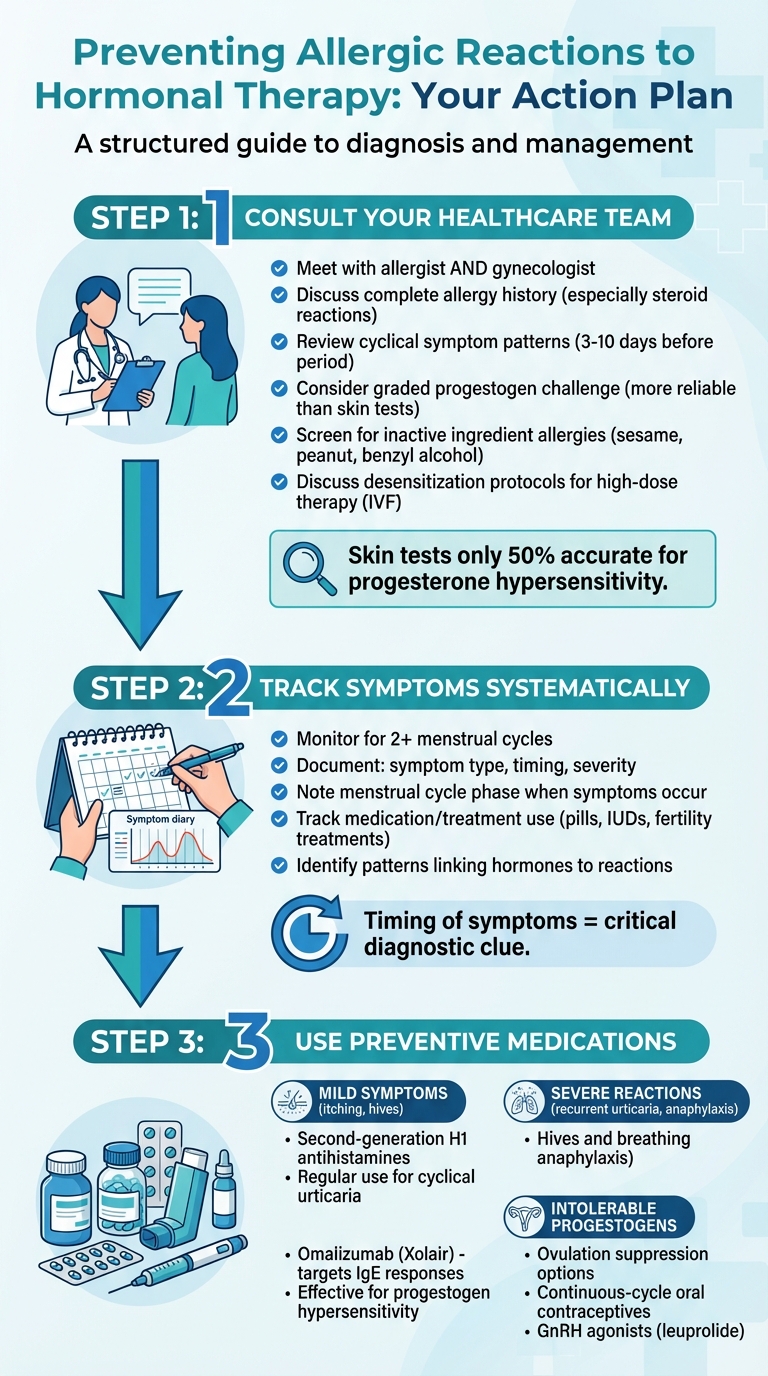
How to Prevent Allergic Reactions to Hormonal Therapy: 3-Step Action Plan
Preventing allergic reactions to hormonal therapy starts with early planning and collaboration with your healthcare team. Identifying risks and creating a tailored safety plan can make a significant difference.
Talk to Your Healthcare Provider
Before beginning any hormonal medication, it's essential to consult both an allergist and a gynecologist. Be upfront about your complete allergy history, especially if you've experienced reactions to steroid medications like hydrocortisone, which can sometimes cross-react with progesterone.
Your healthcare provider will likely review your medical history to establish a baseline. This includes checking whether your past symptoms followed a cyclical pattern. For instance, if you’ve noticed reactions occurring 3–10 days before your period, it could suggest sensitivity to natural progesterone.
If synthetic hormones are suspected as the cause of allergic reactions, your provider may recommend a graded progestogen challenge. This method is more reliable than skin testing, as progesterone skin tests only yield positive results in about 50% of confirmed cases of hypersensitivity. Keep in mind, a negative skin test doesn’t completely rule out an allergy, and a positive result doesn’t always mean treatment must be avoided.
"Progestogen challenge should be considered in all patients where confirmation of a suspected diagnosis is necessary and safe."
- Sergio E. Chiarella, M.D., Division of Allergic Diseases, Mayo Clinic
If you’re undergoing high-dose hormonal therapy, such as during IVF, discuss desensitization protocols with your doctor. These procedures gradually increase your tolerance to hormones in a controlled clinical setting. Additionally, make sure to screen for allergies to inactive ingredients like sesame, peanut, or benzyl alcohol, as these can also trigger reactions. All of this information helps your healthcare team adjust your treatment plan safely.
Track Your Symptoms and Cycles
After consulting your healthcare provider, tracking your symptoms systematically can help refine the diagnosis. Over the course of two cycles, document any symptoms - such as rashes or breathing issues - along with their timing and severity. Pay close attention to where you are in your menstrual cycle when these symptoms occur.
By monitoring specific phases of your cycle, you can identify patterns. For example, if symptoms consistently appear while using birth control pills, IUDs, or fertility treatments, this may indicate hypersensitivity to synthetic hormones.
"The timing of progestogen exposure, either endogenous or exogenous, in relationship to symptoms is a critical component of the clinical history."
- Sergio E. Chiarella, M.D., Division of Allergic Diseases, Mayo Clinic
This detailed tracking provides your healthcare team with valuable insights, helping them identify safer treatment options or make necessary adjustments to your current plan.
Use Preventive Medications
For mild symptoms like itching or hives, second-generation H1 antihistamines can be a good first-line option to stop minor reactions from escalating. If you have a history of cyclical urticaria, your provider might recommend taking these medications regularly.
For more severe reactions, such as recurrent urticaria or anaphylaxis that doesn’t respond well to standard antihistamines, omalizumab (Xolair) may be an option. This medication targets IgE-mediated immune responses and has been effective for patients with progestogen hypersensitivity, particularly those pursuing fertility treatments.
If progestogens are intolerable, your doctor may suggest ovulation suppression using continuous-cycle oral contraceptives or GnRH agonists like leuprolide. These treatments prevent the natural progesterone surge during your cycle, effectively eliminating the trigger.
Lifestyle Changes to Lower Allergy Risks
Adjust Your Diet
What you eat can influence how your immune system responds, especially when you're on hormonal therapy. Estrogens, for instance, can boost the production of IgE antibodies and increase histamine release, making allergic reactions more intense or frequent.
To manage this, start by keeping a food diary. Track your meals alongside your hormonal therapy doses and menstrual cycle phases. This can help pinpoint foods that worsen symptoms during hormonal shifts. Also, be mindful of cross-reactive allergens. For example, if you're allergic to birch pollen, eating apples or peaches might trigger a reaction. Similarly, latex allergies can lead to issues with avocados, kiwifruit, or other tropical fruits.
| Allergy Type | Potential Cross-Reactive Dietary Triggers |
|---|---|
| Birch Pollen | Apples, Peaches |
| Latex | Avocados, Kiwifruit, Tropical Fruits |
| Seasonal Allergies | Various fruits and vegetables (Oral Allergy Syndrome) |
Reading food labels is another key step. Avoid common allergens like peanuts, shellfish, and eggs. If you're uncertain about specific triggers, consult an allergist for skin or blood tests to identify foods that might interact poorly with your hormonal changes.
While dietary changes are important, don't overlook the impact of stress and your environment on allergy management.
Manage Stress and Control Your Environment
Stress plays a direct role in how your body tolerates hormonal medications. When you're stressed, your body releases cortisol, which can lead to an overproduction of IgE antibodies. This creates a cycle of inflammation, worsened allergic reactions, and disrupted sleep.
"Stress management contributes to maintaining hormonal balance and consequently lessens allergy flare-ups."
Incorporate stress-relief techniques like yoga, meditation, or deep breathing exercises to lower cortisol levels and keep your immune system in check. Aim for 7 to 9 hours of quality sleep each night - your body produces cytokines during sleep, which are essential for regulating immune responses and repairing cells. To improve sleep quality, consider allergen-proof pillow and mattress covers, keep pets out of your bedroom, and shower before bed to remove pollen and other irritants.
For extra protection, install a HEPA air purifier in your bedroom to filter out airborne allergens while you sleep. Daily use of saline nasal sprays or a Neti pot can also help clear allergens from your nasal passages. By taking these steps to manage your environment, you can reduce your overall allergic load and help your body better handle hormonal medications.
sbb-itb-6dba428
Monitor and Adjust Treatments with Telehealth Support
Get a Personalized Treatment Plan
Telehealth providers specialize in creating hormonal therapy plans tailored to your specific needs and sensitivities. This personalized approach helps manage potential allergy risks and ensures safer outcomes. Medical professionals carefully assess your symptoms and prescribe the lowest effective dose to minimize side effects. For hormonal acne, for instance, your provider might start you on Spironolactone at 25–50 mg daily, gradually increasing the dose as tolerated. Studies suggest that even 50 mg per day can significantly reduce hormonal acne, cutting breakouts by 50% to 100%. If oral medications cause side effects or interact with other drugs, a topical version of Spironolactone is an alternative. This localized treatment option, which avoids systemic effects, is available for about $43 per month.
"If you prefer not to take oral medications or it is not recommended to take oral spironolactone due to side effects or medication interactions, your provider may recommend the topical cream."
- Claudia Ricotti, MD, Dermatology Resident, Cleveland Clinic
Telehealth platforms like Oana Health make these treatments even more convenient by delivering prescriptions directly to your home with free shipping. Regular follow-ups ensure that your treatment plan stays aligned with your progress and goals.
Schedule Regular Check-Ins
After starting your personalized treatment, regular monitoring becomes essential. While most medication allergies appear within hours of taking a dose, some may develop after repeated use. Virtual check-ins allow your provider to identify and address side effects or allergic reactions early - whether it’s mild symptoms like dizziness or more serious signs like hives, rashes, or swelling. During these appointments, it’s important to share all symptoms, no matter how minor, and disclose any supplements or medications you’re taking to avoid potential interactions.
If you have kidney disease, your provider may also monitor potassium levels and kidney function, as oral Spironolactone can increase potassium. Hormonal treatments typically require at least three months of consistent use to show noticeable results. Patience, combined with regular monitoring, ensures that your therapy remains effective and safe. If any concerns arise, your provider can adjust dosages, switch medication forms, or discontinue treatment altogether to safeguard your health while helping you achieve your goals.
Conclusion
Managing allergic reactions effectively requires a thoughtful mix of medical guidance and practical lifestyle changes. Begin by collaborating with your healthcare provider to create a detailed allergy management plan. This plan should pinpoint your specific triggers and outline actionable steps to avoid them. Keeping a symptom diary can also help you track patterns, connect triggers to symptoms, and optimize medication timing.
Incorporating targeted lifestyle adjustments can significantly lower your exposure to allergens. Simple steps like using HEPA filters, carefully reading food labels for hidden allergens, and finding ways to reduce stress can make a big difference. For those at risk of severe reactions, it’s critical to always have your prescribed epinephrine auto-injector on hand and wear a medical alert bracelet.
Ongoing professional support is equally important. Regular check-ins with your doctor or licensed professionals help ensure your treatment plan evolves with your needs. Platforms like Oana Health make it easier to access virtual consultations, where adjustments to dosages, medication types, or alternative treatments can be discussed.
The Asthma and Allergy Foundation of America underscores the importance of this partnership:
"Work with your doctor to create your allergy management plan."
- Asthma and Allergy Foundation of America (AAFA)
FAQs
What are the typical signs of an allergic reaction to hormonal therapy?
Allergic reactions to hormonal therapy can show up in different ways. Some of the more common signs include skin rashes, hives, and swelling. However, in rare but serious cases, these reactions can progress to anaphylaxis. This severe response may cause widespread hives, swelling in the tongue or mouth, trouble breathing, wheezing, or a tight feeling in the throat.
If you notice any of these symptoms - especially the severe ones - it’s crucial to get medical help right away. Always talk to your healthcare provider if you think you might be having an allergic reaction to your medication.
How can I tell if my allergic reactions are caused by hormonal therapy?
If you think your allergic reactions could be tied to hormonal therapy, reaching out to a healthcare professional is key. They’ll review your medical history, evaluate your symptoms, and, if needed, suggest allergy testing to determine the exact cause.
It’s also helpful to track when your symptoms appear, particularly if they started after beginning or adjusting hormonal medications. Maintaining a symptom journal can make it easier for you and your doctor to spot patterns and identify possible triggers.
What steps can I take to lower my risk of allergic reactions to hormonal therapy?
Reducing the chance of allergic reactions to hormonal therapy can begin with a few thoughtful lifestyle adjustments. Start by minimizing exposure to harmful environmental substances. Choose personal care products that are free from phthalates, parabens, and synthetic fragrances. Swap out plastic containers for glass or stainless steel alternatives, and when possible, go for organic fruits and vegetables to cut down on pesticide exposure.
It’s also important to support your body’s natural detox processes. Drinking plenty of water, eating a fiber-rich diet, and staying active through regular exercise can help your body handle potential allergens more effectively. These straightforward changes, alongside guidance from a healthcare professional, can promote a healthier hormonal balance and potentially lower the risk of reactions to hormonal therapies.