
How Insulin Resistance Affects PCOS Workouts
Feeling drained after workouts or not seeing results with PCOS? Insulin resistance could be the reason. Around 65–95% of women with PCOS experience insulin resistance, which impacts how their body uses energy during exercise. This condition makes it harder for muscles to access glucose, leading to fatigue and lower workout performance. However, the right exercise plan can improve insulin sensitivity, even without major weight loss. Here’s what you need to know:
- What’s happening? Insulin resistance disrupts glucose absorption, causing fatigue and hormonal imbalances.
- Why exercise helps: Physical activity improves insulin sensitivity for up to 72 hours, reduces abdominal fat, and supports hormonal balance.
- Best workouts: Combine moderate-intensity cardio, strength training, and HIIT. Aim for 150 minutes per week.
- Tailored approach: Balance intensity with recovery to avoid spikes in cortisol, which can worsen symptoms.
Making small, consistent changes to your workout routine can improve energy, reduce insulin resistance, and support overall PCOS management. Let’s break it down step-by-step.
Best exercise for insulin resistance (treating PCOS naturally)
How Insulin Resistance Affects Workout Performance
Insulin resistance caused by PCOS creates unique obstacles for your workouts, starting at the cellular level. It interferes with how your muscles access and use glucose, which is the primary fuel source during exercise.
Energy Use and Fatigue
Your skeletal muscles handle 70–80% of the body's insulin-stimulated glucose uptake. But when insulin resistance disrupts this process, your muscles can't efficiently pull glucose from your bloodstream. This happens because of increased serine phosphorylation of insulin receptor substrate-1 (IRS-1), which blocks glucose uptake. The result? You might feel your energy drain faster, leaving you fatigued earlier in your workout. High-intensity exercises can make things worse by spiking cortisol levels and destabilizing blood sugar.
This energy struggle highlights how insulin resistance can sap your stamina and limit your performance.
Reduced Muscle Performance
Insulin resistance doesn’t just affect energy - it also impacts how your muscles grow, repair, and adapt. It reduces mTOR signaling, a critical pathway for muscle health.
"Yet, the underlying mechanisms of insulin resistance in PCOS remain ill defined." - N K Stepto, Institute for Health and Sport
Another issue is muscle tissue fibrosis, which involves abnormal remodeling that disrupts the delivery of nutrients. This makes it even harder for muscles to get the glucose they need for fuel. On top of that, women with PCOS often experience a weaker growth hormone response to exercise, which slows down muscle recovery. Together, these factors create a tough environment for building strength and endurance.
Best Exercises to Improve Insulin Sensitivity
The right exercise routine can play a big role in improving how your body handles insulin. Studies highlight that vigorous aerobic exercise is particularly effective for reducing both BMI and insulin resistance in women with PCOS. Different types of exercise target insulin sensitivity in unique ways, and this section breaks down the best approaches.
Aerobic Exercise
Steady-state cardio, performed at 50–70% of your max heart rate, is known to enhance glucose metabolism and lower HOMA-IR levels. For example, a study found that 150 minutes of brisk walking per week led to measurable benefits. Participants experienced a -0.32% change in their 8-week fasting glucose levels. However, those engaging in vigorous exercise saw an 8.06% increase, likely due to the physical stress of unsupervised high-intensity workouts.
To keep things manageable, aim for 150 minutes of moderate-intensity aerobic activity weekly - that’s just 30 minutes a day, five days a week. This routine not only improves insulin sensitivity but also fits into most lifestyles. While steady-state cardio is a great starting point, incorporating high-intensity intervals can amplify results.
High-Intensity Interval Training (HIIT)
HIIT involves alternating between short bursts of intense activity and recovery periods, delivering fast and effective results. In one study, 28 women with PCOS completed 3 HIIT sessions per week for 8 weeks at 100–110% of their maximum aerobic velocity. The outcomes were striking: participants saw significant reductions in fasting insulin, HOMA-IR, BMI, and visceral fat.
"HIIT improved insulin resistance without weight loss in the women with PCOS." - BMC Sports Science, Medicine and Rehabilitation
Compared to continuous moderate-intensity exercise, HIIT offers better reductions in visceral fat and greater cardiovascular benefits. To maximize your results, push yourself to near-maximal effort during the high-intensity intervals.
Strength and Resistance Training
Building muscle through strength training provides long-term metabolic advantages. Skeletal muscles act as glucose storage units, so having more muscle helps your body manage blood sugar more effectively. Research shows that resistance training has the greatest impact on reducing fasting insulin levels, with a mean reduction of 3.99 μIU/ml.
In a 2017 study, 16 overweight or obese women (including 9 with PCOS) participated in a 12-week supervised progressive resistance training program. Even though two-thirds of the participants didn’t lose significant body fat (≥5%), they still achieved a 37% average improvement in insulin sensitivity. This highlights how resistance training can enhance insulin function, even without major weight loss.
"Exercise, regardless of modality, reduces fasting insulin, but not fasting blood glucose, in women with PCOS compared with those receiving no intervention." - Sheffield Hallam University Research Archive
For the best results, include resistance training 2–3 times per week at 60–85% of your one-rep max. This approach helps regulate blood sugar while building lean muscle mass.
sbb-itb-6dba428
How to Optimize Workouts for PCOS with Insulin Resistance
Balancing Intensity and Recovery
When managing insulin resistance, the intensity of your workouts can have a big impact. Instead of going all-out every session, aim for moderate-intensity exercise at 50–70% of your maximum heart rate. This level often helps stabilize blood sugar more effectively than high-intensity routines. A simple way to gauge this is the "talk test": you should be able to speak in short sentences while exercising.
Overdoing it with intense workouts can backfire, especially for women with PCOS, who may have a heightened stress response. High-intensity sessions can spike cortisol levels, leading to increased abdominal fat and worsening insulin resistance. One study even showed that while vigorous home-based exercise caused an 8.06% rise in glucose levels, moderate exercise led to a small -0.32% decrease. This highlights the potential downsides of unsupervised, overly intense routines for some women.
"When you dread exercising... you release stress hormones. Stress hormones can cause your body to hold onto fat, particularly belly fat." - Monica Moore, MSN, APRN
For the best results, aim for 30-minute sessions, 3–5 times per week, mixing different intensity levels to allow for proper recovery. If you include HIIT (High-Intensity Interval Training), balance it with lower-intensity recovery days or stress-reducing activities like yoga or Pilates. This approach not only helps regulate stress hormones but also supports long-term progress. Pairing these workouts with the right nutrition can further enhance your insulin sensitivity.
Using Nutrition to Support Exercise
The right nutrition can make your workouts more effective and sustainable. Each meal should include a balance of lean protein, healthy fats, and high-fiber, low-glycemic carbohydrates to keep blood sugar steady before and after exercise. This combination helps prevent energy crashes that can disrupt your routine.
To support overall health, aim for at least 25 grams of fiber daily from sources like vegetables, legumes, and whole grains. Keep total fat intake below 30% of daily calories, with saturated fats making up less than 10%. Avoid sugary drinks altogether, as they can cause energy dips or hypoglycemia, interfering with your performance. For those focusing on weight loss, reducing daily calorie intake by 500 to 1,000 calories, while ensuring meals remain nutrient-dense, can help restore ovulation cycles. Even a modest 5% weight loss can make a noticeable difference.
"A healthy eating plan for PCOS often includes: A diet with a lower intake of carbohydrates (but not a 'low-carb' diet), eating more lean protein and monounsaturated fats, and eating mostly whole grains." - Angela Grassi, MS, RD, Author of The PCOS Workbook
8-Week Workout Plan for Insulin Sensitivity
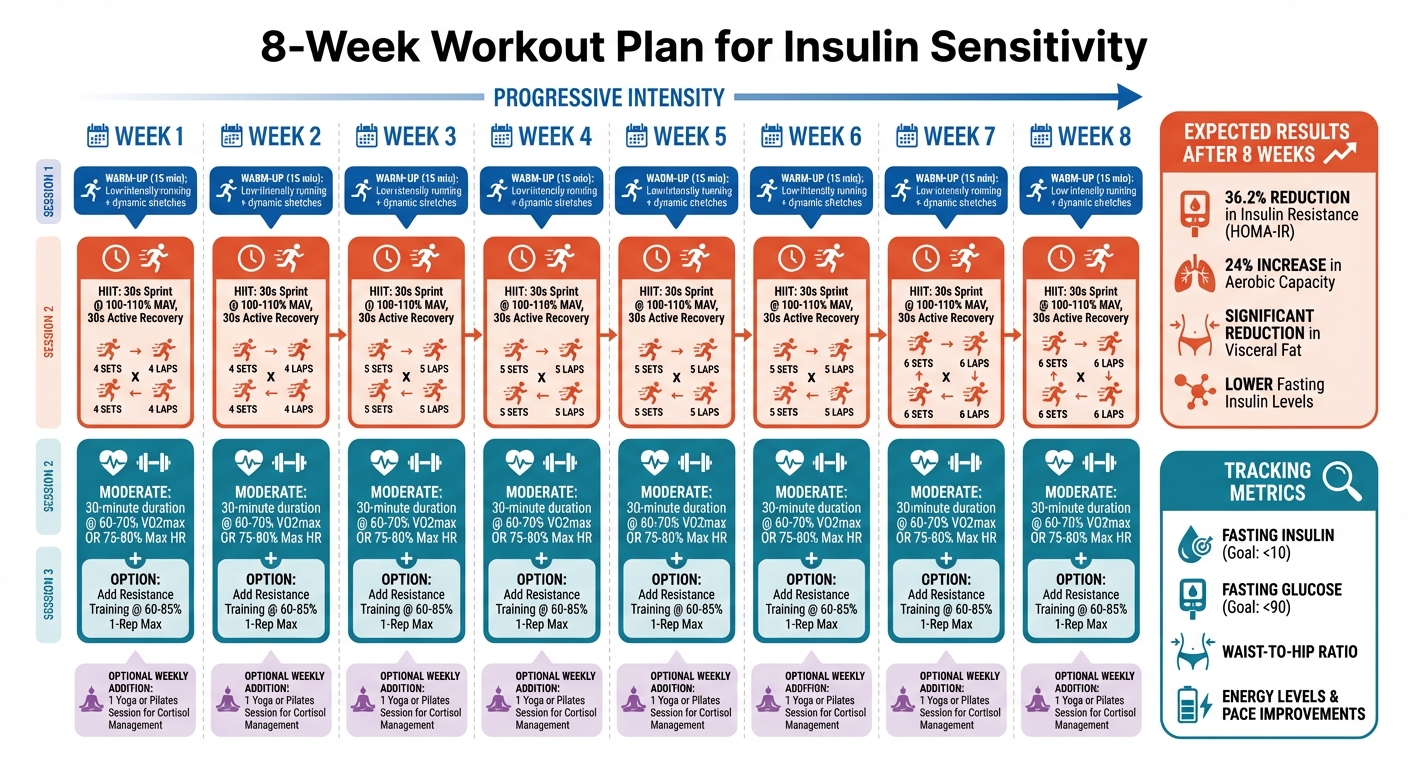
8-Week PCOS Workout Plan for Insulin Sensitivity
Weekly Routine Structure
This 8-week plan includes three sessions per week, alternating between HIIT (High-Intensity Interval Training) and moderate aerobic or resistance training. Each session kicks off with a 15-minute warm-up, featuring low-intensity running and dynamic stretches to prepare your body for the workout.
For the HIIT sessions, aim for 30-second sprints at 100–110% of your Maximum Aerobic Velocity (MAV), followed by 30 seconds of active recovery. The number of sets and laps increases over time: start with 4 sets per lap (4 laps total) in Week 1 and work up to 6 sets per lap (6 laps total) by Week 8. This gradual progression has been shown to significantly lower insulin resistance (HOMA-IR), fasting insulin levels, and visceral fat in women with PCOS.
On non-HIIT days, focus on moderate-intensity aerobic exercises at 60–70% of your VO2max or 75–80% of your maximum heart rate. You can also incorporate resistance training to build muscle, which helps improve metabolic health. Research shows that combining aerobic and resistance training is more effective at reducing cardiovascular risks than doing either type alone. Consider adding a weekly yoga or Pilates session to help manage cortisol levels, as stress-induced cortisol can worsen insulin resistance.
"Exercise is the first-line treatment for PCOS. Moderate intensity and high-intensity aerobic exercise improves IR in women with PCOS." - Safa Anwar, et al.
By sticking to this routine and making adjustments as needed, you can set yourself up for long-term success.
Tracking Progress and Making Adjustments
Track your progress by focusing on improvements in energy, pace, and strength - not just changes on the scale. For example, a 12-week exercise program increased aerobic capacity (VO2 peak) by an average of 27% in overweight women with PCOS.
Monitor both your performance and physiological markers to assess how well the plan is working. Before starting and after completing the 8-week program, ask your healthcare provider for fasting glucose and insulin tests. Use these results to calculate your HOMA-IR by multiplying fasting glucose by fasting insulin, then dividing by 405. Ideally, aim for fasting insulin levels under 10 and fasting glucose levels below 90. Additionally, keep an eye on your waist-to-hip ratio as an indicator of progress.
If you notice excessive fatigue or an increase in fasting glucose levels, it may be a sign to scale back the intensity of your workouts. A study conducted by the University of California San Francisco (2015–2022) revealed that some women in vigorous exercise programs experienced an 8.06% increase in glucose levels, while those in moderate exercise programs achieved a -0.32% decrease. This underscores the importance of listening to your body and adjusting as needed.
"Women with PCOS should be encouraged that participation in exercise can result in significant improvements in insulin sensitivity and relative central adiposity even if they do not achieve significant weight loss." - Scott D, et al.
Keep a record of your menstrual cycles, as increased regularity often signals positive hormonal changes. Use heart rate monitors or fitness trackers to ensure you're hitting the right intensity levels. Remember, exercise can boost insulin sensitivity for 2–72 hours after each session.
Conclusion
Key Takeaways
Exercise is the go-to strategy for managing PCOS and insulin resistance, but how you approach it matters just as much as the effort itself. Insulin resistance is a common issue for women with PCOS, regardless of their weight, making it a key area to address with focused interventions. The intensity of your workouts plays a bigger role than just the time spent exercising, driving improvements in insulin sensitivity, body composition, and hormonal balance.
You don’t need significant weight loss to see metabolic benefits. Reductions in visceral fat and better insulin sensitivity can happen even without major changes on the scale. Instead of obsessing over weight, track meaningful markers like fasting insulin levels, waist circumference, and overall energy. With consistent effort over 8 to 12 weeks, you could see about a 24% boost in aerobic capacity and a 36.2% drop in insulin resistance.
For best results, aim for at least 120 minutes of vigorous exercise weekly, mixing HIIT with moderate-intensity workouts. Pair these sessions with a high-fiber, low-glycemic diet. A combination of aerobic exercise, strength training, and proper nutrition creates a winning formula. Structured workout plans with clear goals and accountability often lead to better long-term results compared to unsupervised routines.
This evidence underscores the importance of a balanced exercise plan, smart nutrition choices, and medical guidance to effectively manage PCOS. It ties back to earlier discussions emphasizing a tailored and holistic approach to tackling this condition.
How Oana Health Can Help

While exercise and nutrition are vital, medical support can amplify these efforts. Addressing insulin resistance in PCOS often requires a multi-faceted approach, blending lifestyle changes with targeted treatments. Oana Health provides personalized, science-backed solutions designed to complement your fitness routine and tackle the metabolic challenges of PCOS. Through their telehealth platform, licensed professionals can prescribe insulin-sensitizing medications like:
- Oral Metformin ER: $22/month
- Metformin & Spironolactone combo: $32/month
- Oral GLP-1 & Metformin: $199/month
These treatments are tailored to enhance your body’s response to exercise and improve hormonal balance. Plus, everything is delivered directly to your door with free shipping, making it easy to stay on track.
FAQs
How does insulin resistance affect your energy levels during PCOS workouts?
Insulin resistance can sap your energy during workouts by making it harder for your body to use glucose as fuel. When your muscles struggle to absorb glucose due to insulin not functioning properly, you may feel more tired, and exercise can seem tougher than usual. This is a common hurdle for women dealing with PCOS.
Although regular exercise can gradually improve insulin sensitivity, the effects aren’t instant. Fatigue during workouts might still linger, which is why it’s crucial to focus on exercise routines that are consistent and designed to manage your energy wisely. Pairing these workouts with other approaches - like maintaining a balanced diet and seeking medical guidance - can help boost your results and support better metabolic health overall.
What are the best types of exercises to improve insulin sensitivity for women with PCOS?
For women managing PCOS, combining aerobic exercise with resistance training can work wonders for improving insulin sensitivity. Aerobic activities - like brisk walking, swimming, or cycling - help reduce fasting insulin levels and enhance how your body handles glucose. On the other hand, resistance exercises, such as weightlifting or bodyweight routines, not only boost insulin sensitivity further but also build muscle, which is essential for tackling insulin resistance.
The best approach? A balanced routine that mixes both. Aim for about 150 minutes of moderate aerobic exercise each week, paired with two to three resistance training sessions. Sticking to this routine consistently can do more than just improve insulin sensitivity - it can also help with other PCOS-related challenges, like weight gain and fatigue. Before diving into a new workout plan, though, it’s always wise to check in with a healthcare provider to make sure it’s safe and aligns with your specific needs.
How does nutrition improve workout results for women with insulin resistance and PCOS?
Nutrition plays a crucial role in enhancing workout results for women dealing with insulin resistance and PCOS. By focusing on stabilizing blood sugar levels, the right diet can improve insulin sensitivity, making exercise more effective in managing symptoms. Incorporating whole foods, fiber-rich choices, lean proteins, and healthy fats while keeping carbohydrate intake in check can help minimize blood sugar spikes and curb cravings.
When combined with regular physical activity, balanced nutrition can support hormonal balance, lower inflammation, and boost overall workout performance. This powerful duo helps maintain steady energy levels, improve fat metabolism, and tackle PCOS-related challenges like weight gain and insulin resistance. Adjusting your diet to prioritize blood sugar regulation is a key step in getting the most out of your exercise routine.