
How Insulin Resistance Impacts Hormonal Acne
Insulin resistance can play a major role in hormonal acne. When your cells stop responding effectively to insulin, your body produces excess insulin, which leads to hormonal changes that trigger acne. High insulin levels increase androgens, stimulate oil production, and worsen inflammation - all of which contribute to clogged pores and breakouts.
Research shows:
- 81% of acne patients show signs of insulin resistance based on C-peptide levels.
- High-glycemic foods (like white bread and sugary snacks) and dairy, especially skim milk, can worsen acne by causing insulin spikes.
- Studies confirm that individuals with severe acne often have higher fasting insulin and IGF-1 levels compared to those with clear skin.
Addressing insulin resistance through dietary changes (low-glycemic diets, reducing dairy), lifestyle adjustments (exercise, weight management), and medications like Metformin can help tackle the root cause of hormonal acne instead of just masking symptoms.
Insulin Resistance and Acne! Cure Acne with These Easy Steps. Keep Clear Skin and Control Diabetes
How Insulin Resistance Causes Hormonal Acne
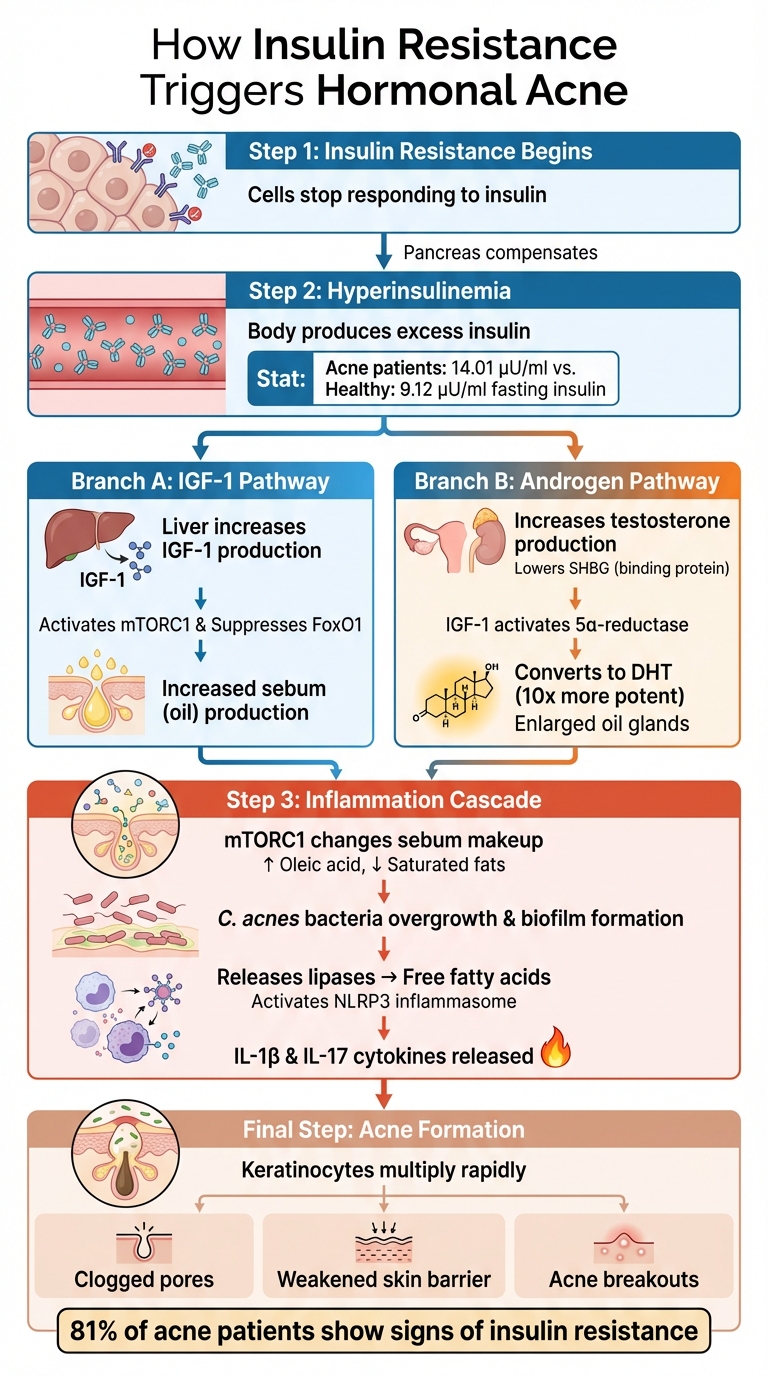
How Insulin Resistance Triggers Hormonal Acne: A Step-by-Step Breakdown
When your body’s cells stop responding properly to insulin, your pancreas ramps up insulin production, leading to higher levels in your blood (a condition called hyperinsulinemia). This sets off a chain reaction of hormonal shifts that directly impact your skin. The main culprits? Increased oil production, elevated androgen levels, and chronic inflammation. These factors work together to create the perfect storm for acne, as explained below.
How High Insulin and IGF-1 Affect Your Skin
Excess insulin prompts your liver to produce more IGF-1 (insulin-like growth factor 1) while reducing its natural regulators. This results in higher levels of free IGF-1 circulating in your bloodstream. Both insulin and IGF-1 then activate a pathway known as mTORC1, while suppressing a protective protein called FoxO1. When FoxO1 is suppressed, it removes the brakes on certain lipogenic (fat-producing) factors, leading to increased sebum (oil) production.
The connection is clear. For instance, a study comparing severe acne patients to healthy individuals found that those with acne had fasting insulin levels of 14.01 µU/ml, compared to 9.12 µU/ml in the control group. A fascinating clue comes from people with Laron Syndrome, a rare condition marked by IGF-1 deficiency. These individuals naturally never develop acne. However, when treated with recombinant IGF-1, acne emerges - underscoring the hormone's pivotal role.
"IGF-1 signaling is the central endocrine pathway of puberty and sexual maturation, and is the converging point of nutrient signaling in acne." - Bodo C Melnik, Department of Dermatology, University of Osnabrück
Androgens and Overactive Oil Glands
High insulin levels don’t stop at IGF-1 - they also increase androgen production. Elevated insulin encourages your ovaries and adrenal glands to produce more testosterone and other androgens. At the same time, it lowers SHBG (sex hormone-binding globulin), which increases the amount of free testosterone in your system.
The situation worsens because IGF-1 activates an enzyme called 5α-reductase, which converts testosterone into dihydrotestosterone (DHT). DHT is far more potent, binding to androgen receptors 10 times more strongly than regular testosterone. With FoxO1 suppressed, your skin becomes hypersensitive to these androgens. The result? Enlarged sebaceous glands that churn out excessive oil, leading to clogged pores and acne lesions. This androgen surge also makes your skin more vulnerable to inflammatory damage, which brings us to the next point.
Inflammation and Skin Barrier Damage
Insulin resistance doesn’t just increase the amount of oil your skin produces - it changes its makeup. Overactivation of mTORC1 alters sebum composition, increasing oleic acid while reducing saturated fatty acids. This imbalance encourages the overgrowth of Cutibacterium acnes bacteria, which thrive in this altered oil environment and form biofilms.
These biofilms release enzymes called lipases, which break down sebum into free fatty acids like palmitic acid. These fatty acids activate the NLRP3 inflammasome, triggering the release of inflammatory cytokines such as IL-1β and IL-17. These cytokines cause keratinocytes (skin cells) to multiply too quickly, clogging pores and weakening the skin’s protective barrier. This creates a vicious cycle of inflammation and acne breakouts.
"Hyperinsulinemia is responsible for increased proliferation and dysfunction of keratinocytes by stimulation of IGF-1 receptors." - Anna Sadowska-Przytocka, Department of Dermatology, Poznan University of Medical Sciences
Research on Insulin Resistance and Acne
How Common Is Insulin Resistance in Acne Patients
Studies show that insulin resistance is significantly more common in individuals with acne compared to those with clear skin. For instance, 67% of acne patients displayed insulin resistance when assessed using the Triglyceride-Glucose (TyG) index. Another study using HOMA-IR measurements found that 78% of acne patients had insulin resistance, compared to only 55% in the control group.
A 2022 study conducted at Al-Fayhaa Teaching Hospital examined 43 acne patients with various diagnostic methods and confirmed these elevated rates. This aligns with growing evidence suggesting that insulin resistance could play a direct role in acne development - even in individuals who maintain a normal body weight.
"Insulin resistance might be an independent factor in acne vulgaris development and should be considered when diagnosing and treating acne." - Michalina Gruszczyńska et al., Biomedicines
These findings highlight the strong association between insulin resistance and acne, suggesting it could also influence the severity of the condition.
The Link Between Acne Severity and Insulin Resistance
Research goes beyond prevalence to demonstrate how insulin resistance can worsen acne severity. Biomarkers of insulin resistance, such as C-peptide and the TyG index, show a strong positive correlation with acne severity, with correlation coefficients of r = 0.760 and r = 0.814, respectively.
Data from the 2023 Basrah study illustrate this relationship clearly. Patients with mild acne had average C-peptide levels of 1.33 ng/ml, whereas those with severe acne had levels of 4.75 ng/ml - almost four times higher. Similarly, another study of 243 severe acne patients reported mean HOMA-IR values of 2.87, compared to 1.63 in healthy individuals.
Between March 2016 and October 2017, Dr. Monika Singh and her team at Sawai Man Singh Medical College studied 80 patients with moderate to severe acne. They found that fasting insulin levels in acne patients averaged 33.85 µIU/mL, compared to just 7.14 µIU/mL in the control group.
"Insulin resistance was seen in majority of patients with acne. These results can add to the evidence regarding a potential association between metabolic dysregulation and acne." - Monika Singh, Indian Journal of Dermatology
These findings underscore the critical connection between insulin resistance and both the presence and severity of acne, pointing to metabolic factors as a key consideration in understanding and managing the condition.
sbb-itb-6dba428
Diet and Lifestyle Factors That Worsen Insulin Resistance and Acne
High-Glycemic Foods and Acne Breakouts
Eating foods that cause rapid blood sugar spikes - like white bread, sugary drinks, and candy - can set off hormonal changes that worsen acne. These high-glycemic foods prompt your pancreas to release a large amount of insulin to handle the sudden glucose increase. Over time, this can lead to chronic hyperinsulinemia, which reduces insulin sensitivity and exacerbates acne.
The statistics are hard to ignore. A NutriNet-Santé study of 24,452 participants found a strong link between sugary beverages and acne, with an adjusted odds ratio of 2.19. Milk chocolate also showed an increased risk, with an odds ratio of 1.28.
"High glycemic load diets exacerbate acne by increasing the levels of IGF1."
– Rashmi Kumari, Department of Dermatology and STD, JIPMER
Dairy products also play a role in these hormonal shifts, further aggravating acne.
Dairy Products and Their Effect on Acne
Milk and other dairy products can make acne worse because of their insulinotropic nature - they stimulate a significant insulin response even without causing a blood sugar spike. Whey protein, in particular, drives excessive insulin production, while casein increases IGF-1 levels, both of which contribute to acne development.
The type of milk you consume matters. Research shows that people who drink skim milk are 24% more likely to experience acne, compared to a 16% increased risk for whole milk drinkers. A meta-analysis of 78,529 individuals highlighted the connection, with odds ratios of 1.25 for any dairy, 1.28 for any milk, and 1.32 for low-fat or skim milk. Additionally, high milk consumption is associated with a 10–20% increase in IGF-1 levels in adults and a 20–30% rise in children .
Whey protein supplements are especially problematic for acne-prone individuals. If you're using protein powders, switching to pea protein could be a better option for your skin. Interestingly, fermented dairy products like yogurt and cheese seem to have little to no impact on acne, likely because fermentation reduces IGF-1 levels.
Dietary Changes to Improve Your Skin
To address hormonal acne, making thoughtful dietary changes is essential. A low-glycemic load diet can help lower insulin and IGF-1 levels, reducing androgen activity and oil production .
Here are some practical steps to consider:
- Replace refined sugars and white flour with whole grains and low-glycemic carbohydrates to avoid insulin spikes.
- Cut back on or eliminate cow's milk, especially skim milk, and avoid whey protein supplements.
- Increase omega-3 fatty acid intake through fish or supplements to help lower IGF-1 levels and reduce inflammation.
- Add probiotics to your routine. Specific strains, such as Lactobacillus rhamnosus GG, may improve insulin sensitivity and reduce IGF-1 expression in the skin.
If you suspect dairy is a trigger for your acne, try eliminating it for two weeks and monitor any changes.
"Acne vulgaris tends to be regarded as a disease of Western civilization due to the fact that the increased serum level of insulin/IGF-1 is... significantly correlated with a high intake of carbohydrates, insulinotropic milk and dairy products."
– Anna Sadowska-Przytocka, PhD, Department of Dermatology, Poznan University of Medical Sciences
Treatment Options for Insulin Resistance and Hormonal Acne
Medications That Improve Insulin Sensitivity
One of the most commonly prescribed treatments for insulin resistance and hormonal acne is Metformin. This medication enhances insulin sensitivity by increasing GLUT4 expression and activating AMPK, which helps inhibit mTORC1 activity [2, 11]. Additionally, Metformin may raise glucagon-like peptide-1 (GLP-1) levels, improving how muscles and fat cells process glucose.
For women, doctors often pair Metformin with oral contraceptive pills to increase sex hormone-binding globulin (SHBG), which lowers free testosterone levels [2, 11]. In cases where excess androgens play a major role, Spironolactone, an androgen receptor blocker, can also be highly effective [2, 11].
Interestingly, research shows that 20% to 40% of women with acne also have polycystic ovary syndrome (PCOS). Metformin is particularly helpful for these patients, as it reduces elevated levels of IGF-1 and androgens, two key drivers of hormonal acne. While oral isotretinoin may offer a more dramatic reduction in acne severity, Metformin provides additional benefits, such as improved lipid profiles, without the serious side effects associated with retinoids (e.g., birth defects and liver toxicity).
Oana Health makes these treatments accessible with options like oral Metformin ER for $22/month, a combined Metformin & Spironolactone plan for $32/month, and advanced GLP-1 & Metformin therapy for $199/month.
Of course, medication works best when combined with lifestyle changes to address insulin resistance at its core.
Lifestyle Changes for Hormonal Acne
Lifestyle adjustments can significantly enhance the effectiveness of medical treatments by tackling insulin resistance directly. Regular exercise is one such change - physical activity not only improves muscle glucose uptake but also increases levels of irisin, a protective myokine often found in lower levels among those with acne. This can help combat both obesity and insulin resistance [9, 18].
Managing body weight is another important factor. Excess abdominal fat worsens insulin resistance and can disrupt hormonal balance, contributing to acne. Studies of populations like the Kitavans of Papua New Guinea and the Aché of Paraguay - whose diets are low-glycemic and free from processed foods - have shown almost no cases of acne.
Additionally, vitamin D supplementation is worth considering. Up to 82.3% of female acne patients are found to be vitamin D deficient, and supplementing this nutrient can improve post-meal insulin sensitivity while reducing inflammation linked to acne.
How Oana Health Supports Your Treatment
Oana Health combines these treatment strategies into a personalized care approach designed to meet your unique needs. Through their telehealth platform, licensed medical professionals review your health history and prescribe evidence-based treatments, all while addressing the root causes of insulin resistance and hormonal acne.
Medications like Metformin, Spironolactone, and advanced GLP-1 therapy are delivered straight to your door with free home delivery. Beyond prescriptions, Oana Health supports you in making dietary and lifestyle changes, offering a comprehensive approach to managing your condition. Whether you need targeted medications or broader support, Oana Health ensures that effective, science-backed care is both convenient and affordable.
Conclusion
The connection between insulin resistance and hormonal acne highlights the importance of a combined approach to treatment. Elevated insulin levels can lead to hormonal changes that boost androgens, increase oil production, and fuel inflammation. Research shows that many acne patients struggle with insulin resistance, making it a critical factor to address for lasting results.
"Insulin resistance might be responsible for lack of efficacy of classical treatment strategy in acne." – Anna Sadowska-Przytocka, PhD
Rather than depending entirely on topical treatments, managing insulin resistance through dietary changes and specific medications can make a significant difference. For example, adopting a low-glycemic diet or using medications like Metformin can improve insulin sensitivity and, in turn, reduce acne. One study found that patients who followed a low-glycemic diet for 12 weeks saw substantial decreases in IGF-1 levels and noticeable improvements in their acne.
This metabolic perspective reinforces the idea that addressing hormonal imbalances is key to effective acne treatment. For those who haven't found success with traditional methods, targeting insulin resistance could be the missing link to achieving long-term skin health.
FAQs
How do I know if insulin resistance is causing my acne?
Insulin resistance is often a key player in hormonal acne. To identify whether it's a factor, healthcare providers typically assess biomarkers such as C-peptide, TyG index, or HOMA-IR levels. High levels of these markers are frequently associated with both insulin resistance and more severe acne outbreaks.
If you think insulin resistance might be influencing your skin, it's worth consulting a healthcare professional. They can help with testing and suggest personalized treatments or lifestyle adjustments to tackle the underlying issue.
How can changing my diet help with insulin resistance and hormonal acne?
What you eat can play a big role in managing hormonal acne. High-glycemic foods - like processed sugars and refined carbs - are known to cause blood sugar spikes. These spikes lead to higher insulin levels, which can trigger your skin to produce more oil, setting the stage for breakouts. Shifting to a low-glycemic diet that includes whole grains, vegetables, and lean proteins can help keep blood sugar levels steady, potentially reducing acne flare-ups.
Cutting back on dairy, particularly milk, might also make a difference. Dairy products can increase insulin and IGF-1 levels, both of which are linked to acne development. Incorporating anti-inflammatory foods, such as omega-3-rich fish, flaxseeds, and walnuts, can also support healthier skin by calming inflammation.
In short, focusing on whole, unprocessed foods while avoiding high-glycemic and dairy-heavy options offers a practical approach to managing hormonal acne and promoting better skin health.
Can medications that target insulin resistance help with hormonal acne?
Certain medications aimed at managing insulin resistance might also play a role in improving hormonal acne. These include options like antidiabetic drugs such as biguanides, GLP-1 receptor agonists, SGLT2 inhibitors, and thiazolidinediones. By helping your body process insulin more effectively, these treatments can address the hormonal imbalances that often trigger acne.
If you think insulin resistance could be impacting your skin, it’s important to consult a healthcare professional. They can guide you toward the right treatment plan tailored to your needs.