
How Sleep Loss Worsens Anxiety During Menopause
Sleep loss and anxiety are closely linked during menopause, creating a cycle that many women struggle to break. Hormonal changes disrupt sleep and emotional stability, while anxiety makes it harder to rest. This combination can lead to irritability, memory issues, and even long-term mental health challenges like depression.
Key Points:
- Hormonal Shifts: Declining estrogen and progesterone levels disrupt sleep-regulating neurotransmitters and increase sensitivity to temperature changes, causing night sweats and waking episodes.
- The Sleep-Anxiety Cycle: Poor sleep heightens emotional fragility, while anxiety worsens insomnia, often creating a self-reinforcing loop.
- Impact on Health: Chronic sleep deprivation affects mood, focus, and resilience, with 26% of menopausal women meeting clinical criteria for insomnia.
- Solutions: Cognitive Behavioral Therapy for Insomnia (CBT-I), lifestyle changes (consistent sleep schedules, stress management, and diet adjustments), and medical treatments like hormone therapy or sleep medications can help.
Breaking this cycle requires understanding the connection between sleep and anxiety and addressing both with targeted strategies.
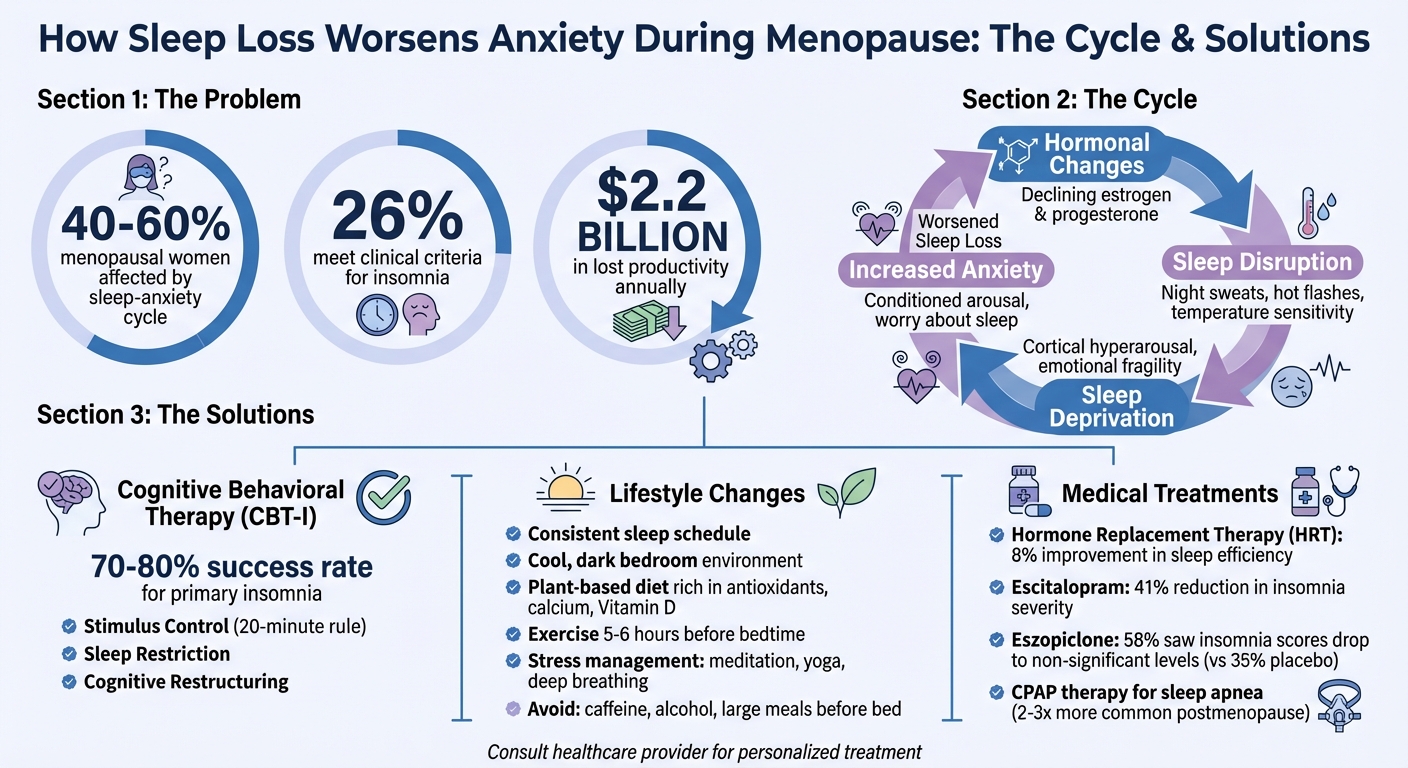
Breaking the Sleep-Anxiety Cycle During Menopause: Solutions and Statistics
The Sleep-Anxiety Cycle During Menopause
Sleep and anxiety during menopause are deeply intertwined, forming a cycle that feeds on itself. Hormonal changes disrupt sleep, which fuels anxiety, and that anxiety, in turn, makes falling asleep even harder. Let’s break down how these hormonal shifts set this cycle in motion.
How Hormonal Changes Disrupt Sleep
During menopause, declining estrogen levels throw off your body’s internal thermostat. This happens because lower estrogen narrows the brain’s thermoregulatory zone, making you more sensitive to temperature changes. As a result, your body may activate cooling mechanisms - like sweating or triggering hot flashes - at lower core temperatures than before.
"The thermoregulatory zone in the brain - often thought of as the 'body's thermostat' - is altered by lower estrogen levels. Those experiencing night sweats have a narrower range of comfortable temperatures as a result of this." - Alyssa Dweck, MD, FACOG, Gynecologist and Women's Health Expert
But it’s not just about temperature. Reduced estrogen also disrupts neurotransmitters like serotonin, norepinephrine, and acetylcholine, which are key players in regulating sleep. At the same time, lower progesterone levels reduce the body’s natural sedative effects. Often, the brain changes that trigger a hot flash will wake you up first, and the surge of heat and restlessness that follows makes it even harder to fall back asleep.
These hormonal shifts don’t just disrupt sleep - they set the stage for anxiety to take hold and worsen the situation.
How Anxiety Makes Sleep Loss Worse
When you’re sleep-deprived, you’re more likely to feel irritable and emotionally fragile. This can lead to a state called "conditioned arousal", where your bed - rather than being a place of rest - becomes a source of stress. Experts explain that worrying about sleep itself can perpetuate this cycle.
"Distress about poor sleep can lead to dysfunctional efforts to induce sleep and can cause conditioned arousal, whereby the bed becomes a cue for arousal rather than sleep." - Joshua Z Tal, Stanford University School of Medicine
Insomnia also sharpens your awareness of hot flashes, making them harder to ignore. The physical stress of these episodes - like a racing heart or sudden heat - can mimic or even trigger feelings of panic. Add to this the common midlife stressors, such as caring for aging parents or managing career demands, and the combination of anxiety and sleep loss can quickly spiral out of control.
How Sleep Deprivation Affects Your Body and Mind
Sleep deprivation doesn’t just sap your energy - it disrupts your brain function and emotional well-being in profound ways. During menopause, it can lead to cortical hyperarousal, a state of heightened brain activity marked by increased high-frequency beta EEG activity. This condition makes it harder to achieve deep, restorative sleep, leaving your mind in a constant state of alertness and preventing the mental rest your body craves.
What Sleep Deprivation Does to Mental Health
A lack of sleep can take a serious toll on your mental health. It erodes emotional resilience, leading to irritability, difficulty managing stress, and mood swings. In fact, about 26% of women experience sleep issues so severe they disrupt daily life and meet the criteria for insomnia. For women going through menopause, chronic sleep disturbances are strongly linked to depression.
"Anxiety and sleep deprivation can be self-reinforcing; worrying causes poor sleep, while further sleep difficulties cause greater anxiety." - Sleep Foundation
This vicious cycle often leads to a downward spiral. Poor sleep can trigger depression, which then makes it even harder to sleep. Nearly 50% of people diagnosed with depression also have an anxiety disorder. Many women dealing with long-term insomnia during menopause report heightened anxiety, mild depression, and struggles with concentration and memory.
Why Sleep Is Needed for Emotional Balance
Sleep plays a critical role in maintaining emotional stability, especially during the hormonal changes of menopause. These shifts disrupt mood-regulating neurotransmitters. For example, the decline in progesterone - a hormone that naturally promotes calmness by stimulating GABA receptors - removes a key defense against anxiety and sleep problems. Without adequate sleep, neurotransmitter systems falter, leaving women more emotionally vulnerable during midlife.
The consequences aren’t just personal - they’re economic too. Sleep disturbances among women in midlife result in an estimated $2.2 billion in lost productivity annually.
Recognizing these effects is a necessary first step before diving into practical solutions.
sbb-itb-6dba428
Solutions: How to Improve Sleep and Reduce Anxiety During Menopause
Breaking the cycle of poor sleep and anxiety during menopause often requires a mix of lifestyle adjustments, professional guidance, and, in some cases, medical treatments. By addressing both the mental and physical challenges, these strategies can help restore restful sleep and emotional well-being.
Cognitive Behavioral Therapy for Insomnia (CBT-I)
CBT-I is a highly effective approach for tackling insomnia, often recommended as the first step. This therapy focuses on reshaping the thoughts and habits that perpetuate sleep issues, even after menopause-related triggers like hot flashes subside. Research shows that 70% to 80% of individuals with primary insomnia benefit from this method.
CBT-I includes several techniques designed to improve sleep:
- Stimulus Control: This method helps rebuild the association between your bed and sleep. For example, the "20-minute rule" encourages you to leave the bed if you can't fall asleep within 20 minutes, engaging in a calming activity in dim light instead.
- Sleep Restriction: By limiting the time spent in bed to match actual sleep time, this technique strengthens your natural sleep drive, promoting deeper and more consistent rest.
- Cognitive Restructuring: This strategy addresses unhelpful thoughts, like "I won't function tomorrow if I don't sleep", which can fuel pre-sleep anxiety and make it harder to relax.
"CBT-I focuses on exploring the connection between the way we think, the things we do, and how we sleep." – Sleep Foundation
For those unable to access in-person therapy, digital CBT-I tools, such as the VA's "CBT-I Coach", provide structured, remote support.
Lifestyle Changes That Help You Sleep Better
Simple daily habits can make a big difference in sleep quality. Sticking to a consistent sleep schedule - waking up and going to bed at the same time every day, even on weekends - helps regulate your body's internal clock. Your sleep environment also matters: aim for a cool, dark, and quiet bedroom, and consider using a fan or removing electronics that might disrupt your rest.
Diet plays a role, too. A plant-based diet rich in antioxidants, calcium, and Vitamin D can support better sleep. On the flip side, avoid large meals, caffeine, and alcohol close to bedtime, as these can trigger hot flashes or interrupt sleep. Limiting evening fluid intake can also help reduce those frustrating middle-of-the-night bathroom trips.
Exercise is another key factor. While regular activity improves sleep efficiency, it's best to finish workouts 5 to 6 hours before bedtime to avoid interference with falling asleep. Establishing a calming bedtime routine - like reading, taking a warm bath, or listening to soothing music - can help signal to your body that it's time to wind down. And while naps might be tempting, it's best to avoid them late in the day to maintain a strong nighttime sleep drive.
Stress management is equally important. Practices like mindfulness meditation, deep breathing, yoga, or therapeutic massage can help calm the nervous system, reducing the anxiety that often fuels insomnia. Some women also find that acupuncture enhances sleep quality.
Medical and Professional Treatment Options
When lifestyle changes and behavioral therapies aren't enough, medical treatments can offer additional relief. These options address both the physical and emotional challenges of menopause-related sleep issues.
Hormone replacement therapy (HRT) is a common choice for managing symptoms like hot flashes and night sweats that disrupt sleep. Studies show that combined estrogen and progesterone therapy can improve overall sleep efficiency by about 8%.
For women experiencing anxiety alongside insomnia, antidepressants like Escitalopram (Lexapro) can be a helpful option. Research indicates a 41% reduction in Insomnia Severity Index scores among peri- and postmenopausal women using this medication. Sleep medications like Eszopiclone (Lunesta) can also provide short-term relief; in clinical trials, 58% of menopausal women taking Eszopiclone saw their insomnia scores drop to non-significant levels, compared to 35% with a placebo.
Sleep apnea becomes more common postmenopause, with women being 2 to 3 times more likely to experience it than before menopause. For those diagnosed, CPAP (Continuous Positive Airway Pressure) therapy can significantly improve sleep quality.
Telehealth services, such as those offered by Oana Health, provide personalized care for menopause-related symptoms. These services include hormonal and non-hormonal treatments and make professional support accessible, even for women in areas without nearby specialists.
Conclusion: Breaking the Sleep-Anxiety Cycle
Key Takeaways
Sleep loss and anxiety are deeply connected, creating a cycle that impacts 40%-60% of menopausal women. Hormonal shifts during menopause disrupt the body’s ability to regulate temperature and maintain healthy sleep patterns. On top of that, anxiety makes falling and staying asleep even tougher. This combination doesn’t just leave you feeling drained - it can also affect emotional balance, mental clarity, heart health, and metabolism.
The silver lining? There are effective solutions. Cognitive Behavioral Therapy for Insomnia (CBT-I) stands out as the leading treatment, with over half of patients experiencing lasting improvements. Menopausal hormone therapy has also been shown to enhance sleep quality. For those who prefer alternatives, non-hormonal treatments can significantly reduce the severity of insomnia. Additionally, small lifestyle changes - like sticking to a regular sleep schedule, keeping your bedroom cool, managing stress with relaxation techniques, and cutting back on late-day caffeine - can make a big difference when paired with other treatments.
"Appropriate treatment, therefore, has immediate benefit as well as advantages for maintaining optimal health in the postmenopausal years." – Fiona C Baker, PhD
By understanding these strategies, you can reclaim both your sleep and your emotional well-being.
Next Steps for Better Sleep and Emotional Health
Start by talking to your healthcare provider about your sleep and anxiety concerns. Postmenopausal women are three times more likely to develop sleep apnea, so it’s important to rule out conditions like obstructive sleep apnea or restless legs syndrome.
If seeing a specialist in person isn’t an option, telehealth platforms like Oana Health offer personalized menopause care from licensed professionals, delivered right to your home. These evidence-based treatments can help you get the support you need, no matter where you are. Pair these steps with consistent lifestyle adjustments to achieve lasting improvements. With the right combination of expert guidance, behavioral strategies, and daily habits, breaking free from the sleep-anxiety cycle is entirely possible.
FAQs
How do hormonal changes during menopause impact sleep?
During menopause, shifts in hormones like estrogen and progesterone can wreak havoc on sleep patterns. These hormonal changes often trigger hot flashes and night sweats, making it tough to stay asleep or feel well-rested.
Estrogen, in particular, plays a role in regulating neurotransmitters that impact sleep. As estrogen levels drop, many women find it harder to fall asleep, stay asleep, or wake up feeling refreshed. In fact, research reveals that 40–69% of women struggle with sleep disturbances during menopause, and these issues can linger into postmenopause. Along with hormonal changes, physical and emotional shifts during this time further contribute to sleep difficulties.
What lifestyle changes can help improve sleep during menopause?
Improving sleep during menopause often involves addressing common symptoms like hot flashes and night sweats. Small changes can go a long way - try keeping your bedroom cool, wearing lightweight, breathable fabrics, and steering clear of evening triggers like spicy foods, caffeine, and alcohol.
Maintaining a consistent sleep schedule is another key step. Going to bed and waking up at the same time every day helps keep your internal clock in sync. Incorporating relaxation techniques, such as deep breathing, meditation, or gentle yoga, can help ease stress and set the stage for better rest. It’s also a good idea to avoid screens and stimulating activities at least an hour before bedtime, as the blue light from devices can interfere with melatonin production.
During the day, staying active, eating a balanced diet, drinking plenty of water, and cutting back on afternoon caffeine can all contribute to better sleep quality. If sleep issues continue to be a challenge, reaching out to a healthcare provider for tailored advice can provide additional support.
Can anxiety medication help improve sleep problems during menopause?
Yes, some anxiety medications can assist with sleep problems during menopause, especially when anxiety plays a role in disrupting rest. By managing anxiety, these medications may help improve sleep quality and support emotional balance.
Hormone replacement therapy (HRT) is another option that has been found to ease both anxiety and sleep-related challenges for some women going through menopause. To find the most suitable treatment for your situation, it's essential to consult a licensed healthcare provider.