
How Spironolactone Works with Birth Control for PCOS
Managing PCOS symptoms often requires a combination of treatments. Spironolactone and birth control pills work together to address hormonal imbalances, helping reduce acne, unwanted hair growth, and irregular periods. Here's how:
- Spironolactone: Blocks androgen receptors, reduces oil production, and slows hair growth. It’s especially effective for acne and hirsutism.
- Birth Control Pills: Decrease androgen production, regulate menstrual cycles, and protect against uterine issues like endometrial hyperplasia.
- Combined Effect: Birth control reduces androgen levels, while spironolactone stops androgens from affecting skin and hair. Together, they offer better results than either treatment alone.
This combination also requires monitoring for side effects, such as potassium levels, and should not be used during pregnancy. Results typically appear within 3–6 months for acne and up to 6 months for hair growth improvements. Regular follow-ups ensure safety and progress. For personalized care, telehealth services like Oana Health can help tailor treatments to your needs.
Spironolactone Q&A with Dermatologist Dr. Jenny Liu
PCOS Symptoms Treated by Combination Therapy
Polycystic Ovary Syndrome (PCOS) is marked by hormonal imbalances like irregular ovulation, elevated androgens, and an abundance of ovarian follicles. These imbalances determine the symptoms that combination therapy aims to address. Two key factors, high luteinizing hormone (LH) levels and insulin resistance, drive excess androgen production. LH prompts the ovaries to produce testosterone and androstenedione, while insulin resistance causes hyperinsulinemia, which further signals the ovaries to ramp up androgen production.
This cascade of hormonal disruptions creates a disorder that affects multiple systems, leading to reproductive issues (such as irregular periods and infertility), metabolic challenges (like weight gain and glucose intolerance), and skin-related symptoms (including acne, unwanted hair growth, and hair thinning). In fact, skin-related symptoms affect about 70% to 80% of people with PCOS.
How Androgens Cause PCOS Symptoms
Excess androgens are at the root of many visible PCOS symptoms. These hormones are responsible for facial hirsutism, which includes unwanted hair growth on areas like the face, chest, and back, as well as acne and androgenetic alopecia (hair thinning). Adult-onset acne is particularly common, impacting 12% to 22% of women in the United States.
Beyond these visible effects, androgens disrupt the menstrual cycle by preventing the ovaries from releasing an egg each month. The resulting lack of ovulation, combined with persistent progesterone deficiency, leads to irregular or absent periods and contributes to infertility. Additionally, the absence of regular ovulation can cause the uterine lining to thicken excessively, increasing the risk of endometrial hyperplasia and, potentially, endometrial cancer.
Why Treating Symptoms Matters
Addressing PCOS symptoms is about much more than appearance. If left untreated, the hormonal and metabolic imbalances associated with PCOS can lead to serious long-term health issues, including Type 2 diabetes, cardiovascular disease, and metabolic syndrome. Insulin resistance, which is significantly more common in women with PCOS compared to others of the same age and weight, is a key driver of these risks.
"Given that PCOS is caused by abnormalities in the reproductive, metabolic, and dermatologic systems, it is appropriate to consider multimodal hormonal therapy that addresses all 3 problems." - Robert L. Barbieri, MD, Editor in Chief, OBG Management
Early intervention can improve both physical and mental well-being. The visible symptoms of PCOS - like acne, excess facial hair, and difficulties with weight management - can take a toll on mental health, often contributing to anxiety and depression. For women trying to conceive, restoring regular ovulation through combination therapy can be a critical step in overcoming infertility. Even losing just 5% to 10% of body weight can help restore ovulation, improve insulin sensitivity, and reduce androgen-driven symptoms. Understanding the origins of these symptoms lays the groundwork for exploring targeted treatments, such as how spironolactone works to block androgens effectively.
How Spironolactone Blocks Androgens
Spironolactone helps manage PCOS symptoms by targeting and reducing androgen activity at the cellular level. This is crucial because androgens, such as testosterone and dihydrotestosterone (DHT), play a significant role in causing symptoms like acne and unwanted hair growth. By blocking the effects of these hormones, spironolactone effectively addresses these issues.
How It Works: Blocking Androgen Receptors
Spironolactone works as an androgen receptor blocker by competing with testosterone and DHT for the same receptor sites in the body. This competition prevents these hormones from triggering the processes that lead to acne and excess hair growth.
Here’s what spironolactone does:
- It blocks DHT from binding to skin receptors, reducing oil production and slowing the growth of oil-producing cells.
- It increases sex hormone-binding globulin (SHBG), which binds to free testosterone, making it less active.
- It lowers the activity of 5-alpha reductase, the enzyme that converts testosterone into the more potent DHT.
- It enhances the liver's ability to clear testosterone from the bloodstream.
At doses between 50 and 100 mg daily, spironolactone can cut sebum production by 30% to 50%. Together, these effects lead to noticeable improvements in acne and hirsutism by reducing oiliness and slowing unwanted hair growth.
Results for Acne and Unwanted Hair
The effectiveness of spironolactone in treating acne and hirsutism is well-supported by clinical research. For acne, a 12-week randomized trial showed that 70.6% of participants taking 50 mg daily were completely free of acne lesions, compared to just 6.5% in the placebo group. Other studies report acne lesion reductions ranging from 50% to 100%. In cases of truncal acne, 37.5% of adult women taking 75 to 150 mg daily experienced at least a 50% improvement.
For unwanted hair growth, spironolactone has also shown promising results. A study involving 109 women found that 72% of those on low doses (75 to 100 mg daily) saw improvements in hirsutism. Women taking 100 mg were over seven times more likely to report better hair growth outcomes compared to those on placebo. Additionally, spironolactone outperformed other treatments like finasteride (5 mg per day), metformin, and low-dose cyproterone acetate in reducing hirsutism.
While some improvements may be noticeable within four weeks at lower doses, the full therapeutic effects typically take 4 to 8 weeks to begin and about three months for maximum results. This delay occurs because hair and skin cells need time to adjust to hormonal changes, and existing hair must be replaced by finer, less androgen-sensitive growth.
How Birth Control Pills Help Manage PCOS
Combination oral contraceptives (COCs) are a common treatment for managing PCOS in women who are not planning to become pregnant. These pills combine estrogen and progestin to reduce androgen levels and regulate menstrual cycles. Unlike spironolactone, which blocks androgen receptors, COCs work by decreasing the overall production of androgens. Let’s break down how these hormones help manage PCOS symptoms.
How Birth Control Reduces Androgens
COCs tackle androgen levels through several mechanisms. Progestin suppresses the release of gonadotropin-releasing hormone (GnRH), which reduces luteinizing hormone (LH) peaks. This, in turn, lowers the production of androgens like androstenedione and testosterone by the ovaries. At the same time, the estrogen component, typically ethinyl estradiol, boosts the production of sex hormone-binding globulin (SHBG). SHBG binds to free testosterone in the bloodstream, further reducing its active levels.
Additionally, COCs inhibit the enzyme 5-alpha reductase, which is responsible for converting testosterone into dihydrotestosterone (DHT) - a more potent androgen linked to acne and hair growth issues.
"Estrogen is known to stimulate the hepatic synthesis of sex hormone and bind globulin, which binds androgens and decreases levels of free testosterone." - MK Trivedi, BS, BA, University of California San Francisco
COCs also have an impact on adrenal gland activity. By lowering adrenocorticotropic hormone (ACTH) levels, they help reduce androgen production from the adrenal glands. This multifaceted approach makes birth control pills especially effective, particularly when paired with spironolactone, as the two medications target androgens in different ways.
Regulating Your Menstrual Cycle
Beyond addressing androgen levels, COCs play a key role in normalizing menstrual cycles. They create a predictable 28-day cycle by inducing withdrawal bleeding, thanks to their hormonal composition. Progestin helps prevent the irregular ovulation often seen in PCOS, while estrogen supports the endometrial lining, reducing the risk of breakthrough bleeding.
One of the most critical benefits of COCs is their ability to protect the uterus. By maintaining hormonal balance, they prevent endometrial hyperplasia - a condition where the uterine lining thickens due to chronically low progesterone levels.
This uterine protection has long-term advantages. Studies show that using COCs can lower the risk of endometrial and ovarian cancers by approximately 30%. Some research even suggests a 50% reduction in endometrial cancer risk, with these protective effects lasting up to 20 years after stopping the pills.
On top of these health benefits, many women experience noticeable improvements in skin and hair issues caused by PCOS. Acne and unwanted hair growth often decrease within 3 to 6 months of starting COCs.
How Spironolactone and Birth Control Work Together
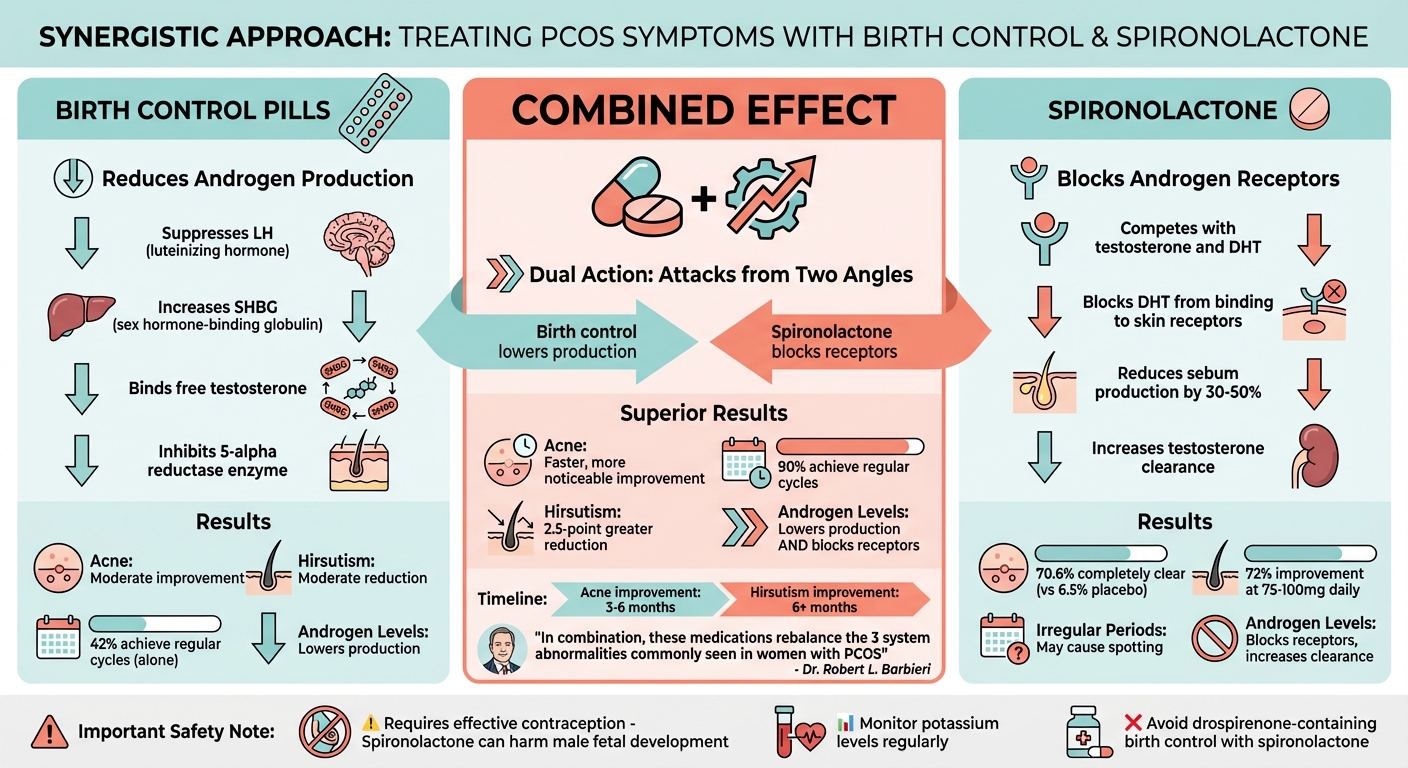
How Spironolactone and Birth Control Work Together to Treat PCOS Symptoms
Tackling Androgens from Two Angles
When spironolactone and birth control pills are used together, they target excess androgens in complementary ways. Birth control pills work by reducing androgen production - they suppress LH (luteinizing hormone) and increase SHBG (sex hormone-binding globulin), which binds to free testosterone. On the other hand, spironolactone blocks androgens from attaching to receptors in your skin and hair follicles. Essentially, birth control lowers the production of androgens, while spironolactone stops those androgens from taking action. Together, they address both the source and the effects of excess hormones.
"In combination, these medications rebalance the 3 system abnormalities commonly seen in women with PCOS, including reproductive, metabolic, and dermatologic dysfunction."
– Robert L. Barbieri, MD, Chair of Obstetrics and Gynecology, Brigham and Women's Hospital
This combination therapy is particularly important because spironolactone comes with teratogenic risks - it can cause feminization of male fetuses if taken during pregnancy. For this reason, effective contraception is crucial when using spironolactone. While the combined approach improves symptoms significantly, it also requires careful monitoring to ensure safety.
How the Combination Improves Results
The dual-action nature of spironolactone and birth control pills leads to noticeable improvements in symptoms, as shown in clinical studies. For example, a 12-month study involving 62 adolescent girls with PCOS found that 90% achieved regular menstrual cycles with combination therapy, compared to just 42% with birth control pills alone. For hirsutism, the combined treatment resulted in a 2.5-point greater reduction in hair growth scores than using either medication on its own.
| Symptom | Birth Control Alone | Spironolactone Alone | Combination Therapy |
|---|---|---|---|
| Acne | Reduces sebum production | Blocks androgen receptors | Faster and more noticeable improvement |
| Excess Hair (Hirsutism) | Moderate reduction in hair growth | Reduces testosterone effects | Most effective; 2.5-point greater reduction |
| Irregular Periods | Restores regular cycles | May cause spotting | Highly effective (birth control component) |
| Androgen Levels | Lowers production and increases binding | Blocks receptors and increases clearance | Combines both: lowers production and blocks receptors |
One important note: avoid using drospirenone-containing birth control (like Yaz or Yasmin) alongside spironolactone. Both medications have potassium-sparing effects, which can increase the risk of high potassium levels (hyperkalemia). To reduce this risk, your healthcare provider should monitor your potassium levels, especially when beginning treatment.
If you’re considering spironolactone treatment for managing PCOS symptoms, Oana Health offers telehealth consultations with licensed professionals who can create a tailored treatment plan and deliver it directly to your home.
sbb-itb-6dba428
Safety and Precautions
Common Side Effects
Using spironolactone alongside birth control can lead to some side effects. The most frequently reported include nausea, headaches, dizziness, and breast tenderness.
Research on women taking spironolactone for acne revealed the following side effects: 29% experienced increased urination, 22% had menstrual irregularities, 17% reported fatigue, 14% experienced headaches, and 12% felt dizzy. Interestingly, spironolactone's ability to lower blood pressure may counterbalance the slight rise in blood pressure sometimes caused by oral contraceptives.
Because of these effects, regular check-ups are essential to monitor blood pressure, potassium levels, and kidney health. While hyperkalemia (high potassium levels) is rare in healthy women under 45 - occurring in less than 1% of cases - the risk increases with age, climbing to 16.7% in women aged 46 to 65.
When You Shouldn't Use These Medications
Understanding when to avoid combining these medications is just as important as knowing their benefits.
Pregnancy is the most critical reason to avoid spironolactone. The drug can interfere with male fetal development by blocking male hormones. For this reason, effective birth control is mandatory when taking spironolactone.
"Spironolactone should be prescribed along with contraception to prevent pregnancy as the drug can be harmful to a developing baby." – Boston Children's Hospital
Additionally, this combination should not be used if you have severe kidney issues (such as serum creatinine levels over 2.0 mg/dL or an eGFR below 30 mL/min), high potassium levels (above 5.0 mEq/L), Addison's disease, or acute liver conditions. Birth control pills also carry additional risks for women with a history of blood clots, uncontrolled high blood pressure, or those over 35 who smoke heavily.
Combining spironolactone with ACE inhibitors, ARBs, or potassium supplements significantly raises the risk of dangerous potassium buildup. To avoid complications, steer clear of potassium supplements and salt substitutes containing potassium while on spironolactone.
Side Effect Comparison
Here’s a quick side-by-side look at the key side effects of spironolactone, birth control, and their combination:
| Side Effect | Spironolactone | Birth Control | Combined Therapy |
|---|---|---|---|
| Nausea/Vomiting | Common | Common | Possible from both |
| Headache/Dizziness | Common | Common | Possible from both |
| Menstrual Changes | Irregular bleeding/spotting | Spotting between periods | Often regulated by birth control |
| Breast Changes | Tenderness or enlargement | Tenderness | Increased likelihood |
| Blood Pressure | Typically lowers | May increase | Spironolactone may offset the increase |
| Potassium Levels | Risk of hyperkalemia | No significant effect | Monitoring needed for high-risk groups |
| Serious Risks | Dehydration, low sodium | Blood clots, stroke | Combined individual risks |
"Monitoring potassium in young healthy women has low utility but should be considered in those with risk factors including older age; renal and cardiovascular disease." – American Academy of Dermatology
Dosing and Choosing the Right Birth Control
Typical Spironolactone Doses for PCOS
For managing PCOS symptoms, spironolactone is usually prescribed in doses ranging from 50 mg to 200 mg daily. Lower doses, typically between 50–150 mg daily, are effective for acne, while higher doses, around 100–200 mg daily, are more effective for hirsutism. To minimize potential side effects, treatment often begins with 25 mg daily for one week before increasing to 50–100 mg daily. A daily dose of 100 mg tends to strike a good balance between effectiveness and side effects compared to doses at the lower or higher ends of the spectrum.
"In acne, we prefer to start dosing at 25 mg/d for 1 week and then to increase to 50 mg/d (and maintain this dose in most patients). We have not found it necessary to use doses greater than 100 mg/d." – D. Morgado-Carrasco, Actas Dermo-Sifiliográficas
Treatment typically continues for one to two years. Additionally, taking spironolactone with food can significantly improve absorption, increasing it by up to 90%. Proper dosing is a critical first step in managing PCOS symptoms and preparing for the next phase of treatment: selecting the right birth control.
Best Birth Control Pills for PCOS
While spironolactone addresses many PCOS symptoms, adding the right birth control pill can further enhance symptom management. For women with PCOS, combined oral contraceptives containing progestins with low or anti-androgenic properties are often recommended. Third- and fourth-generation progestins, such as norgestimate, desogestrel, and drospirenone, are particularly effective due to their anti-androgenic effects.
Among these options, drospirenone stands out because it acts as a spironolactone analog with anti-androgenic activity. Clinical studies support its effectiveness: in a study involving 2,147 participants, 66% of women using drospirenone-containing pills reported acne improvement. Comparatively, 53% improved with norgestimate, 44% with desogestrel, and only 25% with levonorgestrel. It's worth noting that pills containing levonorgestrel may aggravate acne in some cases and are generally avoided for PCOS patients.
| Progestin Type | Androgenic Activity | Common Brands | Acne Improvement Rate |
|---|---|---|---|
| Drospirenone | Anti-androgenic | Yaz, Yasmin | 66% |
| Norgestimate | Low | Ortho Tri-Cyclen | 53% |
| Desogestrel | Low | Mircette, Kariva | 44% |
| Levonorgestrel | High | Alesse, Aviane | 25% |
When combining drospirenone with spironolactone, doctors closely monitor potassium levels, especially in patients with kidney issues or those taking medications that affect potassium. For a tailored approach to PCOS treatment, including spironolactone and the most suitable birth control option, consider telehealth consultations through Oana Health, where licensed professionals can guide you through your options.
What to Expect and When to See Results
When You'll See Improvements
Combination therapy takes time, so patience is key as your body adapts to hormonal changes. For acne, you might notice some improvement within 4–8 weeks, with more significant results appearing by 3–6 months. Addressing unwanted hair growth, or hirsutism, is a slower process. It typically requires at least 6 months to see noticeable reductions, as this aligns with the natural hair growth cycle.
"Successful treatment of hirsutism with combination OC+SPL requires at least 6 months of therapy, with the proportion of satisfied patients continuing to increase with treatment duration." – Uche Ezeh, MD, Journal of Women's Health
Research backs these timelines. In a study involving 200 women with PCOS undergoing combination therapy, 85.1% reported improvement in hirsutism, 82.7% saw better menstrual cycles, and 79.3% experienced acne relief. Additionally, hirsutism scores improved by 59.9%. Menstrual regularity often stabilizes within a few months when spironolactone is combined with birth control. These benchmarks help set realistic expectations as you start treatment.
Why Regular Check-Ups Matter
Follow-up appointments are essential for tracking progress and ensuring safety. Typically, your first follow-up happens around 4 weeks after starting treatment. This visit allows your doctor to evaluate early progress and make any necessary dosage adjustments. During these check-ins, they'll also monitor for side effects and adjust your regimen if needed.
While most healthy young women don’t require routine potassium checks, your doctor may order periodic blood tests based on your dosage or kidney health. Follow-ups also confirm the effectiveness of birth control in preventing pregnancy. Once your symptoms are well-managed, your doctor might shift you to a lower maintenance dose, usually around 25 to 50 mg daily.
Conclusion
Using spironolactone alongside birth control provides an effective approach to managing PCOS symptoms. This combination works by lowering androgen levels and blocking their effects, helping to address issues like hirsutism, acne, and irregular periods, while also reducing the risk of endometrial hyperplasia. Together, these treatments tackle both the hormonal imbalances and skin-related challenges that come with PCOS. Plus, pairing birth control with spironolactone is crucial for ensuring safety.
For a more tailored approach, Oana Health offers telehealth consultations with licensed physicians who create personalized treatment plans delivered right to your doorstep. It’s worth noting that medications are most effective when paired with healthy lifestyle habits, such as eating a balanced diet and staying active. This strategy highlights the comprehensive approach to PCOS management discussed throughout this article.
FAQs
How do spironolactone and birth control work together to manage PCOS symptoms?
Spironolactone and birth control often work hand-in-hand to manage common symptoms of PCOS, such as acne, excess hair growth (hirsutism), and hair thinning. Spironolactone functions as an anti-androgen, meaning it blocks the effects of androgens (male hormones), which are frequently elevated in individuals with PCOS. By reducing androgen activity, it helps to gradually minimize issues like unwanted hair growth and persistent acne.
Birth control adds another layer of support by regulating hormone levels and preventing pregnancy - a crucial factor since spironolactone can pose risks to a developing fetus. Together, these treatments address the hormonal imbalances at the root of many PCOS symptoms, offering relief from some of the condition's most challenging effects. Keep in mind, though, that it may take a few months to see noticeable results, so sticking with the treatment plan and being patient is essential.
What side effects should I be aware of when using spironolactone with birth control for PCOS?
Using spironolactone alongside birth control to address PCOS symptoms like acne and excess hair growth is generally considered safe, but it’s essential to stay informed about potential side effects. Common reactions to spironolactone include dizziness, nausea, muscle cramps, fatigue, and headaches, especially during the early stages of treatment. Without hormonal contraception, it may also lead to irregular periods.
When combined with birth control, the side effects of spironolactone usually remain the same. However, it’s important to pay attention to how your body reacts and reach out to a healthcare provider if any symptoms persist or worsen. It’s also critical to use contraception with spironolactone, as it can cause harm to a developing fetus in the event of pregnancy. Regular consultations with your doctor and routine blood tests can help ensure this treatment is both effective and safe for managing PCOS symptoms.
Why do you need to monitor potassium levels when taking spironolactone and birth control for PCOS?
Spironolactone is a potassium-sparing diuretic, meaning it helps your body retain potassium. However, when taken alongside birth control, it can raise potassium levels further, potentially leading to hyperkalemia - a condition where high potassium can disrupt heart and muscle function. Regular monitoring of potassium levels is crucial to keep the treatment safe and effective while addressing PCOS symptoms like acne and excessive hair growth.