
Spironolactone and PCOS: Hormonal Response Insights
Spironolactone is a key medication for managing androgen-related symptoms in PCOS, such as acne, excessive hair growth, and hair thinning. It works by blocking androgen receptors, reducing testosterone activity, and limiting its conversion to more potent forms like DHT. While it effectively targets these symptoms, its impact on hormone levels like FSH and LH is minimal, and it may cause menstrual irregularities in some women.
Key Takeaways:
- Effectiveness: Spironolactone reduces symptoms like hirsutism and acne within 6–12 months, with a 72% improvement rate for hirsutism at 75–100 mg/day.
- Mechanism: It blocks androgen receptors, inhibits enzymes that produce testosterone, and increases SHBG levels to trap free testosterone.
- Combination Therapy: Pairing with metformin improves outcomes, especially for women with insulin resistance or higher BMI.
- Side Effects: Common issues include menstrual irregularities (30% of users) and the potential for hyperkalemia, requiring regular monitoring.
- Individualized Treatment: Outcomes vary based on factors like body type, baseline hormone levels, and whether combined with lifestyle changes.
Spironolactone is often used alone for lean PCOS patients or combined with metformin for those with metabolic concerns. Regular monitoring of potassium, creatinine, and menstrual patterns is essential for safe treatment.
How Spironolactone Works in the Body
Reducing Excess Androgens in PCOS
Spironolactone tackles androgen excess in a few clever ways. It binds to androgen receptors in tissues like hair follicles and sebaceous glands, effectively blocking testosterone and dihydrotestosterone (DHT) from doing their job.
But it doesn’t stop there. Spironolactone also inhibits enzymes like 17α-hydroxylase and 17,20-lyase, which are essential for testosterone production. On top of that, it boosts sex hormone-binding globulin (SHBG) levels, which helps trap free testosterone, and blocks 5α-reductase, the enzyme responsible for converting testosterone into the more potent DHT.
"The role of spironolactone in androgen excess syndromes such as hirsutism is to reduce the rate of testosterone production and increase the metabolic clearance of testosterone."
By reducing testosterone production and speeding up its clearance, spironolactone addresses issues like acne. It prevents DHT from binding to sebocytes (the cells that produce sebum), which slows their growth and decreases oil production. This is particularly helpful for the 80% of women with PCOS who experience hirsutism. Together, these mechanisms work to ease symptoms and pave the way for hormonal balance.
Effects on Hormone Levels
While spironolactone is effective at targeting androgen activity, its impact on circulating hormone levels is less dramatic. A meta-analysis of clinical trials showed that spironolactone alone caused only a slight drop in testosterone levels (weighted mean difference of –0.06), highlighting its primary action at the receptor level rather than significantly lowering overall testosterone.
Interestingly, spironolactone doesn’t seem to affect luteinizing hormone (LH) or follicle-stimulating hormone (FSH) levels in women with PCOS. However, when combined with metformin, a more noticeable reduction in testosterone is observed (weighted mean difference of –0.35). One downside is that spironolactone’s ability to bind to progesterone receptors can lead to menstrual irregularities, a side effect reported by about 30% of women using it for PCOS.
Research Findings: Hormonal Changes and Symptom Relief
Hormonal Changes Documented in Studies
Clinical research highlights spironolactone's varied hormonal effects in managing PCOS. A 12-month study conducted by the University of Padua involved 25 women with PCOS (13 lean and 12 overweight) taking 100 mg of spironolactone daily. The outcomes varied based on body type: lean participants primarily saw an increase in HDL-cholesterol, while overweight participants experienced significant reductions in triglycerides and insulin levels, especially when the medication was paired with weight loss efforts. Notably, improvements in insulin sensitivity were only observed in overweight participants who combined spironolactone treatment with dietary weight loss interventions.
A broader meta-analysis of 24 randomized controlled trials further revealed that spironolactone does not significantly affect FSH or LH levels in women with PCOS. These findings suggest that the metabolic and hormonal effects of the medication can vary significantly, influencing the clinical outcomes seen in skin and hair-related symptoms.
Improvements in Acne, Excess Hair, and Hair Loss
The hormonal adjustments linked to spironolactone often result in noticeable improvements in acne, excessive hair growth (hirsutism), and hair loss. Clinical studies show that spironolactone effectively reduces hirsutism. For example, a meta-analysis comparing various anti-androgen treatments found that a daily dose of 100 mg of spironolactone reduced Ferriman-Gallwey (FG) scores by a mean difference of -2.43 compared to finasteride and -1.18 compared to cyproterone acetate in women with idiopathic hirsutism. However, for women with PCOS, the reduction in FG scores was less pronounced.
"Spironolactone (100 mg/daily) exhibited a significant reduction in FG score in idiopathic hirsutism... however, no significant difference was found among PCOS subjects in comparison to flutamide and finasteride." - Rohina Bashir et al., Current Pharmaceutical Design
In addition to hirsutism, spironolactone's action on androgen receptors helps improve acne and hair loss, even when circulating testosterone levels remain largely unchanged. Clinical improvements are typically observed within a 6–12 month period. However, for women with lower pretreatment estradiol levels, intermenstrual bleeding is a common side effect, affecting approximately 30% of users.
Spironolactone Alone vs. Combined with Other Treatments
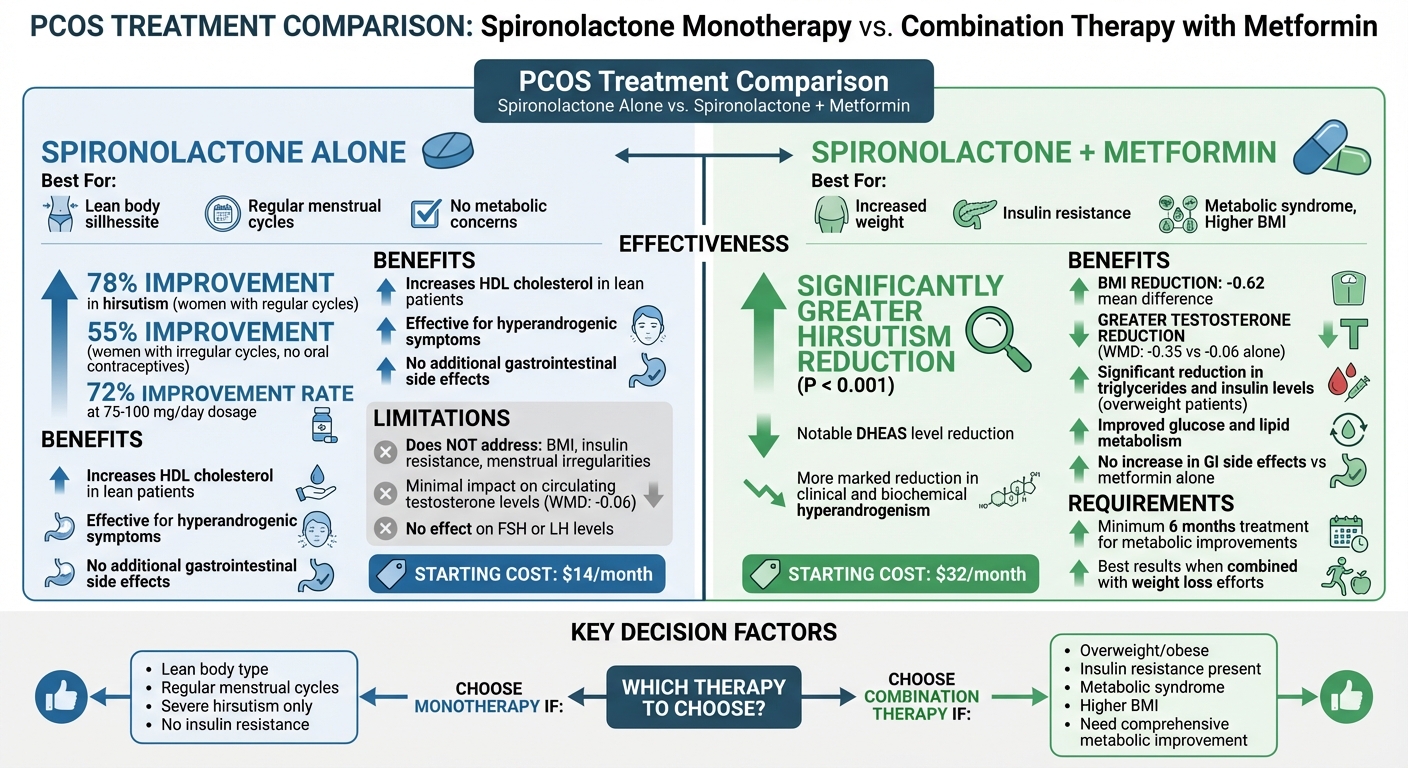
Spironolactone Treatment Outcomes: Monotherapy vs Combination Therapy for PCOS
Combined Treatment: Results and Benefits
Pairing spironolactone with metformin delivers better outcomes than using either medication alone. A meta-analysis conducted by Guangzhou Medical University reviewed six randomized controlled trials involving 717 patients. The findings revealed that combination therapy significantly reduced BMI (mean difference of -0.62) and lowered total testosterone levels compared to metformin alone. This works because metformin enhances insulin sensitivity, while spironolactone blocks androgen receptors, tackling both metabolic and hormonal issues simultaneously.
Notably, achieving these metabolic improvements requires at least six months of combined treatment. Research from the University "Magna Græcia" compared 56 overweight and obese PCOS patients, with one group taking metformin alone (1,700 mg/day) and the other receiving a combination of metformin and low-dose spironolactone (25 mg/day). After six months, the combination group showed a significantly greater reduction in hirsutism scores (P < 0.001) and a notable drop in DHEAS levels - results not observed in the metformin-only group.
"This study confirms the beneficial effects of metformin in PCOS patients. It also indicates that the addition of low-dose spironolactone induces a more marked reduction of clinical and biochemical hyperandrogenism as compared to metformin alone." - P. Guzzi et al., Researchers
Another advantage of this combination is that it doesn’t lead to an increase in gastrointestinal side effects. Studies show that nausea, vomiting, and diarrhea occur at similar rates whether metformin is taken alone or alongside spironolactone. For those exploring telehealth options, Oana Health offers a Metformin & Spironolactone treatment plan starting at $32 per month, prescribed by licensed professionals and delivered with free shipping.
Single-Drug Treatment: Using Spironolactone Alone
Spironolactone monotherapy is often effective for managing hyperandrogenic symptoms, particularly in patients without significant metabolic concerns. A retrospective study found that 78% of women with regular menstrual cycles experienced improvement in hirsutism when treated with spironolactone alone, compared to 55% of women with irregular cycles who were not using oral contraceptives. Additionally, hirsutism improved in 72% of women treated with low doses of spironolactone (75–100 mg/day).
For lean PCOS patients, spironolactone alone can be a good option. Studies suggest that these individuals may see an increase in HDL cholesterol without needing additional insulin-sensitizing medications. However, spironolactone as a stand-alone treatment does not address metabolic factors like BMI, insulin resistance, or menstrual irregularities. For overweight patients, the most noticeable benefits to glucose and lipid metabolism occur when spironolactone is paired with lifestyle changes and weight loss efforts.
Ultimately, the choice between monotherapy and combination therapy depends on individual symptoms. Women with severe hirsutism, regular cycles, and a healthy weight may find spironolactone alone sufficient. On the other hand, those dealing with insulin resistance, higher BMI, or metabolic syndrome are likely to see better results with a dual approach.
sbb-itb-6dba428
Dosing and Individual Response Differences
Standard Dosage Ranges for Different Symptoms
Spironolactone treatment varies depending on a patient’s medical history and the severity of their symptoms. For managing hirsutism (excessive hair growth), studies often recommend doses between 75–100 mg daily, which have shown a 72% improvement rate. In cases of acne vulgaris, dosages can go up to 200 mg per day, depending on how severe the condition is. While lower doses, such as 50 mg per day, have been studied, they tend to be less effective in improving Ferriman-Gallwey scores or reducing testosterone levels compared to higher doses.
Interestingly, women with more severe hirsutism at the start of treatment often see greater improvements with spironolactone. However, because the medication can impact electrolyte levels - especially potassium - regular monitoring of blood pressure and lab tests is essential.
Once a starting dose is established, healthcare providers closely monitor patient responses to fine-tune the treatment plan.
Tracking Progress and Adjusting Doses
When treating hirsutism, it’s important to assess progress after about four months, as hair growth cycles take time to respond. Many providers use the Ferriman-Gallwey (FG) score to measure hair growth reduction and track improvements.
Routine blood tests are critical to keep an eye on potassium levels, creatinine, and estimated glomerular filtration rate (eGFR) to avoid complications like hyperkalemia or toxicity. Spironolactone should not be used if serum creatinine exceeds 2.0 mg/dL or if eGFR is below 30 mL/min.
Patients should also be monitored for menstrual irregularities, which may signal the need for dose adjustments. Lower baseline levels of dehydroepiandrosterone sulfate (DHEAS) have been linked to better treatment outcomes. For women of childbearing age, spironolactone is often paired with oral contraceptives to prevent pregnancy and help regulate menstrual cycles.
For those seeking a convenient option, Oana Health provides personalized spironolactone treatments starting at $14 per month, prescribed by licensed professionals and delivered with free shipping.
Conclusion: Key Takeaways on Spironolactone for PCOS
Spironolactone works by blocking androgen receptors and reducing the activity of testosterone and DHT. This helps address hormonal imbalances that cause acne, excess hair growth, and hair loss in about 80% of women with hyperandrogenic PCOS. While it effectively manages these androgenic symptoms, it has little impact on FSH, LH, or menstrual cycle regularity.
When taken at 100 mg daily for 12 months, spironolactone has been shown to improve HDL-cholesterol levels in lean individuals and lower triglycerides in overweight patients, especially when combined with weight loss efforts.
"Spironolactone is well tolerated among idiopathic hirsute and PCOS women. The drug significantly improved hirsutism in the former group and shows a positive trend in the latter women, however, displays no effect on FSH, LH, menstrual cyclicity, BMI, and HOMA-IR in PCOS women." - Rohina Bashir et al., Current Pharmaceutical Design
These findings highlight the importance of tailoring treatment to each patient’s unique needs. Factors such as menstrual status, BMI, and baseline hormone levels can influence how well spironolactone works. Women with more severe hirsutism and lower DHEAS levels often see better results. Additionally, combining spironolactone with lifestyle changes - like weight loss for those who are overweight - can lead to greater improvements in glucose and lipid metabolism compared to relying on medication alone.
FAQs
How does spironolactone help manage PCOS symptoms?
Spironolactone plays a key role in managing PCOS symptoms by targeting excess testosterone levels. This reduction can help alleviate signs of hyperandrogenism, like unwanted facial hair (hirsutism) and acne. By promoting hormonal balance, it also supports healthier skin and may encourage improved hair growth.
When paired with maintaining a healthy weight, spironolactone can further contribute to better insulin sensitivity and improved cholesterol levels. These combined effects can lead to more favorable long-term health outcomes for women managing PCOS.
What are the benefits of using spironolactone and metformin together for managing PCOS?
Combining spironolactone with metformin for managing PCOS symptoms can be a powerful approach, as it tackles multiple issues at once. This pairing has been shown to help reduce hyperandrogenism, which can alleviate concerns like excessive facial hair (hirsutism) and high androgen levels.
While spironolactone focuses on balancing hormones, metformin addresses insulin resistance - an issue many women with PCOS face. By working together, these medications provide a more well-rounded way to manage both hormonal and metabolic challenges, potentially leading to improved results for those dealing with the condition.
What should I keep an eye on while taking spironolactone for PCOS?
When using spironolactone to manage PCOS, keeping an eye on a few key factors can help ensure the treatment works well and remains safe. One important area to monitor is potassium levels, as spironolactone can occasionally cause hyperkalemia (high potassium), a rare but potentially serious condition. It's also worth noting some common side effects, such as menstrual changes, dizziness, or breast tenderness.
Because spironolactone is not safe during pregnancy, women of childbearing age should carefully track their menstrual cycles and use reliable contraception to prevent unintended pregnancy. Regular visits to your healthcare provider are crucial for blood tests, health evaluations, and addressing any concerns that may arise during treatment.