
How Telehealth Simplifies Long-Term Acne Management
Managing hormonal acne doesn’t have to be a hassle. Telehealth offers a convenient way to access personalized care, avoid long wait times, and stay on track with treatments like spironolactone or birth control pills - all without leaving home. Here’s why telehealth is changing how women approach acne care:
- Faster Access: Telehealth cuts wait times from 13.7 weeks to just 4.6 weeks on average.
- Convenience: No more long drives or missed work - consultations are online, with evening and weekend options.
- Affordable Treatments: Options like spironolactone start at $14/month, delivered straight to your door.
- Effective Monitoring: Regular virtual follow-ups every 3 months ensure treatments are adjusted as needed.
For women dealing with hormonal acne or PCOS, telehealth removes barriers like travel and scheduling conflicts, making long-term care easier and more consistent. Platforms like Oana Health provide tailored treatment plans and free prescription delivery, helping you manage your skin without the stress of traditional appointments.
What Is Hormonal Acne and How Is It Treated?
Hormonal acne often shows up as deep, painful cysts and nodules, mainly along the jawline, neck, chest, and shoulders. These breakouts can last for a week or more, making them particularly stubborn. Unlike the more scattered acne seen during adolescence, hormonal acne tends to focus on the lower third of the face, especially around the chin and jawline.
These breakouts frequently follow a monthly cycle, flaring up around the menstrual period. They are most common in women in their late 20s and older. When standard treatments like antibiotics fail to work, hormonal imbalances are often the culprit. In the United States, hormonal acne affects about 12% to 22% of women, with the prevalence jumping to 70%–80% among those diagnosed with PCOS (polycystic ovary syndrome).
"Hormonal acne is more likely to form deep, painful cysts in the skin that can take a week or more to go away."
– Maria Robinson, MD, MBA, Board-certified Dermatologist
The root cause often lies in excess androgens, which stimulate the sebaceous glands to produce too much oil and trigger inflammation. In conditions like PCOS, elevated levels of testosterone and dihydrotestosterone (DHT) make matters worse. About 80% of women with persistent hormonal acne find that antibiotics fail to provide relief, and roughly 30% experience a relapse after isotretinoin treatment.
There are, however, treatments specifically designed to target these hormonal triggers. Oral medications like spironolactone block androgen receptors and reduce testosterone levels, while combined oral contraceptives (COCs) increase SHBG (sex hormone-binding globulin), which binds free testosterone and suppresses androgen production. Topical options, including spironolactone formulations and clascoterone (Winlevi), work directly on the skin to reduce oil production with fewer systemic side effects.
How Spironolactone Works
Spironolactone is a well-established treatment for hormonal acne. It works by blocking androgen receptors and inhibiting the enzyme 5-alpha reductase, which helps lower testosterone production and, in turn, reduces sebum (oil) production. Initially developed as a blood pressure medication, spironolactone has become a go-to option for women dealing with persistent acne.
Doses for acne typically range from 50 to 100 mg daily, though some cases may require up to 200 mg. In one six-month study, patients taking 150 mg daily saw a 62% reduction in acne severity compared to a 32% reduction in those treated with doxycycline. Other studies have shown a reduction in breakouts ranging from 50% to 100%.
"Spironolactone is an effective acne treatment with clinical trial data to support its use as a first-line acne treatment for women with acne."
– Howa Yeung, MD, Associate Professor of Dermatology
It’s important to be patient with spironolactone, as noticeable improvements often take 3 to 6 months, with optimal results typically appearing between months 3 and 5. Routine potassium monitoring isn’t usually necessary for healthy young women, but it’s recommended for those with kidney issues or on other potassium-sparing medications. Common side effects, like menstrual irregularities and breast tenderness, often improve when spironolactone is combined with birth control pills.
Birth Control Pills for Acne Treatment
Combined oral contraceptives (COCs) are another effective way to treat hormonal acne by stabilizing hormonal fluctuations. They work by increasing SHBG levels, which bind free testosterone, and by suppressing ovarian androgen production, addressing acne at its hormonal source.
Three COCs are FDA-approved specifically for acne treatment: Ortho Tri-Cyclen (norgestimate/ethinyl estradiol), Estrostep (norethindrone/ethinyl estradiol), and Yaz (drospirenone/ethinyl estradiol). Modern formulations use third- or fourth-generation progestins with lower androgenic activity, making them particularly effective. Clinical trials have shown a 55% reduction in acne lesions within six months. While antibiotics may work faster initially, hormonal treatments often match or surpass their results over time. For women with PCOS, combining COCs with other therapies can enhance their effectiveness.
Although COCs have a favorable safety profile, there’s a slight increase in the risk of venous thromboembolism (VTE). Women using these contraceptives experience about 8 to 10 events per 10,000 person-years, compared to 5 to 10 events in non-users. Thanks to telehealth platforms, women can now access COCs more conveniently through remote prescriptions facilitated by self-screening tools.
For those who prefer not to take oral medications, topical treatments are also available.
Topical Spironolactone for PCOS-Related Acne
Topical spironolactone is a great option for women with PCOS who either cannot tolerate oral medications or prefer a localized treatment. Applied directly to the skin, it acts as an anti-androgen, reducing oil production with minimal systemic exposure.
In clinical studies, a 5% topical spironolactone gel reduced acne lesions by 71%, compared to 36% for a placebo. This approach avoids many of the side effects linked to oral spironolactone, like menstrual irregularities or breast tenderness.
Another topical option is clascoterone (Winlevi), an FDA-approved anti-androgen cream. Applied twice daily, the 1% formulation works by blocking DHT at the skin receptor level. However, its cost - ranging from $300 to $600 per month - can be a barrier for some.
To maximize results, pair topical treatments with pH-neutral cleansers. This combination helps manage PCOS-related acne effectively while avoiding the extensive monitoring often required with systemic medications.
How Telehealth Makes Long-Term Acne Management Easier
Managing hormonal acne is no small task. It demands consistent care, yet traditional in-person appointments often come with long waits, travel hassles, and rigid schedules. Telehealth changes the game by bringing specialized care straight to patients, removing many of the barriers that make long-term acne management challenging. With telehealth, patients can access timely and efficient care without the delays and obstacles of traditional setups.
Personalized Virtual Consultations
Telehealth platforms kick off with a digital intake process. Patients fill out detailed questionnaires covering their skin health, lifestyle, nutrition, and gynecological history. This helps providers pinpoint the hormonal factors contributing to their acne. Patients then submit standardized photos - front-facing, left-side, and right-side views - for medical professionals to review. Using this information, providers craft personalized treatment plans tailored to each individual’s needs.
The virtual format offers unique advantages. Dr. Hilary Baldwin, Medical Director at The Acne Treatment and Research Center, highlights one key benefit:
"I think the teenagers are more comfortable, honestly. They're sitting on their sofa and not in a paper robe on a paper chair... they're actually looking me in the eye while they're talking to me."
This comfort isn’t limited to teens. Adults, especially those self-conscious about their skin, also find virtual consultations less intimidating. Without the stress of sitting in a waiting room, patients can discuss sensitive hormonal issues from the privacy of their homes.
Providers can prescribe a range of treatments, including spironolactone, birth control pills, and topical options, based on each patient’s medical history and specific requirements. Once a treatment plan is in place, ongoing monitoring ensures that it evolves with the patient’s progress.
Regular Monitoring and Treatment Adjustments
Treating hormonal acne often involves fine-tuning medications and dosages over time. Telehealth makes this process much smoother. Virtual follow-ups are far quicker, with an average wait time of 4.6 weeks compared to 13.7 weeks for in-person visits.
Most telehealth platforms schedule follow-ups every three months. These check-ins allow providers to track progress, address side effects, and adjust medications like spironolactone as needed. This structured approach helps patients stay consistent without the hassle of taking time off work or dealing with transportation issues. In fact, 94.8% of patients report saving significant time through virtual care.
Scheduling flexibility is another major perk. Dr. Baldwin notes:
"They can have meetings on Sunday at 8 o'clock at night. I can do it in my pajamas. I'm in love with this entire concept; I think it works really well."
With options for evening and weekend appointments, telehealth makes it easier than ever for patients to stick to their treatment plans, even with busy work or school schedules.
Prescription Delivery to Your Home
Once a treatment plan is finalized, telehealth platforms take care of the rest. Medications are shipped directly to the patient’s doorstep, speeding up the start of treatment. This is especially helpful for those in rural areas who might otherwise face long travel distances - some as far as 115 miles.
For example, Oana Health provides free shipping on all acne treatments, including oral and topical spironolactone prescribed after virtual consultations with licensed professionals. Patients receive their medications at home without any added shipping costs, making long-term care more affordable and accessible.
From the initial consultation to receiving prescriptions, the entire process typically takes weeks instead of months. For the nearly 50 million Americans dealing with acne each year, this streamlined approach can make a world of difference in starting treatment without unnecessary delays or complications.
Telehealth vs. In-Person Dermatology Visits
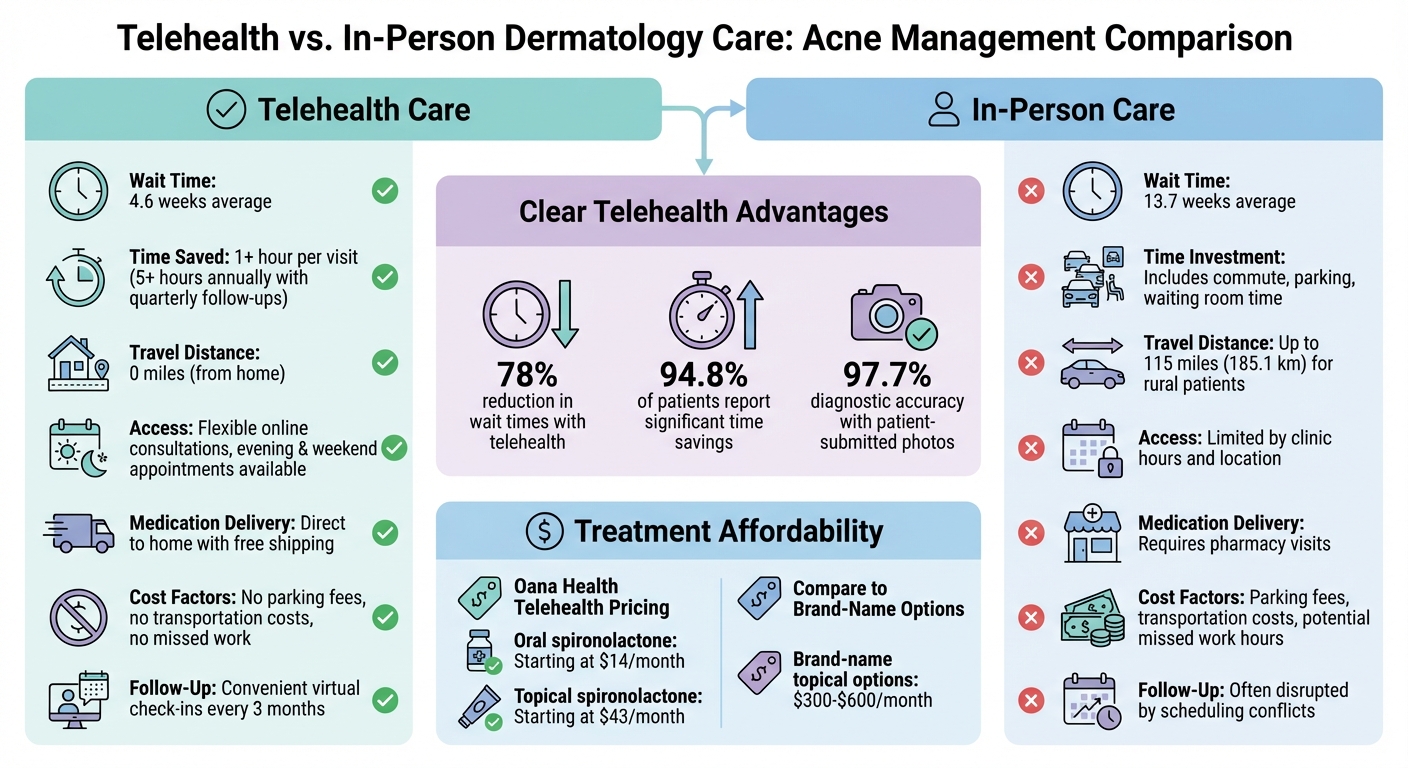
Telehealth vs In-Person Dermatology: Wait Times, Costs, and Convenience Compared
When managing long-term hormonal acne, choosing between telehealth and in-person dermatology visits plays a big role in how quickly you can start treatment, how much time you invest, and how easily you stick to your care plan. Let's dive into the differences between these two options and what they mean for your lifestyle.
Telehealth vs. In-Person Care: A Side-by-Side Look
Teledermatology offers a major time advantage. Patients save over an hour per visit compared to traditional in-person consultations. With follow-ups typically scheduled every three months, this adds up to more than five hours saved annually - time that would otherwise be spent commuting, parking, and waiting in a clinic.
For those living in rural areas, the benefits are even more striking. On average, rural patients face a 185.1 km (about 115 miles) journey to see a dermatologist. Telehealth eliminates this travel burden, making care more accessible for those far from urban centers.
| Factor | Telehealth | In-Person Care |
|---|---|---|
| Access | Flexible, online consultations from anywhere | Limited by clinic hours and location |
| Follow-Up | Convenient, regular virtual check-ins | Often disrupted by scheduling issues |
| Medication Delivery | Direct to your home | Requires trips to a pharmacy |
| Cost/Time Savings | Lower costs, no travel or parking expenses | Higher indirect costs from travel time |
These differences highlight why telehealth is becoming a popular choice for acne care - it’s quicker, more convenient, and often more affordable.
Telehealth also speeds up the process of starting treatment. On average, virtual appointments are scheduled within 4.6 weeks, cutting wait times by up to 78% compared to traditional in-person visits. This faster access helps patients begin treatment before any lasting skin damage occurs.
Dr. Hilary Baldwin, MD, sums it up perfectly:
"They're happy because it costs less. I live in New York City, they don't have to park, and they don't have to get on the grubby subway. They can have meetings on Sunday at 8 o'clock at night."
The savings go beyond just time - avoiding parking fees, transportation costs, and missed work hours adds up in meaningful ways.
For hormonal acne management, Oana Health offers a telehealth option that combines affordability and convenience. Their personalized treatment plans start at just $14 per month for spironolactone, with free home delivery. This removes the hassle of in-person pharmacy visits and travel, making acne care easier than ever.
sbb-itb-6dba428
Oana Health: Telehealth for Hormonal Acne Treatment

Hormonal acne can be a frustrating challenge, especially if you notice breakouts along your jawline, chin, or cheeks that seem to sync with your menstrual cycle. That’s where Oana Health comes in. Their telehealth platform is designed to address hormonal acne by targeting the root cause: excess androgens. With a combination of licensed medical expertise and science-backed treatments, they focus on conditions like PCOS and hormone-related acne. Plus, telehealth makes it easier to access timely, personalized care without leaving your home.
Affordable Acne Treatments Delivered to Your Door
Oana Health provides hormonal acne treatments at prices that won’t break the bank, with free shipping included. For example, oral spironolactone starts at just $14 per month, while topical spironolactone begins at $43 per month - a fraction of the $300 to $600 monthly cost of some brand-name options. Topical spironolactone acts directly on the skin to block androgen receptors without the systemic side effects of oral medications.
To make things even easier, prescriptions are shipped straight to your door. No more pharmacy trips or worrying about refill reminders - this direct delivery model helps you stay consistent with your treatment plan.
Personalized Treatment Plans for Hormonal Acne
Every person’s skin is different, and Oana Health takes that seriously. Their licensed providers craft customized treatment plans by assessing your acne severity, hormonal profile, and preferences for oral or topical medications. For mild to moderate acne, topical spironolactone often delivers noticeable results within 4–6 weeks. For more stubborn cases or those linked to PCOS, they offer comprehensive plans that address both skin and metabolic concerns.
What’s more, research shows that photos submitted by patients achieve a 97.7% diagnostic accuracy when compared to in-person evaluations. This means your provider can accurately assess your condition remotely. As your treatment progresses, they monitor your response and adjust as needed - all through virtual check-ins that work around your schedule.
Conclusion
Looking back at the benefits outlined above, managing hormonal acne long-term no longer requires countless in-person appointments. Thanks to telehealth, personalized and consistent care is now accessible right from the comfort of your home. With shorter wait times and significant time savings, virtual care removes the hurdles - like long delays and lengthy travel - that often disrupt treatment plans. And the results speak for themselves: patients have seen an impressive 87.94% reduction in their Global Acne Grading System scores.
Platforms like Oana Health make this even more convenient. They offer affordable options, such as oral spironolactone starting at just $14 per month, paired with free home delivery and treatment plans tailored to your unique hormonal needs. No more pharmacy lines or prescription headaches - just care that works around your life.
FAQs
How does telehealth make managing acne easier?
Telehealth simplifies acne management by cutting out the need for in-person appointments. Instead, you can consult licensed healthcare providers right from your home, using video calls, phone chats, or secure messaging. No more dealing with long waits or transportation headaches - just straightforward access to care.
This method is particularly useful for tackling stubborn or hormonal acne. It allows for faster access to treatment plans, prescriptions, and ongoing care. Plus, telehealth makes it easier to stay on track with your acne regimen, offering a convenient, private, and focused approach tailored to your needs.
How does spironolactone help treat hormonal acne?
Spironolactone is a well-regarded treatment for hormonal acne in adult women. It targets androgen hormones, helping to curb excess oil production and reduce inflammation - two key factors that lead to acne.
Research indicates that 75% to 85% of patients see noticeable improvement, ranging from partial to complete, within just 3 to 6 months of starting the treatment. This makes spironolactone a dependable choice for addressing acne linked to hormonal imbalances.
Can telehealth help manage hormonal acne caused by PCOS?
Yes, telehealth is an excellent way to manage hormonal acne linked to PCOS. With virtual consultations, licensed healthcare providers can create customized treatment plans designed specifically for your needs. These plans often include prescription medications, advice on lifestyle changes, and regular check-ins to monitor your progress and tweak treatments as necessary.
What’s more, telehealth makes it simple to get care without leaving your home. This convenience helps you stay consistent with your treatment and follow-up appointments. Over time, this approach not only addresses hormonal imbalances that trigger acne but also saves you both time and effort.