
How Insulin Resistance Links PCOS to Colorectal Cancer
Insulin resistance, a common issue in PCOS, significantly increases the risk of colorectal cancer. Here's why it matters and what you can do about it:
- PCOS and Insulin Resistance: Up to 80% of women with PCOS experience insulin resistance, even those with a normal weight. This condition disrupts glucose regulation and hormone balance, fueling metabolic issues.
- Cancer Risk: Insulin resistance promotes colorectal cancer by increasing insulin and IGF-1 levels, which stimulate abnormal cell growth, block cell death, and encourage tumor blood vessel formation.
- Obesity and Inflammation: Visceral fat, common in PCOS, exacerbates insulin resistance, creating a pro-inflammatory environment that further raises cancer risk.
- Prevention and Management: Lifestyle changes, such as a low-insulinemic diet, regular exercise, and weight management, can improve insulin sensitivity. Medications like Metformin and GLP-1 receptor agonists offer additional support. Routine screenings for metabolic markers and colonoscopies are essential for early detection.
Key Takeaway: Addressing insulin resistance through diet, exercise, medical treatments, and regular monitoring can reduce cancer risks and improve overall health for women with PCOS.
Insulin Resistance in PCOS
What is Insulin Resistance?
Insulin resistance occurs when cells no longer respond effectively to insulin, making it difficult for the body to manage glucose levels. In individuals with PCOS, this issue stems from abnormal phosphorylation of the insulin receptor and IRS-1, which disrupts glucose regulation.
In women with PCOS, the pathways responsible for regulating blood sugar become impaired, while those linked to cell growth remain active. This means insulin continues to stimulate the ovaries to produce excessive testosterone, even when it fails to regulate blood sugar properly. Studies show that between 50% and 70% of women with PCOS experience this type of insulin resistance. Overall, insulin resistance affects 35% to 80% of individuals with PCOS, including more than half of those who are at a normal weight.
This impaired insulin signaling sets off a cycle that perpetuates the symptoms of PCOS.
How PCOS Causes Insulin Resistance
PCOS creates a feedback loop where high androgen levels and insulin resistance fuel each other. Elevated insulin levels act as a co-gonadotropin, prompting the ovaries to produce more androgens.
"Reciprocal interactions among androgen excess, hyperinsulinemia, and reduced hepatic sex hormone-binding globulin production create a self-sustaining 'vicious cycle' that exacerbates PCOS manifestations." – Nature Scientific Reports
Insulin also reduces the liver's production of Sex Hormone Binding Globulin (SHBG), which leads to higher levels of free, active testosterone in the bloodstream. On top of that, genetic predispositions and exposure to elevated levels of androgens or insulin during fetal development can program the body to develop insulin resistance later in life.
These disruptions lay the groundwork for further metabolic challenges.
Health Effects of Insulin Resistance in PCOS
Insulin resistance in PCOS extends beyond blood sugar issues, triggering widespread metabolic changes. Elevated insulin levels decrease IGFBP-1, increasing the availability of free IGF-1, a factor that promotes cell growth and inhibits programmed cell death.
This resistance also contributes to dysfunction in fat tissue, particularly by increasing visceral fat accumulation. Visceral fat, which is metabolically active, releases pro-inflammatory cytokines like leptin while reducing anti-inflammatory markers such as adiponectin. This imbalance results in chronic, low-grade inflammation. Physical signs like acanthosis nigricans - dark, velvety patches on areas like the neck, armpits, or groin - often indicate the severity of insulin resistance. Additionally, women with PCOS and endometrial hyperplasia face a fourfold higher risk of developing endometrial cancer compared to those without PCOS.
These metabolic changes disrupt hormone balance and create conditions that may increase the likelihood of cancer development.
Polycystic Ovary Syndrome & Insulin Resistance
How Insulin Resistance Increases Colorectal Cancer Risk
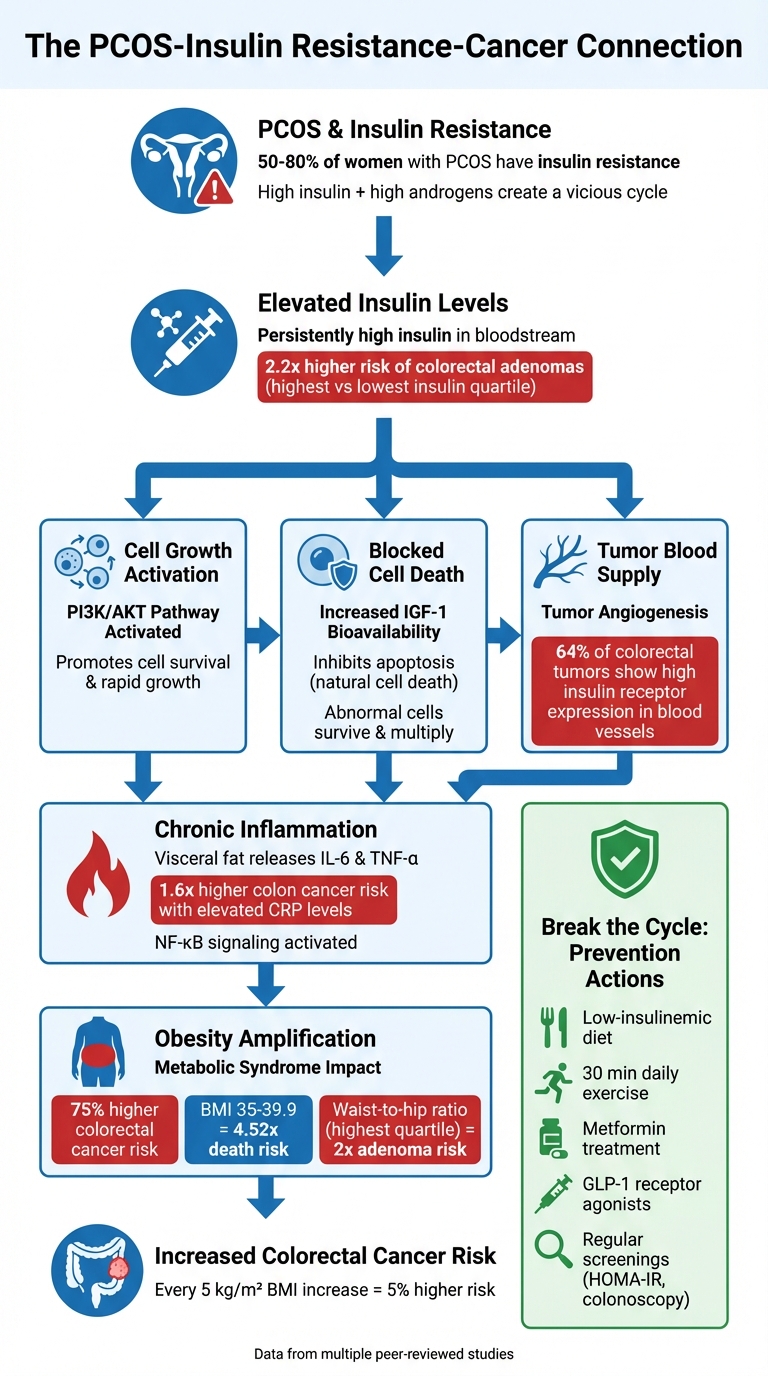
How Insulin Resistance in PCOS Leads to Colorectal Cancer Risk
The connection between PCOS-related insulin resistance and colorectal cancer lies in several biological mechanisms that increase cancer risk.
High Insulin Levels and Cancer Cell Growth
In people with PCOS, persistently high insulin levels activate pathways that encourage colorectal cancer development. Insulin binds to receptors on colorectal cells, triggering the PI3K/AKT signaling pathway, which promotes cell survival and rapid growth.
"Insulin has been shown to affect growth of normal and neoplastic epithelial cells and to have mitogenic actions in vitro and in experimental models, either directly or indirectly through IGF-1." – Raluca Pais, University of Medicine and Pharmacy
High insulin levels also boost IGF-1 bioavailability, which blocks apoptosis (the natural process of cell death), allowing abnormal colon cells to persist and multiply. Research indicates that individuals in the highest quartile of fasting insulin levels are 2.2 times more likely to develop colorectal adenomas - precancerous growths - compared to those in the lowest quartile.
Insulin also plays a role in tumor angiogenesis, the process by which tumors develop new blood vessels to secure nutrients. A study revealed that 64% of colorectal tumors displayed high insulin receptor expression in the blood vessels within or around the tumor.
"The preferential over-expression of IR in the peri-tumoral microvessels suggests that hyperinsulinemia might contribute to colorectal cancer growth by enhancing angiogenesis." – Jane Jijun Liu, Moffitt Cancer Center
| Mechanism | Effect on Colorectal Cancer Development |
|---|---|
| PI3K/AKT Pathway Activation | Encourages cell growth and prevents cell death |
| Increased IGF-1 Bioavailability | Promotes rapid cell multiplication and inhibits apoptosis |
| Tumor Angiogenesis | Provides tumors with nutrients through newly formed blood vessels |
| Apoptosis Inhibition | Enables damaged colon cells to survive |
These processes pave the way for further cancer-promoting factors, as detailed below.
Chronic Inflammation as a Cancer Risk Factor
Insulin resistance leads to low-grade systemic inflammation, which damages cells and accelerates tumor growth. Visceral fat, commonly seen in individuals with PCOS and insulin resistance, acts as an endocrine organ, releasing pro-inflammatory substances like interleukin-6 (IL-6) and tumor necrosis factor-alpha (TNF-α).
This inflammation activates NF-κB signaling, a key pathway that alters colon cell behavior and is closely linked to cancer development. Studies measuring C-reactive protein (CRP), a marker of inflammation, found that individuals with elevated CRP levels face a 1.6-fold higher risk of developing colon cancer.
From June 2006 to December 2019, the Kailuan Study, led by Wenqiang Li and Jun Qu, followed 93,659 participants (74,671 men and 18,988 women) over 13 years. The study identified 586 colorectal cancer cases and showed that both inflammation (tracked by CRP levels) and insulin resistance (measured by the triglyceride-glucose index) significantly contributed to the link between abdominal obesity and colorectal cancer risk.
"Long-term, low-grade inflammation, which causes protein and DNA damage, can increase tumor growth and progression." – Wenqiang Li, Department of General Surgery, Aerospace Center Hospital
Obesity further intensifies this inflammatory environment, as explored in the next section.
How Obesity Increases Cancer Risk
Obesity, prevalent among individuals with PCOS, magnifies colorectal cancer risk through several interconnected mechanisms. Visceral (abdominal) fat is especially harmful because it is metabolically active, producing oxidative stress, inflammatory cytokines, and adipokines that worsen insulin resistance.
Obesity disrupts adipokine balance, reducing levels of adiponectin (a protective protein) and increasing leptin, which supports tumor growth.
The numbers are striking: individuals with metabolic syndrome - a condition marked by obesity and insulin resistance - face a 75% higher risk of developing colorectal cancer. For those with severe obesity, the risk of death from colorectal cancer rises dramatically, with a BMI of 35.0–39.9 associated with a 4.52-fold increase in relative risk compared to a BMI of 25–29.9. Men in the highest quartile of waist-to-hip ratio are twice as likely to develop colorectal adenomas compared to those in the lowest quartile.
"Accumulation of visceral fat is a strong determinant of IR and compensatory hyperinsulinemia, which in turn promotes colorectal carcinogenesis." – Ana Patricia Ortiz, MPH, PhD
Waist circumference and waist-to-hip ratio are better predictors of colorectal cancer risk than BMI alone because they more accurately reflect visceral fat levels.
sbb-itb-6dba428
Managing Insulin Resistance to Lower Cancer Risk
Recognizing the connection between insulin resistance and colorectal cancer opens the door to proactive strategies. For women with PCOS, addressing insulin resistance through lifestyle changes, medical treatments, and regular health monitoring can significantly reduce cancer risks. Managing insulin resistance not only alleviates PCOS symptoms but also helps mitigate related cancer risks. Here’s how you can improve insulin sensitivity effectively.
Lifestyle Changes to Improve Insulin Sensitivity
Diet plays a key role in managing insulin resistance. A low-insulinemic diet emphasizes foods like leafy greens, whole fruits, coffee, and high-fat dairy, while cutting back on red meat, processed meats, margarine, French fries, and sugary drinks. Diets such as the Mediterranean diet, DASH diet, and low-glycemic index plans have shown promise in reversing insulin resistance.
Incorporating 30 minutes of daily exercise can enhance insulin sensitivity and reduce levels of insulin and bioavailable IGF-1, both of which are linked to cancer cell growth. Maintaining a healthy weight is equally important - every 5 kg/m² increase in BMI correlates with a 5% rise in colorectal cancer risk. Reducing visceral fat through consistent exercise and a balanced diet helps lower inflammation and insulin resistance.
Other beneficial lifestyle adjustments include managing stress, ensuring adequate sleep, quitting smoking, and limiting alcohol consumption.
Medical Treatments for Insulin Resistance
When lifestyle changes aren’t enough, medications can provide additional support. Metformin, commonly prescribed for PCOS, helps regulate blood sugar and may also reduce colorectal cancer risk by inhibiting tumor-promoting pathways. It activates the AMPK pathway, which in turn stimulates tumor suppressor genes such as p53 and p21.
"Proper management of insulin resistance can improve symptoms of PCOS and prevent the development of type 2 diabetes." – Nicole Galan, RN
Another option is GLP-1 receptor agonists, which address insulin resistance by compensating for reduced GLP-1 levels. GLP-1 typically suppresses oncogenes, and these medications help curb abnormal cell growth by reducing hyperinsulinemia. This prevents the activation of pathways like PI3K/mTOR and MAPK/ERK that drive tumor development.
In addition to medication, regular screenings are essential to catch potential issues early.
Screening and Early Detection
Monitoring key metabolic markers can provide early warnings of increased cancer risk. Women with PCOS should regularly check their fasting glucose (normal is below 100 mg/dL) and Hemoglobin A1C (normal is below 5.7%) to identify early signs of diabetes progression. The Homeostasis Model Assessment of Insulin Resistance (HOMA-IR) is another valuable tool, offering early detection of hyperinsulinemia. Research shows that men in the highest tertile of HOMA-IR are twice as likely to develop adenomas compared to those in the lowest tertile.
| Test Type | Normal Result | Prediabetes Range | Diabetes Diagnosis |
|---|---|---|---|
| Fasting Glucose | Below 100 mg/dL | 100–125 mg/dL | 126 mg/dL or higher |
| A1C Test | Below 5.7% | 5.7%–6.4% | 6.5% or higher |
| Glucose Tolerance (2hr) | Below 140 mg/dL | 140–199 mg/dL | 200 mg/dL or higher |
Regular colonoscopies are critical for detecting colorectal adenomas, which are precursors to colorectal cancer. Insulin resistance and central obesity are strongly linked to the development of these early-stage lesions. Women with PCOS and associated metabolic risks should prioritize colonoscopy screenings to address the obesity-insulin resistance-cancer connection.
"HOMA-IR... has been suggested to provide an earlier indication of evolving hyperinsulinemia and/or hyperglycemia." – Ana Patricia Ortiz, MPH, PhD
Tracking the waist-to-hip ratio can also be insightful, as central obesity measured this way is a strong predictor of insulin resistance and a significant risk factor for adenomas. For individuals with an HbA1c level of ≥7%, the relative risk of colorectal cancer increases to 2.94 compared to those with lower levels.
Oana Health: Managing Insulin Resistance and PCOS

Managing insulin resistance and PCOS requires care that’s both effective and easy to access. Oana Health delivers on this need with personalized solutions designed to fit individual lifestyles.
Personalized Treatment Plans
Oana Health provides prescription treatments backed by science, specifically targeting insulin resistance in PCOS. Options include Oral Metformin ER for $22/month, a Metformin lotion alternative for $43/month (ideal for those with sensitive stomachs), and GLP-1 receptor agonists (compounded semaglutide) at $199/month, which have been shown to promote 5%–10% weight loss within 12 weeks. Starting is simple: a quick 5-minute online intake is reviewed by licensed physicians who create a customized treatment plan tailored to your needs.
"I'm so glad I discovered Oana's metformin lotion! I used to struggle a lot with the side effects for oral metformin and this is a great alternative for me. I get the same benefits but no more upset stomach and nausea." – Carrie S., Patient
Convenient and Affordable Telehealth
Oana Health makes it easy to stay on track with its telehealth services. Available in 28 states, treatments are shipped directly to your door with free shipping. Medications are custom-made in FDA-regulated compounding pharmacies and typically arrive just days after approval. The service also includes automatic refills and ongoing medical support via phone or online, so there’s no need for in-person visits.
Support for Long-Term Health Management
Beyond insulin resistance, Oana Health addresses other PCOS-related concerns such as unwanted facial hair, weight gain, acne, and hair loss. Their Hairless Hype treatment ($69/month) combines prescription-grade ingredients to reduce unwanted hair, with clinical studies showing 81% of women see significant improvement within a year. For broader hormonal support, the Metformin & Spironolactone pack ($32/month) helps balance hormones and improve insulin sensitivity. By tackling these metabolic challenges, Oana Health’s treatments also contribute to reducing long-term risks, like colorectal cancer.
"Oana's telehealth service is fantastic! It's helped manage my insulin levels and reduce excess hair growth I was experiencing due to PCOS." – Victoria A., Patient
Conclusion
High insulin levels play a key role in promoting cancer cell growth while blocking apoptosis - the process where damaged cells self-destruct. Adding to this, chronic inflammation and abdominal obesity further increase the risk. In fact, metabolic syndrome has been linked to a 75% higher likelihood of developing colorectal cancer.
Taking action early can interrupt the biological pathways that fuel cancer. Addressing insulin resistance through lifestyle adjustments, medical treatments, and regular screenings tackles these mechanisms head-on. For instance, adopting a low-insulinemic diet and reducing visceral fat significantly lowers the risk of colorectal cancer. On the other hand, a high-insulinemic lifestyle has been associated with a 4.72-fold increase in risk. By focusing on these strategies, the pathways contributing to cancer development can be effectively disrupted.
Experts emphasize the importance of proactive measures:
"Understanding your risks, watching for symptoms, and working with your health care team on a plan can make a real difference." – Dr. Eleonora Teplinsky, American Society of Clinical Oncology expert
For women with PCOS, addressing insulin resistance is critical for safeguarding long-term health. Regular metabolic screenings, using markers like HOMA-IR and C-reactive protein, can help detect issues early. Medical interventions may also be necessary to regulate growth factors that lifestyle changes alone might not fully control.
Innovative solutions like Oana Health make it easier to adopt this comprehensive approach. By combining personalized prescription treatments with convenient telehealth support, managing insulin resistance becomes part of a larger strategy to reduce cancer risk and enhance overall well-being for women with PCOS.
FAQs
How does insulin resistance in PCOS contribute to a higher risk of colorectal cancer?
Insulin resistance, often associated with PCOS, may heighten the risk of colorectal cancer. This happens because higher levels of insulin and resistin in the body can trigger chronic inflammation. Over time, this inflammation may lead to harmful changes in the colon, increasing the likelihood of cancer development.
Taking steps to manage insulin resistance is key to lowering this risk. Focusing on lifestyle adjustments - such as eating a balanced diet, staying active with regular exercise, and seeking medical care to address PCOS symptoms - can improve insulin sensitivity and promote better overall health.
What are the best lifestyle changes to manage insulin resistance in PCOS?
Managing insulin resistance when dealing with PCOS often begins with practical lifestyle changes that can make a real difference. Start by focusing on a diet packed with whole, nutrient-dense foods. Think lean proteins, healthy fats, and plenty of fiber. At the same time, try to cut back on refined carbs and added sugars. These dietary tweaks can play a big role in improving how your body handles insulin.
Exercise is another key player here. Aim for a combination of aerobic activities - like walking, jogging, or cycling - and strength training to boost your body's insulin sensitivity and help manage weight. Even small, steady efforts can create meaningful progress in reducing insulin resistance and lowering related risks.
For those looking for a tailored solution, Oana Health provides treatments grounded in science to tackle insulin resistance and other PCOS challenges - all from the comfort of your home.
Why should women with PCOS and insulin resistance get regular cancer screenings?
Women dealing with PCOS and insulin resistance face an increased risk of developing certain types of cancer, including endometrial and colorectal cancers. Hormonal imbalances tied to PCOS, such as prolonged exposure to estrogen, can heighten the risk of endometrial issues. Similarly, insulin resistance, which often leads to elevated insulin levels, has been associated with a greater likelihood of colorectal cancer.
Regular cancer screenings are crucial for early detection, as catching potential issues early allows for more effective treatment. Women with these conditions should work closely with their healthcare providers to create a tailored screening plan, particularly if they have other risk factors like obesity or a family history of cancer. Early detection plays a key role in managing health risks and improving long-term well-being.