
Latest Research on Insulin Sensitivity Treatments for PCOS
PCOS affects up to 20% of women worldwide, with insulin resistance being a key factor. Treatments like metformin and GLP-1 receptor agonists are widely used to address this issue, but each works differently and has unique benefits.
- Metformin: Improves insulin sensitivity, reduces glucose production, and regulates hormones. It also supports weight loss (5.8% on average) and enhances fertility, especially in non-obese women. Common side effects include nausea and diarrhea, which typically decrease over time.
- GLP-1 Receptor Agonists: Aid in weight loss (1.81 kg more than metformin), improve insulin sensitivity, and reduce liver fat. However, they often cause nausea, vomiting, and dizziness. These medications are typically injected, though oral options are emerging.
- Combination Therapy: Combining metformin with GLP-1 receptor agonists shows better outcomes for weight loss, BMI reduction, and hormonal balance compared to metformin alone.
While both treatments are effective, the combination may offer additional benefits for women struggling with weight-related PCOS symptoms. Ongoing research aims to address gaps in long-term safety and effectiveness.
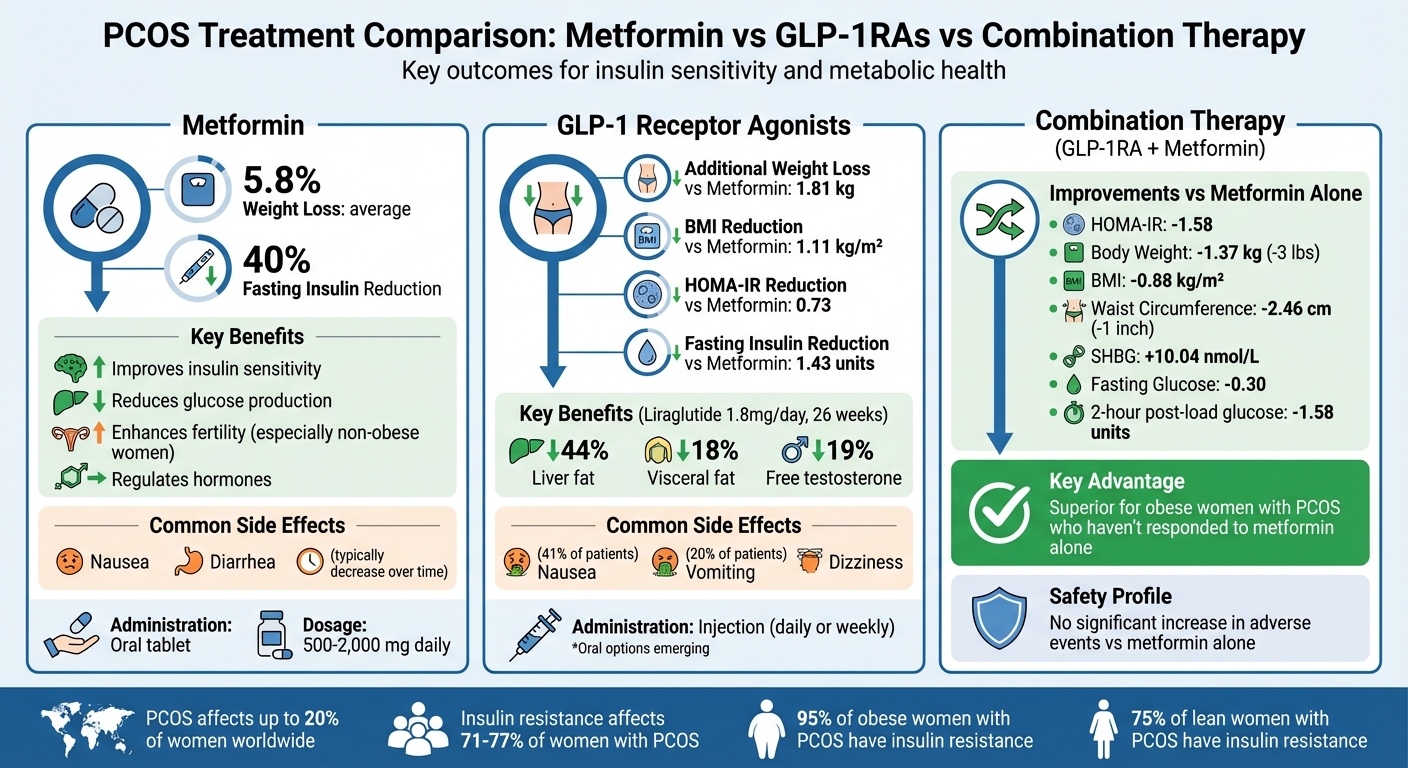
Metformin vs GLP-1 Receptor Agonists vs Combination Therapy for PCOS Treatment Outcomes
What Recent Studies Show About Metformin
How Metformin Affects Insulin and Blood Sugar
Metformin works by activating AMPK, a key enzyme involved in energy regulation. This activation reduces ATP synthesis, which helps move glucose transporters to the cell surface, increasing glucose uptake by cells.
In the liver, metformin reduces glucose production (gluconeogenesis) and limits glucose absorption in the intestines. Research shows it can lower fasting insulin levels by about 40%. Additionally, it combats lipotoxicity by inhibiting enzymes that produce fat and reducing fatty acid oxidation, which improves insulin sensitivity. These changes not only help regulate blood sugar but also contribute to better weight management and reproductive health improvements.
Effects on Weight, Hormones, and Fertility
For individuals with PCOS, metformin's effects go beyond controlling blood sugar. Its ability to regulate hormones is a significant factor in addressing reproductive challenges linked to PCOS.
Studies highlight an average weight loss of 5.8% with metformin use. It also lowers androgen levels by targeting specific ovarian enzymes, which helps reduce symptoms like hirsutism and acne.
When it comes to fertility, the results are promising. Metformin enhances ovulation and increases clinical pregnancy rates, particularly in women who are not obese. It also improves the uterine lining's receptivity to embryos by boosting GLUT4 expression, creating a more favorable environment for implantation.
Drawbacks of Metformin
While metformin offers many benefits, it does come with some drawbacks. Gastrointestinal issues like nausea and diarrhea are common, especially at the start of treatment. However, these side effects usually subside with a gradual increase in dosage, starting at 500 mg daily and working up to 1,500–2,000 mg per day when taken with meals.
"Metformin should be seriously considered as the most suitable first-line treatment for anovulatory infertile non‐obese patients with PCOS." – Ghalia M Attia, Medical Histology and Cell Biology, Mansoura University
The effectiveness of metformin can vary based on body weight. Women with a BMI over 35 kg/m² often see less improvement in ovulation and weight loss compared to those with lower BMIs. For managing hirsutism, oral contraceptives tend to work better, especially in women with a BMI between 25 and 30 kg/m². Additionally, metformin shows limited benefits for women undergoing short assisted reproduction technology (ART) protocols and is less effective than letrozole for inducing ovulation.
sbb-itb-6dba428
GLP-1 Receptor Agonists Compared to Metformin
What Studies Show About GLP-1 Receptor Agonists
Recent research has shed light on how GLP-1 receptor agonists (GLP-1RAs) compare to metformin, particularly in treating women with PCOS. These studies suggest that GLP-1RAs outperform metformin in improving insulin sensitivity and aiding weight loss and managing insulin resistance. For instance, meta-analyses reveal that GLP-1RAs reduce HOMA-IR (a measure of insulin resistance) by 0.73 and lower fasting insulin levels by 1.43 units more than metformin does.
A specific trial highlighted that taking 1.2 mg of liraglutide daily decreased BMI by 1.1 kg/m², whereas 1,000 mg of metformin taken twice daily only led to a reduction of 0.1 kg/m². Across various studies, GLP-1RAs consistently resulted in an average additional weight loss of 1.81 kg and a BMI reduction of 1.11 kg/m² compared to metformin.
Another 26-week study using 1.8 mg/day of liraglutide reported remarkable outcomes: liver fat dropped by 44%, visceral adipose tissue decreased by 18%, and free testosterone levels were reduced by 19%. These findings underline the metabolic advantages of GLP-1RAs, paving the way for further exploration of their hormonal effects.
Effects on Hormones and Metabolism
While GLP-1RAs show clear benefits for weight loss and insulin sensitivity, their impact on hormones is less pronounced. When comparing GLP-1RAs and metformin as standalone treatments, neither demonstrates a clear edge in reducing total testosterone, DHEAS, or increasing SHBG levels.
"GLP-1RAs effectively reduced body weight, BMI and insulin resistance in patients with PCOS, although they were accompanied by nausea, vomiting and dizziness." – Scientific Reports
The two treatments work through distinct mechanisms. GLP-1RAs stimulate glucose-dependent insulin release and reduce appetite via the central nervous system, while metformin primarily reduces glucose production in the liver. These differences suggest that combining the two therapies could offer complementary benefits, especially for improving SHBG levels.
Safety Considerations
In addition to effectiveness, the safety profile of GLP-1RAs is an important consideration. These treatments are associated with higher rates of gastrointestinal and neurological side effects. Studies indicate they significantly increase the risk of nausea (P=0.02), vomiting (P=0.04), and dizziness (P=0.03) compared to control groups. Clinical trials report that about 41% of patients experience nausea, and 20% report vomiting.
Before starting GLP-1RA therapy, patients should be screened for potential contraindications, such as a history of pancreatitis, thyroid cancer, or diabetic retinopathy. Most GLP-1RAs are administered through subcutaneous injections, either daily or weekly, though oral options are now emerging. This delivery method may be a factor for patients comparing GLP-1RAs to metformin's oral tablet form.
Ongoing monitoring is crucial, including regular lab tests and weight checks over a 6- to 12-month period. While GLP-1RAs show promise, long-term safety data specific to PCOS patients remains limited, highlighting the need for further research.
Using GLP-1 Receptor Agonists and Metformin Together
Benefits of Combined Treatment
Research has started to explore how combining metformin with GLP-1 receptor agonists can enhance the management of PCOS, particularly by targeting insulin sensitivity - a key factor in controlling the condition.
A 2025 meta-analysis of eight randomized controlled trials with 337 participants revealed that this combination therapy outperformed metformin alone in improving several health markers in women with PCOS. The findings showed that adding a GLP-1RA to metformin led to:
- A reduction in insulin resistance (HOMA-IR) by –1.58
- Additional weight loss of –1.37 kg (≈ –3 lbs)
- A decrease in BMI by –0.88 kg/m²
- A reduction in waist circumference by –2.46 cm (≈ –1 inch)
- An increase in SHBG levels by +10.04, which can help address hormonal imbalances tied to PCOS symptoms
"Collectively, combination of GLP1RAs and metformin provides superior benefits over metformin alone in reducing body weight, improving insulin sensitivity, and regulating hormonal imbalances in women with PCOS." – Yuzi Zhao, Li Jiang, et al.
These combined benefits make this therapy particularly helpful for obese women with PCOS who haven't seen sufficient results with metformin alone. The metabolic improvements also highlight the potential advantages of using both medications together rather than relying on a single drug.
Single Drug vs. Combined Treatment Results
The table below outlines the specific improvements observed with the combination therapy compared to metformin alone, based on the 2025 meta-analysis:
| Outcome Measure | Improvement with Combination vs. Metformin Alone |
|---|---|
| Insulin Resistance (HOMA-IR) | –1.58 |
| Body Weight | –1.37 kg (≈ –3 lbs) |
| BMI | –0.88 kg/m² |
| Waist Circumference | –2.46 cm (≈ –1 inch) |
| SHBG (Hormonal Balance) | +10.04 |
| Fasting Glucose | –0.30 |
Additionally, the combination therapy reduced 2-hour post-load glucose by 1.58 units compared to metformin alone. While GLP-1 receptor agonists are well-known for aiding weight loss and improving insulin sensitivity, their combined use with metformin stands out for its ability to also enhance hormonal balance.
Safety and Long-Term Effects
While the metabolic benefits of this combination are clear, it's equally important to consider its safety. Current meta-analyses indicate that adverse event rates for combination therapy are not significantly higher than those for metformin alone. This suggests that adding a GLP-1RA doesn't introduce a notable increase in side effects.
However, more extensive research is needed to understand the long-term safety and effectiveness of this approach. Most studies so far have been limited by small sample sizes and short follow-up periods. Clinical guidelines recommend regular monitoring - through lab tests and weight checks - over 6 to 12 months to ensure both safety and sustained benefits.
What We Still Need to Learn
Current Research Limitations
While recent studies offer encouraging insights, there are still notable gaps due to small sample sizes and limited follow-up durations. These issues make it difficult to assess the long-term effects on cardiovascular and reproductive health. Additionally, the evidence for newer treatments remains minimal, highlighting the need for more comprehensive clinical trials.
"Evidence is limited by study heterogeneity, varying diagnostic criteria, and the use of aggregate data in meta-analyses, all of which make interpretation challenging." – Saeede Saadati, Monash Centre for Health Research and Implementation
For example, the long-term use of metformin requires monitoring for vitamin B12 deficiencies. Moreover, the impact of combination therapies on offspring metabolic health has been largely overlooked in existing research. These gaps emphasize the need for alternative care models and more expansive studies.
How Telehealth Improves Access to PCOS Treatment
Despite the research challenges, new care methods are emerging to improve access. In the United States, only 13% of counties have endocrinologists, and patients often face wait times of over four months for in-person appointments. Telehealth platforms are stepping in to bridge this gap by offering remote access to specialized care. For instance, Oana Health provides personalized PCOS treatments through virtual consultations, delivering medications and care plans directly to patients' homes. This approach saves time, reduces costs, and alleviates stress.
Digital health tools also enhance treatment adherence by supporting lifestyle changes and enabling regular follow-ups. Virtual platforms allow for weekly adjustments to medications and lifestyle plans, creating a more continuous care model. This timely feedback encourages accountability and supports the consistent treatment adherence often needed for combination therapies.
"By using telehealth, we can make weekly tweaks to a patient's diet, medication, or lifestyle without them having to leave home." – Dr. Lisa Chang, Telehealth Coordinator, Emory Women's Health Center
What Future Studies Should Examine
To address current limitations, future research must focus on larger and longer-term studies. Tracking patients over several years could provide insights into how combination therapies influence heart health, reproductive outcomes, and diabetes prevention. This is especially critical given that over 50% of women with PCOS develop type 2 diabetes by age 40.
Researchers should also explore how genetic predisposition, lifestyle factors, and the severity of PCOS affect individual treatment responses. Since insulin resistance impacts 71% to 77% of women with PCOS, understanding these variables could lead to more tailored treatments.
Additionally, future studies should investigate the role of gut microbiota and epigenetic factors in shaping treatment outcomes. These mechanisms might explain why some patients respond better to specific therapies, helping clinicians select the most effective strategies for each individual.
Insulin Resistance and PCOS | Insulin resistant PCOS, symptoms, and how to manage it
Conclusion
Both metformin and GLP-1 receptor agonists are effective in addressing insulin resistance in PCOS. Metformin consistently improves glucose regulation and lipid profiles, particularly in cases of type 2 diabetes and impaired glucose tolerance. On the other hand, GLP-1 receptor agonists, such as liraglutide and semaglutide, play a crucial role in weight management. For example, 76% of patients on a 3 mg dose of these medications achieved over 5% weight loss, compared to just 30% on placebo.
The combination of these therapies takes PCOS treatment a step further. When GLP-1 receptor agonists are paired with metformin, patients see additional benefits, including an average weight loss of 1.37 kg and a BMI reduction of 0.88 kg/m² compared to metformin alone. This dual approach also enhances hormonal balance, as shown by an increase in SHBG levels by an average of 10.04 nmol/L.
These measurable improvements highlight the importance of tailoring treatment strategies to individual metabolic needs. PCOS is a highly variable condition, influenced by factors like phenotype, age, and metabolic profile. A one-size-fits-all approach doesn’t work - insulin resistance affects 95% of obese women and 75% of lean women with PCOS, making personalized care essential. Expanding access to treatments, including telehealth services, is equally important. Platforms like Oana Health provide personalized, at-home PCOS care, offering a convenient solution for many.
"Personalized approaches, tailored to individual responses, are imperative for optimizing outcomes in the management of PCOS." – Endocrine and Metabolic Science
FAQs
How does combining metformin with GLP-1 receptor agonists benefit women with PCOS?
Combining metformin with GLP-1 receptor agonists offers a powerful way to improve insulin sensitivity, helping the body regulate blood sugar more effectively. Beyond that, this combination has been linked to weight loss and improvements in other metabolic health markers, including cholesterol levels and blood pressure. These effects are often more pronounced compared to using metformin on its own.
For women managing PCOS, this pairing can address symptoms like insulin resistance while supporting hormonal balance, paving the way for improved long-term health.
How does metformin help improve fertility in women with PCOS?
Metformin can play a role in improving fertility for women with PCOS by tackling insulin resistance, a frequent issue linked to this condition. By enhancing the body's sensitivity to insulin, it helps restore hormonal balance, which can lead to more regular ovulation and boost the likelihood of conception.
Beyond that, metformin may also help lower elevated androgen levels, another common symptom of PCOS. This reduction can further support reproductive health and improve pregnancy outcomes. Its focus on addressing the underlying causes of PCOS makes it a helpful option for women looking to enhance their fertility.
What side effects can GLP-1 receptor agonists cause when used for PCOS treatment?
GLP-1 receptor agonists, commonly prescribed to help improve insulin sensitivity in individuals with PCOS, can sometimes lead to side effects. The most frequently reported issues include nausea, vomiting, and general gastrointestinal discomfort.
Another potential effect that has gained attention is changes in facial appearance, often called "Ozempic face." This term describes facial thinning or a noticeable loss of fat in the face, which some patients have observed during treatment.
Since side effects can vary from person to person, it's essential to talk openly with your healthcare provider about any concerns. They can help you weigh the benefits and risks to decide if this treatment aligns with your health needs.