
Long-Term Metformin Use: Safety and Monitoring Tips
Metformin has been a trusted medication for managing type 2 diabetes and related conditions since 1994. While it’s highly effective, long-term use requires regular monitoring to ensure safety and address potential side effects. Here’s what you need to know:
- Key Benefits: Metformin improves blood sugar control, reduces complications like heart disease, and may lower mortality rates by 24% over 20 years.
- Side Effects: Common issues include nausea, diarrhea, and stomach upset, which can often be managed by taking the medication with food or switching to extended-release (ER) versions.
- Monitoring Needs: Regular kidney function tests, Vitamin B12 checks (every 1–3 years), and A1C monitoring help ensure safe and effective use.
- Risks to Watch: Rare complications like lactic acidosis and Vitamin B12 deficiency require prompt medical attention if symptoms arise.
- Lifestyle Tips: Pair metformin with a balanced diet, regular exercise, and hydration for better results.
Metformin: Risks and Side Effects You Need to Know
Common Side Effects and How to Manage Them
For many people starting metformin, digestive discomfort is a common hurdle. Studies show that up to 75% of users experience gastrointestinal issues, with 20% to 30% encountering symptoms significant enough to require active management. The good news? These side effects often ease as your body gets used to the medication. Let’s look at the most frequent digestive concerns and practical solutions.
Digestive Side Effects
The most reported issues include diarrhea, nausea, stomach aches, gas, bloating, and a metallic taste. In some cases, patients may develop chronic diarrhea later on. This happens because metformin levels in the small intestine can be 30 to 300 times higher than in the bloodstream, with 30% to 50% of the drug reaching the colon.
To reduce stomach upset, take metformin with a full meal and a glass of water. Starting with a low dose - like 500 mg once daily - and gradually increasing it can also help your digestive system adjust. As Diana Isaacs, PharmD from Cleveland Clinic, explains:
If you start off on a higher dose, you're more likely to have these side effects. If you stop taking it for some reason and you go right back to that higher dose, you might also notice more of these side effects.
Switching to an extended-release (ER) formulation is another option. ER versions release the drug more gradually, which often leads to fewer stomach-related problems.
| Side Effect | Management Strategy |
|---|---|
| Nausea | Take with food; start with a low dose |
| Diarrhea | Stay hydrated; try over-the-counter remedies; switch to ER |
| Stomach Ache | Use a heat pad; eat smaller, more frequent meals |
| Metallic Taste | Chew sugar-free gum |
| Vomiting | Take small sips of water to avoid dehydration |
Managing Weight Changes
Weight management is another important consideration. Metformin is considered weight-neutral and may even lead to slight weight loss. It’s not known for causing weight gain. For women with PCOS or insulin resistance, metformin improves insulin sensitivity and reduces liver glucose production, which can help with weight regulation. Pairing the medication with a balanced diet and regular exercise is key. As Diana Isaacs points out:
With metformin, it's really about making sure you have food in your stomach and making sure you're following a healthy meal plan.
If you notice unusual fatigue or weakness during long-term use, it might be worth asking your doctor to check your vitamin B12 levels. Addressing these concerns early can help you stay on track with your treatment.
When to Contact Your Doctor
While most side effects are manageable, some symptoms require immediate medical attention. Lactic acidosis, a rare but serious condition, affects fewer than 0.01% of users. Symptoms include extreme fatigue, trouble breathing, severe muscle pain, or an irregular heartbeat. Yellowing of the skin or eyes may signal liver issues. Persistent vomiting or diarrhea lasting more than a day should also prompt a call to your doctor, as dehydration can strain your kidneys. Around 5% of patients cannot tolerate metformin due to side effects, so it’s essential to discuss ongoing issues with your healthcare provider.
Monitoring Guidelines for Long-Term Use
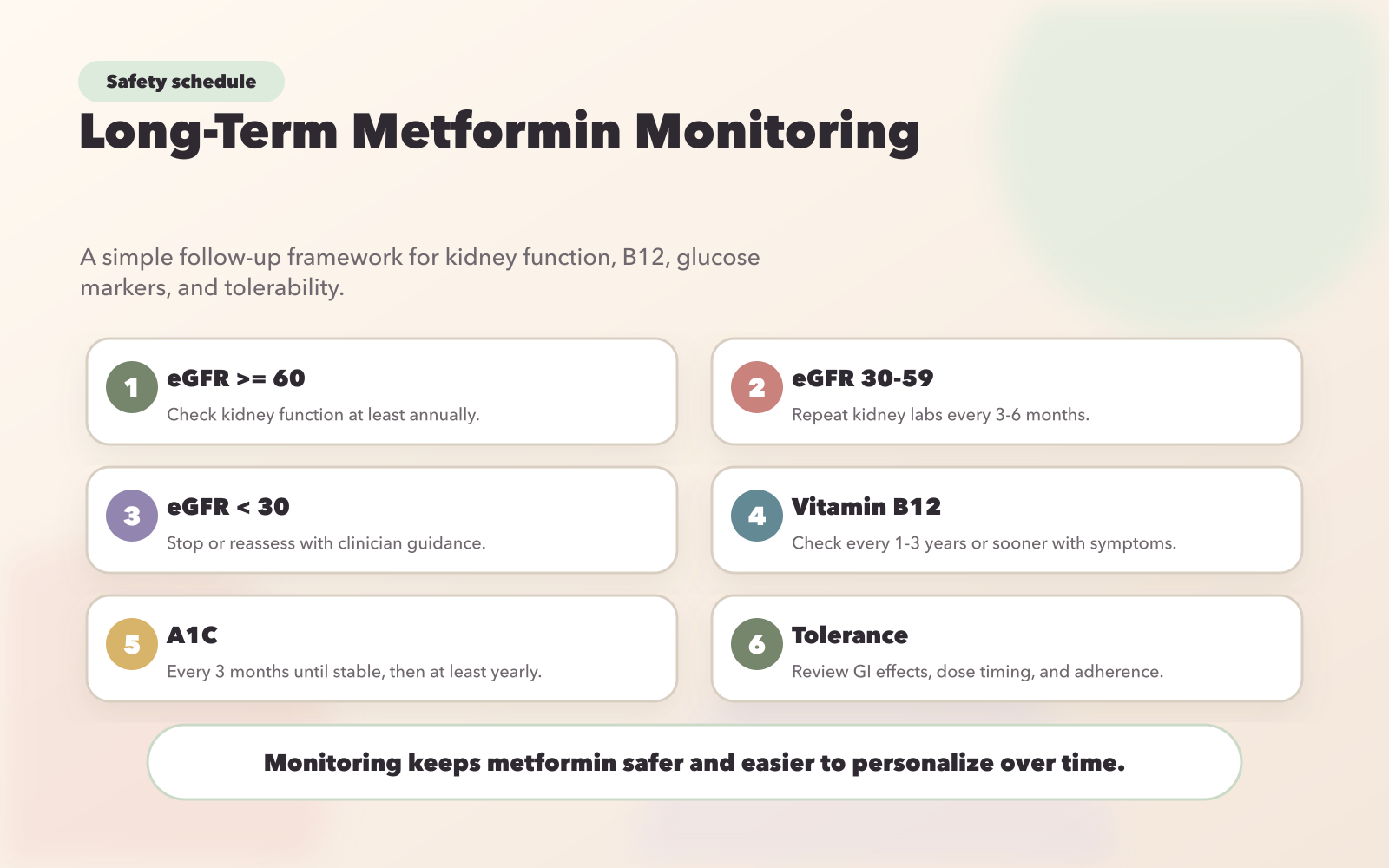
Metformin Long-Term Monitoring Schedule: Kidney Function, Vitamin B12, and A1C Testing Guidelines
Keeping up with routine lab tests is key to using metformin safely over the long haul. Since metformin is primarily processed by your kidneys and can increase the risk of Vitamin B12 deficiency, regular monitoring helps catch potential issues early. These tests work hand in hand with earlier advice on managing metformin's side effects.
Kidney Function Tests
Your kidneys play a big role in clearing metformin from your system, which is why monitoring your eGFR (estimated glomerular filtration rate) is so important. This test measures how well your kidneys filter waste and is considered more accurate than serum creatinine, especially for people over 65.
- If your eGFR is ≥60 mL/min/1.73 m², annual testing is usually enough.
- For eGFR levels between 30–59 mL/min/1.73 m², expect to be tested every 3 to 6 months, as your doctor may adjust your dosage.
- Metformin is not recommended if your eGFR falls below 30 mL/min/1.73 m².
Certain situations demand extra caution. For instance, if you’re undergoing iodinated contrast imaging and your eGFR is between 30 and 60 mL/min/1.73 m², you’ll need to temporarily stop metformin. Your kidney function should be rechecked 48 hours after the procedure before restarting the medication. Similarly, acute illnesses, surgeries, or dehydration episodes call for immediate kidney function tests, as these conditions can affect how your body processes metformin.
| eGFR Level (mL/min/1.73 m²) | Monitoring Frequency | Action Required |
|---|---|---|
| ≥60 | Annually | Continue standard dosing |
| 30–59 | Every 3–6 months | Increase monitoring; dose adjustments may be needed |
| <30 | Immediate assessment | Stop taking metformin |
Liver Function Tests
Liver health is another crucial factor for safe metformin use. Regular liver function tests ensure your body can metabolize the medication properly. Most doctors will recommend a baseline liver function test before starting metformin, with a follow-up around the 3-month mark. After that, yearly testing is generally sufficient unless you have existing liver issues.
This is particularly important because impaired liver function raises the risk of lactic acidosis, a rare but serious complication. If you drink alcohol regularly, your doctor might also screen for excessive alcohol use annually, as heavy drinking is a controllable risk factor.
Blood Sugar and A1C Monitoring
Keeping tabs on your hemoglobin A1C and daily blood sugar levels helps confirm that metformin is effectively managing your blood sugar. A1C provides a snapshot of your average blood sugar levels over the past 2–3 months, making it a reliable measure of long-term control.
- When starting metformin or changing your dose, your doctor will likely check your A1C every 3 months until your levels stabilize.
- Once you hit your target range, annual A1C checks are usually enough.
Daily blood glucose monitoring - either at home or as directed by your doctor - can help you understand how your body reacts to meals, exercise, and medication adjustments. This ensures your treatment plan stays on the right track.
According to Sina Hartung, MMSC-BMI:
Consistent lab monitoring and smart dosing turn metformin into a worry-free medication for most people.
With a well-planned monitoring routine, metformin’s safety record becomes even more reassuring. In fact, studies show it’s associated with a 24% lower all-cause mortality rate over 20 years compared to diet management alone.
Vitamin B12 Deficiency Risks
One of the potential long-term effects of taking metformin is vitamin B12 deficiency. This happens because metformin interferes with the calcium-dependent absorption of the B12–intrinsic factor complex, making it harder for the body to take in this essential vitamin. Studies show that up to 1 in 10 people using metformin may experience a deficiency, with the likelihood increasing by about 13% each year the medication is used [24,26].
This deficiency often goes unnoticed in the early stages. For example, the Diabetes Prevention Program Outcomes Study found that around 5% of participants had biochemical B12 deficiency after 5 years of metformin use, and this number rose to nearly 9% after 9 to 13 years. Additionally, after 13 years, 20.3% of metformin users had low or borderline B12 levels, compared to 15.6% in the placebo group. Dr. Jill Crandall, a Professor of Medicine at Albert Einstein College of Medicine, highlights the challenge of detection:
"The presence of anemia did not discriminate between who did or did not have low B12 levels, so I think we may have a false sense of security by just analyzing hemoglobin and hematocrit."
While understanding these statistics is important, recognizing early symptoms is key to addressing the issue before it worsens.
Recognizing B12 Deficiency Symptoms
The symptoms of B12 deficiency can be subtle at first, often showing up as neurological issues like "pins and needles", numbness, balance problems, or reduced sensitivity. These signs can resemble diabetic neuropathy, which may delay proper diagnosis and treatment [24,27]. Other physical symptoms include severe fatigue, muscle weakness, and pale or yellowish skin [11,24]. You might also notice a sore, red, or inflamed tongue (glossitis) or recurring mouth ulcers. Mental effects such as memory difficulties, confusion, irritability, or depression are possible, and advanced cases can lead to blurred or impaired vision [11,24]. The UK's Medicines and Healthcare products Regulatory Agency advises:
"If you are taking metformin, seek medical advice if you develop new or worsening symptoms of extreme tiredness, a sore and red tongue, pins and needles, or pale or yellow skin."
Supplementation and Diet Strategies
Once a deficiency is identified, quick action is essential. Most patients can continue metformin while addressing the issue [11,24]. Oral supplements of 1,000–2,000 mcg daily are often effective for correcting deficiencies, while maintenance may involve 1,000 mcg daily or monthly intramuscular injections, depending on individual needs [25,27].
Dietary choices also play a role in managing B12 levels. Foods such as fish, meat, poultry, eggs, milk, cheese, and yogurt are excellent sources of B12. For those on vegetarian or vegan diets, fortified cereals or plant-based milk alternatives can help meet daily requirements.
Regular monitoring of B12 levels is critical. Healthcare professionals recommend testing every 2 to 3 years for most patients, or annually for those at higher risk, such as older adults, vegetarians, vegans, or anyone using metformin for over 4 years or taking proton pump inhibitors (PPIs) [25,24,27]. If your B12 levels are borderline (200–400 pg/mL), additional tests like methylmalonic acid (MMA) and homocysteine levels can provide a clearer picture [25,27].
Keeping a close eye on B12 levels is an important step in ensuring the safe, long-term use of metformin. Regular testing, combined with dietary adjustments and supplementation, can help prevent complications.
sbb-itb-6dba428
Rare Risks and Prevention
While Vitamin B12 deficiency is a more common concern with metformin use, there are rare but serious risks to keep in mind. Among these is lactic acidosis, a potentially life-threatening condition caused by an excessive build-up of lactic acid in the body. Though extremely uncommon - occurring in about 0.03 cases per 1,000 patient-years - it carries a high fatality rate of nearly 50% when it does occur. Staying vigilant and undergoing regular health monitoring can help reduce this risk.
The U.S. Food and Drug Administration highlights the difficulty of identifying lactic acidosis early:
"The onset of lactic acidosis is often subtle and accompanied only by nonspecific symptoms such as malaise, myalgias, respiratory distress, increasing somnolence, and nonspecific abdominal distress."
What is Lactic Acidosis?
Lactic acidosis happens when metformin builds up in the body, often due to impaired kidney function. Since metformin is primarily eliminated through the kidneys, any decline in kidney performance increases the risk. Other contributing factors include severe dehydration, liver disease, heart failure, and excessive alcohol consumption. Medically, the condition is defined by a blood pH below 7.35 and lactate levels above 5.0 mmol/L.
The FDA advises that "the risk of lactic acidosis may be significantly decreased by regular monitoring of renal function in patients taking metformin and by use of the minimum effective dose". Following sick-day rules is equally important - temporarily stopping metformin during severe vomiting, diarrhea, or fever can prevent dehydration from straining the kidneys. Additionally, if you're undergoing surgery or an imaging procedure involving contrast dye, your doctor will likely recommend pausing metformin and waiting 48 hours post-procedure before resuming. Limiting alcohol intake is another key preventative step, as excessive drinking can impair the liver's ability to process lactate. Recognizing the early signs of lactic acidosis is critical for swift medical intervention.
Warning Signs Requiring Immediate Care
If you notice any of the following symptoms, stop taking metformin and seek emergency medical attention immediately: rapid or deep breathing, unexplained shortness of breath, extreme fatigue or persistent weakness, severe stomach pain with nausea or vomiting, unusual muscle pain or cramping, increasing drowsiness, confusion or dizziness, or feeling unusually cold in your extremities along with a slow or irregular heartbeat.
Memorial Sloan Kettering Cancer Center cautions: "If lactic acidosis happens, it can lead to other health problems and can be deadly". Because this condition is a medical emergency, do not wait for symptoms to improve on their own. Immediate treatment at a hospital is essential and could save your life.
Oana Health Metformin Treatment Options
Oana Health provides personalized solutions for managing long-term metformin use, focusing on conditions like PCOS, insulin resistance, and metabolic health. Their telehealth services simplify care while addressing common challenges associated with metformin treatment.
Personalized Treatment Plans
Oana Health tailors treatments to individual needs through a quick online intake process. Licensed physicians review your medical history within 1–2 days to recommend the best approach. For those dealing with PCOS or insulin resistance, Oana Health goes beyond standard oral metformin by offering alternative options.
If you've experienced gastrointestinal side effects like nausea or stomach upset from oral metformin, Oana Health offers a topical metformin formulation. This option provides insulin-sensitizing benefits without digestive discomfort, with noticeable results typically emerging after 3–4 weeks of nightly use. One patient shared:
I'm so glad I discovered Oana's metformin lotion! I used to struggle a lot with the side effects for oral metformin and this is a great alternative for me. I get the same benefits but no more upset stomach and nausea.
For more comprehensive PCOS management, Oana Health offers specialized treatment packs. These include the MetSpiro Pack (a combination of metformin and spironolactone, starting at $32/month) and Hairless Hype (a blend of metformin, eflornithine, and azelaic acid, starting at $115/month). Clinical data shows that 81% of women using Hairless Hype see significant improvement within a year. Additionally, Oral Metformin ER is available starting at $22/month and is often better tolerated than immediate-release versions for long-term use.
Telehealth Convenience
Oana Health’s telehealth platform ensures seamless care without the hassle of in-person visits. With 24/7 access to medical professionals, patients can address persistent side effects or dosage adjustments easily. Medications are delivered with free shipping, automatic refills, and gradual dose titration, starting at 500 mg/day and increasing slowly as needed. This approach supports long-term treatment success while prioritizing patient comfort.
Affordable, Science-Backed Care
Oana Health maintains transparent pricing and evidence-based care. Oral Metformin ER starts at $22/month (billed quarterly) with a one-time $20 doctor evaluation fee. Newsletter subscribers can save $20 on their first treatment. All medications are prepared in FDA-regulated compounding pharmacies.
| Treatment Type | Primary Use | Monthly Price |
|---|---|---|
| Oral Metformin ER | Insulin resistance / Diabetes | $22 |
| MetSpiro Pack | PCOS / Hormonal health | $32 |
| Topical Metformin | Insulin sensitivity (no GI issues) | $89 |
| Hairless Hype | Unwanted hair growth | $115 |
Karen H., a patient who transitioned to Oral Metformin ER, shared her experience:
Switching to metformin ER has been a game changer for me. I used to struggle with horrible nausea from regular metformin, which made it really hard to stick with the treatment.
Lifestyle Tips for Long-Term Safety
Incorporating specific lifestyle habits alongside regular testing can help you get the most out of metformin while staying safe. A thoughtful mix of diet, exercise, and consistent medical care ensures the medication works effectively and reduces potential risks.
Following a Balanced Diet
To avoid stomach discomfort, take metformin with your largest meal.
Focus on cutting back on refined carbs like white bread, sugary cereals, and chips, as these can cause sudden blood sugar spikes that counteract metformin’s effects. Instead, opt for fiber-rich foods to maintain steady glucose levels. Additionally, limit saturated fats from sources like red meat and butter to support heart health.
Be cautious with alcohol. The Department of Veterans Affairs advises:
Caution patients against excessive alcohol intake, either acute or chronic, when taking metformin because alcohol potentiates the effects of metformin on lactate metabolism.
Keep fast-acting carbs such as sugar cubes, fruit juice, or candy handy to treat sudden low blood sugar episodes. If you’re planning extra physical activity, include starchy carbs - like bread, pasta, or cereals - before or after exercise to maintain stable blood sugar levels. The NHS emphasizes:
To prevent hypoglycaemia, it's important to have regular meals, including breakfast. Try not to miss or delay a meal.
Pairing a nutrient-rich diet with consistent physical activity can significantly enhance insulin sensitivity.
Adding Regular Exercise
Exercise is a powerful partner to metformin in managing blood sugar. Both independently improve insulin sensitivity, creating a complementary approach to glucose control. Diana Isaacs, PharmD at Cleveland Clinic, explains:
When you have insulin resistance, your muscles, fat and liver cells aren't able to use that insulin efficiently. So, metformin helps your body be more sensitive to the insulin that it already has.
A long-term study spanning 21 years showed that lifestyle changes, including losing at least 7% of body weight and 150 minutes of moderate exercise weekly, were highly effective in preventing diabetes progression. Exercising after meals can be especially beneficial for reducing post-meal blood sugar spikes.
Stay hydrated, especially during hot weather or extended activity. When starting or changing your exercise routine, test your blood sugar more often to understand how your body reacts. Always keep fast-acting carbs nearby in case of low blood sugar.
Keeping Up with Medical Follow-Ups
Healthy habits should go hand in hand with regular medical checkups to ensure long-term safety. Schedule routine visits with your healthcare provider to monitor kidney function, vitamin B12 levels, and any lifestyle adjustments you’ve made.
The FDA highlights:
The risk of lactic acidosis may be significantly decreased by regular monitoring of renal function in patients taking metformin and by use of the minimum effective dose of metformin.
The UK's Medicines and Healthcare products Regulatory Agency advises:
If you are taking metformin, seek medical advice if you develop new or worsening symptoms of extreme tiredness, a sore and red tongue, pins and needles, or pale or yellow skin – these can be signs of low vitamin B12 levels.
Inform your doctor about changes in your diet, exercise routine, or alcohol intake so they can adjust your treatment plan accordingly. If you have upcoming surgeries or imaging that involves iodine contrast dye, let your provider know - metformin often needs to be paused 48 hours before and after such procedures.
Conclusion
This guide highlights how safe, long-term use of metformin relies on regular monitoring and adopting healthy lifestyle habits.
Metformin has proven to be a reliable and effective treatment for type 2 diabetes and insulin resistance, supported by decades of research and real-world data. Studies show that metformin users experienced a 24% lower all-cause mortality rate over 20 years compared to those managed by diet alone. As Sina Hartung, MMSC-BMI, explains:
Across thousands of patients we see no late-onset toxicity trends; metformin's safety curve is unusually flat.
Staying proactive with routine testing is key. Annual eGFR tests, vitamin B12 checks every 1–3 years, and A1C monitoring every 3–6 months help maintain metformin’s strong safety profile. While lactic acidosis is extremely rare - occurring in just 3 to 10 cases per 100,000 patient-years - early detection through regular labs makes these complications almost entirely avoidable.
Pair metformin use with healthy habits. Taking it with your largest meal can help minimize stomach discomfort, staying hydrated supports kidney function, and regular exercise boosts insulin sensitivity. Always consult your healthcare provider before making any changes to your medication, as stopping metformin suddenly can cause dangerous blood sugar spikes.
For professional guidance tailored to your needs, visit Oana Health. They offer telehealth services and Oral Metformin ER starting at $22/month, complete with free shipping and support from licensed professionals.
With consistent monitoring and a focus on healthy living, metformin continues to be a dependable tool for managing your metabolic health.
FAQs
When should I stop metformin during illness?
If you experience vomiting, diarrhea, or dehydration while taking metformin, stop using it immediately. Wait to resume until you're eating and drinking normally again, and your illness has fully resolved - usually 24 to 48 hours after recovery. If you're uncertain about when to restart, consult your healthcare provider for guidance.
What are early signs of low vitamin B12?
Early signs of a vitamin B12 deficiency can include fatigue, shortness of breath, and dizziness. These symptoms often stem from anemia, which may develop as a result of low B12 levels. In some cases, this deficiency might be connected to prolonged use of metformin.
How can I tell if my metformin dose is safe for my kidneys?
To keep your metformin use safe for your kidneys, regular kidney function tests are crucial. These tests typically include serum creatinine levels and the estimated glomerular filtration rate (eGFR). Current guidelines recommend adjusting or discontinuing metformin if kidney function falls below specific thresholds. Be sure to discuss your test results and overall health with your healthcare provider to determine the best course of action for you.