
Natural Ways to Lower Androgens
High androgen levels can disrupt your hormones, leading to issues like acne, irregular periods, and hair changes. The good news? You can manage them naturally.
Here’s how:
- Diet: Focus on low-glycemic carbs, high-fiber foods, and omega-3 fats. Flaxseeds and spearmint tea are especially helpful.
- Exercise: Combine strength training, cardio, and stress-reducing practices like yoga to improve insulin sensitivity.
- Herbal Remedies: Spearmint tea, zinc, licorice root, and DIM can help reduce testosterone and support balance.
- Liver Health: Eat cruciferous vegetables, fiber-rich foods, and stay hydrated to aid hormone detoxification.
These steps, paired with medical treatments like Spironolactone or Metformin, create a balanced approach to managing androgen levels.
4 Tips to NATURALLY Lower Testosterone with PCOS (Reverse Acne + Hair Loss + Facial Hair)
Diet Changes to Lower Androgen Levels
High-glycemic foods can spike blood sugar levels, triggering insulin surges that signal the ovaries to produce excess testosterone, especially in women with PCOS or hormonal imbalances. This creates a feedback loop: higher insulin levels lead to increased androgen production, which worsens insulin resistance.
To break this cycle, dietary adjustments can help regulate blood sugar, reduce androgen production, and support overall hormone balance. The focus should be on foods that stabilize insulin levels and promote steady energy release.
Low-Glycemic and High-Fiber Foods
Choosing low-glycemic carbohydrates is key to avoiding the insulin spikes that fuel androgen overproduction. Replace refined carbs like white bread and pasta with whole grains, legumes, and non-starchy vegetables such as broccoli, spinach, cauliflower, and zucchini. These options release sugar gradually, helping to maintain steady insulin and testosterone levels.
Fiber is another important factor in balancing hormones. It slows sugar absorption and aids in the elimination of excess hormones from the body. Flaxseeds, in particular, stand out: consuming 30 grams (around 2-3 tablespoons) of ground flaxseed daily has been shown to lower both total and free testosterone levels in clinical studies. For a hormone-friendly breakfast, ditch sugary cereals and white toast. Instead, aim for a meal that includes 30-40 grams of protein paired with vegetables or chia pudding to keep your blood sugar stable throughout the day.
Beyond carbohydrates and fiber, incorporating healthy fats and natural remedies can further support androgen balance.
Omega-3 Fats and Spearmint Tea
Omega-3 fatty acids found in fatty fish, walnuts, and flaxseeds are excellent for reducing inflammation and improving insulin sensitivity - two key factors in lowering androgen levels. A study involving 78 women with PCOS found that taking 3 grams of omega-3 daily for eight weeks significantly reduced testosterone levels. Remarkably, women taking omega-3s were more than twice as likely to experience regular menstrual cycles (47.2% compared to 22.9%).
To incorporate omega-3s into your diet, include salmon, sardines, or tuna in your meals at least twice a week. Plant-based sources like walnuts are also effective; just 1 ounce per day increased Sex Hormone Binding Globulin (SHBG) levels by 12.5%. SHBG binds to testosterone, reducing the amount of active androgens circulating in the bloodstream.
Another natural remedy worth trying is spearmint tea. Known for its anti-androgenic properties, drinking two cups daily for 30 days has been shown to lower both free and total testosterone levels in women with PCOS. It’s versatile, too - enjoy it hot, iced, or as a smoothie base. Paul Grant from Kings College Hospital highlights:
"Spearmint herbal tea has significant anti-androgen effects in polycystic ovarian syndrome".
These dietary changes and natural remedies work together to support non-pharmaceutical approaches to hormone regulation, offering a holistic path to better health.
Exercise and Lifestyle Modifications
Physical activity plays a key role in how your body manages insulin, which is essential for controlling androgen levels. Exercise improves how muscles absorb glucose, reducing insulin spikes that can lead to increased androgen production. And here's the kicker: these benefits happen even without weight loss, making exercise a powerful tool for hormonal balance in women with PCOS.
Strength Training and Cardio Exercise
Both strength training and cardio bring unique benefits to hormone regulation. Cardio exercises like brisk walking, cycling, or swimming have been shown to lower total testosterone levels in women with PCOS. In fact, a 2026 meta-analysis of 23 studies highlighted cardio as an effective way to reduce androgen levels without medication.
On the other hand, strength training - whether it’s using weights, resistance bands, or bodyweight moves like squats and push-ups - helps build muscle, which improves metabolism over time. More muscle means better glucose absorption and increased insulin sensitivity. The CDC suggests adults aim for at least two strength-training sessions per week, alongside 150 minutes of moderate-intensity or 75 minutes of vigorous-intensity cardio. For women with PCOS, researchers recommend focusing on 120 minutes of vigorous exercise weekly for maximum benefits on insulin resistance and BMI.
Tamika Woods, a PCOS-focused nutritionist, explains the connection between insulin and androgens:
"Having high insulin levels triggers your ovaries to produce more testosterone, worsening the symptoms of PCOS and making it harder for you to lose weight".
Consistent exercise breaks this cycle, making it one of the most effective natural strategies for managing PCOS symptoms. When combined with dietary and herbal approaches, these workout routines create a well-rounded plan for reducing androgen levels.
Yoga for Stress and Insulin Management
In addition to high-intensity workouts, mind-body practices help address stress-induced hormone imbalances. Chronic stress prompts your adrenal glands to produce more testosterone and DHEA, leading to adrenal androgen excess. Practices like yoga, pilates, and tai chi are excellent for reducing cortisol levels, which in turn lowers androgen production. Specific yoga poses - such as Bridge, Cobra, and Child's Pose - stimulate the endocrine system while promoting relaxation.
A 12-month study found that moderate-intensity exercise significantly reduced both total and free testosterone levels. Mind-body exercises are particularly useful for managing the cortisol-androgen connection without causing the inflammation that sometimes accompanies high-intensity workouts.
Here’s a quick tip: before morning workouts, try a light snack like half a banana with nut butter. This can help prevent cortisol spikes while still allowing you to enjoy the insulin-sensitizing effects of exercise.
Herbal Supplements and Natural Treatments
In addition to dietary changes and exercise, certain herbal supplements offer a targeted way to help reduce androgens naturally. These remedies work hand-in-hand with the lifestyle adjustments mentioned earlier.
Spearmint Tea and Zinc
Spearmint tea has gained attention for its potential to lower androgen levels. A study involving 42 women with PCOS found that drinking spearmint tea twice daily for 30 days led to notable reductions in both free and total testosterone levels. This effect is believed to occur through its influence on the hypothalamic–pituitary–gonadal axis, signaling the body to produce less testosterone.
Meanwhile, zinc takes a different approach. It blocks the enzyme 5-alpha reductase, which converts testosterone into the more potent dihydrotestosterone (DHT). Research suggests that zinc supplementation can significantly improve symptoms like hirsutism within eight weeks. Diana Drake, DMD Natural Medicine, highlights its benefits:
"Zinc improves ovarian function thereby decreasing androgens and increasing progesterone, which is a natural androgen blocker".
A daily dose of 30–50 mg of zinc, taken after dinner, is often recommended.
Licorice Root, Peony, and DIM
Licorice root and white peony form a powerful team for balancing hormones. Licorice root reduces testosterone production by suppressing the CYP17A1 enzyme and blocking androgen receptors. White peony complements this by enhancing aromatase activity, which converts testosterone into estrogen. Together, these herbs can help normalize pituitary hormones and improve ovulation rates. For best results, combine 1–5 grams of licorice with 1–3 grams of peony. However, licorice should not be used for more than a week without medical supervision, as it may raise blood pressure and lower potassium levels.
Diindolylmethane (DIM), found in cruciferous vegetables, is another natural option. DIM blocks androgen receptors and inhibits the aromatase enzyme, offering relief from androgen-related issues like acne and hirsutism. A daily dose of 100 mg is typically recommended.
Saw Palmetto and Vitamin D
Other supplements, such as saw palmetto, target androgen conversion. Saw palmetto reduces 5-alpha reductase activity, which helps limit the conversion of testosterone to DHT. Similarly, red reishi mushroom has been found to lower 5-alpha reductase levels, potentially addressing concerns like acne and hair loss.
Vitamin D is another key player in hormone regulation, especially since many women with PCOS are deficient in it. Supplementing with vitamin D can support overall hormonal balance. Additionally, stinging nettle boosts levels of Sex Hormone Binding Globulin (SHBG), a protein that binds excess androgens. A typical dose is 240–250 mg taken once or twice daily between meals.
sbb-itb-6dba428
Liver Support and Detoxification
When it comes to hormonal balance, your liver plays a crucial role. Beyond dietary and lifestyle changes, supporting liver detoxification is essential for maintaining equilibrium. As Dr. Jennifer Luis, a naturopathic doctor, puts it:
"Think of your hormones, like estrogen, as messengers that deliver instructions to your cells. After they've delivered their message, they need to be deactivated and cleared from the body to prevent them from accumulating and continuing to send signals. This is where your liver comes in."
The liver processes hormones in two main phases. First, it tags them for elimination, and then it converts them into water-soluble forms so they can leave the body. However, when the liver is overloaded with alcohol, processed foods, or stress, this process slows down. Instead of being excreted, hormones can recirculate in the body, disrupting the delicate balance between androgens and other sex hormones. A diet rich in nutrients can help ease the liver’s workload and keep this system running smoothly.
When the liver’s detoxification process is impaired, it can lead to elevated insulin levels, which may further drive the overproduction of androgens. This is especially relevant for women with PCOS, as insulin resistance impacts about 80% of those diagnosed, often resulting in higher androgen levels. The final step of hormone elimination happens in the gut. If constipation occurs, those processed hormones can be reabsorbed into the bloodstream rather than being excreted.
Foods and Habits That Support Liver Health
Certain foods and habits can give your liver the boost it needs to function effectively. For starters, cruciferous vegetables like broccoli, cauliflower, kale, and Brussels sprouts are excellent choices. These contain compounds such as indole-3-carbinol and sulforaphane, which directly aid the liver’s hormone detox pathways. Including these vegetables in your daily meals can make a big difference.
Fiber is another key player. Foods like beans, lentils, chia seeds, and berries help bind processed hormones in your digestive system, ensuring they are carried out of the body. Without adequate fiber or regular bowel movements, hormones may re-enter circulation, causing further imbalance. Additionally, your liver relies on B vitamins from leafy greens and proteins, magnesium from nuts and seeds, and antioxidants from colorful produce like beets and berries to fuel its detoxification enzymes.
On the flip side, it’s important to minimize liver stressors. Cutting back on alcohol, processed foods, and refined sugars can reduce the burden on your liver during detoxification. Staying hydrated and getting 8–10 hours of sleep each night also help facilitate hormone excretion and lower inflammation. A good hydration rule of thumb is to drink about 5 ounces of water for every 10 pounds of body weight daily, which supports the kidneys in flushing out water-soluble hormone metabolites.
The liver’s resilience is one of its most remarkable traits. As Johns Hopkins hepatologist Dr. Tinsay Woreta notes, "The liver has an amazing ability to regenerate and heal once active injury has been stopped". By making small, consistent changes - like incorporating liver-friendly foods and habits - you can naturally support androgen management and enhance overall hormonal health. These steps can complement other strategies for maintaining balance and well-being.
Combining Oana Health Treatments with Natural Methods
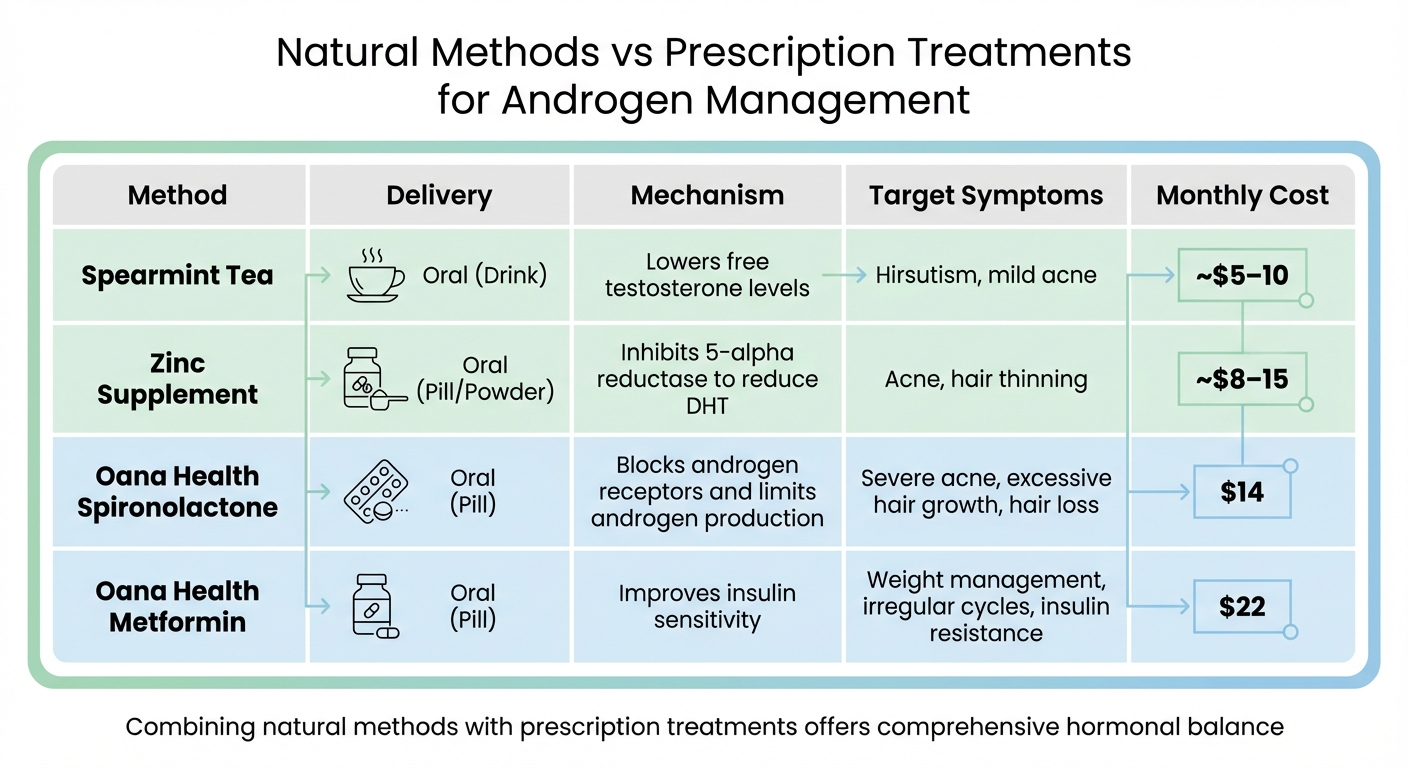
Natural vs Prescription Treatments for Lowering Androgen Levels
Integrating prescription treatments with natural strategies can create a more effective approach to managing androgen balance. While natural methods focus on improving metabolic health - like enhancing insulin sensitivity and gut function - prescription options such as Spironolactone and Metformin directly target the underlying causes of high androgen levels. Together, they address both the symptoms and the root issues.
Research supports the benefits of combining these approaches. For example, a study involving 122 women with PCOS found that those who combined herbal remedies with lifestyle changes saw greater symptom improvement compared to those relying solely on lifestyle adjustments. Supplements like Inositol can also complement medications like Metformin, as they work through different pathways to enhance insulin sensitivity.
However, it’s crucial to consult a healthcare provider before mixing supplements with prescription medications. Some natural remedies, like Licorice root, can interact with drugs or require close monitoring due to potential side effects, such as increased blood pressure. As Susannah Kerwin, ANP-BC, HNP, explains:
"Lowering your androgen levels can help with problems like acne, but if you lower them too much, it can affect other important things like your libido".
A healthcare professional can guide you in finding the right balance for your needs.
How Natural Methods and Oana Health Work Together
When paired with Oana Health's prescription treatments, natural methods create a well-rounded plan for hormonal balance. Here's a look at how these approaches complement each other:
| Method | Delivery | Mechanism | Target Symptoms | Monthly Cost |
|---|---|---|---|---|
| Spearmint Tea | Oral (Drink) | Lowers free testosterone levels | Hirsutism, mild acne | ~$5–10 |
| Zinc Supplement | Oral (Pill/Powder) | Inhibits 5-alpha reductase to reduce DHT | Acne, hair thinning | ~$8–15 |
| Oana Health Spironolactone | Oral (Pill) | Blocks androgen receptors and limits androgen production | Severe acne, excessive hair growth, hair loss | $14 |
| Oana Health Metformin | Oral (Pill) | Improves insulin sensitivity | Weight management, irregular cycles, insulin resistance | $22 |
Through Oana Health's telehealth platform, you can access licensed healthcare professionals who review your medical history and prescribe tailored treatments. Medications are shipped directly to your door with free shipping, making it easier to stay consistent with your care plan. For women managing conditions like PCOS - where over half develop type 2 diabetes by age 40 - this combination of medical oversight and natural support offers a practical path to better hormonal health.
Pairing a high-fiber, low-glycemic diet with prescription anti-androgens can help address visible symptoms like acne and unwanted hair, while also tackling insulin-related triggers behind androgen production. Adding at least 120 minutes of vigorous exercise weekly can further improve insulin resistance and BMI.
Conclusion
Lowering androgen levels effectively involves tackling insulin resistance, inflammation, and gut health all at once. Eating a high-fiber diet helps remove excess hormones via the digestive system, while cutting back on refined carbs prevents insulin surges that can lead to androgen overproduction. Adding regular exercise improves insulin sensitivity, and natural options like spearmint tea can further support hormonal balance. These lifestyle changes create a solid base for additional medical treatments when needed.
For women dealing with PCOS or other conditions tied to high androgen levels, prescription medications can work alongside natural methods. Drugs like Spironolactone (starting at about $14 per month) and Metformin (around $22 per month) target the root causes of elevated androgens, while healthy habits strengthen the body’s ability to regulate itself.
Focusing on whole, nutrient-rich foods is another key step in supporting hormonal balance and building a foundation for long-term health.
By blending natural lifestyle changes with clinical treatments, you can create a well-rounded strategy for managing hormone levels. Oana Health offers access to licensed physicians who provide personalized treatments delivered right to your door.
This combined approach - daily natural care paired with targeted medical solutions - offers a comprehensive, sustainable way to achieve hormonal balance over time. Together, these strategies form a complete plan for managing androgen levels effectively.
FAQs
What are some natural dietary changes to help lower androgen levels?
To help lower androgen levels naturally, try adding anti-inflammatory and hormone-supporting foods to your meals. Foods like walnuts, fatty fish (like salmon), leafy greens, flaxseed, and soy products can play a key role. For example, fatty fish are packed with omega-3 fatty acids, which are known to reduce inflammation and aid in hormone balance. Flaxseed, in small amounts (about 2–3 tablespoons daily), contains lignans that may help decrease testosterone activity.
Another option is spearmint tea - drinking 2–3 cups a day has been linked to reduced free testosterone levels. Soy-based foods like tofu or soy milk are also worth considering, as their isoflavones may help maintain hormonal balance. Combine these dietary adjustments with regular exercise and stress-reduction techniques for an even greater impact on androgen levels.
How does exercise help balance hormones and improve insulin sensitivity?
Exercise is a powerful tool for managing hormones and improving insulin sensitivity, especially for women dealing with PCOS. Regular physical activity can help reduce androgen levels by increasing the production of sex hormone-binding globulin (SHBG). This protein binds to testosterone, lowering its activity in the body. Additionally, exercise enhances insulin sensitivity, which can lead to reduced insulin levels. Lower insulin levels, in turn, may help decrease the production of excess androgens in the ovaries.
Activities such as aerobic exercises, resistance training, or high-intensity interval training (HIIT) are particularly effective in supporting hormonal balance. The key is finding a routine that suits your individual needs, whether it’s addressing insulin resistance or managing weight. Staying consistent with a tailored exercise plan can lead to long-term improvements in both hormonal health and overall well-being.
What are some natural supplements that can help lower androgen levels?
Certain natural supplements might assist in lowering androgen levels, particularly for women dealing with conditions like PCOS. For instance, nettle (Urtica dioica) is thought to help balance hormones by binding to and eliminating excess androgens in the body. Similarly, zinc plays a role in supporting ovarian health and may reduce the activity of 5-alpha-reductase, an enzyme responsible for converting testosterone into DHT.
Additional options include spearmint tea, licorice root, and omega-3 fatty acids, all of which have been linked to promoting hormone balance and reducing androgen levels. However, it's crucial to consult a healthcare provider before trying any new supplements to ensure they’re safe and suitable for your individual needs.