
Managing Hair Loss While Using Hormonal Contraceptives
Hair loss while using hormonal contraceptives is a common concern, affecting many women. Here's what you need to know:
- Why it happens: Birth control pills can alter hormone levels, sometimes increasing dihydrotestosterone (DHT), which shrinks hair follicles. This can cause shedding or thinning, especially in those genetically predisposed to hair loss.
- Who’s at risk: Women with a family history of hair loss, hormonal sensitivity, PCOS, or thyroid issues are more likely to experience this side effect.
- Types of hair loss: Telogen effluvium (temporary shedding) and androgenic alopecia (long-term thinning) are the most common forms linked to contraceptives.
- Solutions: Switching to low-androgen contraceptives, like those containing desogestrel or drospirenone, can help. Treatments such as oral minoxidil, spironolactone, or targeted topical formulas may also reduce hair loss.
- Lifestyle tips: A nutrient-rich diet (iron, biotin, vitamin D), stress management, and gentle hair care can support regrowth and minimize shedding.
For personalized advice, consult a healthcare provider to choose the best contraceptive and treatment plan for your needs.
Hormonal Birth Control & Hair Loss Explained by a Trichologist | Dr. Health Hair & Skin Clinic
sbb-itb-6dba428
Types of Hair Loss from Hormonal Contraceptives
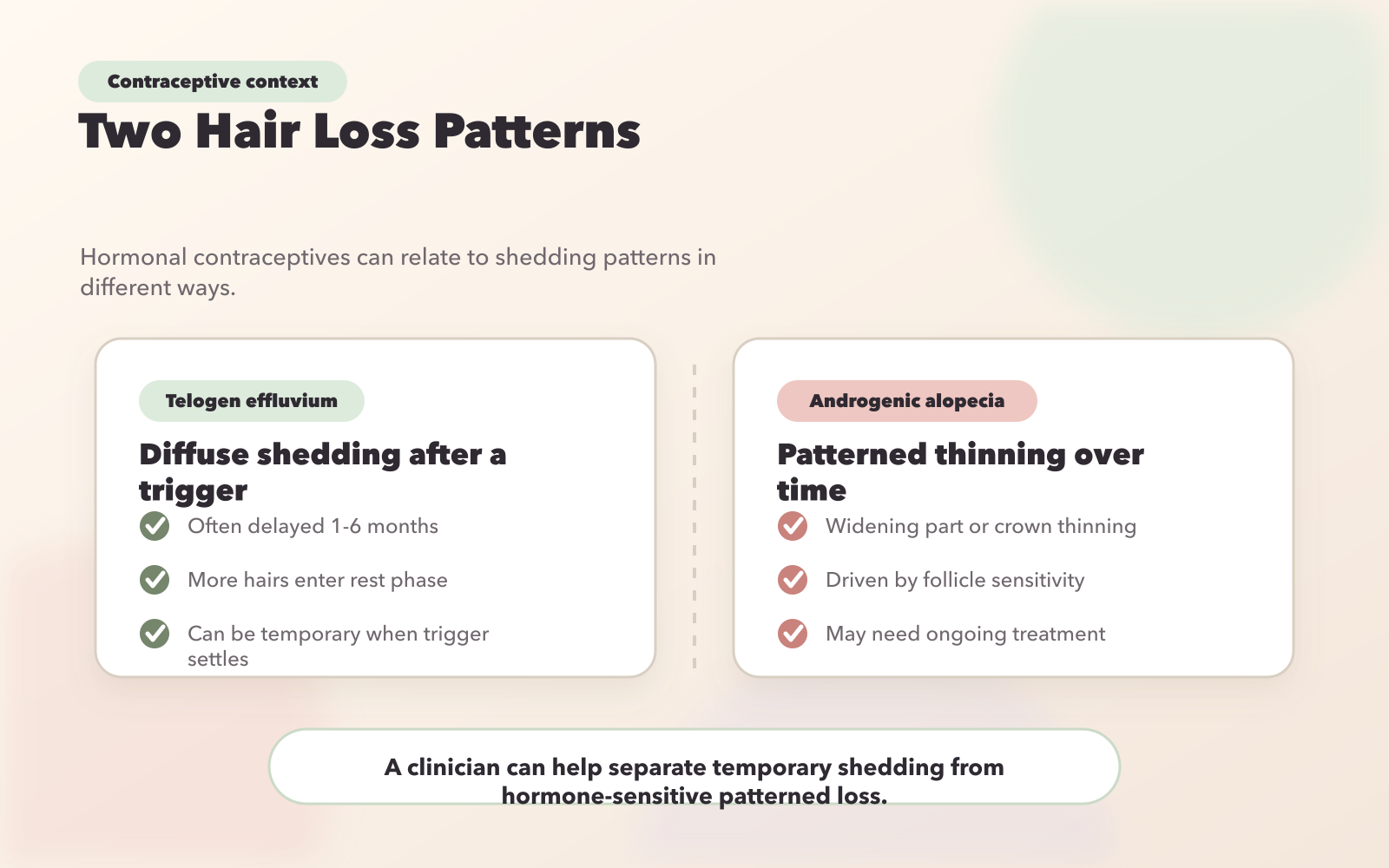
Comparing Hair Loss Types from Hormonal Contraceptives: Telogen Effluvium vs Androgenic Alopecia
Birth control can impact hair in two primary ways. Knowing which type of hair loss you're dealing with can guide you and your healthcare provider in finding the right treatment plan.
Telogen Effluvium
Telogen effluvium (TE) happens when hormonal changes cause a large number of hair follicles to shift prematurely into the resting phase. Normally, about 10%–15% of your hair is in this phase, but with TE, this can jump to as much as 50%.
Interestingly, the shedding isn't immediate. It typically starts 1–6 months after the hormonal trigger, with an average delay of about 3 months. This delay occurs because resting hairs only fall out when new growth pushes them out. The shedding is usually diffuse, not patchy.
"Telogen effluvium is the excessive shedding of resting or telogen hair after some metabolic stress, hormonal changes, or medication." - Elizabeth C. Hughes, StatPearls
If you’re experiencing TE, you might notice more hair than usual on your brush or in the shower drain - sometimes over 100 hairs in a single day. The silver lining? TE is typically temporary and resolves within about 6 months as your hormones stabilize.
Now, let’s look at a more persistent form of hair loss linked to contraceptive use.
Androgenic Alopecia
Androgenic alopecia (AGA) is a chronic condition that hormonal contraceptives can either trigger or worsen. This type of hair loss involves the gradual shrinking of hair follicles, leading to progressively thinner and shorter hairs until growth eventually stops.
Women with AGA often retain their hairline but experience noticeable thinning at the crown and top of the head. This is usually visible as a widening center part. For context, a healthy scalp typically has a growing-to-resting hair ratio of 12:1, but in AGA, this ratio can drop to 5:1.
"Alopecia, an adverse reaction to androgen activity caused by the progestin component of hormonal contraceptives, can cause considerable psychosocial distress for women." - PubMed
Unlike TE, AGA requires ongoing management since it doesn’t resolve on its own. Contraceptives with high-androgen progestins - such as levonorgestrel, norgestrel, and norethindrone - are more likely to cause this type of hair loss, particularly in women with a genetic predisposition.
Recognizing these distinctions is crucial for choosing the right course of treatment.
Selecting Contraceptives That Protect Hair Health
The impact of progestin and estrogen on hair loss varies depending on the contraceptive you choose. Some formulations may help maintain hair density, while others could contribute to thinning. Understanding these differences is essential, especially if you're managing hair loss concerns.
Low-Androgen Index Contraceptives
The androgen index of a contraceptive reflects its testosterone-like activity, which can shrink hair follicles and lead to thinning. If you have a family history of hair loss or are concerned about hair health, low-androgen contraceptives are a better option. The American Hair Loss Association suggests options like Desogen, Ortho-Cept, Ortho-Cyclen, and Ortho Tri-Cyclen. These contain progestins such as desogestrel and norgestimate, which have minimal androgenic effects.
On the other hand, high-androgen pills, such as Loestrin, Ovral, and Nordette, are less ideal for those prioritizing hair health.
Progestin-only methods, including the birth control shot (Depo-Provera), implants (Nexplanon), and some hormonal IUDs, may also increase the risk of hair loss. For example, up to 11% of users report hair thinning within the first nine months of using Depo-Provera. These methods lack estrogen, which provides some protection against hair loss, and often use more androgenic progestins. Switching to a low-androgen formulation can help reduce these effects, especially when combined with estrogen-dominant options.
Estrogen-Dominant Pills
Combined oral contraceptives, which include both estrogen and progestin, are often the best choice for supporting hair health. Estrogen helps by suppressing androgen production, increasing sex hormone–binding globulin (SHBG) to neutralize androgens, and extending the hair growth phase.
Pills containing drospirenone, such as Yasmin and Yaz, are particularly effective because drospirenone blocks androgen receptors, countering the effects of DHT (dihydrotestosterone).
"Pills containing the anti-androgenic progestins drospirenone and cyproterone acetate may be better than other forms of progestin at improving hirsutism." – Hello Clue
Switching contraceptives requires patience. It may take up to six months to notice improvements in hair growth or density. For personalized advice, consult a healthcare provider who can evaluate your specific needs and recommend a contraceptive that aligns with your hair health goals.
Choosing a hair-friendly contraceptive lays the groundwork for additional treatments that can further encourage hair regrowth.
Medical Treatments for Hair Loss
For women experiencing hair loss while on hormonal contraceptives, prescription treatments can provide an additional layer of support. If switching to a more hair-friendly contraceptive doesn't fully address the issue, these treatments can help reduce thinning and encourage regrowth. They work by either blocking the androgens that shrink hair follicles or stimulating dormant follicles to grow again. Female pattern hair loss affects up to 50% of women at some point, and hormonal contraceptives can sometimes speed up this process in those who are more susceptible. These solutions, whether used alone or together, offer targeted options when adjusting contraceptives isn’t enough.
Oral Minoxidil
Oral Minoxidil is a low-dose prescription medication that improves blood flow to the scalp by widening blood vessels, ensuring better nutrient delivery to hair follicles. Originally developed to treat high blood pressure, it’s now prescribed in doses of 0.25–2.5 mg daily for hair regrowth. Studies show that 40-60% of women dealing with androgenetic alopecia or telogen effluvium see noticeable regrowth after 3 to 6 months of consistent use. The medication works by extending the anagen (growth) phase of the hair cycle, which can counteract the shedding often linked to hormonal contraceptives.
Doses are kept low to limit side effects like lightheadedness or fluid retention. Healthcare providers monitor blood pressure during treatment, and most patients notice reduced shedding within three months, with fuller density by six months. Oana Health offers Oral Minoxidil for $25/month, including telehealth consultations and free home delivery.
Topical and Oral Spironolactone
Spironolactone helps combat hair loss by blocking androgen receptors on hair follicles, preventing DHT (dihydrotestosterone) from causing follicle shrinkage. This makes it particularly useful for women whose hair loss is tied to high-androgen contraceptives or hormonal imbalances. Oral Spironolactone is typically prescribed in doses of 100 to 200 mg daily, working throughout the body to reduce androgen activity. Clinical studies indicate that about 70% of women with hormonal hair loss see improvements within six months.
For a more localized approach, Topical Spironolactone is available. Applied directly to the scalp in concentrations of 1-5%, it offers targeted anti-androgen effects without the systemic side effects, such as electrolyte imbalances, that oral forms can sometimes cause. Oana Health provides both options - oral Spironolactone starts at $14/month, while Topical Spironolactone costs $43/month. Both options include personalized dosing tailored to your specific needs and contraceptive type.
Hair Plus Plus Formulation
Another effective option is Hair Plus Plus, a prescription-based topical treatment from Oana Health. This compounded formula combines three clinically studied ingredients: 5% Minoxidil (to improve blood flow), 0.001% Retinoic Acid (to enhance scalp absorption), and 0.005% Latanoprost (to prolong the growth phase of hair). Together, these ingredients address hair loss by improving circulation, boosting absorption, and extending the active growth phase.
This formulation offers a more targeted approach compared to over-the-counter minoxidil products. Designed specifically for women dealing with hormonal hair thinning, including those on contraceptives, it delivers noticeable results. Most users report a 50% reduction in shedding within three months, with the best density improvements appearing around the 12-month mark. Applied nightly to a clean, dry scalp, Hair Plus Plus costs $40/month and includes ongoing doctor consultations and free shipping. As with all minoxidil-based treatments, consistency is key - stopping use can lead to a return of thinning within 3 to 6 months.
Lifestyle Changes to Support Hair Growth
Medical treatments are most effective when combined with daily habits that nourish and care for your hair. Simple changes like improving your diet, managing stress, and adopting gentle hair care routines can make a noticeable difference. These habits enhance the effects of treatments for contraceptive-related hair loss.
Eating for Healthy Hair
Your hair thrives on a diet rich in nutrients. Protein, for instance, is essential for keratin production, which strengthens hair. The average person needs about 40 to 60 grams of protein daily. You can find it in foods like lean meats, fish, eggs, beans, lentils, and tofu. Iron is another key player, as it helps red blood cells deliver oxygen to hair follicles. Without enough iron, hair may shed faster than it grows.
"Iron carries oxygen to all cells in your body, which is how hair grows. Low iron (anemia) can cause hair to shed faster than it grows".
Vitamin D is crucial for creating new hair follicles, but deficiencies are surprisingly common. A 2020 study revealed that nearly 80% of participants with hair loss had low vitamin D levels. To boost your intake, try fatty fish, fortified milk, or egg yolks. Vitamin C is another powerhouse - it supports collagen production and helps your body absorb iron. Just one yellow bell pepper can provide up to 456% of the daily vitamin C requirement for women. Biotin aids keratin production, zinc repairs follicles, and omega-3 fatty acids reduce inflammation that can harm hair.
Here’s a quick guide to key nutrients and their benefits:
| Nutrient | Key Food Sources | Benefit to Hair |
|---|---|---|
| Biotin | Eggs (yolks), nuts, seeds, sweet potatoes, whole grains | Supports keratin production |
| Iron | Red meat, spinach, lentils, beans, tofu | Delivers oxygen to hair follicles |
| Zinc | Oysters, beef, pumpkin seeds, chickpeas | Aids follicle recovery and growth cycle |
| Vitamin D | Fatty fish, fortified milk, egg yolks, mushrooms | Helps create new hair follicles |
| Vitamin C | Berries, citrus fruits, bell peppers, broccoli | Boosts collagen and iron absorption |
| Omega-3s | Salmon, walnuts, flaxseeds, chia seeds | Reduces inflammation and adds shine |
To make the most of these nutrients, pair vitamin C–rich foods with iron-heavy options. For example, you could enjoy a spinach salad with strawberries or lentil soup with bell peppers. Steer clear of restrictive diets that cut out essential nutrients, as they can lead to temporary hair thinning. Staying hydrated is just as important - aim for at least 64 ounces (2 liters) of water daily to keep your scalp healthy. Also, avoid over-supplementing with vitamins A, E, or selenium, as excess amounts may actually trigger hair loss.
Managing Stress
Stress is a common culprit behind hair loss, often leading to a condition called telogen effluvium, where hair follicles prematurely enter a resting phase. When hormonal contraceptives disrupt your hair’s natural growth cycle, stress can make the situation worse. This is why stress management is particularly important when you’re adjusting to non-hormonal birth control or other new contraceptive methods. Over half of women will experience noticeable hair loss at some point in their lives.
Working with a mental health professional or joining a support group can be incredibly helpful. Not only does it reduce stress, but it also addresses the emotional impact of hair loss.
"Alopecia can severely affect a woman's emotional well-being and quality of life".
Even small practices, like gently massaging your scalp while shampooing, can stimulate blood flow to hair follicles and promote growth.
Gentle Hair Care Practices
External care is just as important as internal nourishment. Harsh styling and tight hairstyles, such as ponytails, braids, or buns, can strain hair follicles and increase shedding. Loosening up your hairstyles is especially important when your hair is fragile due to hormonal changes.
Typically, shedding between 50 and 100 hairs daily is normal, but harsh treatments can push this number higher. Patience is key - give hormonal adjustments or regrowth treatments at least six months to show visible results. When trying new hair products, test them on a small patch of skin to avoid irritation that could further harm your scalp.
Remember, hair naturally cycles through growth and rest phases. Hormonal contraceptives can temporarily disrupt this balance, but with time and care, the hair loss will often resolve.
"If you have hair loss due to stress or hormone changes... the hair loss will stop after a period of time".
Conclusion
Hair loss linked to hormonal contraceptives is usually temporary and can often be reversed. Androgenic progestins may lead to telogen effluvium or exacerbate androgenic alopecia, particularly in women with a genetic predisposition. Switching to low-androgen contraceptives, such as Yasmin (drospirenone) or Dianette, could help safeguard your hair while maintaining effective contraception. Pairing this switch with treatments like oral minoxidil, spironolactone, or products like Hair Plus Plus can address hair loss more directly. In most cases, hair shedding resolves within a few months as your body adjusts or after changing contraceptives.
Lifestyle adjustments also play a critical role. A diet rich in nutrients like zinc, B vitamins, iron, and protein, combined with stress management and gentle hair care routines, can support regrowth and enhance the effectiveness of medical treatments. If you experience sudden hair shedding after starting or stopping birth control, or notice thinning along your part line, consult a dermatologist or gynecologist promptly. Women with a family history of hair loss or androgen sensitivity should discuss these factors with their healthcare provider when choosing a contraceptive method. Professional guidance is essential when lifestyle changes need additional support.
To achieve the best results, combining medical treatments with lifestyle improvements is key. For personalized care, Oana Health offers telehealth consultations with licensed professionals specializing in female hormones and hair loss. They provide prescription treatments like oral minoxidil ($25/month), topical spironolactone ($43/month), and Hair Plus Plus ($40/month), all delivered to your door with free shipping. Whether you need to adjust your contraceptive or explore targeted hair regrowth options, their experts ensure your treatment plan is tailored to your specific hormonal needs and symptoms.
FAQs
How can I tell if my shedding is telogen effluvium or androgenic alopecia?
Telogen effluvium is a condition that causes temporary, widespread hair shedding across the scalp. It’s often brought on by factors like stress, hormonal shifts, or certain medications. The good news? Once the underlying cause is addressed, the shedding typically stops within a few months.
On the other hand, androgenic alopecia - commonly called female pattern hair loss - results in gradual thinning, particularly around the crown and temples. This condition is usually linked to hormonal imbalances or genetics.
To pinpoint the cause, it’s essential to track your hair loss patterns and potential triggers. Consulting a healthcare provider for appropriate tests can provide clarity and guide treatment options.
What labs should I ask for if birth control seems to be causing hair loss?
When dealing with hair loss, it’s a good idea to talk to your doctor about testing for possible hormonal causes. They might recommend tests to check your thyroid function or measure hormone levels such as androgens and estrogen. These results can shed light on whether birth control could be playing a role and help determine the best course of treatment.
If I switch birth control, how long until my hair starts growing back?
Hair regrowth often starts to pick up within 3 to 6 months after changing birth control methods. For many women, noticeable improvement and regrowth become apparent around the 9 to 12-month mark, though the timeline can differ depending on individual factors.