
Managing Spironolactone Side Effects: Tips From Patients
Struggling with spironolactone side effects? You're not alone. This medication is widely used to treat hormonal conditions like PCOS and acne, but it can cause fatigue, dizziness, nausea, and more. The good news? Most side effects improve over time, and there are practical ways to manage them effectively.
Key Takeaways:
- Common side effects: Fatigue, dizziness, nausea, breast tenderness, and menstrual changes.
- Quick tips:
- Stay hydrated but avoid high-potassium foods like bananas and avocados.
- Take spironolactone with food to reduce nausea.
- Move slowly when standing to prevent dizziness.
- Schedule doses earlier in the day to avoid sleep disruption.
- When to call your doctor: Symptoms like irregular heartbeat, muscle weakness, or severe nausea may signal serious issues like high potassium levels or dehydration.
By tweaking your daily routine, monitoring symptoms, and staying consistent with treatment, you can minimize discomfort and see long-term benefits. For persistent concerns, consult your doctor or use telehealth services like Oana Health.
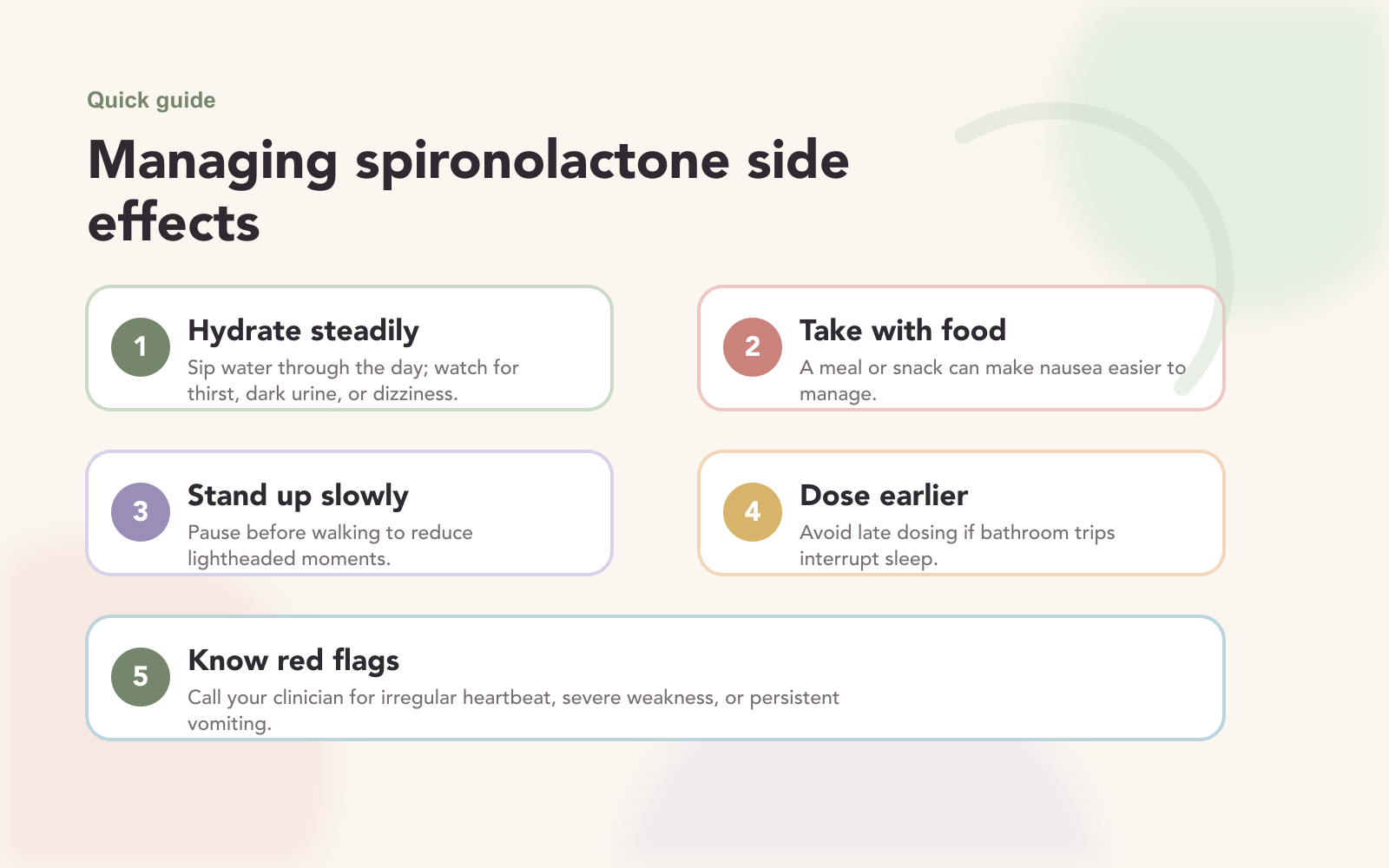
Quick Guide to Managing Spironolactone Side Effects
Spironolactone uses and side effects| 17 MUST KNOW tips!
Common Side Effects: What Patients Experience
Side effects from spironolactone often appear at the start of treatment or after a dose adjustment. Below, we’ll explore some of the most frequently reported issues and how they tend to manifest.
Fatigue and Dizziness
Spironolactone’s diuretic properties lower fluid levels and blood pressure, which can lead to feelings of fatigue and lightheadedness. A common occurrence is dizziness when standing up too quickly - this is known as orthostatic hypotension. Until this sensation passes, activities like driving or cycling may not be safe. Additionally, the medication’s impact on electrolytes - retaining potassium while reducing sodium, magnesium, and calcium - can contribute to muscle weakness and lingering tiredness.
Breast Tenderness and Menstrual Changes
Spironolactone’s ability to block androgen and progesterone receptors often leads to hormonal side effects. Many women report experiencing breast tenderness, enlargement, or irregularities in their menstrual cycle, such as missed or unpredictable periods. Other hormonal changes, including shifts in libido, have also been noted.
Digestive Problems
Digestive issues like nausea, vomiting, cramps, and diarrhea are fairly common in the early stages of treatment. These symptoms occur because spironolactone can irritate the gastrointestinal lining, causing anything from mild discomfort to severe pain. For patients using the medication to treat acne, there may be a temporary worsening of skin conditions - a "purging" phase - before improvement is typically seen around the three-month mark. Taking spironolactone with food can help minimize these gastrointestinal side effects.
How to Manage Spironolactone Side Effects
You can minimize spironolactone side effects with small, practical changes to your daily routine, making it easier to stick with your treatment.
Hydration and Electrolyte Balance
Staying properly hydrated is key to managing spironolactone's effects, as it’s a potassium-sparing diuretic. Drink water steadily throughout the day to avoid dehydration, but be mindful of your potassium intake. Signs of dehydration include dark, strong-smelling urine, increased thirst, or dizziness, while symptoms of high potassium (hyperkalemia) may include an irregular heartbeat, tingling, or muscle weakness. Clinical studies show that 2% of spironolactone users experienced severe hyperkalemia compared to 1% of placebo users.
Be cautious with salt substitutes like Lo‐Salt or Nu‐Salt, which use potassium chloride instead of sodium - they can dangerously increase potassium levels. Similarly, limit high-potassium foods like bananas, avocados, lentils, nuts, and dried apricots. After intense exercise, consider a sugar-free sports drink like Powerade Zero to replenish magnesium and sodium without adding extra sugar.
"The heart can't pump without electrolytes. If you think of the heart as a lamp, electrolytes are like the electrical circuit, generating the current that keeps the light burning steady and strong."
– Lynne Braun, PhD, CNP, Rush Heart Center for Women
Cut back on caffeine and alcohol, as both can intensify fluid loss due to their diuretic effects. If you experience vomiting or diarrhea, an oral rehydration solution like Pedialyte can quickly restore lost fluids and electrolytes. Pairing proper hydration with diet adjustments can also alleviate digestive discomfort.
Diet Changes and Meal Timing
Taking spironolactone with or immediately after a meal can significantly reduce nausea, as reported by many patients. Consistency is important - if you take it with food, stick to that routine because food enhances the medication’s absorption.
Opt for light, non-greasy meals to ease digestive issues. If diarrhea occurs, avoid caffeine and alcohol until symptoms subside. To prevent nighttime disruptions, schedule your second dose before 4:00 PM.
"Too much sodium can cause the medication to not be effective because the spironolactone is essentially competing with your body's natural propensity to retain water."
– Troy Alexander-El, MD, Board-certified Internal Medicine Physician
These dietary tweaks, combined with lifestyle changes, can help you manage fatigue and hormonal side effects more effectively.
Lifestyle Adjustments for Fatigue and Hormonal Symptoms
Fatigue is a common side effect when starting spironolactone, but a consistent sleep schedule, balanced diet, and regular exercise can help your body adjust. These habits not only reduce fatigue but also improve overall treatment adherence.
Move slowly when standing to avoid dizziness, and if you feel lightheaded, lie down until it passes. Avoid driving or operating machinery if you’re fatigued or dizzy, and cutting back on alcohol can also help reduce these symptoms.
For hormonal side effects like irregular periods or breast tenderness, some patients find hormonal contraceptives useful for managing these symptoms. However, if you notice concerning changes like voice deepening, contact your doctor right away.
sbb-itb-6dba428
When to Contact Your Doctor
Warning Signs That Need Medical Attention
While most side effects of spironolactone are mild, certain symptoms require immediate medical attention. Keeping track of how you feel during treatment is important so any necessary adjustments can be made promptly.
One of the most serious risks is high potassium levels (hyperkalemia). Be on the lookout for symptoms like a slow or irregular heartbeat, muscle weakness, tingling or numbness in your hands, feet, or lips, shortness of breath, or chest pain. Research shows that severe hyperkalemia affects about 2% of users [4, 11, 17].
Another red flag is jaundice, which may appear as yellowing of the skin or eyes, dark or strong-smelling urine, pale stools, or pain in the upper right part of your abdomen [4, 6, 10]. Additionally, signs of kidney issues or dehydration, such as significantly reduced urination, extreme thirst, severe dizziness, confusion, or bloody urine, should not be ignored [4, 6, 10].
If you experience a severe allergic reaction - symptoms like facial swelling, difficulty breathing, or blistering rashes - call 911 immediately. Do not attempt to drive; seek emergency care without delay [4, 10, 11].
Other symptoms that require urgent attention include signs of internal bleeding, such as bloody or black, tarry stools, or vomiting material that resembles coffee grounds. Neurological symptoms like sudden confusion, fainting, blurred vision, seizures, or loss of consciousness also warrant immediate medical evaluation [4, 6, 10]. Even if you experience milder but persistent side effects, such as dizziness or fatigue that doesn't improve after a few days, it’s a good idea to contact your doctor to discuss whether your dosage needs adjustment [4, 17].
How Oana Health Can Help
If you notice any of these concerning symptoms, help is just a few clicks away. Oana Health provides telehealth services to connect you with licensed professionals who specialize in hormonal health and PCOS treatments, including spironolactone prescriptions.
Through Oana Health, your doctor can monitor your potassium levels within the first week of starting or adjusting your treatment. They’ll also keep an eye on electrolyte levels to ensure your safety throughout your treatment journey.
If side effects persist or become bothersome, Oana Health’s platform allows you to get personalized advice without leaving home. Plus, prescriptions are shipped directly to your door with free delivery. Their medical team can tweak your treatment plan as needed, helping you manage side effects effectively while staying on track with your health goals.
Conclusion
Managing spironolactone side effects can be simple with a few thoughtful steps. Common issues like dizziness, nausea, or fatigue often improve within a few days or weeks as your body adapts. To ease these symptoms, make sure to stay hydrated, take your medication with food, rise slowly when standing, and stick to a consistent routine for taking your medication and meals.
Patience is key - results don’t happen overnight. For benefits like reduced hormonal acne, consistent use over several months is usually necessary. Keeping a regular schedule for your medication helps maintain steady absorption and improves outcomes. In the meantime, stay alert for any unusual or bothersome symptoms.
Be especially mindful of warning signs that need immediate attention, such as symptoms of high potassium - like an irregular heartbeat or muscle weakness - which occur in about 2% of users. If side effects persist or you have concerns, reach out to your healthcare provider without delay.
For extra support, Oana Health offers an easier way to manage your spironolactone treatment. They provide telehealth consultations with licensed professionals who specialize in hormonal health. These experts monitor your potassium levels during the first week, adjust your dosage as needed, and even deliver prescriptions to your door with free shipping. With the right guidance, you can manage side effects and stay focused on your health goals.
FAQs
What are the symptoms of high potassium while taking spironolactone?
High potassium levels, also known as hyperkalemia, can sometimes develop when taking spironolactone. Watch out for symptoms like muscle weakness, cramps, fatigue, nausea, tingling or numbness, shortness of breath, or an irregular or rapid heartbeat. If you experience any of these, reach out to your healthcare provider right away, as untreated high potassium levels can pose serious health risks.
What can I do to manage dizziness while taking spironolactone?
Dizziness caused by spironolactone can often be handled with a few simple changes to your routine. For instance, try moving slowly when transitioning between positions - like standing up from sitting or lying down - to give your body a moment to adjust. If you do feel light-headed, take a break by sitting or lying down until the sensation passes. Taking your medication with food might also ease this symptom.
It’s equally important to stay hydrated and follow a balanced diet. If dizziness occurs, avoid tasks like driving or using heavy machinery until you feel steady again. Should the dizziness persist or worsen, don’t hesitate to contact your healthcare provider. Services like Oana Health offer telehealth consultations with licensed clinicians who can help refine your treatment plan if necessary.
When should I talk to my doctor about spironolactone side effects?
If you're taking spironolactone and notice any serious or unexpected symptoms, it's important to contact your doctor right away. Symptoms like severe muscle cramps, swelling, an unusually fast or irregular heartbeat, blood in your urine, or signs of an allergic reaction - such as a rash or swelling in your face - shouldn't be ignored. Persistent side effects like dizziness, nausea, or fatigue that don't ease up after a few days are also worth discussing with your healthcare provider.
You should also reach out if you experience major changes in your menstrual cycle, hormonal issues that interfere with your daily routine, or if you're pregnant or planning to become pregnant. Additionally, don't stop or adjust your medication dosage without consulting your doctor first. If you've had abnormal lab results related to potassium levels or kidney function, make sure to follow up as recommended.
When you're unsure about anything related to your treatment, it's always better to check in with your doctor to make sure everything is on track and safe for you.