
Spironolactone Side Effects in Women with PCOS
Spironolactone is a common medication for managing PCOS symptoms like acne, unwanted hair growth, and hair thinning. It works by reducing testosterone levels and blocking androgen receptors. While effective, it can cause side effects, especially with long-term use. Here’s what you need to know:
Key Points:
- Common Side Effects: Irregular periods, dizziness, frequent urination, breast tenderness, fatigue, and temporary hair or skin changes.
- Serious Risks: High potassium levels (hyperkalemia), pregnancy-related risks, and potential drug interactions.
- Managing Side Effects: Track symptoms, adjust dosages with your doctor, and combine with birth control if needed.
- Monitoring: Regular blood tests are essential to check potassium levels and kidney function.
- Alternatives: Birth control, metformin, or topical treatments may be options if spironolactone isn’t suitable.
Important: Spironolactone is unsafe during pregnancy and requires reliable contraception. Consult your doctor for personalized treatment and monitoring.
For more details, keep reading to learn about managing side effects, recognizing warning signs, and exploring other treatment options.
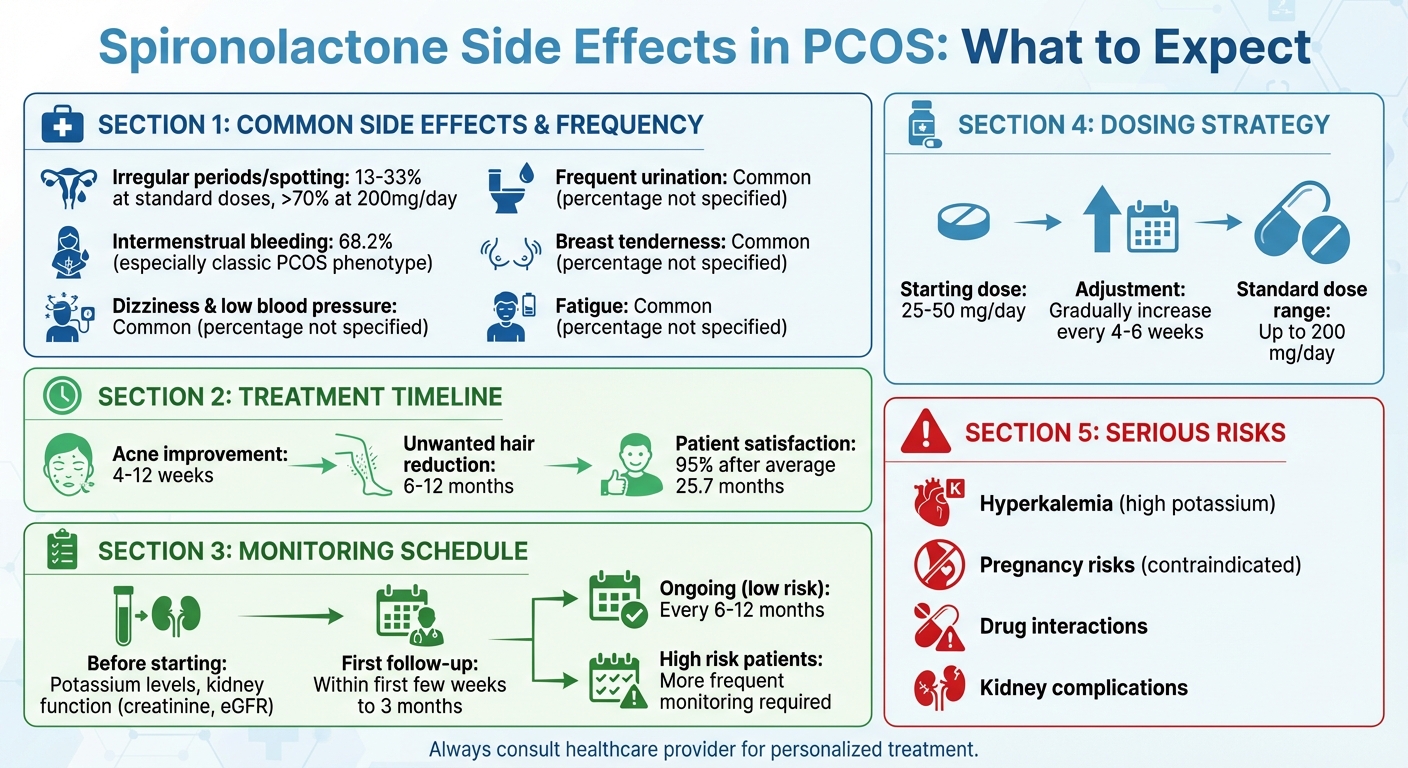
Spironolactone Side Effects in PCOS: Frequency, Monitoring Schedule, and Treatment Timeline
A Magic Pill for Acne, PCOS, Female Hair Loss, Hirsutism and HS
Common Side Effects and How to Manage Them
Spironolactone is often effective in addressing PCOS symptoms, but like any medication, it can come with side effects. These can vary in how often they occur and how intense they are, but most women find them manageable and temporary. Research shows that despite these challenges, symptoms tied to elevated androgen levels improve significantly with treatment.
Knowing what to expect and having a game plan can make the process smoother. Here’s a closer look at common side effects and practical ways to handle them.
Irregular Periods and Spotting
Changes in menstrual cycles are one of the most frequently reported side effects of spironolactone. Because it impacts hormone levels, the medication can disrupt your usual cycle, leading to spotting or breakthrough bleeding. For example, one study reported intermenstrual bleeding in 68.2% of women with PCOS taking spironolactone, particularly in those with the classic PCOS phenotype. At standard doses, menstrual changes affect 13–33% of women, but this rate can exceed 70% at higher doses (around 200 mg per day).
To keep track of irregularities, consider using a cycle-tracking app. Many healthcare providers suggest combining spironolactone with oral contraceptives to help regulate your cycle. If bleeding lasts longer than seven days or becomes unusually heavy, it’s important to reach out to your doctor.
Dizziness, Low Blood Pressure, and Increased Urination
Spironolactone’s diuretic properties can lead to more frequent trips to the bathroom and lower blood pressure. This might cause dizziness, particularly when standing up too quickly. To reduce disruptions, try taking your dose at bedtime. Stay hydrated with water or electrolyte-balanced drinks, but avoid overloading on potassium-rich beverages since the medication already affects potassium levels. If dizziness or fainting continues, talk to your doctor - they may need to adjust your dosage or monitor you more closely.
Breast Tenderness and Enlargement
Hormonal shifts during treatment can sometimes cause breast tenderness or enlargement. This is likely due to how spironolactone interacts with hormone receptors in breast tissue. Supportive bras and over-the-counter pain relievers can help alleviate discomfort. However, if you notice unusual lumps, persistent pain, or rapid changes in size, consult your doctor to rule out any underlying issues.
Fatigue and Mood Shifts
Changes in hormones, blood pressure, and electrolytes can sometimes result in fatigue or mood swings. To combat this, stick to a consistent sleep routine, rest when needed, and engage in light physical activity to boost energy levels. Staying hydrated and eating a balanced diet can also make a difference. If fatigue or mood changes, such as ongoing sadness or anxiety, start interfering with your daily life, it’s time to discuss these symptoms with your doctor. They might adjust your treatment or explore other possible causes.
Hair and Skin Changes During Treatment
Spironolactone works by blocking androgen receptors in hair follicles and skin, which can improve acne and reduce unwanted hair growth. However, some women may initially notice temporary hair shedding or changes in texture as their follicles adjust to lower androgen levels. Acne improvements are typically seen within 4–12 weeks, while reductions in unwanted hair may take 6–12 months. During this adjustment period, consider using gentle skincare products for acne and, if hair thinning is a concern, treatments like minoxidil. If hair shedding becomes severe or doesn’t improve, consult your doctor to revisit your treatment plan.
For a more personalized approach to PCOS management, Oana Health offers tailored spironolactone prescriptions starting at $14/month, with free home delivery.
Serious Risks and Required Monitoring
Some rare risks associated with spironolactone demand close attention. While these complications are uncommon, they can become dangerous if overlooked. Staying informed and following regular monitoring protocols is key to using this medication safely.
High Potassium Levels (Hyperkalemia)
Spironolactone lowers aldosterone levels, which can cause potassium levels in the body to rise (a condition called hyperkalemia). This risk is higher for people with kidney disease, diabetes, or those taking certain medications like ACE inhibitors (e.g., lisinopril), ARBs (e.g., losartan), potassium supplements, or NSAIDs. Older women and individuals using potassium-enriched salt substitutes may also face an increased risk.
Hyperkalemia often shows no symptoms, but it can occasionally cause muscle weakness, fatigue, palpitations, or even dangerous heart rhythm problems. Because of this, regular blood tests are critical to catch elevated potassium levels early. If you notice any symptoms, seek medical attention right away.
Your healthcare provider will typically check your potassium levels and kidney function (via creatinine and eGFR tests) before starting spironolactone. Follow-up testing is usually done within the first few weeks to three months, and then every 6–12 months if risks are low. However, if you have kidney problems or take medications that interact with spironolactone, your doctor may recommend more frequent monitoring. Always share a complete list of your medications, including over-the-counter drugs and supplements, with your provider before starting treatment. This proactive approach ensures spironolactone remains a safe and effective part of managing PCOS or other conditions.
Pregnancy Risks and Birth Control Requirements
Spironolactone is not safe to use during pregnancy, breastfeeding, or if you are trying to conceive due to its anti-androgen effects.
If there’s a chance of pregnancy, using reliable contraception is essential while on spironolactone. Many doctors suggest pairing the medication with birth control pills to help regulate menstrual cycles and prevent unintended pregnancies. If you suspect you might be pregnant, stop taking spironolactone immediately and contact your doctor.
For those planning to conceive, it’s important to work with your healthcare provider to gradually discontinue spironolactone ahead of time. They can recommend safer alternatives, such as topical acne treatments or lifestyle adjustments, to manage PCOS symptoms without posing risks to a developing baby.
Drug Interactions and Medical Conditions to Consider
In addition to hyperkalemia and pregnancy concerns, other factors - like drug interactions and pre-existing medical conditions - require careful assessment before starting spironolactone. Certain medications, including ACE inhibitors, ARBs, potassium-sparing diuretics, and some NSAIDs, can increase risks. Other drugs, such as digoxin and lithium, may also interact with spironolactone.
Pre-existing conditions like Addison’s disease, liver problems, severe dehydration, or very low blood pressure can increase the likelihood of complications. If you have kidney disease, uncontrolled diabetes, or heart failure, your doctor will need to carefully evaluate whether spironolactone is the right choice for you. Be sure to disclose all medications, supplements, and over-the-counter products during your consultation.
Monitoring doesn’t stop at lab tests. Pay attention to any new symptoms, such as muscle weakness, severe dizziness, fainting, swelling, rapid weight gain, reduced urination, or chest pain. These could indicate kidney issues, significant blood pressure changes, or heart-related concerns that need immediate medical attention. Staying vigilant helps ensure spironolactone remains a safe part of your treatment plan.
sbb-itb-6dba428
When to Change or Stop Treatment
Managing PCOS requires a personalized approach, as individual tolerance to treatments can vary. Adjusting your dose or stopping treatment altogether may become necessary if side effects persist or new concerns arise. Collaborating with your healthcare provider is key to ensuring safe and effective management. Let’s explore how to handle dose adjustments, recognize urgent warning signs, and consider alternative treatments.
Adjusting Your Dose to Minimize Side Effects
Starting with 25–50 mg per day and gradually increasing the dose every 4–6 weeks can help reduce side effects. This slow adjustment allows your body to adapt while identifying the lowest dose that effectively manages your symptoms.
If you notice persistent fatigue, muscle cramps, irregular bleeding that doesn’t improve after a few weeks, or bothersome breast tenderness, it’s time to consult your doctor about lowering your dose. Many women find relief at reduced doses. Keeping a diary of side effects - such as dizziness, mood changes, changes in urination, or skin and hair issues - can provide valuable insights to guide your treatment adjustments.
Warning Signs That Require Immediate Medical Attention
Certain symptoms demand urgent medical care. Stop taking spironolactone immediately and seek emergency care if you experience any of the following:
- Heart issues: Chest pain, shortness of breath, or a racing/irregular heartbeat could indicate severe electrolyte imbalances or heart rhythm problems.
- Severe dehydration or low blood pressure: Symptoms like fainting, near-fainting, or confusion may signal these conditions.
- Allergic reactions: Swelling of the face, lips, tongue, or throat; difficulty breathing; or a rapidly worsening rash requires immediate attention.
- High potassium levels: Severe muscle weakness, paralysis, or palpitations accompanied by nausea or vomiting could point to dangerously high potassium levels.
- Pregnancy concerns: If you have a positive pregnancy test, miss a period when pregnancy is possible, or confirm pregnancy while on spironolactone, stop treatment immediately. Spironolactone carries risks of birth defects in a male fetus.
In any of these situations, contact emergency services or head to the nearest emergency department without delay.
Exploring Other Treatment Options for PCOS
If spironolactone isn’t suitable or well-tolerated, there are other effective therapies for managing PCOS symptoms:
- Hormonal birth control: Helps regulate periods, reduce acne, and lower androgen levels.
- Metformin: Targets insulin resistance and aids in weight management.
- Topical treatments: Options like eflornithine cream slow facial hair growth, while topical anti-androgens and acne medications provide localized relief without affecting the whole body.
For those needing to transition to alternative treatments, services like Oana Health offer personalized telehealth options. Through a quick online consultation, you can receive tailored recommendations based on your medical history. Oana Health provides a variety of prescription-grade treatments, including oral and topical spironolactone, oral minoxidil for hair loss, eflornithine for unwanted hair, and different metformin formulations. Plus, they deliver treatments to your door with free shipping and offer ongoing support to help you manage side effects, adjust doses, and find the right combination of therapies to keep your PCOS symptoms under control.
Conclusion: Using Spironolactone Safely for PCOS
Managing PCOS symptoms with spironolactone requires a thoughtful approach, balancing proper dosage adjustments and regular monitoring in partnership with your healthcare provider. This medication has shown effectiveness in addressing common PCOS-related issues like acne, unwanted hair growth, and scalp hair thinning. One study even reported a 95% satisfaction rate after an average of 25.7 months of treatment, with improvements often lasting beyond the treatment period. To get the most out of spironolactone, it's essential to collaborate closely with your doctor, use reliable contraception, and stay on top of routine lab work. Starting with a low dose and gradually increasing it helps minimize side effects, which most women find manageable or improving over time. Keeping a symptom diary can also be a valuable tool for tracking progress and making informed adjustments to your treatment plan.
It’s crucial to use effective contraception while taking spironolactone. Pairing it with hormonal birth control not only prevents pregnancy but can also help regulate menstrual cycles and enhance symptom management.
For a more tailored approach to managing PCOS, consider exploring telehealth options like Oana Health. They offer personalized treatment plans that may include oral spironolactone, topical spironolactone, or other therapies specifically designed for PCOS. With free shipping and ongoing support, they make it easier to adjust doses, manage side effects, and find the right combination of treatments to take control of your symptoms.
FAQs
What are the potential long-term effects of taking spironolactone for PCOS?
Spironolactone offers several long-term benefits for women dealing with PCOS. It can help regulate hormone levels, reduce acne, and decrease unwanted hair growth. However, like any medication, it comes with potential side effects, such as electrolyte imbalances, changes in kidney function, or shifts in hormone levels.
To keep these risks in check, staying in regular contact with your healthcare provider is crucial. They can track your progress, tweak your dosage as necessary, and ensure the treatment is both safe and tailored to your needs.
What can I do to manage dizziness and fatigue from spironolactone safely?
If you're experiencing dizziness or fatigue while taking spironolactone, there are a few things you can do to feel better. Start by keeping yourself well-hydrated, focusing on a balanced diet, and being mindful of sudden movements - like standing up too quickly - which can make these symptoms worse. These small adjustments can make a noticeable difference in your comfort.
However, if these side effects don’t ease up or seem to get worse, it’s a good idea to talk to your doctor. They might tweak your dosage or recommend other ways to manage these issues. Staying in regular contact with your healthcare provider is key to ensuring your treatment stays both safe and effective.
What should I do if I think I might be pregnant while taking spironolactone?
If you suspect you're pregnant while taking spironolactone, stop using the medication immediately and reach out to your healthcare provider. This drug may pose risks to a developing fetus, so it's crucial to confirm your pregnancy and explore safer alternatives with your doctor.
Your healthcare provider will help you navigate the next steps, which may include confirming the pregnancy, conducting any needed tests, and adjusting your treatment plan to prioritize both your health and the baby's safety.