
Foods to Avoid on Metformin for PCOS Management
If you're using Metformin to manage PCOS, avoiding certain foods can help the medication work better and reduce side effects. Here’s a quick guide:
- Skip refined carbs and sugary foods: These cause blood sugar spikes, counteracting Metformin’s effects and worsening PCOS symptoms like acne and irregular periods.
- Avoid fried and high-fat processed foods: They delay Metformin absorption, increase inflammation, and worsen insulin resistance.
- Limit sugary drinks and alcohol: Sugary beverages destabilize blood sugar, while alcohol raises the risk of serious complications like lactic acidosis.
Instead, focus on whole grains, lean proteins, healthy fats, and low-GI fruits and vegetables. Pair these with Metformin for better blood sugar control and improved PCOS symptom management. Smart dietary choices make a big difference.
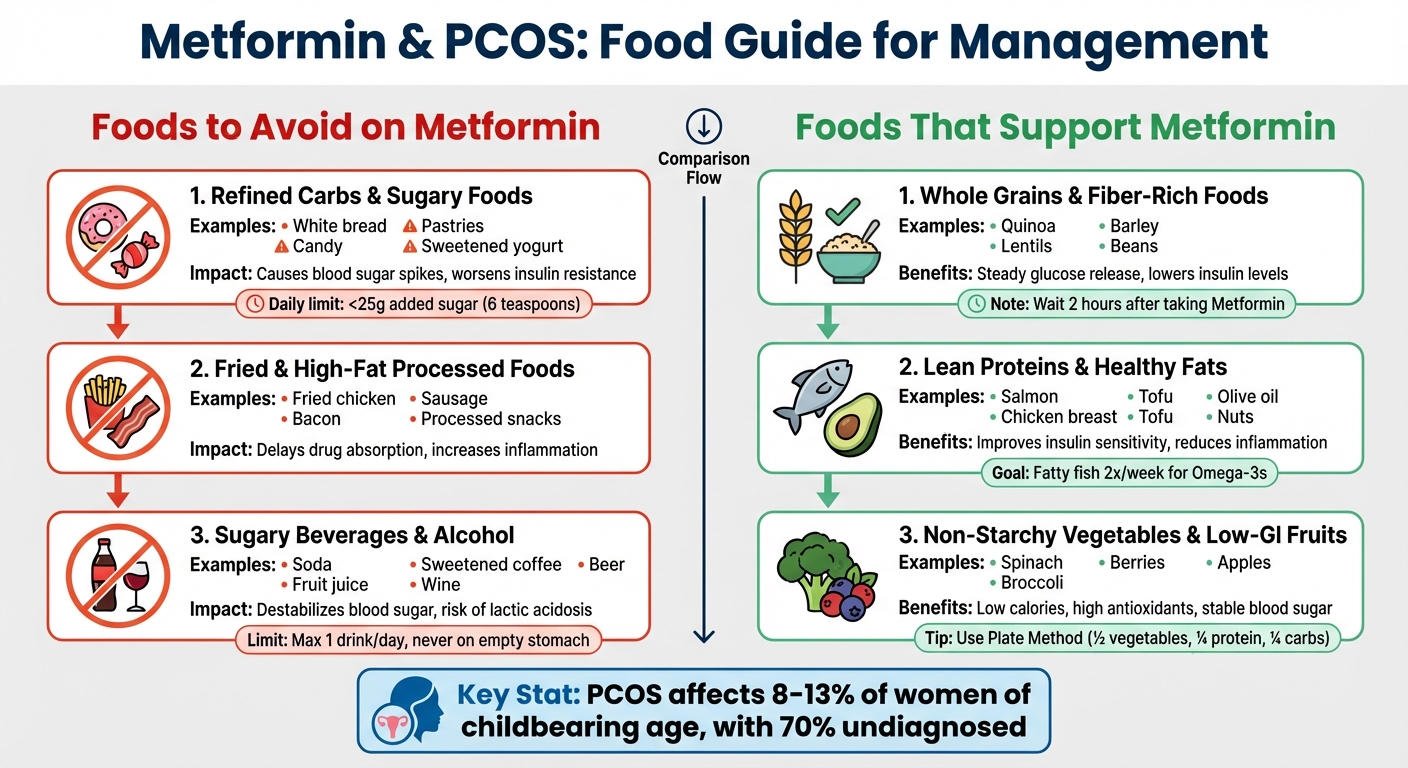
Foods to Avoid vs. Foods to Eat on Metformin for PCOS Management
Top Foods To Avoid When Taking Metformin For PCOS!!
sbb-itb-6dba428
Why Diet Matters When Taking Metformin
Think of Metformin and your diet as a team working together to regulate blood sugar and improve insulin sensitivity. Eating foods that cause rapid blood sugar spikes - like sugary snacks or white bread - can undermine the medication’s effectiveness. Experts stress that your diet plays a critical role in getting the most out of Metformin.
Dr. Basma Faris, a Board-Certified Obstetrician and Gynecologist, explains:
"Certain foods can interfere with metformin's ability to manage insulin and blood sugar levels in your body, reducing treatment efficacy".
Your food choices also impact how your body absorbs Metformin. For instance, high-fat meals can delay absorption, sometimes requiring higher doses. Similarly, eating high-fiber foods with Metformin may reduce how much of the medication your body takes in. Consuming more than 2,300 mg of sodium daily can also prompt your body to produce extra glucose. These factors directly influence how well Metformin manages conditions like PCOS.
Foods that worsen insulin resistance, such as fried items or refined carbs, can make Metformin’s job even harder. Chioma Okwara, an Anatomist and Health Writer, highlights this connection:
"High insulin is both a symptom of PCOS and a major driver of the condition".
Elevated insulin levels can lead the ovaries to produce excess androgens, which may worsen symptoms like acne, unwanted hair growth, and irregular periods. This creates a cycle that amplifies PCOS symptoms and complicates blood sugar management.
Metformin’s gastrointestinal side effects can also be aggravated by greasy, sugary, or high-fat foods, which may lead to treatment non-compliance. Alcohol adds another layer of risk, potentially doubling the chance of lactic acidosis.
At Oana Health, we understand the importance of pairing Metformin with thoughtful dietary choices for effective PCOS management. Our licensed professionals can provide personalized guidance to help you overcome these challenges and stay on track with your treatment.
Foods to Avoid While Taking Metformin
Diet plays a crucial role in supporting Metformin's effectiveness and managing PCOS symptoms. Let’s dive into the foods that can interfere with the medication and make PCOS management more challenging.
Refined Carbohydrates and Sugary Foods
Refined grains and sugary foods can wreak havoc on blood sugar levels. These foods trigger rapid glucose spikes, which directly counteract Metformin's ability to stabilize blood sugar. As Dr. Jossy Onwude, MD, puts it:
"Refined carbohydrates and added sugars represent the most important category of foods to avoid while taking metformin. These foods directly counteract metformin's blood sugar-lowering effects and can make diabetes management much more difficult."
In addition to undermining Metformin, high-sugar foods increase insulin resistance, which can worsen PCOS symptoms like acne and unwanted hair growth. They also promote inflammation, adding another layer of difficulty to managing the condition.
Hidden sugars are everywhere - in pasta sauces, salad dressings, and flavored yogurts. To keep your sugar intake in check, aim for less than 25 grams (about 6 teaspoons) of added sugar per day. If you’re enjoying naturally sweet fruits like mangoes or grapes, pair them with protein to slow glucose absorption. Cutting back on sugar not only helps with PCOS but also supports weight control.
Fried and High-Fat Processed Foods
Fats, especially from fried and processed foods, can interfere with how Metformin is absorbed. Foods like fried chicken, french fries, bacon, and sausage can delay the medication’s absorption, reducing its peak effectiveness and sometimes requiring a higher dose. These foods are also high in saturated and trans fats, which worsen insulin resistance and counteract the benefits of Metformin.
On top of that, fried and fatty foods can worsen Metformin's common gastrointestinal side effects. They also increase inflammation, which can aggravate PCOS symptoms, and studies suggest that high saturated fat intake may lower progesterone levels.
Here’s a quick comparison to guide your choices:
| Food Category | Why It's Problematic | Better Choice |
|---|---|---|
| Fried Foods | Slows drug absorption and increases inflammation | Baked, grilled, or roasted options |
| High-Fat Meats | Worsen insulin resistance and boost heart risks | Skinless chicken, fish, tofu |
| Processed Snacks | High in sodium and unhealthy fats | Fresh vegetables, nuts, seeds |
Switching to healthier alternatives - like baked or grilled dishes - can improve insulin sensitivity, which is key for managing PCOS.
Sugary Beverages and Alcohol
It’s not just about food; what you drink matters too. Sugary beverages like soda, fruit juice, and sweetened coffee drinks cause rapid glucose spikes, working against Metformin’s effects. Just one soda can exceed the daily recommended limit for added sugar.
Alcohol, however, poses an even greater risk. When the liver processes alcohol, it deprioritizes glucose release, which can lead to dangerously low blood sugar levels (hypoglycemia) if combined with Metformin. Additionally, both alcohol and Metformin are processed by the liver, increasing the risk of lactic acidosis - a rare but serious condition. Dr. Yoshua Quinones, Internist, cautions:
"Drinking too much alcohol on a regular basis while taking metformin could also cause serious complications like lactic acidosis... a condition that occurs when too much lactic acid builds up in your bloodstream."
If you choose to drink, stick to one drink per day and never consume alcohol on an empty stomach. Watch for warning signs like fatigue, muscle pain, difficulty breathing, or severe stomach pain, and seek medical help if these occur. For hydration, opt for water, sparkling water with a splash of citrus, or unsweetened herbal teas. Cutting back on sugary drinks and alcohol not only supports Metformin’s effectiveness but also helps with PCOS and weight management.
What to Eat Instead: Foods That Support Metformin
To get the most out of Metformin, focus on foods that help stabilize blood sugar, reduce inflammation, and promote hormonal balance. Choosing nutrient-packed, low-glycemic options is key.
Whole Grains and Fiber-Rich Foods
Swap out refined carbs for whole grains like barley and quinoa, and include fiber-rich legumes like lentils. These foods provide a steady release of glucose, which helps prevent blood sugar spikes. Angela Grassi, MS, RD, LDN, and Founder of The PCOS Nutrition Center, highlights the benefits:
"A high-fiber diet offers many benefits to women with PCOS, such as lower insulin levels, and antioxidants which fight to lower inflammation, and better gut bacteria."
However, avoid eating high-fiber meals within two hours of taking Metformin, as this can interfere with absorption. You can also adjust your cooking methods for better results - try cooking pasta "al dente" or using cooled starches (like in potato salad) to lower the glycemic impact. Pairing these grains with lean proteins and healthy fats can further stabilize blood sugar and keep you feeling full.
Lean Proteins and Healthy Fats
Incorporate lean proteins and healthy fats to help regulate glucose levels and combat inflammation. Skinless chicken, tofu, olive oil, and fatty fish are excellent choices. For example, eating fatty fish like salmon or sardines twice a week provides Omega-3s that support insulin sensitivity. Simple swaps like replacing butter with olive oil or adding avocado to your meals can make a big difference. For snacks, keep nuts or seeds handy to manage hunger and support weight goals.
| Category | Choose | How It Helps |
|---|---|---|
| Lean Proteins | Chicken breast, turkey, fish, tofu, eggs, lentils, beans | Slow glucose release, muscle maintenance, satiety |
| Healthy Fats | Avocado, olive oil, walnuts, almonds | Improved insulin sensitivity, reduced inflammation |
| Omega‑3 Sources | Salmon, sardines, mackerel, chia seeds, flaxseeds | Hormone balance, anti-inflammatory benefits |
Non-Starchy Vegetables and Low-GI Fruits
Base your meals around non-starchy vegetables like spinach, kale, broccoli, cauliflower, zucchini, and peppers. These veggies are low in calories but packed with antioxidants and prebiotics, which support gut health. For fruits, stick to low-GI options such as berries, apples, and pears.
To lower the glycemic load of your snacks, pair fruits with protein or healthy fats - think an apple with almond butter. You can also use the Plate Method to create balanced meals: fill half your plate with non-starchy vegetables, one-quarter with lean protein, and one-quarter with low-GI carbs. This approach complements Metformin's role in managing PCOS while keeping your nutrition on track.
How to Make These Dietary Changes
Fine-tuning your diet can enhance the effects of Metformin for managing PCOS and weight. By making small, realistic adjustments, you can align your eating habits with the medication's benefits instead of working against them.
Meal Planning and Preparation
Planning meals ahead of time helps you avoid the temptation of processed or sugary foods when hunger hits. Aim for three balanced meals and 2–3 healthy snacks each day. This strategy helps stabilize blood sugar and reduces the risk of overeating.
When preparing meals, choose healthier cooking methods like grilling, baking, or roasting instead of frying. Batch-cooking proteins such as chicken breasts, salmon, or tofu ensures you have quick, nutritious options for busy days. Swap out white rice for alternatives like quinoa or cauliflower rice, and replace white bread with whole-grain sprouted bread or even lettuce wraps. If you’re craving something sweet, keep a small piece of dark chocolate (at least 70% cacao) handy instead of reaching for sugary desserts.
Staying hydrated is equally important. Drinking plenty of water throughout the day helps your kidneys process the medication and can reduce the risk of dehydration - especially if you’re dealing with digestive side effects .
Once your meals are sorted, take the time to understand nutrition labels to avoid sneaky ingredients that can undermine your progress.
Reading Nutrition Labels
Learning to read nutrition labels is a simple way to identify hidden sugars and unhealthy fats that could counteract the benefits of Metformin. Under the "Total Carbohydrates" section, look for the "Added Sugars" line, which separates natural sugars from those added during processing. To maintain a healthy balance, women should limit added sugars to 25 grams (6 teaspoons) per day, while men should stay under 36 grams (9 teaspoons).
Be cautious with low-fat products, such as yogurt, which often compensate for reduced fat by adding sugar. Similarly, savory items like pasta sauces, salad dressings, and pre-packaged meals may contain unexpected amounts of sugar. Always check the saturated fat content under "Total Fat" and monitor sodium levels. Ideally, your daily sodium intake should be under 2,300 milligrams, though 1,500 milligrams is a better target. Watch out for ingredients like hydrogenated oils, high-fructose corn syrup, and artificial sweeteners (e.g., sorbitol or mannitol), as these can worsen Metformin-related gastrointestinal issues.
Once you’ve mastered label-reading, focus on portion control to create well-balanced meals that work with your medication.
Managing Portions and Balanced Meals
Portion control is key to building balanced meals that keep you full while supporting Metformin’s effectiveness. A helpful guideline is the Plate Method: fill half your plate with non-starchy vegetables, one-quarter with lean protein, and the remaining quarter with complex carbohydrates. Pairing carbohydrates with lean proteins or healthy fats slows digestion and helps prevent blood sugar spikes . For instance, if you’re enjoying an apple (which contains about 25 grams of carbs), add a tablespoon of peanut butter for balance.
Using smaller plates and eating slowly can make it easier to recognize when you’re full. If you happen to overeat, a quick walk and a glass of water can help regulate blood sugar . Megan Nunn, PharmD, emphasizes the importance of tailoring your approach:
"Making a long-term individual food plan that you can commit to is essential".
Conclusion
Managing PCOS with Metformin involves more than just taking medication - it’s about aligning your diet to maximize its benefits. Steering clear of refined carbs, sugary treats, fried foods, and alcohol is key. These foods not only spike blood sugar but also worsen insulin resistance and may lead to digestive discomfort. Instead, focus on low-glycemic-index foods, lean proteins, and healthy fats to enhance Metformin's ability to improve insulin sensitivity and ease PCOS symptoms.
Even small changes to your diet can make a big difference. Swapping out high-sugar foods for nutrient-dense alternatives and paying attention to portion sizes can significantly improve treatment outcomes. Megan Nunn, PharmD, emphasizes:
"A healthy diet optimizes the effectiveness of metformin and can help prevent complications of diabetes."
PCOS affects an estimated 8% to 13% of women of childbearing age, yet around 70% of cases go undiagnosed. If you’re dealing with symptoms like weight gain, irregular periods, or excess hair growth, seeking professional advice can help create a plan tailored to your needs.
For additional support, Oana Health offers telehealth services with prescription treatments designed for PCOS. Their licensed medical professionals provide science-backed care, and treatments are shipped directly to your door at no extra cost. By combining the right diet with effective treatments, you can take meaningful steps toward managing PCOS and achieving hormonal balance.
FAQs
Can you drink alcohol while taking Metformin for PCOS?
Drinking alcohol while taking Metformin for PCOS is generally not advised. Alcohol can disrupt how Metformin functions in your body, raising the chances of low blood sugar (hypoglycemia) and, in rare cases, causing a severe condition called lactic acidosis. This condition, though uncommon, can be life-threatening.
If you decide to drink, keep it moderate and pair it with food to help maintain stable blood sugar levels. That said, it’s always a good idea to talk with your healthcare provider about whether alcohol is safe for you, considering your specific health situation and PCOS treatment plan.
Why should you avoid refined carbs while taking Metformin for PCOS?
Refined carbohydrates - think white bread, sugary snacks, and pastries - can work against the benefits of Metformin. These foods cause quick blood sugar spikes and can worsen insulin resistance, both of which Metformin is meant to address.
Cutting back on refined carbs can help Metformin do its job more effectively. It aids in keeping blood sugar levels steady and improving insulin sensitivity, which is crucial for managing PCOS symptoms and supporting hormonal balance.
Why should you follow a specific diet while taking Metformin for PCOS?
Following the right diet while on Metformin for PCOS isn't just helpful - it can make a noticeable difference in how well the medication works. Metformin improves insulin sensitivity, and pairing it with smart food choices can help stabilize blood sugar levels, reduce insulin resistance, and promote better hormonal balance.
On top of that, a well-planned diet can address common PCOS challenges like weight gain and intense cravings. By managing these symptoms, you’re better equipped to work toward long-term health goals. Combining Metformin with healthy eating creates a more comprehensive way to manage PCOS and boost overall wellness.