
Metformin and PCOS: What Studies Show
Metformin is a widely used treatment for Polycystic Ovary Syndrome (PCOS), targeting the metabolic issues at the core of the condition. PCOS affects 4%–12% of women of reproductive age in the U.S., often causing irregular cycles, infertility, insulin resistance, and an increased risk of type 2 diabetes. Metformin helps by improving insulin sensitivity, lowering testosterone levels, and supporting ovulation. Here’s what you need to know:
- Insulin Resistance: Metformin reduces insulin levels, addressing one of PCOS's root causes.
- Weight and Metabolism: Studies show modest weight loss and improved glucose regulation in some cases.
- Ovulation and Fertility: Boosts ovulation rates and pregnancy outcomes, especially when combined with other treatments.
- Side Effects: Common issues include digestive discomfort, but extended-release versions may reduce symptoms.
- Safety: Generally safe for long-term use and during pregnancy, though long-term effects on children remain unclear.
While metformin offers clear benefits, its effectiveness varies based on individual factors like weight and symptoms. A personalized treatment plan is essential for managing PCOS effectively.
Metformin and Polycystic Ovary Syndrome
What Clinical Studies Show About Metformin for PCOS
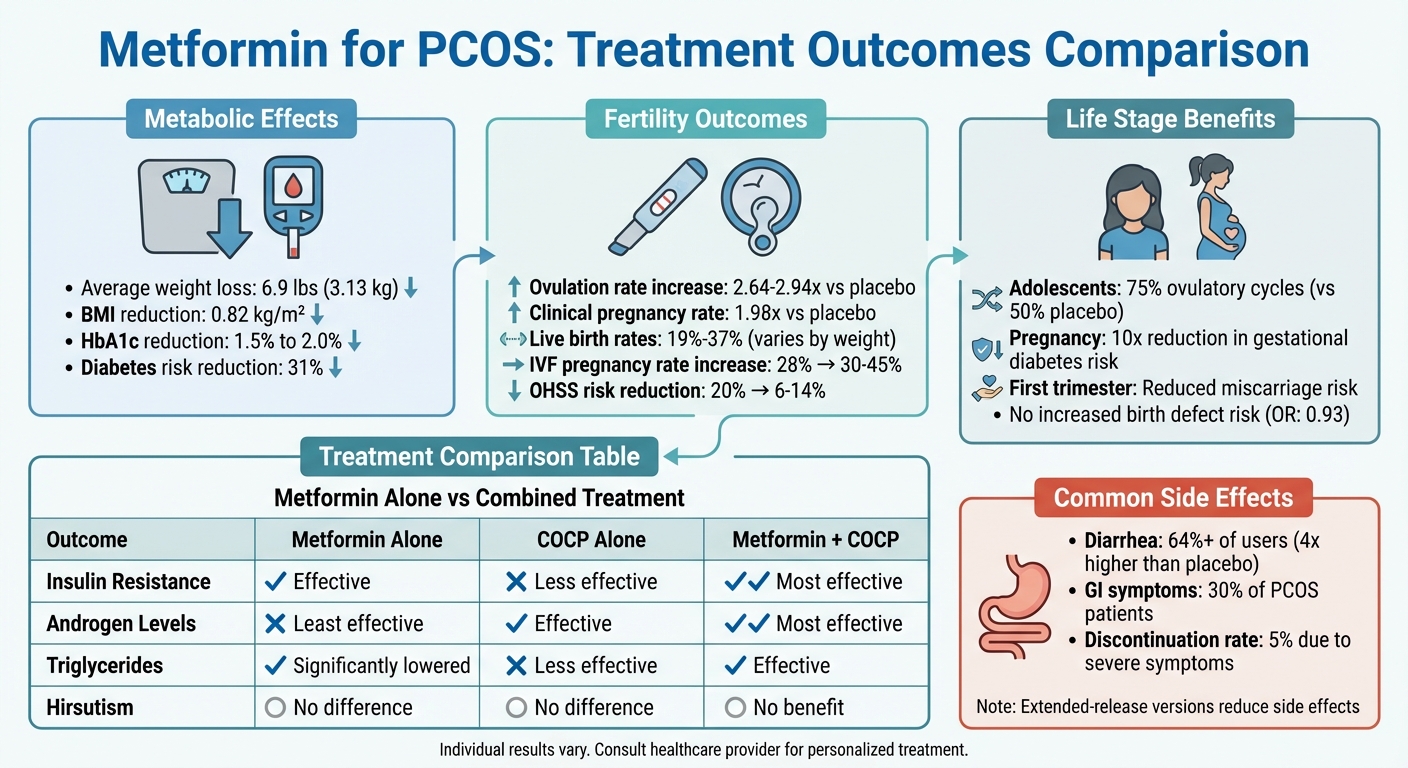
Metformin Treatment Outcomes for PCOS: Alone vs Combined Therapy
Effects on Insulin Resistance and Weight
Research highlights metformin’s ability to improve how the body processes insulin. It works by increasing the number and efficiency of insulin receptors in muscle and fat cells and activating AMPK, which promotes glucose uptake in muscle cells. According to R. Dumitrescu from Carol Davila University of Medicine and Pharmacy:
"Metformin improves insulin-mediated glucose disposal in women with PCOs. Thus, metformin has become one of the key drugs in the treatment of PCOs."
A review of 24 randomized controlled trials found that metformin led to an average weight loss of 6.9 lbs (3.13 kg) and a BMI reduction of 0.82 kg/m². Additionally, it lowered HbA1c levels by 1.5% to 2.0% and reduced the risk of diabetes by 31% in adults with high fasting glucose levels. However, the 2025 COMET-PCOS trial reported no meaningful changes in weight or BMI after 24 weeks, with metabolic syndrome prevalence staying close to baseline levels (26.2% compared to 31%).
Dr. Anne D. Walling from the American Academy of Family Physicians underscores a key point:
"Metformin is the only antidiabetic agent associated with weight loss rather than weight gain and is, thus, particularly suitable for therapy in patients with PCOS."
These metabolic benefits may also play a role in improving ovarian function.
Effects on Ovulation and Fertility
Metformin’s impact on insulin sensitivity helps regulate ovulation by lowering insulin levels, which in turn reduces excessive androgen production in the ovaries. Clinical studies show that metformin increases ovulation rates compared to placebo, with odds ratios ranging from 2.64 to 2.94. It also improves clinical pregnancy rates, with an odds ratio of 1.98 when used alone.
Live birth rates with metformin range from 19% to 37%, but outcomes vary depending on body weight. For obese women, metformin results in lower live birth rates compared to clomiphene citrate (odds ratio 0.30). In contrast, non-obese women see better results with metformin, with an odds ratio of 1.71.
Combining metformin with other treatments often yields better results. For instance, adding metformin to clomiphene citrate increases early pregnancy odds by 2.67 times, especially in women resistant to clomiphene. In IVF treatments using a long GnRH-agonist protocol, metformin increases clinical pregnancy rates (risk ratio 1.32), raising success rates from 28% to between 30% and 45%. Furthermore, metformin significantly lowers the risk of Ovarian Hyperstimulation Syndrome (OHSS) during IVF, reducing the risk from 20% to between 6% and 14% (risk ratio 0.46).
Metformin Alone vs Combined Treatments
Addressing both metabolic issues and androgen excess offers the most comprehensive approach to managing PCOS. Metformin alone effectively reduces insulin resistance and triglyceride levels, while combined oral contraceptive pills (COCP) are better at managing androgen-related markers like the free androgen index (FAI), sex hormone-binding globulin (SHBG), and total testosterone.
Combining metformin with COCP provides even greater benefits. This combination improves insulin resistance (showing a 0.44 improvement) and boosts SHBG levels by 16.61 nmol/L, outperforming COCP alone. However, neither approach showed significant improvements in reducing hirsutism.
| Outcome | Metformin Alone | COCP Alone | Combination (Metformin + COCP) |
|---|---|---|---|
| Insulin Resistance | Effective reduction | Less effective than metformin | Most effective |
| Androgen Levels (FAI/SHBG) | Least effective | Effective | Most effective |
| Hirsutism | No significant difference | No significant difference | No additional benefit |
| Triglycerides | Lowered significantly | Less effective than metformin | Not specified as superior |
The 2023 International PCOS Guidelines offer this advice:
"The choice of metformin or COCP treatment should be based on symptoms, noting some biochemical benefits from combination treatment targeting both major endocrine disturbances seen in PCOS (hyperinsulinemia and hyperandrogenism)."
However, gastrointestinal side effects are common with metformin. Users report diarrhea at a rate four times higher than placebo groups, with over 64% experiencing this issue.
Safety and Side Effects of Metformin
Metformin is widely used to manage PCOS, but it's equally important to understand its safety and potential side effects.
Common Side Effects
More than half of patients report diarrhea, and about 25% experience other digestive symptoms such as nausea, vomiting, abdominal discomfort, bloating, and flatulence. Some individuals also notice a metallic taste or a reduced appetite. Altogether, gastrointestinal side effects affect up to 30% of PCOS patients, with around 5% stopping metformin due to severe symptoms.
To minimize these effects, starting with a low dose - usually 500 mg once daily - and gradually increasing to the target dose (1,500 to 2,550 mg) over 4 to 6 weeks is recommended. Taking metformin with the largest meal of the day can also reduce stomach irritation. Additionally, extended-release versions of the drug tend to cause fewer digestive issues compared to immediate-release tablets.
Although rare, lactic acidosis is a serious side effect, primarily seen in patients with severe kidney problems. However, this condition is uncommon in individuals with PCOS. Another potential concern is vitamin B12 deficiency, which can occur with long-term use due to impaired absorption. On the bright side, metformin does not lead to weight gain or hypoglycemia when used on its own.
While short-term effects are well-documented, the drug's long-term safety is equally important.
Long-Term Safety Data
For women of reproductive age, metformin is generally safe for long-term use, with no reports of severe adverse effects like lactic acidosis or liver failure in PCOS patients. This makes it a reliable option for ongoing management.
During pregnancy, metformin crosses the placenta but has not been associated with a higher risk of major birth defects. A 2021 meta-analysis found no significant increase in congenital malformations, with an odds ratio of 0.93 in randomized controlled trials and 1.35 in observational studies. As noted in BMJ Open Diabetes Research & Care:
"Metformin use in first-trimester pregnancy in women with PCOS or PGDM do not meaningfully increase the MCM risk overall".
In fact, taking metformin during the first trimester - at doses between 1,000 and 2,000 mg daily - may help lower the risk of miscarriage.
However, there are lingering questions about the long-term effects on children exposed to metformin in utero. Studies from Norway suggest that these children may have higher rates of obesity and increased body fat percentages by ages 5 to 10 compared to those in placebo groups. Adriana Leal Griz Notaro from Amare Clinic explains:
"The adverse effects are mostly mild, and there is no risk of teratogenicity, but the risk of long-term complications for the offspring is not yet defined".
sbb-itb-6dba428
Metformin Use at Different Life Stages
PCOS impacts women differently depending on their age, and metformin’s role shifts accordingly. Research highlights its benefits for adolescents, women trying to conceive, and those who are pregnant. These findings emphasize the need for treatments tailored to specific life stages.
Use in Adolescents
About 8% of adolescents are affected by PCOS. Metformin has been shown to effectively target the metabolic problems that drive PCOS in this age group.
A study conducted between December 2018 and August 2024 at University Hospital "Duilio Casula" in Italy involved 168 girls (ages 12–17) diagnosed with PCOS. Participants were treated with 500 mg of metformin twice daily alongside oral contraceptives. The results were striking - insulin resistance improved significantly, and ovarian volume decreased from 9.7 mL to 5.4 mL. Even more impressive, these benefits lasted for 24 months after stopping treatment. The researchers summarized:
"Our study highlights the effectiveness of low-dose metformin therapy in improving insulin resistance and metabolic parameters among adolescent patients with PCOS. Sustained benefits were observed even after treatment cessation".
Another study focusing on hyperinsulinemic adolescents found that 75% of menstrual cycles were ovulatory in the metformin group, compared to only 50% in the placebo group. This demonstrates how metformin interrupts the cycle of insulin resistance and excess androgen production.
To improve tolerability, experts recommend starting with a lower dose (250 mg twice daily) and increasing it to 500 mg twice daily within a week. While oral contraceptives are effective for quickly regulating cycles and lowering androgens, they can worsen insulin resistance. Combining them with metformin offers better metabolic control.
Pregnancy Outcomes
Metformin’s metabolic benefits extend into pregnancy, offering additional advantages. For women with PCOS, continuing metformin (1,000–2,000 mg daily) through the first trimester may lower miscarriage risk, as stopping the medication abruptly can increase the chances of pregnancy loss.
One retrospective study found that metformin use during pregnancy led to a 10-fold reduction in the likelihood of developing gestational diabetes in non-diabetic women with PCOS. Additionally, it appears to reduce the risk of preeclampsia without raising the chances of gestational hypertension.
For women undergoing IVF, metformin has been shown to lower the risk of OHSS (Ovarian Hyperstimulation Syndrome) from 20% to 6%–14%. It also enhances endometrial receptivity by increasing GLUT4 expression and modulating receptors.
Crucially, there is no evidence that metformin causes birth defects in human fetuses. It is generally considered safe for both mother and baby when used during pregnancy.
These findings highlight metformin’s ability to address both the metabolic and reproductive challenges of PCOS, tailored to the needs of different life stages.
Conclusion
Research highlights that metformin offers several benefits for women with PCOS, including improved insulin sensitivity, weight reduction, lower testosterone levels, enhanced ovulation, and a decreased risk of ovarian hyperstimulation. For adolescents, early use can help manage insulin resistance, while for pregnant women, continuing metformin through the first trimester may lower miscarriage risk.
However, metformin's effectiveness depends on individual factors. It tends to work better for non-obese women but is less effective than letrozole for inducing ovulation. Gastrointestinal side effects are common but usually subside over time. Despite its proven benefits, metformin remains off-label for treating PCOS in many parts of the world, underscoring a gap between clinical research and regulatory approval.
Because PCOS presents differently in each individual, a personalized treatment plan is crucial. Factors like BMI, specific symptoms, and life stage should guide the approach. Addressing these unique needs ensures better alignment between medical recommendations and practical care.
For those seeking customized solutions, services like Oana Health simplify access to evidence-based treatments. Licensed professionals assess your medical history to prescribe options such as oral metformin ER, available for $22/month and delivered directly to your home. Whether used alone or alongside other therapies, a tailored plan can address insulin resistance, weight management, and hormonal imbalances, effectively tackling the complexities of PCOS.
FAQs
How long does metformin take to help PCOS symptoms?
Metformin often requires several months to start improving symptoms of PCOS, such as irregular menstrual cycles. Many women begin to see changes within 3 to 6 months, but for some, the process may take longer. The timeline can differ based on individual health factors and how consistently the treatment is followed.
What metformin dose is usually used for PCOS?
The usual metformin dosage for managing PCOS typically falls between 1,500 and 2,550 mg per day, with many recommendations suggesting a range of 1,500 to 1,700 mg daily. For adults, the maximum dose is generally 2.5 g per day. It’s essential to consult a healthcare provider for advice tailored to your specific needs.
Should I stay on metformin if I get pregnant?
Consult your healthcare provider before using metformin during pregnancy. Studies indicate it might be safe and helpful for certain women with PCOS, especially in managing insulin resistance or related symptoms. However, every situation is different, so getting personalized advice from a professional is crucial.