
Minoxidil Drug Interactions: OTC Products to Avoid
Minoxidil, a popular treatment for hair loss, can interact with over-the-counter (OTC) products, potentially reducing its effectiveness or increasing side effects. Key interactions include:
- Antihistamines: Diphenhydramine (Benadryl) can worsen blood pressure drops caused by minoxidil, leading to dizziness or fainting. Safer alternatives include loratadine (Claritin) or cetirizine (Zyrtec).
- Aspirin: Even low doses (75–81 mg) can block scalp enzymes that activate minoxidil, reducing its efficacy.
- Diuretics and Blood Pressure Supplements: OTC diuretics and supplements like garlic or hawthorn can dangerously lower blood pressure when combined with minoxidil.
- Topical Products: Ingredients like propylene glycol and salicylic acid can irritate the scalp or interfere with minoxidil absorption.
- Alcohol and Tobacco: Alcohol can amplify blood pressure effects, while smoking counteracts minoxidil's benefits by reducing blood flow to hair follicles.
To use minoxidil effectively and safely:
- Avoid OTC products known to interact negatively.
- Switch to foam formulations if irritation occurs.
- Monitor your blood pressure and hydration regularly.
- Consult your healthcare provider before combining minoxidil with other medications or supplements.
Understanding these interactions can help ensure better results and reduce risks while using minoxidil for hair regrowth.
OTC Antihistamines and Minoxidil
Over-the-counter (OTC) antihistamines can heighten the hypotensive effect of minoxidil. Diphenhydramine, commonly known as Benadryl, is especially problematic because it can amplify minoxidil's blood pressure–lowering effects. This combination may lead to severe hypotension, which can cause symptoms like dizziness, headaches, fainting, or, in extreme cases, coma. The risk of these effects is more pronounced with oral minoxidil due to its higher systemic absorption. Diphenhydramine intensifies the blood pressure drop caused by minoxidil, making this interaction particularly concerning.
How Antihistamines Affect Blood Pressure
Minoxidil works as a vasodilator, and diphenhydramine can compound this effect.
"The most likely interaction type between minoxidil and other drugs is an additive effect on lowering blood pressure." – Lauren Panoff
Oral minoxidil typically starts lowering blood pressure about 30 minutes after ingestion, with the most significant drop occurring between 2 and 3 hours. The effects can persist for up to 75 hours after a single dose. This prolonged duration increases the likelihood of interactions with OTC medications, even hours or days after taking minoxidil. Because of these risks, finding safer alternatives for allergy relief is essential.
Better Options for Allergy Relief
For those taking minoxidil, second-generation non-sedating antihistamines are a safer choice. Options like loratadine (Claritin), cetirizine (Zyrtec), and fexofenadine (Allegra) are less likely to exacerbate blood pressure drops compared to diphenhydramine. However, even these alternatives should be used with caution.
Always consult a healthcare provider or pharmacist before starting any new allergy medication to address potential interactions. If you experience symptoms such as sudden weight gain, a rapid heartbeat, dizziness when standing, chest pain, or difficulty breathing, seek medical attention immediately.
Aspirin and Minoxidil Effectiveness
Minoxidil works as a pro-drug, meaning it requires activation by sulfotransferase enzymes in hair follicles to become effective. These enzymes convert it into its active form, minoxidil sulfate, which promotes hair growth.
Why Aspirin Interferes with Minoxidil
Aspirin disrupts this process by inhibiting the sulfotransferase enzymes (specifically SULT1A1) responsible for activating minoxidil. Even at low daily doses (75 mg–81 mg), aspirin's metabolite reduces the activity of these enzymes in the scalp.
"Low dose OTC aspirin (75mg-81mg), a derivative of salicylic acid, is used by millions of people daily... the results indicate that prior to initiating topical minoxidil treatment, clinicians should take into account the patient's aspirin regimen." – Andy Goren, Applied Biology, Inc.
A clinical study involving 24 participants revealed that 50% were initially predicted to respond to minoxidil based on their baseline enzyme activity. However, after 14 days of daily low-dose aspirin use, this number dropped to just 27%. This nearly 50% reduction demonstrates how significantly aspirin can interfere with minoxidil's effectiveness. Since the enzyme inhibition is consistent with daily aspirin use, altering the timing of application does not help.
Spacing Out Aspirin and Minoxidil
Unfortunately, spacing out the timing of aspirin and minoxidil application does not mitigate the cumulative enzyme inhibition caused by daily aspirin use. The effects are systemic and build up over time.
If you're taking daily aspirin for heart health or other medical reasons and plan to use minoxidil for hair loss, it's essential to consult your healthcare provider first. They may suggest alternative approaches to avoid compromising hair regrowth. For individuals who need to stay on aspirin, oral minoxidil might be a better option since it relies on activation by liver and platelet enzymes rather than scalp enzymes.
OTC Diuretics and Blood Pressure Supplements
Minoxidil works to lower blood pressure by decreasing peripheral vascular resistance. However, combining it with OTC diuretics or blood pressure supplements can amplify its effects, potentially leading to dangerously low blood pressure. This can result in fainting, heart attacks, or reduced blood flow to critical areas like the eyes and ears .
In some cases, specific diuretics are prescribed by healthcare providers to manage fluid retention caused by minoxidil. But the unsupervised use of OTC "water pills" can be risky. The FDA emphasizes that minoxidil should only be used under medical supervision, with diuretics carefully adjusted to avoid dangerous drops in blood pressure . Below are some important guidelines to help you navigate the safe use of OTC products.
Which Diuretics and Supplements to Avoid
Steer clear of OTC diuretics not specifically prescribed for managing fluid retention associated with minoxidil. These products can cause excessive drops in blood pressure . In clinical settings, healthcare providers typically use prescription-strength options like loop diuretics (e.g., furosemide at 40 mg twice daily) or thiazide diuretics (e.g., hydrochlorothiazide at 50 mg twice daily) for patients on minoxidil therapy .
It's also important to exercise caution with blood pressure-lowering supplements. Products such as hawthorn extract, coenzyme Q10, garlic supplements, and high-dose fish oil can interact with minoxidil. Always consult your healthcare provider before introducing any OTC product into your routine while using minoxidil .
Managing Hydration and Blood Pressure Safely
If you're using minoxidil, keeping a close eye on your hydration and blood pressure is essential. A good practice is to monitor your weight every morning. A sudden gain of 5 pounds (or 2 pounds for children) or an increase of 20 bpm in your resting pulse may indicate fluid retention, which requires immediate medical attention .
Additionally, watch for signs like swelling in your feet, lower legs, hands, or face. Symptoms such as dizziness, lightheadedness, or faintness when standing could signal low blood pressure and should prompt a visit to your healthcare provider.
sbb-itb-6dba428
Topical Products That May Cause Irritation
When using minoxidil, it's important to steer clear of certain ingredients in other topical products. These substances can irritate your scalp or interfere with how well minoxidil works. Knowing what to avoid helps protect your skin and ensures you get the most out of your treatment.
Propylene Glycol and Skin Sensitivity
Propylene glycol is a common ingredient in liquid minoxidil that allows the medication to penetrate the scalp. Unfortunately, it's also a frequent cause of skin irritation. Studies have shown that 17.1% of patients with confirmed patch-test results experienced allergic contact dermatitis due to propylene glycol.
"The most common side effect of topical minoxidil is irritant contact dermatitis with the typical symptoms of itching and scaling. Most commonly, these symptoms are a result of an allergic reaction to propylene glycol, or less commonly, to minoxidil itself." – Hessah BinJadeed, Dermatologist, King Khalid University Hospital
Using additional products containing propylene glycol or alcohol can worsen irritation. For example, certain hair conditioners, lotions, and alcohol-based tonics can dry out the scalp and compound the issue.
Salicylic acid is another ingredient to watch for. Found in products like Neutrogena T/Sal Therapeutic Shampoo and Aveeno Clear Complexion, salicylic acid can severely dry and irritate the scalp when combined with minoxidil.
"Using topical salicylic acid with other topical products may increase your risk for dry skin." – WebMD
If irritation occurs, switching to a different formulation of minoxidil could help.
Selecting Skin-Friendly Products
To reduce the risk of irritation, look for alternatives that avoid common allergens. Switching to foam formulations is often the best choice. Foam versions of minoxidil typically don't contain propylene glycol, eliminating a major cause of allergic reactions. Plus, foam formulations are just as effective as liquid ones but are generally gentler on sensitive skin.
Another helpful step is to consider a patch test. A patch test using 2% minoxidil in propylene glycol has been shown to have a 100% positivity rate for detecting sensitivity in affected individuals. This test can help pinpoint whether you're reacting to propylene glycol or minoxidil itself, guiding you toward the right formulation.
When choosing other hair and skin products, always check ingredient labels. Avoid applying lotions, creams, or styling products to the same area where you use minoxidil. If you plan to use chemical treatments like hair coloring, permanents, or relaxers, wait at least 24 hours before and after these treatments before reapplying minoxidil. This prevents potential chemical interactions that could harm your scalp or increase unwanted absorption of the medication into your bloodstream.
Finally, apply minoxidil only to dry, unbroken skin. Never use it on a sunburned, irritated, or damaged scalp, as this can increase systemic absorption and lead to side effects like dizziness or a rapid heartbeat. Also, keep in mind that minoxidil solutions are highly flammable due to their alcohol content, so avoid flames, fire, and smoking during and immediately after application.
Alcohol and Tobacco Effects on Minoxidil
Alcohol and tobacco can interfere with how well minoxidil works, each in its own way. Knowing how these substances interact with the medication can help you get the most out of your treatment.
How Alcohol Affects Minoxidil
Alcohol can amplify minoxidil's ability to lower blood pressure, which may lead to side effects like dizziness or fainting, especially when starting treatment, increasing the dose, or resuming after a break.
"Minoxidil and ethanol (alcohol) may have additive effects in lowering your blood pressure. You may suffer headaches, dizziness, lightheadedness, fainting, or altered heart rate." – Drugs.com
To reduce dizziness, stand up slowly after drinking alcohol.
Tobacco's Effect on Blood Flow and Hair Growth
Tobacco use undermines the hair growth benefits of minoxidil. The medication works by increasing blood flow to hair follicles and stimulating vascular endothelial growth factor (VEGF) production. Smoking, however, narrows blood vessels, directly opposing minoxidil's goal of improving circulation to the follicles.
Additionally, smoking disrupts the scalp's blood flow, which is crucial for healthy hair growth.
Adjusting Habits for Better Results
Making lifestyle changes can help you maximize the benefits of minoxidil. For instance, monitor your pulse daily - if your resting heart rate rises by 20 beats per minute or more, consult your doctor. Keep an eye on your weight, too; a sudden gain of 5 pounds or more could indicate fluid retention and may require medical attention.
It's a good idea to discuss your alcohol and tobacco use with a healthcare provider. They can advise if you need any dosage adjustments or extra monitoring. For tailored guidance, you might consider telehealth services like those offered by Oana Health.
Guidelines for Safe Minoxidil Use
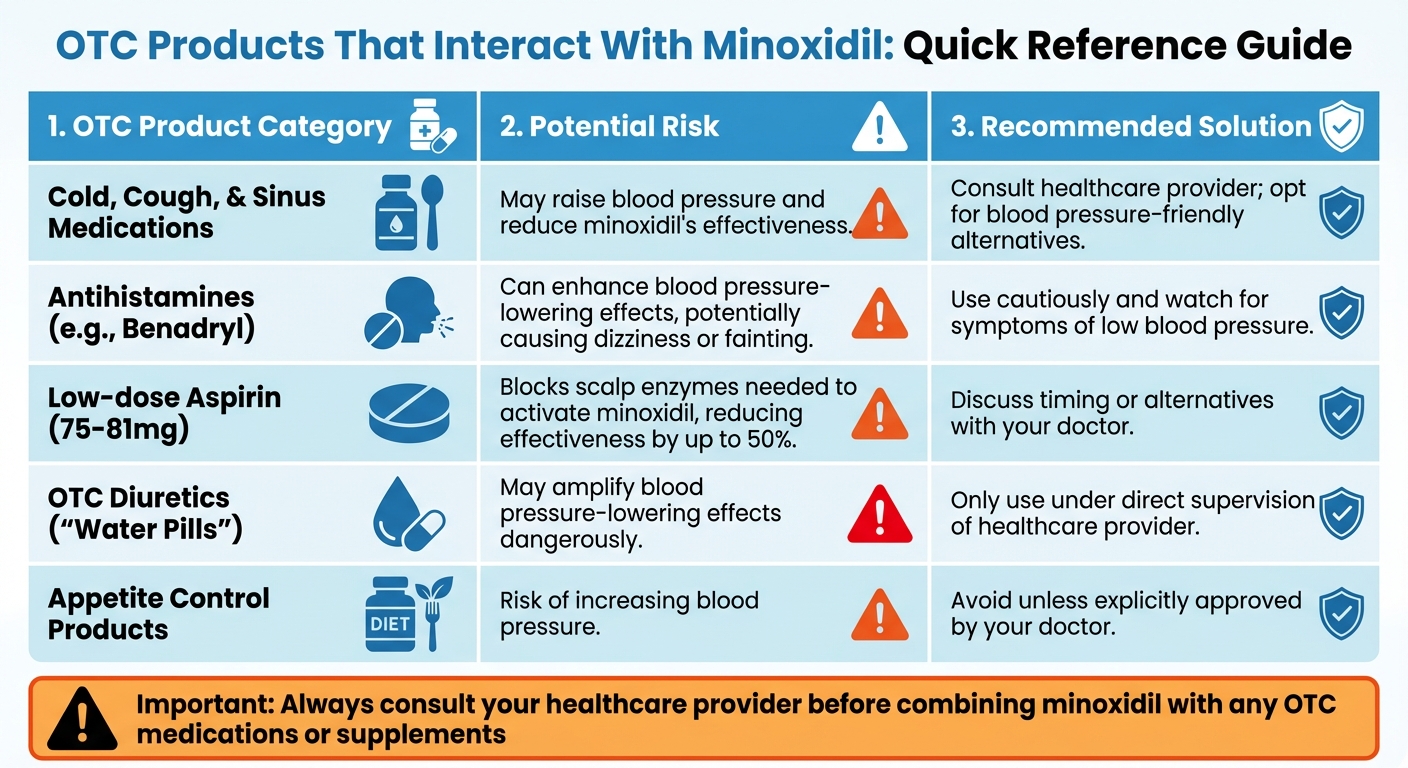
OTC Products That Interact With Minoxidil: Quick Reference Guide
To use minoxidil safely, it's crucial to understand potential interactions with over-the-counter (OTC) products and follow medical advice. Since high blood pressure often has no visible symptoms, consulting a healthcare provider is essential for proper management and safe use of this medication.
Quick Reference: OTC Interactions & Recommended Adjustments
Here's a handy table summarizing key OTC products that may interfere with minoxidil, along with safer alternatives or adjustments:
| OTC Product Category | Potential Risk | Recommended Solution |
|---|---|---|
| Cold, Cough, & Sinus Meds | May raise blood pressure and reduce minoxidil's effectiveness | Consult a healthcare provider; opt for blood pressure–friendly alternatives. |
| Antihistamines (e.g., Benadryl) | Can enhance blood pressure-lowering effects, potentially causing dizziness or fainting | Use cautiously and watch for symptoms of low blood pressure. |
| Low-dose Aspirin | Could interfere with minoxidil by blocking scalp enzymes | Discuss timing or alternatives with your doctor. |
| OTC Diuretics ("Water Pills") | May amplify blood pressure-lowering effects | Only use under direct supervision of a healthcare provider. |
| Appetite Control Products | Risk of increasing blood pressure | Avoid unless explicitly approved by your doctor. |
"Do not take other medicines unless they have been discussed with your doctor. This especially includes over-the-counter (nonprescription) medicines for appetite control, asthma, colds, cough, hay fever, or sinus problems, since they may tend to increase your blood pressure." – Mayo Clinic
These interactions emphasize the importance of professional oversight to ensure your treatment remains effective and safe.
Getting Professional Support Through Telehealth
Professional guidance is critical for managing minoxidil use, especially for women dealing with PCOS-related hair loss. Hormonal imbalances in PCOS often require a more tailored and comprehensive treatment plan.
Services like Oana Health offer specialized telehealth options designed to meet these needs. Their licensed professionals provide personalized treatments, including Oral Minoxidil, conveniently delivered to your doorstep with free shipping. For those managing multiple PCOS symptoms, Oana Health also offers integrated solutions such as Spironolactone and Topical Spironolactone, targeting both hair loss and unwanted hair growth.
With telehealth, regular check-ins allow your provider to monitor your vital signs, adjust dosages as necessary, and ensure your treatment plan works harmoniously with other medications. This ongoing support minimizes risks from drug interactions and helps you achieve the best possible results.
FAQs
Can I take cold or sinus medicine while using minoxidil?
Most over-the-counter cold medicines can generally be used alongside topical minoxidil without issues. However, be careful with decongestants that include pseudoephedrine or phenylephrine, as they might lead to cardiovascular side effects. If you're uncertain about possible interactions, it's best to check with a healthcare professional.
Is oral minoxidil safer than topical if I take daily aspirin?
Oral minoxidil is primarily prescribed for severe hypertension but comes with a higher likelihood of serious heart-related side effects, including pericardial effusion and angina. Compared to topical minoxidil, it is considered less safe for addressing hair loss, particularly if you take daily aspirin, as this may heighten the risk of bleeding. Always consult your doctor to decide which option is most appropriate for your situation.
How can I tell if minoxidil is lowering my blood pressure too much?
You might feel symptoms such as dizziness, lightheadedness, fatigue, or even fainting, particularly when you stand up too quickly. It's important to keep an eye on your blood pressure as directed by your healthcare provider to watch for any noticeable drops. If these symptoms occur, make sure to reach out to your doctor right away.