
Natural Ways to Lower Androgens with Adaptogens
Struggling with acne, facial hair, or hair thinning? These issues often stem from high androgen levels, which can disrupt your hormones and overall health. Here's the good news: certain plants, called adaptogens, might help.
- What are androgens? Hormones like testosterone and DHEA that, when elevated, can cause acne, hirsutism (excess hair growth), and hair loss.
- Why does stress matter? Chronic stress increases adrenal androgens, worsening these symptoms, especially in conditions like PCOS.
- How can adaptogens help? These plant-based remedies regulate stress hormones (like cortisol) and directly reduce androgens.
Key Adaptogens for Hormonal Balance:
- Ashwagandha: Reduces cortisol and improves stress response.
- Licorice Root: Lowers testosterone and helps with PCOS symptoms.
- Spearmint: Reduces free testosterone, improving skin and hair health.
- Reishi Mushroom: Blocks DHT, preventing hair thinning.
- Rhodiola Rosea: Balances adrenal hormones and boosts energy.
Dosage and Safety Tips:
- Start with one adaptogen and use for 8–10 weeks for best results.
- Stick to recommended doses (e.g., 250–600 mg for Ashwagandha).
- Consult a healthcare provider if you have medical conditions or take medications.
These natural remedies can be part of a broader approach to managing hormone imbalances, especially for those with PCOS. Combine them with lifestyle changes and medical advice for long-term benefits.
How Adaptogens Lower Androgens
Adaptogens help manage elevated androgen levels by addressing chronic stress. These plant-based compounds primarily work by regulating the hypothalamic-pituitary-adrenal (HPA) axis, which controls the body’s stress response. When stress triggers the release of adrenocorticotropic hormone (ACTH), it prompts the adrenal glands to produce cortisol and androgen precursors. By balancing ACTH and cortisol levels, adaptogens indirectly curb the overproduction of adrenal androgens. This stress-regulation mechanism highlights how adaptogens support hormonal balance.
What Are Adaptogens?
Adaptogens are natural substances derived from plants that help the body handle a variety of stressors while promoting balance. To qualify as an adaptogen, a substance must be safe even in high doses, offer benefits across multiple body systems, and help normalize bodily functions as needed. Toxicologist Nikolai Vasiyevich Lazarev described them as "non-specific remedies that increase resistance to a broad spectrum of harmful factors (stressors) of different physical, chemical, and biological natures".
Unlike stimulants like caffeine, adaptogens act as metabolic regulators at the cellular level. They protect mitochondria and activate the body’s natural defense mechanisms without causing dependence or tolerance [6, 16].
How Adaptogens Affect Hormonal Health
Adaptogens influence androgen levels through their role in cortisol regulation. Since adrenal androgens are secreted alongside cortisol under ACTH control, chronic stress can lead to elevated androgen levels. Adaptogens help break this cycle by modulating the HPA axis. For example, compounds in Ashwagandha have been shown to "reduce or modulate increased levels of circulating adrenocorticotropic hormone (ACTH) and the concurrent increase in glucocorticoid levels (cortisol) to normal levels". This is particularly beneficial for women, as healthy adrenal function is essential for maintaining hormonal balance.
Some adaptogens also act directly on hormonal pathways. For instance, Red Reishi mushroom inhibits 5-alpha reductase, the enzyme responsible for converting testosterone into the more potent dihydrotestosterone (DHT). Similarly, Chinese Peony enhances aromatase activity, encouraging the conversion of testosterone into estrogen. By addressing both cortisol regulation and direct hormonal mechanisms, adaptogens provide a dual approach to supporting hormonal health.
Research on Adaptogens for Androgen Reduction
The research on adaptogens highlights their potential in reducing androgen levels. In a 60-day randomized, double-blind, placebo-controlled study, participants taking 300 mg of high-concentration Ashwagandha root extract twice daily saw a 27.9% reduction in serum cortisol levels compared to the placebo group. A systematic review and meta-analysis led by George Bachour in June 2025, which included 15 studies and 873 participants, further confirmed that Ashwagandha supplementation significantly reduced cortisol levels over an eight-week period.
Studies on direct anti-androgenic effects are equally revealing. A 2004 clinical trial by Armanini and colleagues found that daily consumption of licorice root significantly lowered total testosterone levels in healthy women within one month, with levels returning to baseline after discontinuing the treatment. A 2010 randomized clinical trial by Paul Grant showed that women with polycystic ovary syndrome (PCOS) who drank spearmint tea twice daily for 30 days experienced notable reductions in plasma androgen and gonadotropin levels.
| Adaptogen | Mechanism | Research Finding |
|---|---|---|
| Ashwagandha | Lowers cortisol and ACTH via HPA axis regulation | 27.9% reduction in serum cortisol after 60 days |
| Licorice | Phytoestrogen activity reducing testosterone | Significant drop in total testosterone within 1 month |
| Red Reishi | Inhibits 5-alpha reductase enzyme | Reduces conversion of testosterone to DHT |
| Spearmint | Reduces free testosterone and modulates LH/FSH | Improved androgen profiles in PCOS patients after 30 days |
These studies suggest that adaptogens are most effective when used consistently over a period of 8 to 10 weeks, making them a long-term solution rather than an immediate remedy.
Best Adaptogens for Hormonal Balance
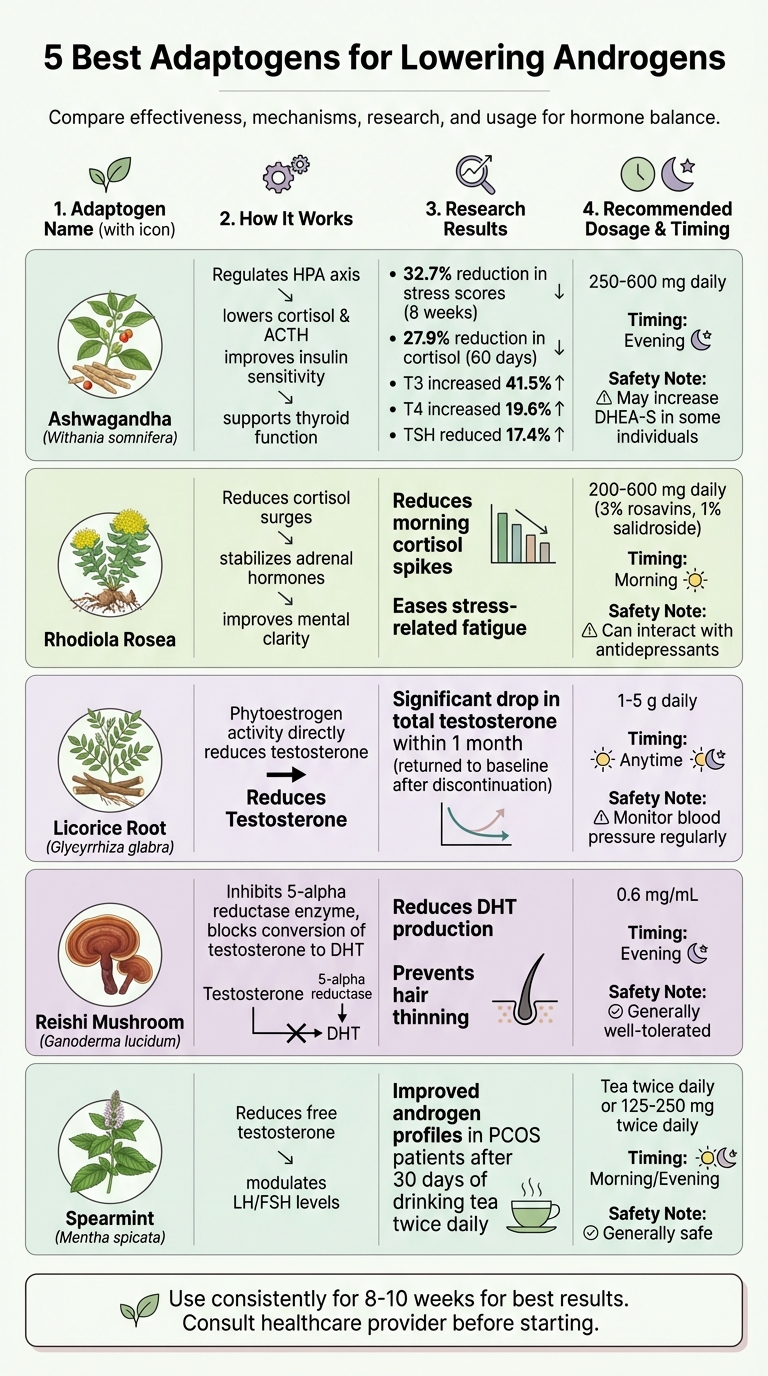
5 Best Adaptogens for Lowering Androgens: Mechanisms, Dosages, and Research Results
When it comes to balancing hormones, not all adaptogens work in the same way. Some focus on managing stress and cortisol levels, while others directly influence hormones like testosterone. Let’s take a closer look at some of the most effective adaptogens and their unique roles in supporting hormonal health.
Ashwagandha: Balancing Cortisol and Hormones
Ashwagandha is one of the most studied adaptogens for hormonal health. It helps regulate the hypothalamic-pituitary-adrenal (HPA) axis, reducing cortisol levels and preventing stress-induced increases in adrenal hormones like DHEA-S. Its ability to adapt to the body’s needs allows it to help normalize hormone levels.
Clinical research highlights its benefits for stress and hormone regulation. A double-blind, randomized, placebo-controlled study conducted in Pune, India, in January 2017 examined the effects of KSM-66 Ashwagandha root extract on 52 participants experiencing chronic stress. Over eight weeks, participants taking 300 mg of the extract twice daily saw a 32.7% reduction in Perceived Stress Scale scores compared to the placebo group. They also experienced significant decreases in serum cortisol and food cravings. Other studies have reported cortisol reductions ranging from 23% to 50%.
Ashwagandha also plays a role in improving insulin sensitivity, which is crucial for women with PCOS, as high insulin levels can lead to excess androgen production. Additionally, it supports thyroid function. In patients with mild hypothyroidism, a daily dose of 600 mg for eight weeks led to increases in T3 by 41.5%, T4 by 19.6%, and a reduction in TSH by 17.4%. Research-backed dosages typically range from 250 mg to 600 mg daily of a standardized root extract.
Rhodiola Rosea: Stabilizing Adrenal Hormones
Rhodiola Rosea is another powerful adaptogen that supports adrenal function by reducing cortisol surges, particularly in the morning. By evening out cortisol levels throughout the day, it helps prevent the cycle of elevated adrenal androgens.
This adaptogen is also known for easing stress-related fatigue and improving mental clarity. For these benefits, a daily dose of 200 mg to 600 mg of a standardized extract containing 3% rosavins and 1% salidroside is recommended. Unlike stimulants, Rhodiola enhances focus and energy without causing dependence or jitteriness.
Licorice Root: Targeting Androgens Directly
Unlike Ashwagandha and Rhodiola, which primarily work through cortisol regulation, licorice root directly reduces androgen levels. Its phytoestrogen properties help lower testosterone, making it particularly effective for addressing symptoms of hyperandrogenism like cystic acne, hirsutism (excess hair growth), and hair thinning.
Licorice root is often paired with peony to enhance its benefits for managing PCOS symptoms. Its ability to directly reduce androgen levels makes it a valuable option for those dealing with hormone-driven conditions.
These adaptogens each bring unique strengths to the table, offering targeted support for hormonal balance depending on individual needs.
sbb-itb-6dba428
Adding Adaptogens to Your Daily Routine
Choosing the Right Adaptogen
The first step in incorporating adaptogens is picking one that aligns with your specific symptoms. For example, if you're experiencing high testosterone or DHT levels, which can manifest as cystic acne, excess facial hair, or hair thinning, consider Reishi or Licorice Root. These adaptogens are known to target androgen production effectively. On the other hand, if your main concern is stress-related hormone spikes, Ashwagandha or Rhodiola may be better options as they help regulate cortisol and support adrenal function.
It’s best to start with one adaptogen at the lowest recommended dose. This approach allows you to observe how your body reacts before adding anything else. Since adaptogens typically take at least two weeks to show noticeable effects, give yourself time to monitor changes. Timing is also important - energizing adaptogens like Rhodiola are most effective in the morning, while calming ones like Ashwagandha are better suited for evening use to promote relaxation and restful sleep.
The form of the adaptogen you choose should match your lifestyle. Capsules are ideal for precise dosing and convenience, especially if you're busy. Tinctures are fast-absorbing and a good alternative for those who prefer to avoid capsules. Powders can be easily added to smoothies or meals, making them suitable for long-term use. To ensure quality and potency, look for products with United States Pharmacopeia (USP) or Good Manufacturing Practice (GMP) certifications, as supplements are not FDA-regulated.
Dosage Guidelines and Safety Considerations
Once you've chosen an adaptogen, understanding the correct dosage and safety measures is crucial.
| Adaptogen | Recommended Dosage | Timing | Primary Safety Note |
|---|---|---|---|
| Ashwagandha | 250–600 mg daily | Evening | May increase DHEA-S in some individuals |
| Rhodiola Rosea | 200–600 mg daily | Morning | Can interact with antidepressants |
| Licorice Root | 1–5 g daily | Anytime | Monitor blood pressure regularly |
| Reishi Mushroom | 0.6 mg/mL | Evening | Generally well-tolerated |
| Holy Basil | 125–250 mg twice daily | Morning/Evening | Avoid if pregnant or trying to conceive |
It’s recommended to use adaptogens for no more than six months at a time, as prolonged use can lead to reduced effectiveness. Many practitioners advise cycling them - using adaptogens for six weeks, followed by a break before restarting.
During the initial weeks, be on the lookout for potential side effects such as digestive discomfort, headaches, or sleep disturbances as your body adjusts. If you have autoimmune conditions, diabetes, hypertension, or are preparing for surgery, consult your healthcare provider before starting adaptogens. They can interact with medications and potentially impact blood pressure, blood sugar, or thyroid function.
"I tell patients not to go and take just any herbs and supplements, because they may interact with your medication. Your body's reaction to those things may do more harm than good." - Dana Ellis Hunnes, PhD, MPH, RD, UCLA Health
By following these guidelines, you can safely incorporate adaptogens into your broader plan for managing PCOS symptoms.
Using Adaptogens with PCOS Treatments
When combined with medical care, adaptogens can play a supportive role in balancing hormones for those managing PCOS. They are not a replacement for medical treatments but can complement them. For instance, if you're taking medications like Metformin or hormonal therapies, adaptogens can help stabilize the stress response, which often exacerbates PCOS symptoms.
Oana Health provides prescription-based treatments designed to address PCOS-related issues such as unwanted facial hair, hair thinning, acne, and insulin resistance. Their licensed professionals can guide you on integrating adaptogens into your treatment plan. Since adaptogens influence hormone pathways, coordinating their use with your prescriptions is essential to avoid any potential interactions.
Before introducing adaptogens, identify your specific PCOS type - whether it's driven by insulin resistance, adrenal issues, or inflammation. Begin with core lifestyle changes and medical treatments, then introduce one targeted adaptogen. This step-by-step approach allows you to track progress and make adjustments as needed. With the right guidance, adaptogens can help address the stress factor that often contributes to hormonal imbalances, enhancing your overall results.
Conclusion
Adaptogens present a natural way to tackle stress-related hormonal imbalances, offering support by regulating the HPA axis and lowering cortisol levels. These plant-based compounds work across various body systems to help restore balance. For instance, a 60-day study revealed that taking 300 mg of Ashwagandha root extract twice daily reduced stress symptoms by 64.2% and decreased serum cortisol levels. This connection is especially relevant for women with PCOS, as 60% to 80% of those affected experience hyperandrogenism. These findings align with the mechanisms explored earlier in this article.
What makes adaptogens unique is their ability to restore balance without overstimulating or suppressing hormones. Some, like Licorice Root and Reishi, even have specific effects on androgen activity. That said, adaptogens work best when incorporated as part of a broader health strategy rather than being relied on as a standalone remedy.
"Adaptogens will help, but you have to take care of that pesky life stress." - Dr. Jolene Brighten, Naturopathic Endocrinologist
To make the most of these benefits, Oana Health provides prescription-based PCOS treatments and expert guidance on integrating adaptogens safely alongside therapies like Metformin or Spironolactone. This professional support is critical, especially considering that up to 70% of PCOS cases go undiagnosed.
It’s important to note that adaptogens typically require consistent use for 2 to 3 months before noticeable improvements occur. When combined with lifestyle adjustments and medical advice, they can play a key role in addressing stress-induced hormonal imbalances, offering a well-rounded approach to health management.
FAQs
How can adaptogens help lower androgen levels naturally?
Adaptogens might play a role in lowering androgen levels by helping the body handle stress and encouraging hormonal balance. When stress becomes chronic, cortisol - a key stress hormone - can rise, throwing other hormones, like androgens, out of sync. By improving the body’s stress response, adaptogens may help bring cortisol levels down, which could indirectly support more balanced androgen levels.
These natural substances are known for their ability to help the body adapt to stress and maintain balance. Certain adaptogens, such as nettle, along with nutrients like zinc, have shown promise in regulating hormones and reducing excessive androgen activity. This makes them a natural and practical option for addressing hormonal imbalances, especially in conditions like PCOS.
Can you use adaptogens alongside PCOS medications safely?
It’s generally safe to use adaptogens alongside PCOS medications, but you should always check with a healthcare provider first. Certain adaptogens, such as licorice root, can influence hormone levels or interact with specific medications. A medical professional can help determine if they fit well with your treatment plan and overall health.
Seeking expert advice ensures you avoid unwanted side effects or interactions.
How long should I use adaptogens to see results?
Adaptogens are generally safe for extended use, but it’s wise to take a short break every 4 to 6 months. Giving your body a few weeks off can help avoid building a tolerance and allows it to reset. Maintaining a consistent routine is important, as it gives your body the chance to respond effectively over time.