
Medications That Interact with Oral Minoxidil
Oral minoxidil for hair loss, originally a blood pressure medication, is now used off-label. However, it interacts with numerous medications, affecting blood pressure, fluid retention, and overall safety compared to topical versions. Key drug interaction categories include:
- Diuretics: May amplify blood pressure drops and cause fluid retention issues.
- Beta Blockers: Help manage reflex tachycardia but require careful monitoring.
- Antidepressants: Can lower blood pressure further, increasing dizziness risks.
- Corticosteroids: Exacerbate fluid retention, counteracting minoxidil's effects.
- Immunosuppressants: Promote fluid buildup, heightening strain on the heart.
- Guanethidine: Increases the risk of severe blood pressure drops.
- Alcohol: Amplifies blood pressure-lowering effects, causing dizziness.
- Aspirin: Interferes with minoxidil's effectiveness and promotes fluid retention.
- Midodrine: Opposes minoxidil's effects; used only in specific cases.
- Tretinoin: Enhances absorption, increasing the risk of systemic effects.
Takeaway: Always discuss your medications, including OTC drugs and supplements, with your doctor before starting oral minoxidil. Regular monitoring of weight, heart rate, and blood pressure is essential to ensure safe use.
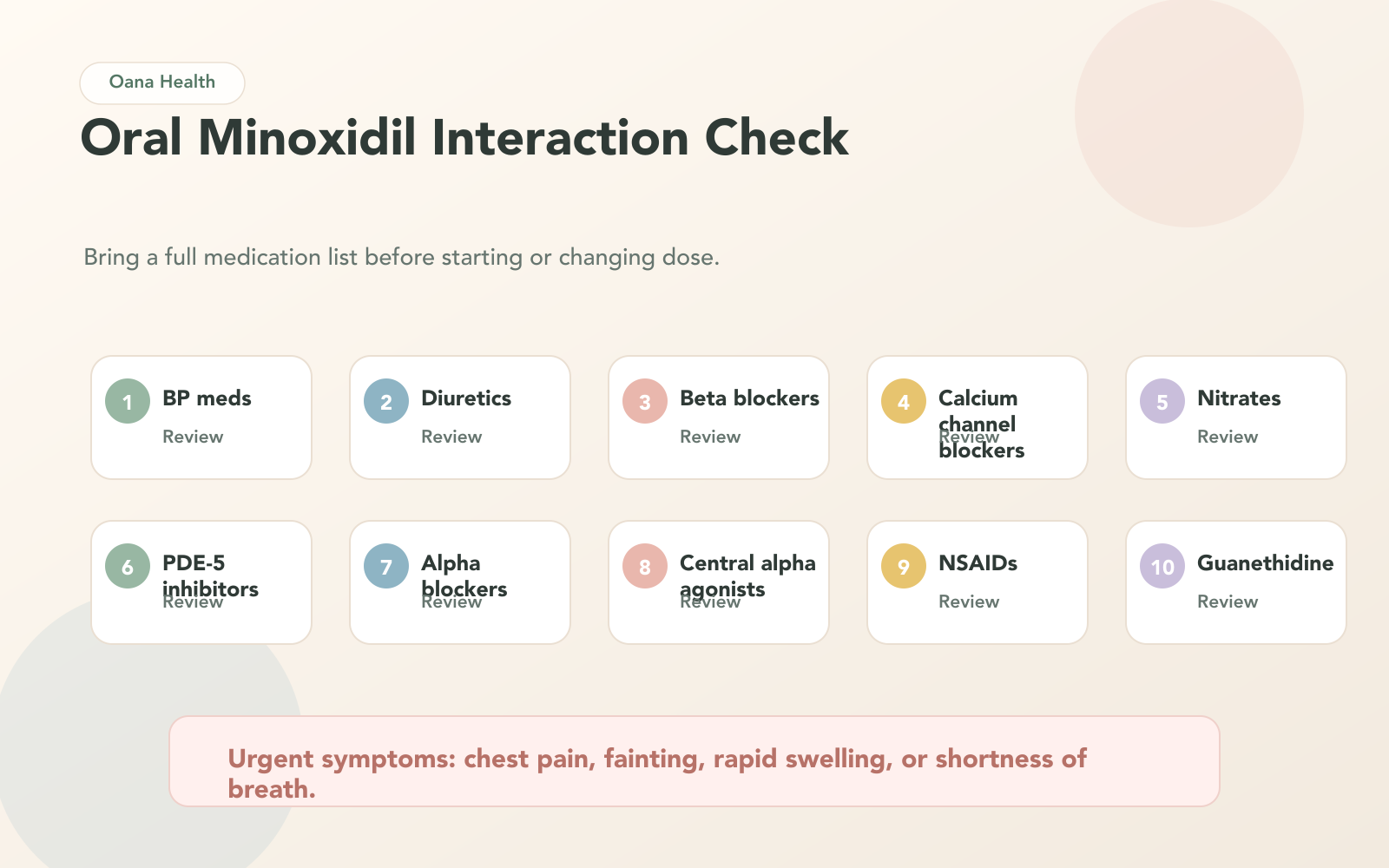
10 Key Drug Interactions with Oral Minoxidil and Safety Guidelines
1. Diuretics
Potential for Blood Pressure Changes
Diuretics work alongside oral minoxidil to lower blood pressure by helping the body get rid of excess salt and water. This combination can sometimes lead to a noticeable drop in blood pressure, which might cause dizziness, lightheadedness, or even fainting. In cases of malignant hypertension, hospitalization may be necessary when starting treatment to monitor for rapid or severe blood pressure drops.
Minoxidil doesn’t just influence blood pressure - it can also impact how the body handles fluid.
Impact on Fluid Retention or Swelling
Oral vs. topical minoxidil can both lead to salt and water retention, potentially causing swelling in the feet and ankles. If not managed properly, this could escalate to congestive heart failure in severe cases. To counteract these effects, diuretics are often prescribed. Loop diuretics like furosemide (Lasix) are particularly effective at addressing minoxidil-induced salt retention. Without proper fluid management, complications such as pericardial effusion have been reported in about 3% of patients not on dialysis.
"Minoxidil tablets must usually be administered with a diuretic to prevent fluid retention and possible congestive heart failure; a high ceiling (loop) diuretic is almost always required." - Drugs.com
Daily monitoring becomes crucial to avoid these risks.
Safety Considerations for Combined Usage
Keeping track of your daily weight, heart rate, and any swelling in the feet, ankles, or lower legs is essential. A sudden weight gain of 5 lb or a heart rate increase of 20 bpm above your normal range should be reported immediately. Missing a prescribed diuretic can lead to serious issues, so it’s critical to stick to your treatment plan carefully.
sbb-itb-6dba428
2. Beta Blockers
Potential for Blood Pressure Changes
Beta blockers, much like diuretics, play a role in managing blood pressure when paired with oral minoxidil. However, they also have a unique function: controlling reflex tachycardia. While minoxidil works by relaxing blood vessel walls to lower blood pressure, beta blockers reduce the heart's adrenaline response. Together, they can significantly lower blood pressure, making this combination an effective option for treating resistant hypertension - provided it's carefully monitored.
One of the standout roles of beta blockers is their ability to manage reflex tachycardia. Minoxidil's blood vessel dilation can trigger the heart to beat faster as a compensatory response. Beta blockers, such as metoprolol or atenolol, help stabilize the heart rate, reducing strain on the heart.
"Minoxidil is associated with sodium and water retention and reflex tachycardia; use with a diuretic and beta blocker." - 2017 ACC/AHA Hypertension Guidelines
In clinical settings, a triple therapy approach is often used: oral minoxidil to lower blood pressure, a beta blocker to control heart rate, and a diuretic to address fluid retention. This combination underscores the importance of careful planning and monitoring when using these medications together.
Safety Considerations for Combined Usage
Starting beta blockers before introducing minoxidil is a common safety strategy. This approach prevents the initial heart rate spike that can occur when minoxidil begins to take effect. Metoprolol, for example, is typically prescribed in doses ranging from 50 to 200 mg daily to effectively manage heart rate.
It's crucial not to stop beta blockers abruptly while taking minoxidil, as this can lead to rebound hypertension and severe tachycardia. Additionally, standing up slowly from a sitting or lying position can help reduce dizziness or fainting. Keep an eye on your resting pulse, and if it increases by 20 bpm or more, consult your doctor immediately.
3. Antidepressants
Potential for Blood Pressure Changes
Antidepressants, like diuretics and beta blockers, can amplify the blood pressure–lowering effects of oral minoxidil, potentially leading to serious health risks. Medications such as bupropion (Wellbutrin), mirtazapine (Remeron), duloxetine (Cymbalta), escitalopram (Lexapro), and sertraline (Zoloft) are classified as CNS-active agents. These drugs are known to cause hypotensive effects, particularly during the early stages of treatment or when adjusting dosages.
When paired with minoxidil - a powerful vasodilator - these antidepressants can produce an additive effect, significantly lowering blood pressure. This combination heightens the risk of orthostatic hypotension, a condition where blood pressure drops sharply upon standing, causing dizziness, lightheadedness, or even fainting. The risk is especially pronounced during the first few weeks of combined use or during dose changes, making close monitoring essential.
Safety Considerations for Combined Usage
If you're using both antidepressants and oral minoxidil, daily monitoring of your resting pulse is critical. A pulse increase of 20 beats per minute or more should prompt immediate medical attention. Weight monitoring is equally important - an adult gaining 5 pounds or more (or a child gaining 2 pounds or more) may be experiencing fluid retention, which requires prompt evaluation.
To reduce the risk of falls or fainting, avoid standing up too quickly from a seated or lying position. Until you're familiar with how this medication combination affects you, refrain from driving or operating heavy machinery. Always consult your healthcare provider before starting or stopping antidepressants, as the highest risk for dangerous blood pressure interactions occurs during dose changes. These precautions highlight the importance of coordinated care and regular communication with your doctor.
4. Corticosteroids
Impact on Fluid Retention or Swelling
Oral minoxidil is already known to increase salt and water retention, and adding corticosteroids can make this effect even stronger. Corticosteroids promote sodium and water retention, which can reduce the blood pressure-lowering benefits of oral minoxidil. Since minoxidil activates the renin-angiotensin-aldosterone system - leading the body to retain more salt and water - introducing corticosteroids can further contribute to fluid buildup. The type of corticosteroid matters, too. Natural corticosteroids like hydrocortisone and cortisone generally have more mineralocorticoid activity compared to synthetic ones like dexamethasone or triamcinolone. However, all corticosteroids can affect blood pressure control if used for more than a week. This makes close monitoring essential when corticosteroids are prescribed for extended periods.
Safety Considerations for Combined Usage
Regular monitoring is crucial when combining corticosteroids with oral minoxidil. Keep an eye on your body weight and any signs of swelling. Daily weigh-ins are recommended, and you should contact your doctor if you notice a weight gain of 5 pounds or more. Swelling in areas like your hands, ankles, or feet can signal early fluid retention issues that need attention. Your healthcare provider may also monitor your blood pressure, electrolyte levels, and body weight on a regular basis, especially if corticosteroids are used for longer than a week. It’s important to continue both medications unless your doctor advises otherwise, as they may need to adjust your antihypertensive treatment to manage these effects.
5. Immunosuppressants (e.g., Cyclosporin)
Potential for Blood Pressure Changes
Immunosuppressants can interfere with oral minoxidil's ability to lower blood pressure by promoting sodium and fluid retention. When immunosuppressive therapy lasts longer than a week, this interaction becomes more concerning, as it may increase the strain on your heart and elevate blood pressure levels.
Impact on Fluid Retention or Swelling
Minoxidil already has the potential to cause sodium and water retention, and combining it with an immunosuppressant can make this issue worse. This heightened retention might lead to visible swelling in areas like the feet, ankles, or lower legs. In severe cases, it could even contribute to serious conditions like congestive heart failure or pulmonary edema. To counteract these risks, doctors often prescribe diuretics alongside oral minoxidil to help manage fluid buildup.
Effect on Hair Growth
Cyclosporin may enhance the hair growth effects of minoxidil, potentially intensifying hypertrichosis (excessive hair growth).
Safety Considerations for Combined Usage
Keep an eye on your weight daily and notify your doctor immediately if you gain 5 pounds or if your resting heart rate increases by 20 beats per minute. Your healthcare provider will also need to closely monitor your blood pressure, weight, and electrolyte levels during treatment. Never adjust the dosage of either medication on your own - your doctor may need to make specific changes to ensure your blood pressure stays within a safe range.
Potential Side Effects Of Combining Low Dose Viagra and Oral Minoxidil
6. Guanethidine
Guanethidine is a key medication to consider when assessing interactions, especially because of its strong influence on blood pressure regulation.
Potential for Blood Pressure Changes
When combined with oral minoxidil, guanethidine carries a substantial risk due to their combined hypotensive effects. This interaction can lead to severe orthostatic hypotension, a sudden drop in blood pressure when standing up, which may result in dizziness, fainting, or even falls.
"Combining Guanethidine with Minoxidil can cause profound orthostatic hypotension - a severe drop in blood pressure when you stand up, which can lead to fainting or falls." - Peter Daggett
Patients with malignant hypertension who are already using guanethidine face an even greater risk of sudden and extreme blood pressure decreases when minoxidil is added. In some cases, these rapid changes in blood pressure can trigger life-threatening events, such as a stroke or heart attack.
Safety Considerations for Combined Usage
To minimize risks, it’s recommended to stop guanethidine 1–3 weeks before starting oral minoxidil. This washout period ensures the medication is cleared from the body, reducing the chance of dangerous drops in blood pressure.
If stopping guanethidine beforehand isn’t feasible, starting minoxidil should only be done in a hospital setting under strict medical supervision. In these cases, healthcare professionals will monitor blood pressure closely and advise caution when transitioning from sitting to standing to prevent orthostatic effects.
7. Alcohol
Potential for Blood Pressure Changes
Alcohol and oral minoxidil can interact in a way that enhances their blood pressure–lowering effects. Both substances work as vasodilators, meaning they relax and widen blood vessels. When combined, this can lead to an excessive drop in blood pressure, potentially causing hypotension.
"Minoxidil and ethanol (alcohol) may have additive effects in lowering your blood pressure. You may experience headache, dizziness, lightheadedness, fainting, and/or changes in pulse or heart rate." – Drugs.com
Symptoms linked to this interaction include dizziness, lightheadedness, headaches, fainting, and changes in pulse. These effects are most noticeable when starting minoxidil, increasing the dose, or resuming treatment after a break. Additionally, alcohol’s vasodilating properties and its impact on the central nervous system can worsen orthostatic hypotension - a sudden drop in blood pressure when standing up. This means combining the two requires extra caution and lifestyle adjustments.
Being aware of how alcohol affects your body while taking oral minoxidil can help minimize risks.
Safety Considerations for Combined Usage
If you decide to drink alcohol while on oral minoxidil, take steps to reduce potential side effects. For example, rise slowly from sitting or lying down to avoid dizziness or fainting. Also, steer clear of driving or using heavy machinery until you know how this combination affects you.
Keep an eye on your vital signs and consult your doctor if you notice significant changes. Some experts recommend avoiding alcohol altogether when taking vasodilating medications like minoxidil. It’s important to discuss your alcohol consumption with your healthcare provider to determine what’s safe for your situation, especially if you experience ongoing symptoms.
8. Aspirin
Potential for Blood Pressure Changes
Aspirin, a type of NSAID, can interfere with minoxidil's ability to lower blood pressure by blocking prostaglandin production. This interaction might reduce the effectiveness of minoxidil.
"Acetylsalicylic acid may decrease the antihypertensive activities of Minoxidil." – DrugBank
The situation becomes trickier when aspirin is paired with certain opioid-containing medications. These combinations can lead to an exaggerated drop in blood pressure, potentially causing dizziness or fainting. This underscores the importance of discussing all medications you’re taking with your healthcare provider.
Impact on Fluid Retention or Swelling
Aspirin can also counteract minoxidil's benefits by promoting fluid retention. NSAIDs like aspirin cause the body to retain sodium and water, which works against the fluid-reducing effects of minoxidil and its accompanying diuretics. If you notice new or worsening swelling or gain more than 5 pounds unexpectedly, it could be a sign of this interaction.
Effect on Hair Growth (Negative)
Aspirin may also interfere with minoxidil's role in promoting hair growth. It inhibits a key enzyme, sulfotransferase, in hair follicles, which is necessary for converting minoxidil into its active form, minoxidil sulfate. This means that even oral minoxidil treatments for hair loss could be less effective if aspirin is part of your routine.
"Minoxidil and Aspirin Don't Mix" – Nicole E. Rogers, MD, FISHRS, Hair Transplant Forum International
Safety Considerations for Combined Usage
Considering aspirin's effects on blood pressure, fluid retention, and hair growth, careful management is essential when using both medications. For pain relief, acetaminophen (Tylenol) is a safer alternative as it doesn’t interfere with minoxidil’s actions. Always consult your healthcare provider before making changes to your aspirin regimen. They may need to adjust your minoxidil dosage or monitor you more closely. Additionally, avoid combining aspirin with alcohol to lower the risk of gastrointestinal bleeding.
9. Midodrine
Potential for Blood Pressure Changes
Midodrine and minoxidil have opposite effects on blood pressure. Minoxidil works by relaxing blood vessels, which lowers blood pressure, while midodrine, an alpha-adrenergic agonist, increases blood pressure by narrowing blood vessels. This creates a direct conflict in how the two drugs affect the cardiovascular system.
Typically, these medications aren't used together in standard treatment plans. However, midodrine can be a critical option in emergencies where minoxidil causes dangerously low blood pressure or severe circulatory shock. In such cases, midodrine can stabilize blood pressure and potentially shorten ICU stays by reducing the need for prolonged IV vasopressor therapy.
"The use of minoxidil with other medications, such as midodrine, an alpha-adrenergic agonist, can help reduce ICU stay by shortening IV vasopressor usage in cases of severe circulatory shock." - Dr. Oracle Medical Advisory Board
Safety Considerations for Combined Usage
Because of their opposing effects on the cardiovascular system, combining these medications should only happen under strict medical supervision in a controlled clinical environment. If you're on minoxidil and have a condition that might require midodrine, it's crucial to inform your healthcare provider, especially if you have any underlying heart or blood pressure issues.
Additionally, since minoxidil can lead to significant sodium and water retention, it’s often prescribed alongside a diuretic and beta-blocker. These additional medications help manage side effects like swelling and a rapid heart rate.
10. Tretinoin
Tretinoin plays an interesting role when paired with minoxidil, mainly because of how it influences skin absorption.
Effect on Hair Growth
Tretinoin can improve the effectiveness of minoxidil by increasing the activity of follicular sulfotransferase enzymes. These enzymes are responsible for converting minoxidil into its active form, minoxidil sulfate, which is essential for promoting hair growth. A clinical study found that 43% of individuals who initially didn’t respond to minoxidil started seeing results within just five days of using topical tretinoin. Additionally, combining 5% minoxidil with 0.01% tretinoin once daily produced similar outcomes to using 5% minoxidil twice daily.
"Topical tretinoin application influences the expression of follicular sulfotransferase. Of clinical significance, in our cohort, 43% of subjects initially predicted to be nonresponders to minoxidil were converted to responders following 5 days of topical tretinoin application." - Sharma et al.
That said, this increased absorption also raises the possibility of heightened systemic effects from minoxidil.
Potential for Blood Pressure Changes
Tretinoin doesn’t directly affect blood pressure, but it does make the skin more permeable. This increased permeability can boost the absorption of topical minoxidil by up to 300%, potentially leading to a drop in blood pressure when used alongside oral minoxidil. Symptoms like dizziness, fainting, headaches, or changes in heart rate may occur as a result.
Impact on Fluid Retention or Swelling
The enhanced absorption caused by tretinoin can also intensify minoxidil’s tendency to cause sodium and water retention. This may lead to noticeable swelling, especially in areas like the hands or feet. If you experience sudden weight gain of 5 pounds or more, it could signal significant fluid retention, which requires immediate medical attention.
Safety Considerations for Combined Usage
If you’re taking oral minoxidil, it’s crucial to consult your doctor before adding topical tretinoin to your routine, especially if you’re also using topical minoxidil. Avoid applying tretinoin to damaged or irritated skin (such as sunburned or eczema-affected areas) to minimize the risk of excessive absorption. Keep an eye on your resting heart rate, and reach out to your healthcare provider if you notice any significant changes. Always discuss new treatments with your doctor to ensure they’re safe and compatible with your current regimen.
When to Talk to Your Doctor
Before starting oral minoxidil, it’s crucial to have a thorough conversation with your doctor. Discuss your full medical history and all medications you’re currently taking. Why? Because oral minoxidil has 195 known drug interactions - including 5 classified as major and 187 as moderate. This step helps identify and manage potential risks before beginning treatment.
Be ready to share your complete list of medications, including prescriptions, over-the-counter drugs, vitamins, and herbal supplements. Pay particular attention to medications like blood pressure drugs, antidepressants (such as Wellbutrin or Zoloft), NSAIDs like ibuprofen or naproxen, and supplements like potassium, CoQ10, garlic, or licorice root. Even everyday items like cold remedies with decongestants or antacids can interact with oral minoxidil.
If you have a history of heart disease, kidney disease, stroke, or pheochromocytoma, make sure to disclose this to your doctor. Additionally, let them know if you’re taking guanethidine, as adjustments to your treatment plan might be necessary. Lifestyle factors like alcohol or tobacco use are also important to mention, as alcohol can amplify minoxidil’s blood pressure-lowering effects.
For a more tailored approach, telehealth platforms like Oana Health can provide personalized care. They review your health profile and monitor for side effects, ensuring safe and effective use of oral minoxidil.
"In deciding to use a medicine, the risks of taking the medicine must be weighed against the good it will do. This is a decision you and your doctor will make." - Mayo Clinic
Conclusion
Oral minoxidil has proven to be an effective treatment for hair loss, but it comes with 195 potential drug interactions, making careful medication management a necessity.
The key to safe minoxidil use lies in open communication with your healthcare provider and thorough oversight of your medications. Be sure to share a complete list of everything you take - including herbal supplements like garlic or licorice root - and disclose any history of heart disease, kidney issues, or other medical conditions. This helps your provider identify risky combinations, adjust dosages, or suggest safer alternatives, such as opting for acetaminophen instead of NSAIDs for pain relief.
Ongoing monitoring is equally important. Simple daily checks, like tracking your resting pulse and weight, can help catch early warning signs of complications. For instance, contact your doctor if you notice your pulse increasing by 20 bpm or if you gain 5 pounds unexpectedly. These small steps play a big role in ensuring your treatment remains both safe and effective.
For added convenience and personalized care, telehealth platforms like Oana Health provide thorough medication reviews and continuous monitoring from licensed professionals. They can assess your health profile, flag any contraindications, and tailor your treatment plan - all without requiring you to leave your home.
Staying on top of drug interactions takes effort, but with professional guidance and tools like telehealth services, you can confidently manage your treatment and prioritize your safety.
FAQs
What warning signs mean I should stop oral minoxidil and call my doctor?
If you notice symptoms like chest pain, chest tightness, shortness of breath, a rapid or irregular heartbeat, or warning signs of serious heart issues such as pericardial effusion or tamponade, stop taking oral minoxidil right away and contact your doctor. These could signal severe side effects that need immediate medical care.
Which OTC meds and supplements are most likely to interact with oral minoxidil?
When taking oral minoxidil, it’s important to be aware of potential interactions with over-the-counter (OTC) medications and supplements. For instance, NSAIDs like ibuprofen might reduce the effectiveness of minoxidil. Additionally, blood pressure medications, including beta-blockers and calcium channel blockers, could amplify its blood pressure-lowering effects, potentially leading to complications. Always make sure to consult your doctor before combining oral minoxidil with any other medications or supplements.
Can I use topical minoxidil or tretinoin while taking oral minoxidil?
Using topical minoxidil or tretinoin along with oral minoxidil is typically considered safe. However, it’s important to consult your doctor beforehand. This allows them to evaluate any potential interactions or issues with absorption. Always stick to your doctor’s recommendations to use these treatments safely and effectively.