
Ozempic vs. Wegovy vs. Mounjaro: Side Effects in PCOS
Managing PCOS symptoms? Medications like Ozempic, Wegovy, and Mounjaro are increasingly used to address insulin resistance, weight loss, and menstrual irregularities. But side effects vary, and understanding them is key to choosing the right treatment.
- Ozempic: Common side effects include nausea (16%-20%), diarrhea (8%-9%), and vomiting (5%-9%). It can also improve ovulation but may affect oral contraceptive absorption.
- Wegovy: Higher doses lead to more intense side effects, like nausea (44%), diarrhea (30%), and vomiting (24%).
- Mounjaro: Fewer side effects compared to Wegovy, with nausea (12%-28%) and diarrhea (12%-23%) depending on the dose.
Quick Comparison
| Side Effect | Ozempic (0.5 mg) | Wegovy (2.4 mg) | Mounjaro (5 mg) |
|---|---|---|---|
| Nausea | 16%-20% | 44% | 12%-28% |
| Diarrhea | 8%-9% | 30% | 12%-23% |
| Vomiting | 5%-9% | 24% | 5% |
| Constipation | 5% | 24% | 6% |
| Abdominal Pain | 5%-7% | 20% | 6% |
Key Takeaway: Mounjaro tends to cause fewer side effects, while Wegovy has the highest rates. All three drugs share risks like thyroid tumor warnings and pancreatitis but offer benefits for managing PCOS symptoms with Metformin and GLP-1 medications. Always consult your provider to tailor treatment to your needs.
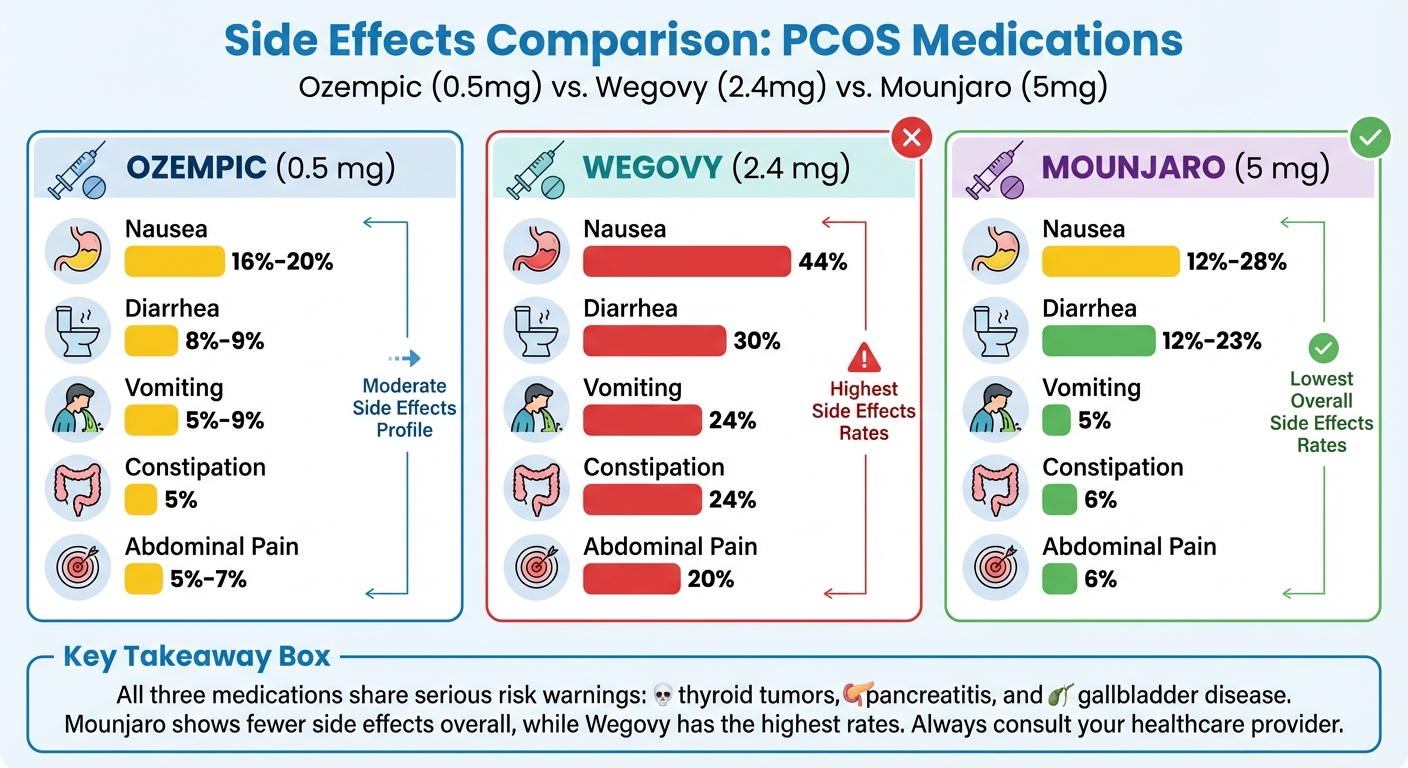
Ozempic vs Wegovy vs Mounjaro Side Effects Comparison for PCOS Treatment
Blum Center Program: GLP-1 Side Effects - Where Do They Come From and How Can You Manage Them?
Ozempic Side Effects in PCOS Patients
Ozempic, often prescribed off-label for managing insulin resistance in PCOS with pharmacotherapy and aiding weight loss, has shown promising results. Around 80% of patients with a BMI over 30 report improved period regularity while using the medication.
The side effects for PCOS patients are generally similar to those observed in diabetes trials. However, because many women with PCOS require higher doses to address severe insulin resistance, the side effects can be more intense.
Common Side Effects
Gastrointestinal issues are the most frequently reported side effects, especially during the initial weeks or after increasing the dose. Ozempic slows down how quickly the stomach empties, which helps with feeling full but can also cause discomfort. Dr. Samina Afreen from UVA Health explains that when food stays in the stomach too long, it can lead to nausea.
| Side Effect | Frequency (0.5 mg) | Frequency (1 mg) |
|---|---|---|
| Nausea | 16% | 20% |
| Diarrhea | 8% | 9% |
| Vomiting | 5% | 9% |
| Abdominal Pain | 7% | 5% |
| Constipation | 5% | 3% |
Treatment usually begins at 0.25 mg weekly for at least a month before increasing the dose. Most patients find that nausea improves after 6 to 10 weeks as their body adjusts. To ease discomfort, try eating smaller, bland meals - like toast, rice, or crackers - and steer clear of greasy or spicy foods. Staying hydrated by drinking 91–125 ounces of water daily can also help with nausea and support kidney health.
Other common complaints include injection site reactions, such as redness or irritation, as well as fatigue, headaches, and heartburn, which occur in about 2% of users. Rotating injection sites - between the abdomen, thigh, or upper arm - can minimize skin irritation. Some users also report sulfur-scented burps or, with rapid weight loss, sagging skin, sometimes referred to as "Ozempic face".
For PCOS patients, one unique consideration is that Ozempic can improve ovulation by increasing insulin sensitivity. This has led to cases of unplanned pregnancies, often referred to as "Ozempic babies", in women who previously struggled with infertility. Additionally, Ozempic may slow the absorption of oral contraceptives, so using backup birth control is recommended.
Rare or Serious Side Effects
While gastrointestinal side effects are common and typically manageable, some adverse events require immediate attention.
Ozempic carries a boxed warning about the risk of thyroid C-cell tumors. It should not be used by individuals with a personal or family history of medullary thyroid carcinoma (MTC) or Multiple Endocrine Neoplasia syndrome type 2 (MEN 2). Symptoms like neck swelling, lumps, hoarseness, or difficulty swallowing should be reported immediately.
Pancreatitis, though rare, is another serious concern. Seek emergency care if you experience severe abdominal pain that radiates to your back, especially if accompanied by vomiting. Other risks include gallbladder disease and acute kidney injury, which should be closely monitored.
PCOS patients face a threefold higher risk of developing type 2 diabetes. If Ozempic is combined with insulin or sulfonylureas, watch for signs of hypoglycemia - such as shakiness, sweating, or confusion - even though Ozempic alone rarely causes low blood sugar.
Recent studies have linked semaglutide use in overweight individuals to a more than sevenfold increased risk of nonarteritic anterior ischemic optic neuropathy (NAION), a condition that can lead to sudden vision loss. Patients with diabetic retinopathy should be monitored for any vision changes.
About 1% of users develop antibodies against Ozempic, which can reduce its effectiveness over time. In late 2023, the FDA updated Ozempic's label to highlight the risk of ileus (intestinal blockage) and noted reports of gastroparesis, where the stomach muscles become too weak to move food properly.
For PCOS patients with a history of eating disorders, close monitoring is essential. The appetite-suppressing effects of Ozempic may lead to skipped meals and malnutrition if not managed carefully.
Understanding these risks helps set the stage for comparing how Wegovy and other medications measure up in managing PCOS symptoms.
Wegovy Side Effects in PCOS Patients
Wegovy, like Ozempic, offers weight loss benefits for individuals with PCOS. However, its higher dosage often leads to more intense gastrointestinal side effects. This medication uses semaglutide and is FDA-approved for managing chronic weight issues at doses up to 2.4 mg per week. For PCOS patients, the increased dosage explains the higher occurrence and severity of side effects, especially those affecting the digestive system.
Common Side Effects
Gastrointestinal issues are the most commonly reported side effects, particularly during the initial phase when doses are gradually increased. At the maximum dose of 2.4 mg, 44% of patients report nausea - almost three times the rate seen with Ozempic. Other frequently reported issues include:
- Diarrhea (30%)
- Vomiting (24%)
- Constipation (24%)
- Abdominal pain (20%)
Additional side effects include headaches (14%), fatigue (11%), and dizziness (8%).
These symptoms are usually temporary and often improve as the body adjusts to the medication. Starting with a lower semaglutide dose (0.25 mg) and gradually increasing it every four weeks can help reduce these effects. Eating smaller, low-fat meals and avoiding greasy or spicy foods can also ease nausea. Staying well-hydrated is crucial, particularly if vomiting or diarrhea occurs, to avoid kidney-related complications.
Injection site reactions such as redness or swelling can often be managed by rotating the injection site. Some patients have also reported rapid weight loss leading to facial volume loss and temporary hair thinning. While these effects are generally short-lived, it’s important to be aware of more serious risks.
Rare or Serious Side Effects
Beyond the common side effects, Wegovy carries rare but serious risks. A boxed warning highlights the potential for thyroid C-cell tumors. This medication should not be used by individuals with a personal or family history of medullary thyroid carcinoma (MTC) or Multiple Endocrine Neoplasia syndrome type 2 (MEN 2). Symptoms such as neck lumps, swelling, hoarseness, or difficulty swallowing should be reported to a healthcare provider immediately.
Pancreatitis, though rare, is another serious risk. Seek urgent medical attention if you experience severe abdominal pain that radiates to your back, especially if accompanied by persistent vomiting. Gallbladder issues have also been observed; in the SELECT trial, 2.8% of patients experienced gallbladder problems compared to 2.3% in the placebo group. Rapid weight loss can further increase this risk.
Clinical trials have shown that Wegovy may raise resting heart rate by an average of 1 to 4 beats per minute, with 26% of participants experiencing an increase of 20 beats per minute or more. Other serious side effects include potential kidney problems, vision changes (possibly linked to nonarteritic anterior ischemic optic neuropathy), and mood changes, including suicidal thoughts. Around 7% of participants in clinical trials discontinued Wegovy due to severe side effects.
Severe low blood sugar was reported in 1.5% or fewer participants during clinical trials. Additionally, about 1% of users may develop antibodies against the medication, which could reduce its effectiveness over time.
Mounjaro Side Effects in PCOS Patients
Mounjaro (tirzepatide) stands out from medications like Ozempic and Wegovy due to its dual action on GLP-1 and GIP receptors. This mechanism may help reduce the severity of digestive side effects compared to drugs that target only GLP-1 receptors. For PCOS patients managing insulin resistance and weight, this could mean a treatment option that’s potentially easier to tolerate. Let’s take a closer look at the side effects associated with Mounjaro.
Common Side Effects
Digestive issues are the most frequently reported side effects. Clinical trials showed that 12% of patients on the 5 mg dose experienced nausea, which is much lower than the 44% reported with Wegovy. Diarrhea was also reported by 12% of patients at this dose. However, at the highest dose of 15 mg, nausea increased to 28%, and diarrhea rose to 23%. Other common side effects include:
- Vomiting (5%)
- Constipation (6%)
- Abdominal pain (6%)
- Indigestion (8%)
These effects are often temporary and tend to occur during dose adjustments before subsiding.
"Patients do report fewer side effects with tirzepatide, though this is variable, and I have had patients with no side effects on both medications." – Mir Ali, MD, Medical Director, MemorialCare Surgical Weight Loss Center
One important note: Mounjaro slows gastric emptying, which can reduce the effectiveness of Metformin or birth control. To avoid unintended pregnancy, consider using a backup method - like condoms - or switching to a non-oral option (e.g., patch, IUD, or vaginal ring) for at least four weeks after starting Mounjaro or increasing your dose.
Many patients have shared that Mounjaro helps reduce "food noise" and better regulates hunger, leading to a more balanced approach to eating. To ease digestive discomfort, try eating smaller, bland meals and staying hydrated. Rotating injection sites can also help reduce localized redness, which occurs in about 3.2% of users.
While most side effects are manageable, there are some rare but serious risks to be aware of.
Rare or Serious Side Effects
Mounjaro includes an FDA boxed warning about the risk of thyroid C-cell tumors. It is not recommended for individuals with a personal or family history of medullary thyroid carcinoma (MTC) or Multiple Endocrine Neoplasia syndrome type 2 (MEN 2). If you notice a lump in your neck, persistent hoarseness, or difficulty swallowing, contact your healthcare provider immediately.
Acute pancreatitis has been observed, occurring in 0.23 cases per 100 patient-years during clinical trials. Symptoms like severe abdominal pain radiating to the back, especially if paired with ongoing vomiting, require immediate medical attention and discontinuation of Mounjaro. Gallbladder disease was reported in 0.6% of patients in placebo-controlled studies, and severe digestive reactions could lead to dehydration or acute kidney injury. Staying well-hydrated is crucial.
Other concerns include a slight increase in heart rate, averaging 2 to 4 beats per minute. The risk of hypoglycemia rises when Mounjaro is combined with insulin or sulfonylureas. Additionally, because it slows gastric emptying, it’s essential to inform your doctor about Mounjaro use before any surgical procedure, as this could affect anesthesia-related risks.
sbb-itb-6dba428
Side Effect Comparison: Ozempic vs. Wegovy vs. Mounjaro
When comparing these medications, Mounjaro appears to have the lowest reported side effects, while Wegovy shows the highest rates. The table below highlights the key differences in side effect profiles, offering insights to help guide choosing the right PCOS weight loss medication.
One reason for Wegovy's higher side effect rates could be its maximum dose of 2.4 mg of semaglutide, which is higher than Ozempic's 2.0 mg cap. On the other hand, Mounjaro's dual-receptor mechanism - targeting both GLP-1 and GIP - may contribute to its better gastrointestinal tolerability. Researchers comparing semaglutide and tirzepatide are still examining the exact reasons for this difference, but it’s an important factor to consider when managing PCOS. For patients with PCOS, medications with fewer side effects can lead to better adherence, with only 5% to 10% discontinuing therapy due to intolerable side effects.
Side Effects Comparison Table
| Side Effect | Ozempic (0.5 mg) | Wegovy (2.4 mg) | Mounjaro (5 mg) |
|---|---|---|---|
| Nausea | 16% | 44% | 12% |
| Vomiting | 5% | 24% | 5% |
| Diarrhea | 9% | 30% | 12% |
| Constipation | 5% | 24% | 6% |
| Stomach Pain | 7% | 20% | 6% |
| Indigestion | 3.5% | 9% | 8% |
Despite their differences in tolerability, all three medications share similar warnings for serious risks, such as thyroid C-cell tumors, pancreatitis, and gallbladder disease. They also offer comparable benefits for PCOS management, including reducing insulin resistance and aiding weight loss, which can help regulate menstrual cycles. However, the tolerability of these medications can significantly impact day-to-day treatment adherence. Learning how to manage side effects effectively can help you stay consistent with your treatment plan and achieve better results. Some patients may also benefit from combining GLP-1 agonists and metformin to further improve metabolic outcomes.
How to Manage Side Effects During PCOS Treatment
Addressing side effects from PCOS treatment can make a big difference in staying consistent with your care plan. Gastrointestinal issues are the most commonly reported side effects, affecting between 16% and 44% of patients. These tend to peak during the dose escalation phase and are often temporary. With a few practical strategies, you can minimize discomfort and continue your treatment more comfortably.
Lifestyle Changes to Reduce Side Effects
- Adjust Meal Portions
Since GLP-1 medications slow gastric emptying, eating smaller portions can help. Dr. Samina Afreen, M.D., an endocrinologist, suggests:
"I recommend patients cut portion sizes in half and check for satiety."
-
Choose Foods That Are Easier on Your Stomach
Bland, low-fat options like crackers, toast, and rice can be gentler on your digestive system. Adding lean protein helps maintain muscle mass. Avoid foods that may worsen gastrointestinal symptoms, such as greasy or highly spiced dishes. -
Hydration and Fiber Are Key
Constipation is often linked to dehydration. Drinking plenty of water and including fiber-rich foods like fruits, vegetables, and whole grains can help. Aim for 25 to 35 grams of fiber daily. Adding light activity, such as a short walk after meals, can also improve digestion and reduce symptoms like nausea. Avoid lying down right after eating to prevent acid reflux. -
Address Specific Symptoms
For nausea, sipping ginger or peppermint tea can provide relief. Eating smaller, more frequent meals instead of a few large ones may also help. If sulfur-smelling burps are an issue, consider cutting back on sulfur-rich foods like broccoli, garlic, and red meat. Probiotics and fermented foods such as yogurt, kefir, or sauerkraut may further ease digestive discomfort.
If these strategies don’t fully address your symptoms, it’s important to know when professional medical advice is necessary.
When to Contact Your Doctor during a PCOS telehealth visit
Some side effects require more than at-home care. For PCOS patients, recognizing these symptoms early ensures safe and effective treatment. Reach out to your healthcare provider if you experience any of the following:
- Severe abdominal pain that moves to your back.
- Yellowing of the skin or eyes paired with pain in the upper right abdomen.
- Symptoms of thyroid issues, like a lump in the neck, persistent hoarseness, or trouble swallowing.
- Persistent vomiting or diarrhea leading to dehydration, marked by symptoms like reduced urination, confusion, or extreme fatigue.
- Signs of hypoglycemia, such as shaking, sweating, a rapid heartbeat, or confusion - especially if you’re also using insulin or sulfonylureas. In these cases, follow the "15-15 Rule": consume 15 grams of carbohydrates and recheck your blood sugar after 15 minutes.
Pharmacist Rosanna Sutherby emphasizes:
"Talk with your doctor if side effects do not go away, get worse, or become too difficult to tolerate."
While around 5% to 10% of patients may stop GLP-1 therapy due to severe stomach-related side effects, adjustments like dose changes or temporary pauses often allow treatment to continue successfully.
When to See a Provider for PCOS Management
Using GLP-1 medications to manage PCOS requires consistent oversight from a healthcare provider. While many side effects tend to ease over time with lifestyle changes and personalized care ensure the treatment remains safe and effective. Dr. Sue Decotiis, a medical weight loss physician, highlights this by saying:
"Using Ozempic under regular provider supervision ensures safe, effective treatment."
There are specific moments when reaching out to your provider becomes essential. For instance, consult your provider when starting GLP-1 medications, if side effects interfere with your daily life, or before increasing your dosage. Symptoms often become more pronounced during dose escalation, so professional guidance is crucial. This is even more important if you're combining GLP-1 medications with other treatments, such as Metformin, which can increase the risk of hypoglycemia.
Regular check-ins with your provider allow for adjustments tailored to your needs. Data underscores the importance of this: as of February 2026, the FDA FAERS database reported 20,587 adverse events associated with Ozempic, including 9,031 serious cases. While about 10% of patients stop using GLP-1 medications due to side effects, many continue successfully with proper medical oversight and dose modifications.
How Telehealth Helps PCOS Patients
Telehealth has made monitoring and managing PCOS more convenient than ever. It simplifies access to expert care, enabling timely treatment adjustments. A great example is Oana Health, which focuses on PCOS management. They offer personalized care plans to address insulin resistance, weight challenges, unwanted hair growth, and other symptoms. Their medical team reviews your health history to determine if medications like Ozempic, Wegovy, or compounded semaglutide are suitable for you - often without the need for a prior prescription.
Providers help manage side effects by recommending gradual dose increases, which give your body time to adjust and reduce gastrointestinal discomfort. Medications are prescribed through LegitScript-certified pharmacies and shipped directly to your home, with free delivery included. Oana Health’s team includes providers with over a decade of clinical experience, licensed to practice in up to 40 states across 28 U.S. jurisdictions.
This level of accessibility is especially important given that 50% to 90% of PCOS patients experience insulin resistance, and nearly half develop prediabetes or type 2 diabetes by the age of 40. Virtual consultations and timely provider interactions play a crucial role in effectively managing PCOS symptoms.
Conclusion
Choosing the right medication for PCOS involves aligning potential side effects with your specific health needs. Clinical studies indicate that Mounjaro tends to cause fewer gastrointestinal issues compared to Wegovy at similar doses, though individual reactions can vary.
Managing PCOS effectively requires a personalized approach. As Dr. Ilana Ressler, a reproductive endocrinologist at Illume Fertility, points out:
"The positive effects of such drugs should only be expected while in use. Lifestyle modifications are essential to sustain these benefits long-term".
Partnering with a healthcare provider is crucial for adjusting doses, monitoring serious risks like pancreatitis or gallbladder problems, and planning for pregnancy if that’s a goal. These steps help ensure that your treatment plan is tailored to your unique circumstances.
Telehealth services, such as those offered by Oana Health, make it easier to access expert evaluations and receive prescriptions directly at home. Considering that 50% to 90% of individuals with PCOS experience insulin resistance, having convenient, professional guidance can help manage your metabolic health safely and effectively.
For the best outcomes, medication should be combined with lifestyle changes. Losing just 5% to 10% of your body weight can lead to major improvements in PCOS symptoms, including the restoration of ovulation. Whether your focus is treatments for insulin resistance, reducing unwanted hair growth, or achieving fertility goals, a combination of tailored medication and expert support provides a strong foundation for long-term PCOS management.
FAQs
What are the side effects of Ozempic, Wegovy, and Mounjaro for PCOS patients?
Ozempic, Wegovy, and Mounjaro have a lot in common when it comes to side effects, especially gastrointestinal issues. These can include nausea, vomiting, diarrhea, stomach pain, and constipation. Of the three, Ozempic tends to cause these problems more often. On the more serious side, potential risks include allergic reactions, vision changes, and pancreatitis. For Ozempic specifically, there’s also a boxed warning about the possibility of thyroid C-cell tumors.
For individuals with PCOS, these medications are being explored for their potential to improve insulin resistance and aid in weight management. However, the side effects are similar to those experienced when these drugs are used for diabetes or weight loss. It’s crucial to consult a healthcare provider to figure out the best course of action for your personal situation.
What are the serious side effects of Ozempic, Wegovy, and Mounjaro for PCOS treatment?
Using Ozempic, Wegovy, or Mounjaro for managing PCOS comes with some serious risks that you should be aware of. One major concern is the potential for thyroid C-cell tumors. While this has been observed in animal studies, like those conducted on rats, it's unclear if this risk applies to humans. However, Mounjaro includes a boxed warning specifically highlighting this issue.
These medications can also lead to severe gastrointestinal side effects such as nausea, vomiting, and diarrhea. Beyond that, there are risks of pancreatitis, allergic reactions, and other long-term complications, which can vary from person to person. It's crucial to have a thorough discussion with a licensed healthcare provider to carefully evaluate the potential risks and benefits before considering these treatments.
What are the best ways to manage gastrointestinal side effects from Ozempic, Wegovy, or Mounjaro when treating PCOS?
To handle gastrointestinal issues like nausea, diarrhea, or vomiting from medications such as Ozempic, Wegovy, or Mounjaro, it’s a good idea to start with a low dose and gradually increase it as your healthcare provider recommends. This gradual approach allows your body to adjust more easily to the medication.
Making adjustments to your eating habits can also help. Opt for smaller, more frequent meals and steer clear of greasy, spicy, or heavy foods that might worsen symptoms. Staying hydrated is especially important if you’re dealing with diarrhea or vomiting, as these can lead to dehydration. If the symptoms are severe or don’t go away, your doctor might suggest anti-nausea medication to provide relief.
The good news is that these side effects often improve as your body gets used to the treatment. For those managing PCOS, partnering with a healthcare provider ensures you get a plan tailored to your specific needs.