
Pain Management for PCOS Patients During Laser Hair Removal
For women with PCOS, laser hair removal can be more painful due to hormonal imbalances, chronic inflammation, and thicker hair follicles. These factors heighten nerve sensitivity and amplify discomfort during treatment. Psychological stress, common among PCOS patients, can also increase pain perception.
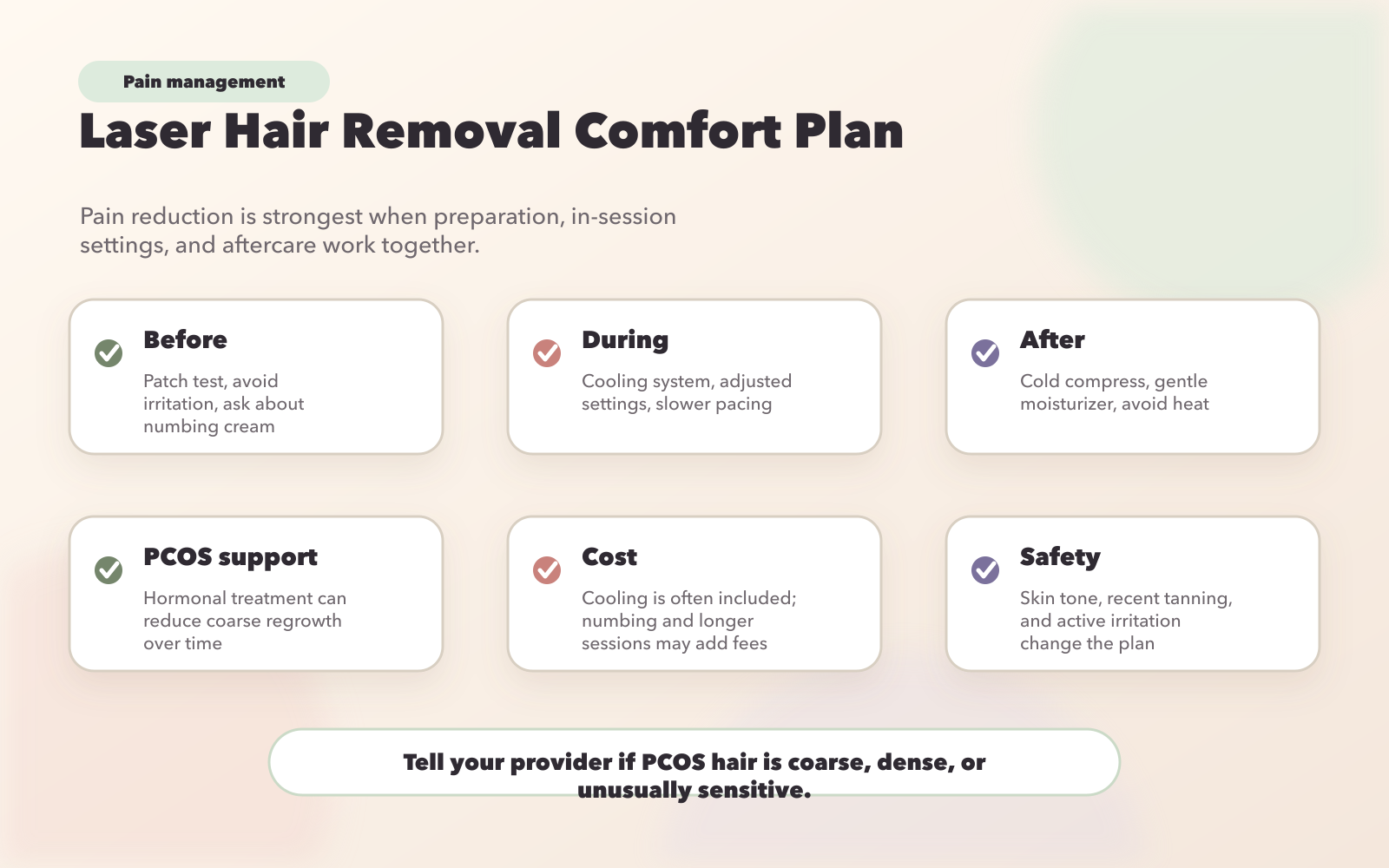
Key strategies to reduce pain:
- Pre-treatment: Use prescription-strength numbing creams (e.g., Pliaglis) or ice packs, shave 24–48 hours before, and avoid sun exposure and retinoids.
- During treatment: Opt for lasers with cooling systems like Pneumatic Skin Flattening (PSF) or Dynamic Cooling Devices (DCD). Adjust laser settings for skin type and hair thickness.
- Post-treatment: Apply cold compresses, moisturizers, and sunscreen. Use hormonal treatments like Spironolactone and laser hair removal or Eflornithine to thin hair over time and reduce sensitivity.
Combining laser treatments with hormonal care can improve comfort and results. Consult a dermatologist and endocrinologist for a tailored plan.
Why PCOS Patients Feel More Pain During Laser Hair Removal
The heightened pain sensitivity experienced by PCOS patients during laser hair removal stems from biological factors tied to hormonal imbalances and changes in hair structure. These elements influence how the skin and nerves react to the heat generated by the laser.
Hormonal Changes and Skin Sensitivity
In PCOS, elevated androgen levels combined with reduced progesterone disrupt the body's natural ability to buffer pain, leaving patients more vulnerable to discomfort. Additionally, chronic low-grade inflammation - characterized by increased levels of interleukin-6 (IL-6) and tumor necrosis factor-alpha (TNF-α) - further heightens nerve sensitivity. This inflammation intensifies the skin's response to both heat and touch, making laser treatments more painful for those with PCOS.
"The hormonal profile in PCOS influences pain perception and contributes to pain susceptibility in affected individuals." - Lida Khodavirdilou, Department of Pharmaceutical Sciences, Texas Tech University Health Sciences Center
But hormonal changes are just part of the story. Structural differences in hair also play a role in the discomfort.
Thicker Hair Follicles and Increased Discomfort
PCOS often causes fine vellus hair to transform into thick, coarse terminal hair. These thicker follicles contain more melanin, which absorbs greater amounts of laser energy. This increased absorption amplifies the heat produced during treatment. To effectively target these coarser hairs, higher laser fluence is required, which can result in a stronger burning sensation.
"Melanin captures energy from the laser and distributes it to the surrounding follicular structures. This results in the destruction of the hair matrix and hair bulge stem cells." - Tanvi Vaidya, Father Muller Medical College
sbb-itb-6dba428
Pain Reduction Strategies Before Treatment
Taking the right steps before treatment can make a big difference in reducing discomfort during laser hair removal for PCOS patients.
Numbing Creams and Cooling Gels
For PCOS patients with thicker, coarser hair, prescription-strength numbing creams are far more effective than over-the-counter options. While standard 5% lidocaine creams from drugstores can provide basic relief for small areas like the upper lip, their effects usually fade within 30–60 minutes. On the other hand, compounded creams with up to 20% lidocaine, 10% benzocaine, and 5% tetracaine penetrate deeper and last longer, making them a better choice for larger or more sensitive areas.
One standout option is Pliaglis, which contains 7% lidocaine and 7% tetracaine. Its self-occluding formula eliminates the need for plastic wrap, adding convenience. Clinical trials have shown that 95% of participants using lidocaine/tetracaine combinations experienced sufficient pain relief, compared to just 20% who used standard EMLA cream.
To use compounded numbing creams effectively, apply a thick layer (about 1/8 to 1/4 inch), cover it (unless using a self-occluding cream), and let it sit for 30–60 minutes to allow deep absorption. Peak effectiveness is typically reached within 30–45 minutes. Make sure to cleanse and dry the area beforehand, as moisture can dilute the cream. Your technician will wipe it off right before starting the laser treatment.
Ice packs are another option for immediate relief, though their effects are shorter-lived. Interestingly, 60.2% of participants in a study preferred ice over lidocaine-prilocaine cream. Ice is particularly effective when applied right after each laser pulse, though numbing creams provide relief lasting up to five minutes post-treatment.
When combined with proper skin preparation, these methods can significantly reduce discomfort.
Skin Preparation Tips for PCOS Patients
Proper skin preparation not only minimizes pain but also helps prevent surface burns and improves treatment efficiency.
Shaving 24–48 hours before your appointment is crucial. This prevents the laser from targeting hair above the skin’s surface, which can lead to painful burns. Avoid waxing, plucking, or threading for 2–4 weeks before treatment, as these methods remove the hair follicle that the laser needs to target.
Sun protection is another key step. Tanned skin absorbs more laser energy, increasing the risk of burns and discomfort. Use a broad-spectrum SPF 30+ sunscreen daily and avoid tanning for 2–4 weeks before your session. Additionally, stop using retinoids or other active skincare products 3–5 days before treatment to reduce irritation.
Hormonal treatments can also help by reducing hair density before you even start laser sessions. For example, Oana Health's Spironolactone works by blocking androgens, while Eflornithine 12% slows hair regrowth and thins the hair over time. Using these medications for several weeks ahead of your treatment can result in finer, less dense hair. This means the laser settings can be adjusted to lower levels, reducing discomfort and potentially leading to better results with each session.
Pain Management During the Laser Session
Once you're in the treatment chair, several strategies can help make the experience more comfortable - especially for PCOS patients, who may face challenges like thicker hair and heightened skin sensitivity.
Cooling Systems and Adjustable Laser Settings
Modern laser systems often incorporate advanced cooling technology to improve comfort. One example is Pneumatic Skin Flattening (PSF), which presses the skin against the laser handpiece, disrupting pain signals. Clinical studies show that PSF reduced pain in 95% of patients, with an average pain score of 2.8 out of 10. This is notably lower than the Dynamic Cooling Device (DCD), which sprays cryogen before each laser pulse and resulted in an average pain score of 5.4 out of 10.
Other cooling options include contact cooling with a chilled sapphire window and continuous cold air systems. If numbing creams aren't an option, ask your technician about using ice packs between laser pulses for quick relief.
Laser settings also play a critical role in managing discomfort. PCOS-related hair often requires higher energy levels (fluence) to target deeper, more stubborn follicles. However, these settings must be carefully adjusted to suit your skin type and minimize risks like burns. The Nd:YAG laser (1064nm wavelength) is a popular choice for its ability to penetrate deeply while sparing the skin's surface. To ensure the settings and cooling methods are effective, ask for a test patch on a small area before starting the full treatment.
Numbing Injections for Facial Treatment
For smaller, sensitive areas like the upper lip and chin, cooling systems may not provide enough relief. In such cases, injectable lidocaine can be a game-changer. This option is particularly effective for PCOS patients, as these areas can be more reactive and prone to discomfort. Studies reveal that 74% of patients worry about pain during procedures, and 42% might hesitate to return for additional treatments due to discomfort.
"Pain is a common patient complaint and concern for people undergoing or considering undergoing laser dermatologic procedures." - Joel L. Cohen MD, Aboutskin Dermatology
When considering lidocaine injections, ensure they are FDA-approved to avoid risks tied to non-standard formulations. Additionally, working with a board-certified dermatologist can help prevent complications like burns, scarring, or permanent discoloration - issues that PCOS patients may be more susceptible to.
If you're navigating PCOS and laser hair removal, consulting with specialists at Oana Health can provide tailored advice to manage discomfort effectively.
Pain Relief After Treatment
Post-treatment care plays a crucial role in ensuring lasting relief and effective recovery.
Pain Relievers and Cold Compresses
After treatment, the affected area often feels like a sunburn for 1–2 days. For individuals with PCOS, redness and swelling may be more noticeable.
Cold compresses are your go-to remedy for immediate relief. Applying ice packs right after treatment can significantly ease discomfort. Research shows that 60.2% of patients in a randomized trial preferred ice packs over topical numbing agents for immediate pain relief. To calm inflammation, follow up with gentle moisturizers after using ice packs.
If your face was treated, hold off on makeup until the next day. However, if you experience any blistering, skip makeup altogether. Sun protection is non-negotiable after laser treatment - apply a broad-spectrum SPF 30+ sunscreen daily. If your provider recommends topical steroid creams or antibiotics, use them exactly as prescribed.
These steps are essential for early recovery and set the foundation for addressing deeper factors like hormonal imbalances.
Hormonal Support for Skin Recovery
Beyond immediate care, managing hormonal factors is key to achieving long-term comfort. For PCOS patients, addressing hormonal imbalances - such as androgen excess - is just as important as treating surface-level discomfort. Elevated androgens can keep the skin reactive even after treatment. Topical Spironolactone is one option that can help regulate hormonal activity at the skin level, reducing irritation and aiding recovery. For example, Oana Health offers a monthly subscription for Topical Spironolactone at $43, which supports skin healing while addressing hormonal contributors to hirsutism.
Combining laser treatments with pharmacological options can enhance both comfort and results. This dual approach allows your skin to recover more effectively between sessions. If you’re not already working with a healthcare provider on hormonal management, consider reaching out to specialists at Oana Health for a personalized treatment plan tailored to your needs.
Pain Management Methods Compared
Pain Management Methods for PCOS Laser Hair Removal: Effectiveness and Cost Comparison
Comparison of Pain Management Techniques
When it comes to managing pain during laser hair removal, choosing the right method often depends on factors like budget, time constraints, and personal sensitivity. A randomized controlled trial revealed that 60.2% of participants favored ice packs over topical lidocaine-prilocaine cream for pain relief during laser hair removal sessions. Ice provides almost instant relief right after the laser pulse, while numbing creams, such as EMLA, require a few minutes post-treatment to take effect.
Timing plays a big role in the choice of pain management. Topical anesthetics need to be applied 30 to 60 minutes before treatment, which can extend the duration of clinic visits and increase overall costs. On the other hand, ice packs work within seconds and are a budget-friendly option, although numbing creams may provide longer-lasting relief for any lingering discomfort after the session. Here's a breakdown to help you decide:
| Method | Effectiveness | Cost | Best For |
|---|---|---|---|
| Ice Packs | High (instant relief) | Very Low | Quick treatments; immediate comfort during procedures |
| Numbing Creams (EMLA) | High (delayed relief) | Moderate to High | Sensitive areas; prolonged post-treatment relief |
| Oral Pain Relievers | Moderate | Low | Managing inflammation after treatment |
| Spironolactone (Rx) | High (long-term) | Varies by insurance | Hormonal causes; reducing hair thickness over time (6+ months) |
| Eflornithine Cream (Rx) | High (growth suppression) | Moderate | Slowing regrowth between sessions |
"The 2 modalities do not differ in terms of degree of pain reduction associated with axillary laser hair removal." - Journal of the American Academy of Dermatology
For individuals dealing with PCOS-related hair growth or heightened skin sensitivity, hormonal therapies can be a game-changer. Combining laser treatments with hormonal solutions like Metformin, oral contraceptives, Spironolactone, or topical Eflornithine not only improves immediate pain management but also enhances long-term results. Spironolactone, for example, addresses hormonal imbalances but requires at least six months for noticeable improvements. Meanwhile, Eflornithine cream doesn’t remove existing hair but effectively slows down new growth between laser sessions.
Ultimately, the choice of pain management should align with your sensitivity, treatment goals, and lifestyle. A tailored approach often delivers the best results, especially when hormonal factors are part of the equation.
Conclusion
Managing pain during laser hair removal isn't a one-size-fits-all process, especially for individuals with PCOS who often face challenges like thicker hair follicles and increased skin sensitivity. The goal is to find the right mix of strategies that suit your specific needs. Options like ice packs for quick relief, numbing creams for longer comfort, or advanced cooling systems built into modern laser devices can all help ease the discomfort during treatment.
PCOS adds another layer of complexity due to its hormonal effects, which can make hair removal more challenging. While laser treatments can effectively reduce hair growth temporarily, combining these sessions with systemic medications - such as metformin or oral contraceptives - can address the hormonal imbalances fueling excess hair growth. This combined approach not only helps with pain management but also improves the overall effectiveness of the treatment.
"Laser and light treatments alone or combined with other treatments have demonstrated 'encouraging results in reducing hirsutism severity, enhancing psychological well-being, and improving overall quality of life for affected individuals.'" - Katrina Tan, MD, Monash Health, Department of Dermatology
A well-rounded plan that includes pre-treatment preparation, customized in-treatment adjustments, and thorough post-treatment care is essential. Before starting, talk with your provider about your pain tolerance, skin type, and hormonal health to create a tailored plan. This might include pre-treatment numbing options, adjusting laser settings to suit your skin, and post-treatment care to aid recovery. Collaborating with both your dermatologist and endocrinologist ensures a comprehensive approach to managing symptoms and improving your quality of life.
For a treatment plan that combines these methods with personalized hormonal care, visit Oana Health.
FAQs
How many laser sessions will I need with PCOS?
Women with PCOS often need 8–12 laser hair removal sessions to achieve noticeable hair reduction. However, due to the hormonal imbalances linked to PCOS, hair regrowth can be more persistent, meaning additional sessions may be required compared to individuals without PCOS.
Can I do laser hair removal while taking spironolactone or eflornithine?
Yes, you can undergo laser hair removal while taking spironolactone or eflornithine. However, it's crucial to consult your healthcare provider beforehand. They can help coordinate the treatments to ensure proper timing and monitor for any potential interactions, giving you the best possible results.
When should I call my provider after a laser session?
If you experience severe pain, persistent redness, swelling, blistering, or any signs of infection after a laser session, reach out to your provider immediately. Keep an eye on the treated area, and don’t hesitate to seek professional advice if anything feels unusual or concerning.