
PCOS Brain Fog: Causes and Symptoms
PCOS brain fog is a common struggle for many women, impacting memory, focus, and mental clarity. This "mental haze" is linked to hormonal imbalances, insulin resistance, and chronic inflammation, all of which disrupt normal brain function. Up to 70% of women with PCOS report experiencing these cognitive challenges, which can affect daily life, work performance, and emotional well-being and mental health.
Key Points:
- Causes: Hormonal shifts (elevated testosterone, LH), insulin resistance (9%-14% drop in brain glucose use), and inflammation.
- Symptoms: Memory lapses, trouble focusing, slower mental processing, mood swings, and fatigue.
- Impact: Reduced attention and verbal fluency, emotional instability, and challenges in decision-making.
- Lifestyle Factors: Poor sleep, nutrient deficiencies (vitamin D, B vitamins), and chronic stress worsen symptoms.
Addressing PCOS brain fog involves managing insulin resistance, balancing hormones, improving sleep, and supporting brain health through targeted treatments and lifestyle changes.
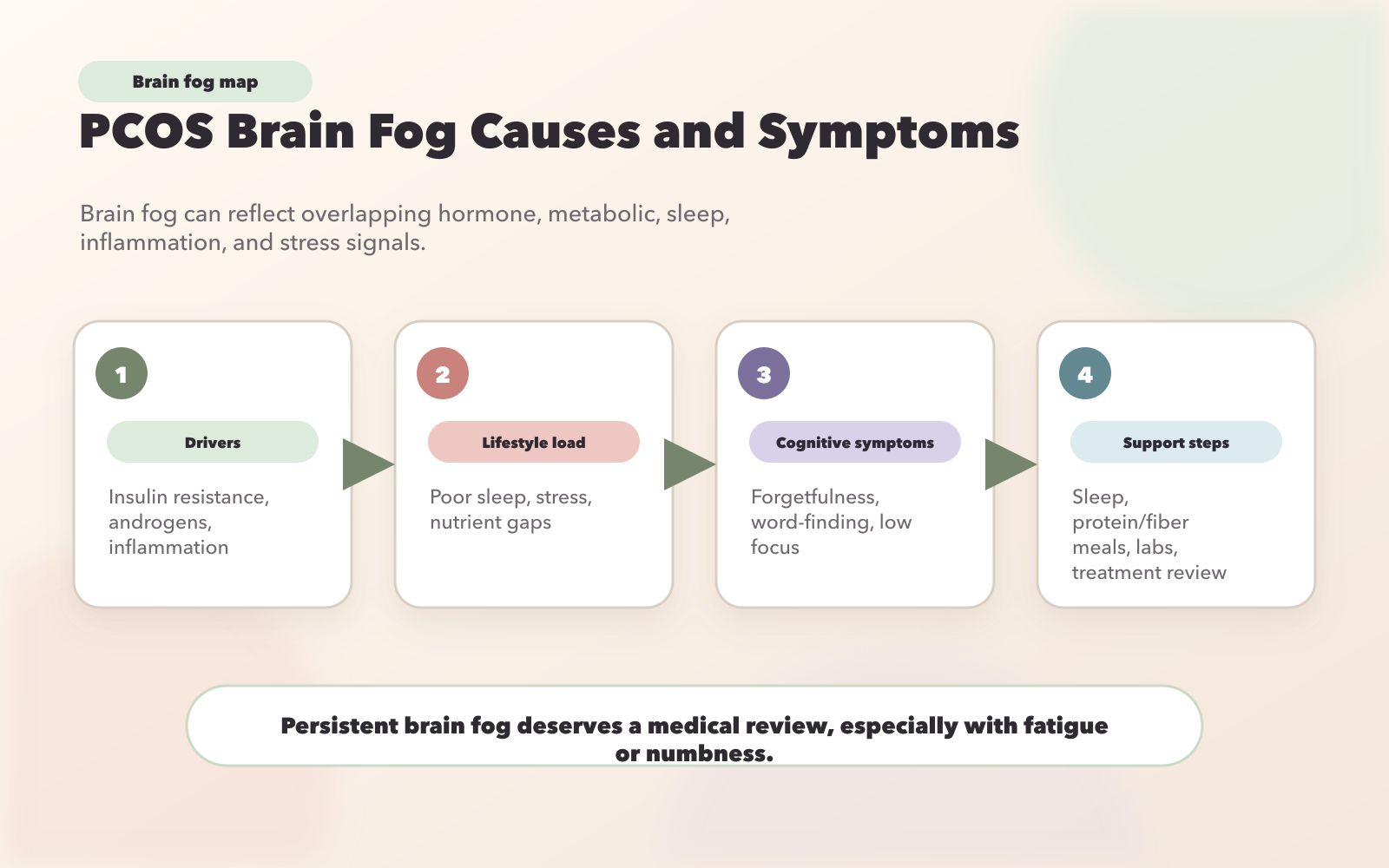
PCOS Brain Fog Statistics: Causes, Symptoms, and Impact on Cognitive Function
The PCOS Fix for Fatigue & Brain Fog You’ve Been Waiting For!
sbb-itb-6dba428
Hormonal and Metabolic Causes of PCOS Brain Fog
PCOS-related brain fog stems from a mix of hormonal and metabolic disruptions that interfere with normal brain function. These changes can make even simple tasks feel daunting.
How Hormone Imbalances Affect Cognition
Hormones are like the brain's messengers, ensuring everything runs smoothly. But with PCOS, these signals get scrambled. Elevated testosterone levels interfere with neurotransmitters and disrupt connections in areas like the middle and inferior frontal gyri, which are vital for decision-making and planning. High levels of luteinizing hormone (LH) also weaken connectivity in the posterior cingulate gyrus, a region tied to emotional processing and self-awareness. On top of that, the common imbalance of too much estrogen and not enough progesterone in PCOS messes with neurotransmitter levels, leading to mental fog. This hormonal chaos affects your ability to think clearly, focus, or remember details. But hormones are just one part of the story - insulin resistance adds another layer of complexity.
Insulin Resistance and Brain Function
Insulin resistance, which affects 65% to 95% of women with PCOS, reduces the brain's ability to use glucose efficiently by 9%–14%. This energy gap hits the frontal, parietal, and temporal cortex the hardest - areas crucial for memory, attention, and processing speed. Brain scans of young women with PCOS (average age 25) show glucose uptake patterns similar to those seen in older adults or individuals with early-stage Alzheimer's disease. Elevated fasting insulin levels further decrease activity in the left middle frontal gyrus, a region essential for working memory and emotional regulation. Combined, these metabolic issues create the mental sluggishness that many with PCOS experience daily. Chronic inflammation makes things even worse.
Inflammation and Cognitive Clarity
Chronic inflammation, a hallmark of PCOS, disrupts focus and mental clarity. Neuroinflammation throws off neurotransmitter balance and depletes key nutrients the brain needs to function properly. Studies highlight inflammation as one of the three main drivers - alongside insulin resistance and androgen excess - of cognitive changes in women with PCOS. This inflammatory state also leads to structural changes in the brain, such as reduced white matter integrity, which hampers communication between different brain regions. Together, these hormonal and metabolic factors intensify the brain fog that so many with PCOS struggle to manage.
Lifestyle Factors That Worsen PCOS Brain Fog
Beyond hormonal changes, certain lifestyle habits can make brain fog in PCOS even more challenging. Issues like poor sleep, nutrient deficiencies, and chronic stress are common culprits that amplify cognitive struggles.
Sleep Problems and Fatigue
Sleep disturbances are a frequent issue for many women with PCOS. Research shows that women with PCOS score much higher on the Pittsburgh Sleep Quality Index compared to those without the condition (p=0.001). Elevated levels of luteinizing hormone (LH) have been tied to poorer sleep quality and more frequent nighttime awakenings. Additionally, insulin resistance - a major risk factor for sleep apnea in PCOS - can create a harmful cycle where metabolic issues further disrupt sleep.
"Without adequate sleep, we can feel groggy and our memory can be significantly impacted in the following days." - Dr. Kiera Smialek, ND, Natural Kid Doc
Chronic insomnia and sleep apnea don’t just cause immediate fatigue and memory problems; they may also lead to long-term declines in brain energy metabolism. This makes everyday tasks feel even more overwhelming, especially when paired with other physical and emotional challenges.
Nutrient Deficiencies
A lack of essential nutrients can worsen the brain’s energy struggles in PCOS. For example, vitamin D deficiency is common and can impair mitochondrial function in brain cells. Supplementing with 2,000–4,000 IU per day may help improve both insulin sensitivity and metabolic health. Inositol, particularly in a 40:1 ratio of Myo-inositol to D-chiro-inositol (about 2,200 mg MI to 55 mg DCI), acts as a glucose sensor, improving how cells use energy.
B vitamins, especially folic acid and B-12, are critical for the methylation cycle. When these vitamins are low, homocysteine levels can rise, contributing to cognitive difficulties. Other key nutrients include magnesium (important for activating vitamin D), iron (especially vital for women with heavy periods), and omega-3 fatty acids, which help reduce brain inflammation.
Stress and Mental Health
Chronic stress wreaks havoc on brain function by causing fluctuations in cortisol levels. Anxiety and depression are common in PCOS, affecting up to 42% and 37% of women, respectively. Stressors like infertility and excessive hair growth often worsen this cycle.
"Cognitive decline and psychological distress appeared interlinked, forming a feedback loop that intensifies suffering over time." - International Journal of Research in Medical Sciences
Studies show that 38.6% of anxiety in PCOS patients is tied to infertility and hair loss, while 25.7% of depression is linked to acne. Brain imaging also reveals reduced activity in the left middle frontal gyrus - a key area for decision-making and focus - in individuals with depressive disorders, which may further impair cognitive performance. Combined with hormonal imbalances, these stressors deepen the challenges of brain fog in PCOS.
Common Symptoms of PCOS Brain Fog
Nearly 70% of women with PCOS report experiencing brain fog, with research indicating an 11% drop in both attention and memory performance.
Cognitive Symptoms
The cognitive challenges tied to PCOS often include trouble focusing, memory lapses, and slower mental processing. You might find yourself zoning out in the middle of a conversation, rereading the same paragraph multiple times, or forgetting why you walked into a room. Many describe the sensation as their brain shifting from "broadband" to "dial-up" speeds.
Memory issues can be so frequent that some women admit to relying on the "smile and nod" approach when they can’t recall what was just said. Everyday decisions, even simple ones, can feel exhausting. Struggling to find the right words or experiencing that frustrating “tip-of-the-tongue” moment becomes all too familiar.
A 30-year longitudinal study highlighted that women with PCOS scored lower on tests for attention, verbal memory, and category fluency. Brain imaging studies have also shown reduced white matter integrity in the corpus callosum, which can affect connectivity and executive functions. On top of that, the brain’s ability to process glucose may decline by 9% to 14%, creating an energy shortfall that makes mental tasks feel even harder. These symptoms stem from the hormonal imbalances and metabolic disruptions often linked to PCOS, such as insulin resistance and chronic inflammation.
But it’s not just thinking that’s affected - emotional well-being and behavior also take a hit.
Emotional and Behavioral Changes
PCOS brain fog doesn’t stop at cognitive issues; it also impacts emotions and behavior. The constant mental effort to stay focused can lead to irritability, mood swings, and emotional instability. It might feel like you’re stuck on an emotional rollercoaster, with sudden mood shifts leaving you feeling disconnected from your usual self.
A lack of motivation is another common struggle. Mental fatigue can make it harder to start tasks or follow through on plans, which may lead others to misinterpret these struggles as laziness. At work, you might battle a mid-afternoon energy crash or push yourself to the brink of burnout. Social interactions, too, can feel increasingly draining, with many women choosing to withdraw rather than struggle to keep up in conversations. This aligns with studies showing that 42% of women with PCOS experience anxiety, while 37% report symptoms of depression.
Oana Health Solutions for PCOS Brain Fog
Oana Health provides targeted treatments for brain fog in PCOS patients, combining hormonal and metabolic insights with evidence-based care through a telehealth platform.
Treatments for managing insulin resistance
Insulin resistance is a key factor in cognitive challenges associated with PCOS. Oana Health offers Oral Metformin ER for $22/month and Metformin combined with Spironolactone for $32/month. These treatments work to stabilize blood sugar levels and reduce hyperinsulinemia, which can significantly improve brain function. By managing insulin levels and addressing metabolic imbalances, these therapies also contribute to sharper mental clarity.
Hormone Balance and Mental Health Support
High testosterone levels can interfere with brain connectivity, affecting memory and cognitive clarity. Antiandrogenic therapies like Spironolactone help restore hormonal balance, improving brain function during memory-related tasks. For additional support with mood and mental clarity, Oana offers Bupropion XL at $25/month. This medication targets neurobiological changes in the limbic system, helping to alleviate anxiety and depression, which are common among individuals with PCOS. Together, these treatments address both the physical and emotional aspects of brain fog.
Personalized Telehealth Services
Oana Health integrates these therapies into customized care plans through its telehealth platform, ensuring a seamless experience for patients. The platform connects users with licensed physicians who specialize in PCOS, providing personalized treatment plans tailored to individual symptoms and metabolic needs. Medications are delivered directly to your home at no additional cost, eliminating the need for pharmacy visits. Operated by independently owned medical practices, Oana Health’s telehealth services focus on addressing the root causes of brain fog while managing broader PCOS symptoms.
Conclusion
Key Takeaways
PCOS brain fog is a condition tied to insulin resistance, hormonal shifts, and neuroinflammation. Elevated testosterone levels can interfere with brain connectivity, while chronic inflammation may harm the neural structures needed for clear thinking. These cognitive challenges, which include issues with memory, focus, and processing speed, affect many women with PCOS.
The encouraging news? Tackling the root causes - not just the symptoms - can help restore mental clarity and improve daily life. Steps like stabilizing blood sugar through diet and lifestyle, addressing hormonal imbalances with appropriate medications, and supporting brain health with proper sleep and exercise can make a real difference. Dr. Heather G. Huddleston from the University of California, San Francisco, explains:
"Our results suggest that people with this condition have lower memory and thinking skills and subtle brain changes at midlife. This could impact a person on many levels, including quality of life, career success and financial security".
By understanding the underlying causes, you can take meaningful steps toward better brain health.
Next Steps for Managing Brain Fog
If you’re struggling with persistent brain fog, forgetfulness, or trouble concentrating, it’s time to take action. Start by tracking your menstrual cycle to spot patterns in your symptoms, and think about how factors like diet, stress, and sleep might be influencing your cognitive health.
Partnering with healthcare providers who specialize in PCOS and brain function is key. Oana Health’s telehealth platform connects you with licensed physicians skilled in addressing the metabolic and hormonal factors behind brain fog. With personalized treatment plans - including options like insulin-sensitizing medications, hormone therapies, and mental health support - you can address the root causes head-on. Plus, direct medication delivery and guidance from PCOS specialists make it easier to reclaim your mental clarity and improve cognitive well-being.
FAQs
How can I tell if my brain fog is from PCOS?
Brain fog tied to PCOS often includes struggles with memory, concentration, and learning. These challenges stem from factors like hormonal imbalances, insulin resistance, inflammation, and disrupted sleep patterns - common issues associated with PCOS. If your mental fog aligns with other PCOS symptoms or hormonal shifts, it’s likely connected to the condition. For tailored guidance, it’s best to consult a healthcare professional.
Can treating insulin resistance improve brain fog?
Yes, managing insulin resistance can help alleviate brain fog in women with PCOS. Tackling hormonal imbalances and metabolic challenges often improves cognitive issues such as reduced brain energy use and impaired mental function. This may result in clearer thinking and improved overall brain health.
When should I see a doctor about brain fog?
If your brain fog persists, worsens, or starts to disrupt your daily activities, it’s important to consult a doctor. This is especially true if you’re also experiencing other symptoms of PCOS or signs of a hormonal imbalance. Seeking medical advice early can help uncover the root cause and lead to appropriate treatment options.