
How Dual-Action Therapies Help PCOS
Dual-action therapies, such as Tirzepatide, are transforming how PCOS is managed by addressing both hormonal and metabolic issues at their core. Unlike traditional treatments that often focus on isolated symptoms, these therapies target insulin resistance - a key driver of PCOS - while promoting weight loss, restoring ovulation, and reducing androgen-driven symptoms like acne and excess hair growth.
Key Takeaways:
- What They Target: Dual-action therapies work on GLP-1 and GIP receptors to improve insulin sensitivity, regulate hunger, and reduce fat storage.
- Why It Matters: 70% of women with PCOS have insulin resistance, which fuels hormonal imbalances and symptoms like irregular periods, stubborn weight gain, and fertility challenges.
- Results: Clinical studies show Tirzepatide leads to:
- 15–20% weight loss (vs. 5% with metformin)
- 88% menstrual cycle recovery (vs. 52% with metformin)
- Improved ovulation and reduced androgen levels, benefiting skin, hair, and overall reproductive health.
Dual-action therapies address the root causes of PCOS with better outcomes than single-action treatments like metformin or birth control pills. Learn how these therapies are reshaping PCOS care by tackling insulin resistance and hormonal imbalances together.
How Tirzepatide Works for PCOS
How GLP-1 and GIP Receptors Work
Tirzepatide is a "twincretin" that targets both GLP-1 and GIP receptors, though it binds much more strongly to GIP receptors. Its affinity for GIP receptors is similar to that of native GIP, while its connection to GLP-1 receptors is about 18 to 20 times weaker than native GLP-1. This dual action is intentional. GIP receptors are found directly on fat cells (adipocytes), allowing tirzepatide to affect fat storage and metabolism. On the other hand, GLP-1 receptors in the brain help regulate hunger and slow digestion after meals. These combined effects address both appetite control and fat metabolism, areas where single-action GLP-1 therapies fall short. This makes tirzepatide particularly effective in tackling the hormonal imbalances associated with PCOS.
Additionally, tirzepatide prefers cAMP signaling over β-arrestin at GLP-1 receptors, which helps sustain insulin secretion. At the same time, activating GIP receptors in the hindbrain may reduce the nausea that often comes with GLP-1-based treatments. Together, these mechanisms create a more balanced metabolic state, offering promising outcomes for managing PCOS.
Effects on Insulin Resistance and Hormone Levels
Tirzepatide directly impacts the insulin-androgen cycle by lowering insulin levels, which, in turn, reduces excessive testosterone production. As weight loss consultant Angela Pollock explains:
High levels of insulin send a direct signal to your ovaries. This signal tells them to produce more male hormones, called androgens.
By improving insulin sensitivity, tirzepatide interrupts this cycle. Research indicates that it enhances the glucose disposal rate, meaning cells can use sugar more efficiently for energy instead of letting it accumulate in the bloodstream. In phase 1 trials, a 15 mg dose of tirzepatide reduced fasting glucose-adjusted glucagon levels by 37% to 44%.
Beyond insulin regulation, tirzepatide significantly improves body composition. It reduces visceral fat - the metabolically active fat around organs - by approximately 40.1%, which helps combat inflammation and hormonal disruptions. In the SURMOUNT-1 trial, participants saw a 33.9% average reduction in total body fat mass compared to just 8.2% in the placebo group. Notably, fat loss was about three times greater than lean muscle loss. These changes at the cellular level contribute to noticeable clinical improvements.
Clinical Studies on Tirzepatide
Clinical research highlights tirzepatide’s effectiveness in managing PCOS. In a study involving 4,241 women, over 90% achieved at least a 10% reduction in body weight within 10 months, with an average weight loss of 18.81%. This far exceeds the 5% weight loss typically linked to better insulin resistance and long-term metabolic health.
When comparing semaglutide and tirzepatide for PCOS, the latter (at a 15 mg dose) showed superior results in improving insulin secretion rates and the disposition index. The improvements in insulin sensitivity weren’t solely due to weight or fat loss, suggesting that GIP receptor activation offers added metabolic benefits.
In the SURPASS-3 trial, 67% to 79% of participants reduced their liver fat content by at least 30%. This is particularly relevant for addressing fatty liver issues, which are common in PCOS. These cellular improvements translate to clinical benefits, including better ovulation, more regular menstrual cycles, reduced acne, and decreased excess hair growth.
sbb-itb-6dba428
Benefits of Tirzepatide for PCOS Management
Step 1: Weight Loss and Fat Reduction
Tirzepatide has shown impressive results in addressing the metabolic hurdles of PCOS by promoting significant weight loss. A study presented at ObesityWeek® in November 2025 highlighted data from 4,241 women in the UK with PCOS who were prescribed tirzepatide via a digital weight loss service. Among these participants, 90.80% achieved at least 10% body weight loss within 10 months, with an average reduction of 18.81% in body weight. This far exceeds the 5% threshold often associated with improved insulin resistance.
Interestingly, women who combined tirzepatide with digital coaching saw even greater results - achieving an average weight loss of 21.02%, compared to 17.23% with the medication alone. The SURMOUNT-4 study further revealed that 80% of participants maintained their weight loss during continued treatment, while only 16.6% of those on a placebo were able to sustain their results. These metabolic changes set the stage for hormonal improvements and better ovulation patterns discussed below.
Step 2: Improved Ovulation and Regular Periods
The weight loss achieved with tirzepatide helps restore hormonal balance, which is critical for regular ovulation and menstrual cycles. By reducing androgen-to-estrogen conversion in fat tissue, tirzepatide minimizes the hormonal disruptions that interfere with follicle growth and ovulation.
Additionally, improved insulin sensitivity decreases androgen production and raises SHBG (sex hormone-binding globulin) levels, both of which contribute to more regular cycles. Dr. Karen Shackelford, MD, explains it well:
Lowering insulin levels may limit the production of ovarian androgens, which could make cycles more regular and possibly boost conception.
Even modest weight loss - just 5–10% of body weight - can lead to noticeable improvements in cycle regularity. This hormonal reset not only supports ovulation but also contributes to better skin and hair health.
Step 3: Reduced Acne and Excess Hair Growth
Tirzepatide's ability to reduce hyperandrogenism offers additional benefits, such as improvements in acne and excess hair growth. By enhancing insulin sensitivity and promoting weight loss, the medication lowers the ovarian signals that trigger excessive testosterone production. Furthermore, the reduction in visceral fat decreases androgen conversion, helping to normalize the LH:FSH ratio - a key hormonal imbalance in PCOS.
In fact, with 75.96% of women achieving at least 15% weight loss, many report significant improvements in acne and unwanted facial hair. These changes, driven by tirzepatide’s dual action on GLP-1 and GIP receptors, complement its effects on weight loss and cycle regulation, offering a more comprehensive management approach for PCOS symptoms.
How Tirzepatide works w/ PCOS - Melissa's Weight Loss Testimonial
Why Dual-Action Therapies Work Better Than Single-Action Options
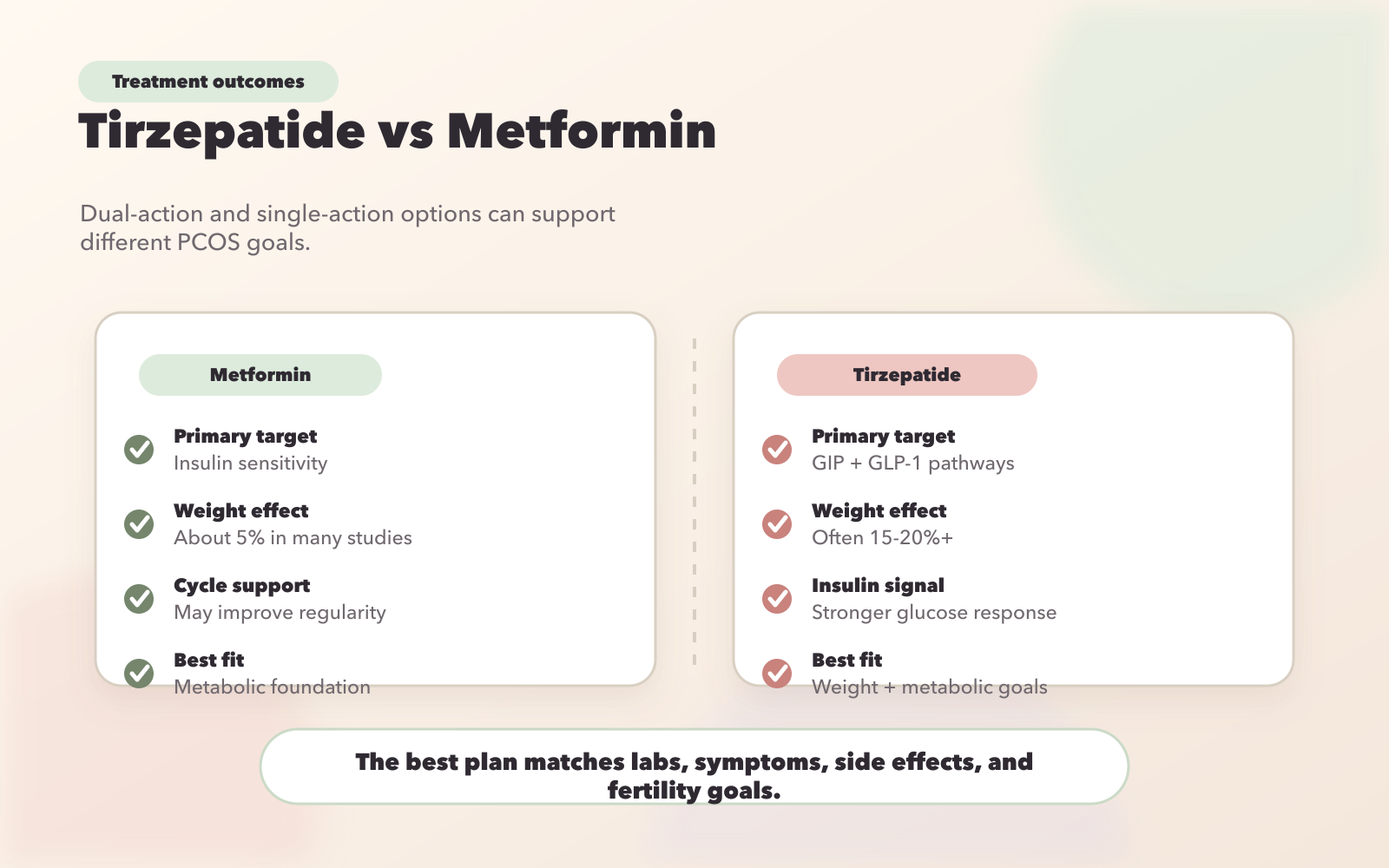
Tirzepatide vs Metformin for PCOS Treatment Outcomes Comparison
Weight Loss and Insulin Sensitivity Comparison
Clinical evidence highlights how dual-action therapies consistently outperform single-action treatments. For example, Tirzepatide, which targets both GLP-1 and GIP receptors, tackles multiple pathways linked to insulin resistance and fat storage, making it more effective than GLP-1-only options.
A study conducted between July 2024 and February 2025 at Uttara Adhunik Medical College Hospital in Bangladesh examined 56 women with PCOS and obesity. Led by Jannatul Ferdous, the research revealed striking results: Tirzepatide reduced insulin resistance prevalence from 80.4% to 50%, while irregular menstrual cycles dropped from 85.7% to 32.1%. Additionally, HbA1c levels improved significantly, falling from 5.7% to 4.9%.
| Feature | Single-Action (GLP-1 only) | Dual-Action (Tirzepatide) |
|---|---|---|
| Receptor Targets | GLP-1 only | GIP and GLP-1 |
| Average Weight Loss | Around 15% | 20–22% (with digital engagement) |
| Insulin Resistance | Standard metabolic improvement | 30.4% absolute reduction in prevalence |
| PCOS Symptoms | Moderate symptom relief | Significant reduction in cysts and cycle irregularity |
These findings clearly demonstrate the metabolic advantages of dual-action therapies over their single-action counterparts.
Better Symptom Relief for PCOS Patients
Dual-action therapies also excel in alleviating PCOS symptoms. The Bangladesh study showed that ovarian cyst prevalence dropped dramatically, from 89.3% to 41%, following treatment with Tirzepatide. This improvement stems from reduced insulin resistance, which helps interrupt the hormonal cascade responsible for increased androgen production.
Jannatul Ferdous commented on these results, stating:
Tirzepatide showed promising results in managing obesity and improving metabolic outcomes in women with PCOS. Significant weight reduction, glycemic control, and symptom improvement were observed.
- Jannatul Ferdous, Department of Gynecological Oncology, Bangabandhu Sheikh Mujib Medical University
Getting Dual-Action Therapies Through Oana Health
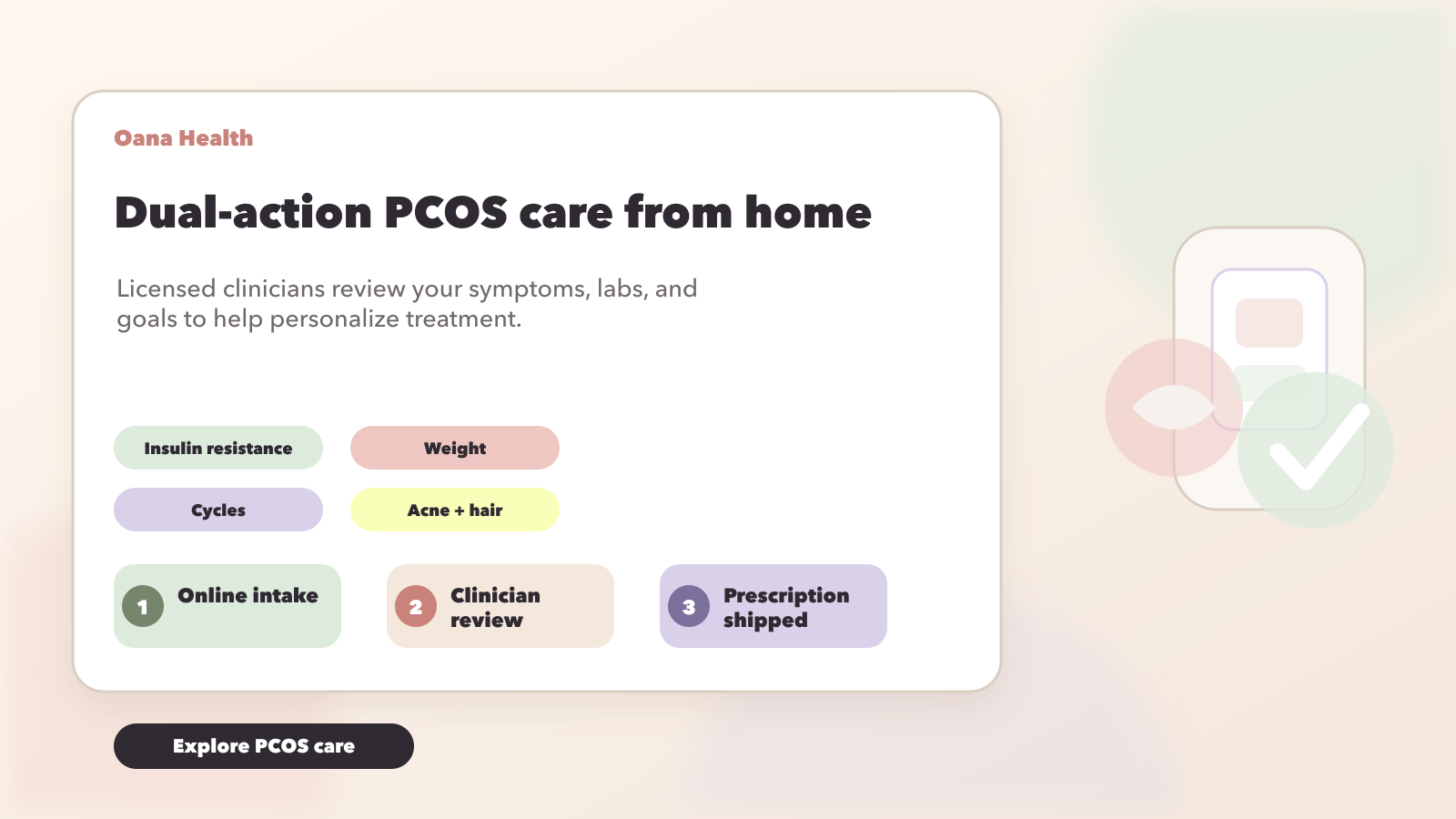
How Oana Health Supports PCOS Treatment
Oana Health provides dual-action therapies for PCOS, such as Tirzepatide, through an easy-to-use telehealth platform. This service targets both hormonal imbalances and metabolic issues, offering personalized care from licensed medical professionals. These experts specialize in PCOS and prescribe treatments backed by scientific research to tackle symptoms like insulin resistance, weight gain, acne, excess hair growth, and irregular periods.
Prescriptions are shipped directly to your doorstep for free, and 24/7 support ensures you're never left without assistance. As Margaret K. shared:
I also love the 24/7 accessibility and customer service that always goes the extra mile.
This approach combines expert medical insights with practical convenience, making it easier for patients to get the care they need without delays.
How to Start Tirzepatide Therapy with Oana Health
Getting started with Tirzepatide therapy is straightforward. Begin by completing an online consultation where you discuss symptoms like insulin resistance or weight concerns with a licensed physician. The provider will review your health history to determine if dual-action therapy is the right fit for you.
If approved, your prescription is processed and shipped directly to your home - no need for in-person visits. Victoria A. shared her experience:
Oana's telehealth service effectively managed my insulin levels and reduced PCOS-related excess hair growth.
Treatment Costs and Plans
In addition to its convenient setup, Oana Health offers pricing designed to make long-term PCOS management accessible. Treatment options include:
- Oral GLP-1 & Metformin: $199 per month
- Oral Semaglutide: $199 per month
- Metformin & Spironolactone: $32 per month
- Oral Metformin ER: $22 per month
Every plan includes free shipping and is prescribed by licensed physicians after a thorough evaluation, ensuring you receive care tailored to your needs.
Conclusion
Dual-action therapies like Tirzepatide are reshaping how PCOS is managed. By tackling insulin resistance - the core issue - and targeting both GLP-1 and GIP receptors, these treatments go beyond the capabilities of traditional single-action medications. They address hormonal imbalances, promote weight loss, and help restore reproductive health. This dual approach supports meaningful weight loss, regularizes menstrual cycles, and reduces androgen-driven symptoms such as acne and excessive hair growth.
The SURMOUNT-4 study shows impressive results: a 20.9% weight loss at 36 weeks, with an additional 5.5% after 52 more weeks. These changes directly enhance ovulation and lower long-term health risks.
Dr. Louis Aronne from Weill Cornell Medicine emphasizes that conditions like obesity, much like diabetes, require consistent management. This underscores the need for dual-action therapies to be part of a long-term treatment plan. These advancements bring a science-backed, practical solution within reach.
Oana Health simplifies access to these therapies through its telehealth platform. With tailored care plans, continuous support from licensed medical professionals, and medications delivered right to your door, managing PCOS is now more accessible than ever. To see if dual-action therapy is a fit for your PCOS symptoms, visit Oana Health and complete a health assessment.
FAQs
Is tirzepatide safe for PCOS long term?
Long-term safety information about tirzepatide for managing PCOS is still limited. Early research suggests it could help with symptom management, but more studies are necessary to fully understand its safety over prolonged use. It's essential to consult a licensed healthcare provider to see if tirzepatide fits your individual needs.
Will tirzepatide help fertility and ovulation?
Tirzepatide has the potential to assist with ovulation and fertility in women with PCOS by targeting insulin resistance and hormonal imbalances - two major factors that often disrupt ovulation. That said, it’s important to note that the FDA has not approved Tirzepatide for this specific purpose.
What side effects should I expect with dual-action therapy?
Side effects of dual-action therapies, such as Tirzepatide, can include nausea, changes in appetite, and gastrointestinal discomfort. In rarer cases, there may be risks like blood clotting or liver toxicity, depending on the specific medication being used. It's essential to consult with a licensed medical professional to fully understand these potential side effects and get guidance on managing them effectively.