
PCOS-Friendly Strength Training Equipment
Strength training can help manage PCOS symptoms by improving insulin sensitivity, reducing testosterone levels, and supporting overall hormonal balance. Here’s a quick breakdown of beginner-friendly equipment to get started:
- Dumbbells: Great for versatile, full-body workouts. Affordable and easy to use at home or in the gym.
- Adjustable Dumbbells: Space-saving with customizable weight options for gradual progression.
- Resistance Bands: Lightweight, portable, and perfect for low-impact strength training.
- Kettlebells: Ideal for dynamic, full-body exercises that boost strength and target visceral fat.
- Cable Machines: Provide controlled resistance for safe and effective strength training.
- Stability Balls: Help with core-focused exercises and balance improvement.
- Step Bench: Supports lower-body exercises like step-ups and lunges.
A simple workout plan: 3 sessions per week, focusing on major muscle groups with 8–12 reps per exercise. Pair this routine with proper recovery and, if needed, medical support like Oana Health’s telehealth services for PCOS treatments.
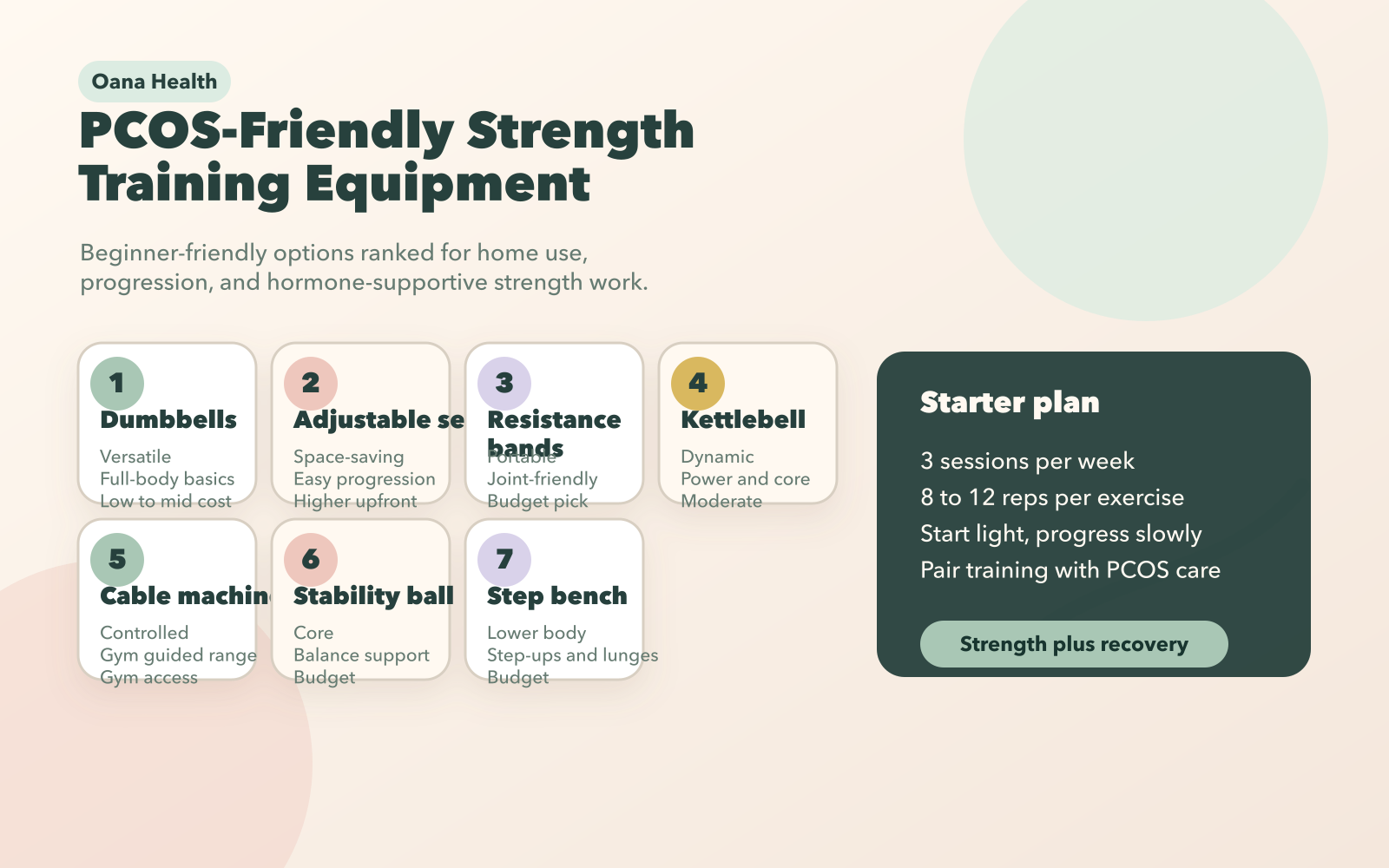
PCOS-Friendly Strength Training Equipment Comparison Guide
Beginners Strength training at home for PCOS (15-minute dumbbell workout)
How Strength Training Affects PCOS Androgen Levels
Strength training plays a key role in regulating hormones, especially for those managing PCOS. By building lean muscle mass through resistance exercises, the body becomes better at using glucose. This improved glucose uptake naturally lowers insulin levels - an important factor because elevated insulin levels, combined with luteinizing hormone, can lead to increased testosterone production in the ovaries.
Scientific studies back up these benefits. For example, a clinical trial conducted between April and September 2021 at the Shamim Clinic in Karachi, Pakistan, highlights these hormonal improvements. Mubarra Rao, DPT, from Ziauddin University, observed 50 women with PCOS over 12 weeks of strength training. Participants completed 36 sessions of exercises like squats, deadlifts, lunges, bench presses, shoulder presses, push-ups, and abdominal crunches, working at 60% to 70% of their one-repetition maximum. The results were promising: serum testosterone levels dropped from 2.54 nmol/L to 2.47 nmol/L, body fat percentage decreased from 34.1% to 32.48%, and BMI reduced from 26.5 to 24.47 kg/m².
Strength training also helps reduce bioavailable testosterone by targeting visceral fat, particularly around the abdomen. This type of fat is closely linked to insulin resistance and hormonal imbalances in PCOS.
"Resistance training improves the menstrual cycle and hyperandrogenism by decreasing central adiposity and increasing lean muscle mass, resulting in the alteration of body composition." - Mubarra Rao, DPT, Ziauddin University
For optimal results, aim for three or more sessions per week that target major muscle groups. Gradually increase weights or repetitions to maintain progressive overload and continue promoting metabolic changes. Unlike high-intensity cardio, which can elevate cortisol and potentially worsen symptoms, well-planned strength training supports the body’s stress response when combined with proper recovery.
1. Dumbbells
Beginner-Friendly Usability
Dumbbells are a fantastic starting point for anyone venturing into strength training, especially at home. They’re approachable, easy to use, and don’t require a gym membership to get started. With progressive overload, you can begin with lighter weights and gradually increase resistance as your strength improves. A single pair of dumbbells can cover all the basics - squats, lunges, presses, and rows - giving you a well-rounded workout without the need for bulky equipment. This simplicity makes it easier to stick to a routine and enjoy the health benefits that come with it.
Effectiveness for Strength Training and Hormonal Balance
Dumbbells don’t just build strength - they also play a role in improving hormonal health. By targeting specific muscle groups, dumbbell exercises can enhance insulin sensitivity and reduce excessive androgen production, both of which are critical for managing PCOS. Research shows that regular strength training with dumbbells can significantly lower serum testosterone and free androgen levels in women with PCOS. Plus, building muscle increases your basal metabolic rate (BMR), which accounts for about 66% of your total energy expenditure, leading to lasting metabolic improvements. Resistance training also boosts levels of Sex Hormone Binding Globulin (SHBG), a protein that binds to excess testosterone, and helps reduce visceral fat more effectively than endless crunches.
"PCOS is less about a woman's ovaries and more about her insulin resistance." - Dr. Mark Perloe, OBGYN and PCOS fertility expert
Affordability and Accessibility
Dumbbells are a budget-friendly and space-saving option for strength training. Standard sets, ranging from 5 to 50 pounds, provide excellent value and allow for long-term progression. Adjustable models like the Bowflex SelectTech 552 and PowerBlock Pro Series are highly rated by Consumer Reports, making them popular choices. As Peter Ronai, Clinical Professor of Exercise Science, points out, free weights like dumbbells "produce superior strength gains in the real world" compared to gym machines that limit movement.
Suitability for Home or Gym Environments
A full-body workout with dumbbells can be completed in just 30–45 minutes. Unlike high-intensity cardio, these workouts boost your metabolism without triggering a cortisol spike. When choosing weights, follow the "Two for Two" rule: if you can perform two extra reps on your last set for two consecutive workouts, it’s time to increase the weight. For endurance and muscle toning, aim for 8–12 repetitions; for strength building, stick to 5–8 reps. If your form starts to break down by the sixth repetition, the weight is likely too heavy.
2. Adjustable Dumbbells
Beginner-Friendly Usability
Adjustable dumbbells are a game-changer, replacing the need for multiple pairs of fixed weights. Take the Bowflex SelectTech 552, for example - it combines 15 sets of weights into one, offering a range from 5 to 52.5 pounds with easy-to-use dials. This design allows you to smoothly increase resistance in small steps (typically 2.5 to 5 pounds), making it ideal for gradual progression. Whether it’s twist handles, dial systems, or a Lock‑N‑Load switch, these models are built for quick and hassle-free weight adjustments.
Effectiveness for Strength Training and Hormonal Balance
Adjustable dumbbells aren’t just convenient - they’re highly effective for building strength and improving overall health. Gradually increasing resistance helps develop lean muscle, boosts metabolism, and improves insulin sensitivity. This precise control over weight increments (2.5 to 5 pounds) is especially helpful for managing PCOS symptoms without overwhelming the muscles. Studies suggest that resistance training with dumbbells can lower serum testosterone levels and increase Sex Hormone Binding Globulin (SHBG), which helps balance excess testosterone. Experts recommend using lighter weights with higher repetitions (10–20 reps per set) to build strength while avoiding temporary testosterone spikes.
"The myogenic or muscular adaptations induced by RT are often accompanied by a range of physiological (metabolic) and functional adaptations that may be clinically important among women with PCOS." - Pamela J. Wright, College of Nursing, University of South Carolina
Affordability and Accessibility
While adjustable dumbbells may seem pricey upfront, they offer excellent value over time. Entry-level models like the REP Fitness QuickDraw start at around $335.99, while mid-range options such as the NÜOBELL range from $745 to $780 . For comparison, a full rack of rubber hex dumbbells (5–100 pounds) can cost about $2,600. The Bowflex SelectTech 552, priced at approximately $429, is particularly beginner-friendly due to its intuitive design. For those looking to invest in premium options, the REP x PÉPIN Fast Series costs about $1,300 for pairs up to 85 pounds. However, most women with PCOS will find a range of 5–50 pounds more than sufficient for their fitness goals .
Suitability for Home or Gym Environments
Adjustable dumbbells are perfect for home workouts, especially if you’re short on space. They take up about the same area as a single pair of fixed dumbbells but offer a full range of resistance. For instance, the REP QuickDraw is built to last, enduring up to 100,000 drops and backed by a lifetime warranty. Similarly, the Snode AD80 comes with a two-year warranty and can withstand drops from up to 32 inches. Coop Mitchell, Founder of Garage Gym Reviews, summed it up well:
"If you closed your eyes during a bench press, you wouldn't even know you were using an adjustable dumbbell." - Coop Mitchell, Garage Gym Reviews
Thanks to their durability and compact design, adjustable dumbbells fit seamlessly into any PCOS-focused strength training routine.
3. Resistance Bands
Beginner-Friendly Usability
Resistance bands are a fantastic starting point for women with PCOS who are new to strength training. Unlike heavy gym equipment, these bands offer a low-impact way to build strength while being gentle on your joints . They work by creating tension through oppositional force rather than relying on gravity, which means they engage both major muscle groups and those smaller stabilizing muscles.
The best part? They’re incredibly easy to use. Many sets come with light, medium, and heavy resistance options, often for as little as $10. This variety allows you to tailor the resistance to the specific muscle group you're targeting - using heavier bands for legs and lighter ones for arms. Erika, a Certified Personal Trainer and Nutrition Coach at PCOS Personal Trainer, captures it perfectly:
"Resistance bands are the perfect low-commitment strength training equipment for the reluctant trainee".
Start with 8–12 reps per set, and if the last rep feels too easy, switch to a heavier band. This gradual progression not only builds strength but also supports hormonal health.
Effectiveness for Strength Training and Hormonal Balance
Resistance bands aren't just convenient - they're effective for managing PCOS. Studies show that resistance band workouts improve insulin sensitivity and glucose uptake. A 16-week study involving 43 women with PCOS even found significant reductions in testosterone levels. These exercises also help increase Sex Hormone Binding Globulin (SHBG), a protein that binds excess testosterone, reducing androgen exposure .
Adding lean muscle through resistance training boosts your basal metabolic rate, which is responsible for about two-thirds of your daily energy expenditure. This can help reduce visceral belly fat, a common issue for women with PCOS. Plus, resistance training enhances muscle tone without adding bulk. Angela Grassi, MS, RDN, LDN from PCOS Nutrition Center, emphasizes:
"Resistance training can help you burn more calories, and is essential for managing PCOS".
The benefits go beyond just physical health, making resistance bands a smart choice for anyone looking to manage PCOS effectively.
Affordability and Accessibility
If you're on a budget, resistance bands are a great investment. Basic loop band sets cost between $4 and $7, while mid-tier options like GYMB Non-Slip Resistance Bands (rated 4.8/5) are priced at $14–$16. Tube bands with handles, such as the Rep Fitness Tube Resistance Bands (rated 5/5), run around $20. Even premium options like Bala Bands (also rated 4.8/5) are affordable, typically ranging from $30 to $35. What's more, tests show that even the less expensive bands - under $10 - can handle full-body workouts.
Suitability for Home or Gym Environments
Resistance bands are as practical as they are effective. Their lightweight and compact design make them perfect for home workouts, small apartments, or even travel . They easily fit into a drawer or bag, making it simple to stick to your routine wherever you are. Despite their simplicity, they can target all major muscle groups without the need for bulky equipment. Whether you're at home or on the go, resistance bands keep your workouts consistent and efficient.
4. Kettlebells
Beginner-Friendly Usability
For women managing PCOS, choosing the right workout equipment can make a big difference in balancing hormone levels. Kettlebells are a versatile option, offering full-body workouts with just one compact tool. Whether you prefer exercising at home or at the gym, kettlebells are a practical choice. If you're new to strength training, start with a kettlebell weighing 9–13 lb for controlled moves like overhead presses, and 13–18 lb for dynamic exercises like swings.
What makes kettlebells beginner-friendly is their adaptability. They support two primary movement types: ballistic lifts (like swings and cleans) for explosive power and grinds (such as Turkish get-ups) for controlled strength. When shopping for kettlebells, look for ones made from a single mold with smooth, rounded handles. Avoid kettlebells with rough seams or triangular handles, as these can cause discomfort during use. This simple piece of equipment not only helps build strength but also supports overall hormonal health.
Effectiveness for Strength Training and Hormonal Balance
Kettlebell workouts go beyond building strength - they can also play a role in improving hormonal balance for women with PCOS. The resistance training they provide promotes muscle growth and enhances insulin sensitivity, which is key to regulating blood sugar levels. Managing insulin levels is particularly important for reducing high testosterone levels, a common issue for those with PCOS. Dr. Tara Scott, Chief Medical Officer at Revitalize Medical Group, highlights this:
"Regulating your insulin levels can help lower testosterone levels, which are typically high in people with PCOS".
Additionally, kettlebell training is effective at targeting visceral fat, a concern for many women with PCOS. Because women naturally have 10–30% fewer muscle-building hormones than men, kettlebell workouts help develop functional strength without adding unwanted bulk. Certified Personal Trainer Erika Volk puts it perfectly:
"Muscle is my best ally in the fight against PCOS!".
With benefits ranging from hormonal support to fat loss, kettlebells are a smart choice for women looking to improve their overall health.
Affordability and Accessibility
Kettlebells are not just effective - they're also a budget-friendly fitness solution. They can replace multiple pieces of equipment, saving both money and space. For beginners, sets like the Tone Fitness Kettlebell Set (which includes 5 lb, 10 lb, and 15 lb weights) allow for gradual progress without breaking the bank. Unlike gym memberships or bulky machines, kettlebells require a one-time investment with no ongoing costs.
Suitability for Home or Gym Environments
Whether you're working out at home or hitting the gym, kettlebells are a convenient addition to your routine. Their compact size makes them easy to store, even in small spaces like closets or apartments. Plus, they're a staple in most gyms, ensuring you can stick to your training plan wherever you are. This flexibility makes kettlebells a perfect fit for a PCOS-friendly workout regimen.
5. Cable Machines
Beginner-Friendly Usability
Cable machines are a fantastic choice for those new to resistance training, especially if you're managing PCOS. Unlike barbells or dumbbells, which require you to stabilize the weight yourself, cable machines provide controlled resistance throughout the entire range of motion. This makes it easier to maintain proper form, reducing the risk of injury while building strength. Plus, their adjustable pulleys allow for exercises in multiple directions, helping you practice key movement patterns.
Many cable-based exercises - like chest presses, rows, and leg movements - are categorized as beginner-friendly by professional fitness guides [28,29]. Pete McCall, MS, CSCS, and ACE Certified Personal Trainer, highlights their versatility:
"The functional training cable machine is an incredibly versatile piece of equipment because the adjustable cable pulley allows the user to move in a variety of directions with resistance".
Cable machines can complement other tools like dumbbells and resistance bands, offering a well-rounded approach to managing PCOS symptoms. They allow for total-body workouts with less risk of overuse injuries compared to high-impact exercises, making them an excellent addition to your strength training plan.
Effectiveness for Strength Training and Hormonal Balance
One of the standout benefits of cable machines is their ability to provide constant tension, which enhances muscle activation. Unlike free weights that rely on gravity, cable machines keep your muscles engaged throughout the entire movement [31,32]. This constant tension can be particularly helpful for improving glucose regulation, a critical component of PCOS management. Certified trainer Erika explains:
"Exercise makes muscle cells more sensitive to insulin. The result? Your pancreas needs to produce less insulin to keep your metabolism running smoothly".
Research supports this approach - a 16-week study found that resistance training significantly reduced testosterone levels in women with PCOS. For the best results, aim for 10 to 20 repetitions per set using moderate resistance. This approach helps balance your metabolism without causing the temporary testosterone spikes that heavy lifting can sometimes trigger. NASM-CPT Kate Meier adds:
"Cable machine workouts are great for when I've only got 30 minutes or so to exercise because I'm able to do five or six full-body exercises".
Suitability for Home or Gym Environments
Cable machines are a staple in most commercial gyms, making them a convenient option for those who prefer working out in a gym setting. However, their size and cost can make them less practical for home use. If you're exercising at home, portable resistance tools like bands can offer a similar constant tension and are much easier to store and afford [3,27].
Once you’ve established a workout routine, these portable options allow you to stay consistent without needing a gym membership. Whether you choose the gym or a home setup, the most important thing is finding a solution that fits your lifestyle and budget.
sbb-itb-6dba428
6. Stability Ball
Stability balls bring a unique edge to strength training, offering core-focused benefits that can be particularly helpful for managing PCOS.
A Great Starting Point
For women with PCOS who are new to exercise, stability balls are a fantastic introduction to strength training. They support bodyweight exercises like ball squats, wall sits, and core drills, helping to build both strength and balance. If you're just starting out, working with a certified personal trainer - such as those certified by ACSM, NASM, or NSCA - can ensure you're using the ball correctly and confidently during your first sessions. The American Council on Exercise (ACE) also encourages focusing on the positive feelings exercise brings:
"Focus on how good exercise makes you feel rather than how you would like to look. Accepting our bodies for what they are is a great way to get rid of the guilt or pressure we often feel to look a certain way."
Supporting Strength and Hormonal Health
Core exercises with a stability ball do more than just tone muscles - they can help reduce visceral fat and improve insulin sensitivity. By increasing lean muscle mass and boosting metabolic rate, these workouts enhance insulin function and lower ovarian androgen levels, both of which are key to managing PCOS-related hormonal issues. Clinical research highlights that 12 weeks of supervised strength training can significantly reduce serum testosterone levels in women with PCOS. Mubarra Rao, DPT, elaborates on this:
"Strength training improves the menstrual cycle and [hyperandrogenism] by decreasing central adiposity and increasing lean muscle mass."
Interestingly, resistance training has been shown to reduce visceral fat even without a change in BMI, thanks to its focus on building lean muscle.
Affordable and Convenient
Stability balls are one of the most budget-friendly tools for strength training, with prices typically ranging from $15 to $40. They’re lightweight, easy to store, and can be used at home or in the gym. For women with PCOS who might feel uneasy about exercising in public, having a stability ball at home offers a comfortable and private alternative. Plus, their versatility means you can tackle a variety of exercises with just one piece of equipment, making them a practical addition to any home fitness setup.
7. Step Bench
A step bench is a great piece of equipment for women with PCOS who want to build strength. It’s easy to use, versatile, and supports exercises that can help manage insulin resistance. As Dr. Mark Perloe, an OBGYN and PCOS fertility expert, explains:
"PCOS is less about a woman's ovaries and more about her insulin resistance".
Easy to Start With
Even if you’re new to strength training, a step bench is a great starting point. You can begin with simple bodyweight exercises like step-ups and elevated push-ups to develop strength and balance. As you get stronger, you can add dumbbells to your step-ups or try exercises like tricep dips and lunges.
Builds Strength and Supports Hormonal Balance
Using a step bench can help you build lean muscle, which plays a big role in improving how your body manages insulin and glucose. A 2016 study involving 43 women with PCOS found that 16 weeks of strength training led to a notable reduction in testosterone levels. Women who trained twice a week also reduced body fat by nearly 4%. Certified Personal Trainer Erika Volk highlights this benefit:
"Studies show that strength training actually reduces androgen levels in PCOS women".
For the best results, aim for higher repetitions (10–20 reps) with lighter weights. This approach helps you build endurance and avoid temporary spikes in testosterone. These factors make the step bench an excellent choice for home workouts.
Budget-Friendly and Convenient
Step benches are compact, affordable, and perfect for home use. They allow you to get a great workout without the recurring expense of a gym membership. Chris Dempers, an ACSM-certified exercise physiologist, emphasizes the convenience:
"If you factor in drive time to a gym, you might be needing a two-hour window to get your workout in. That can be tough to consistently carve out of a day".
When shopping for a step bench, test its height and stability in-store to ensure it suits your needs.
8. Oana Health Telehealth Services
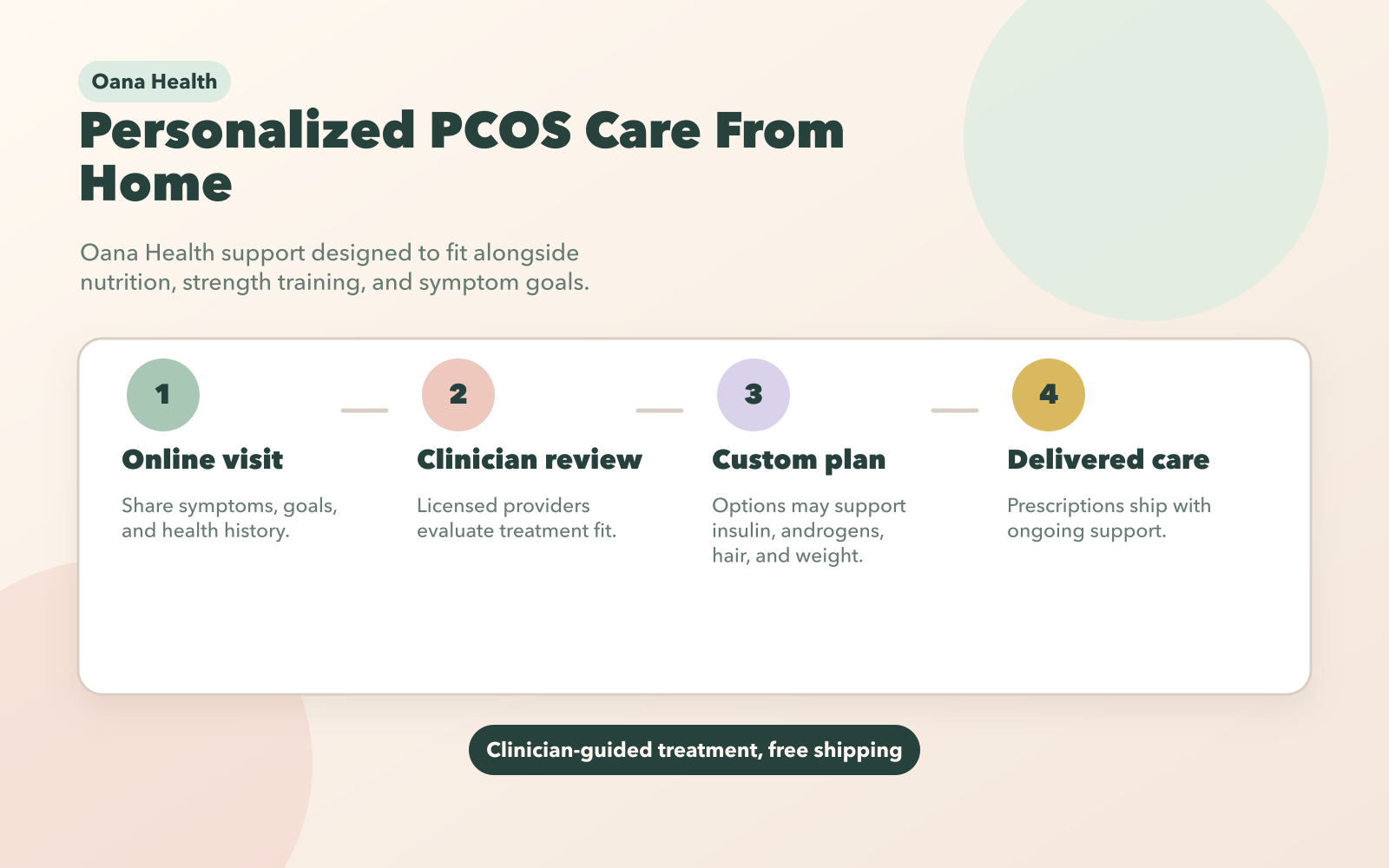
Strength training is a key part of building muscle, but managing PCOS-related hormonal imbalances often requires medical intervention. That’s where Oana Health’s telehealth services come in, complementing your fitness routine by addressing the root causes of PCOS.
Supporting Strength Training and Hormonal Health
While physical activity like strength training is crucial, combining it with medical treatments can take your results further. Oana Health offers science-backed therapies, including medications like GLP-1s and Metformin, which improve insulin sensitivity. These treatments not only enhance the benefits of strength training by promoting lean muscle growth and reducing visceral fat but also help preserve muscle mass during weight loss efforts.
As Pamela J. Wright from the College of Nursing at the University of South Carolina explains:
"Resistance training (RT) is the anaerobic category of exercise involving the repeated movements against unaccustomed loads to stimulate a stronger muscle contraction".
When paired with medical support, strength training can yield even better hormonal balance. Keep an eye on non-scale victories such as increased energy levels, improved sleep, and reduced bloating - these are signs that your exercise and treatment plan is working together to regulate your hormones. Oana Health’s clear and straightforward pricing makes this integrated approach even more accessible, enabling you to focus on both your physical and hormonal well-being.
Affordable and Convenient Care
Oana Health offers a range of prescription treatments with transparent pricing: Oral GLP-1 and Metformin for $199/month, Topical Spironolactone for $43/month to address hair loss, and Oral Minoxidil for $25/month. Plus, all medications come with free shipping. With around 5 million women in the U.S. living with PCOS, Oana Health’s telehealth services break down barriers to receiving the care you need - whether you’re working out at home or hitting the gym.
Sample Beginner Workout Using This Equipment
Kick off your PCOS-friendly strength training with a 5–10 minute warm-up to get your muscles and joints ready. Activities like marching in place, arm circles, or light walking work perfectly for this. This step is essential to ease your body into the workout.
The main workout should last about 20–30 minutes and cover all major movement patterns. Aim for 2–3 sets of 8–12 repetitions for each exercise. If hitting 12 reps feels too easy, it's time to increase the resistance. Remember, proper form is key - it helps protect your joints and keeps cortisol levels balanced.
Here’s a sample workout plan with exercises and beginner-friendly modifications:
| Exercise Category | Exercise | Equipment | Beginner Modification |
|---|---|---|---|
| Lower Body (Knee) | Walking Lunges or Squats | Dumbbells or Bodyweight | Use a step bench or chair for extra balance support |
| Lower Body (Hip) | Band Resisted Pull-Throughs | Resistance Band | Try bodyweight glute bridges if bands feel too tough |
| Upper Body Push | Dumbbell Bench Press | Dumbbells & Stability Ball | Do push-ups on your knees or against a wall |
| Upper Body Pull | Resistance Band Rows | Resistance Band | Use a lighter tension band and focus on shoulder blade squeeze |
| Core | Band Resisted Pallof Press | Resistance Band | Swap in a standard plank or mountain climbers on a step bench |
Stick to this routine three times a week, giving yourself rest days in between sessions. Recovery is just as important as the workout itself - it allows your muscles to repair and helps regulate hormones. Wrap up each session with a 5-minute cool-down stretch.
As you grow stronger, gradually increase the reps, sets, or resistance to keep your muscles challenged. This steady progression is the key to building strength and seeing results over time.
Combining Strength Training with Oana Health Treatments
Pairing strength training with treatments that address hormonal imbalances and insulin resistance can significantly enhance results for managing PCOS symptoms.
Oana Health offers personalized telehealth options, including GLP-1 agonists ($199/month), which help stabilize blood sugar and improve insulin response. These benefits align closely with the metabolic advantages of strength training, tackling insulin resistance through a combination of medication and exercise.
"Optimal treatment and management typically involves a multi-pronged approach of targeted medications and weight-management lifestyle changes." - Pamela J. Wright, College of Nursing, University of South Carolina
This combined strategy not only enhances blood sugar regulation but also addresses hormonal symptoms that many women with PCOS face. For example, Oana Health provides targeted solutions for androgen-related issues, such as Topical Spironolactone ($43/month) or Oral Minoxidil ($25/month), to tackle visible concerns like hair thinning. By managing these symptoms, you can stay consistent with your workouts, a key factor for long-term progress.
Together, these treatments and strength training specifically target visceral fat - the abdominal fat linked to metabolic syndrome and higher cardiovascular risks in PCOS patients. While the number on the scale might not change immediately due to muscle gain, pay attention to other improvements like better energy levels, quality sleep, and reduced bloating. These are clear signs that your treatments and workouts are working in harmony to restore hormonal balance.
Start by scheduling a telehealth consultation with Oana Health to customize your treatment plan based on your PCOS needs. Combining these treatments with your strength training routine can help you effectively manage symptoms while building a healthier, stronger body.
Conclusion
Using the right equipment for strength training can play a key role in managing PCOS symptoms. Whether you prefer working out at home or hitting the gym, beginner-friendly equipment can deliver important hormonal and metabolic benefits.
Even a modest weight loss of 5% to 10% through lifestyle changes can lead to noticeable improvements in insulin sensitivity and cholesterol levels. Prioritize proper form, aim for three full-body workouts each week, and keep an eye on benefits like boosted energy, better sleep, and less bloating.
To get the most out of your efforts, pair your workouts with professional medical guidance. Expert care can complement your routine and address underlying issues. Oana Health provides personalized telehealth consultations and targeted treatments for PCOS. Options include GLP-1 agonists ($199/month) to tackle insulin resistance and Topical Spironolactone ($43/month) to manage hair loss. This comprehensive approach helps address both the physical and hormonal challenges of PCOS.
FAQs
How does strength training help manage PCOS symptoms?
Strength training offers a practical way to manage PCOS symptoms by positively influencing how your body handles glucose and hormones. Exercises such as squats, deadlifts, or resistance band routines help build muscle, which in turn boosts insulin sensitivity. This can lead to lower insulin levels, potentially reducing excess androgen production. As a result, symptoms like acne, unwanted facial hair, and abdominal fat - common issues linked to PCOS - may improve.
Beyond insulin management, strength training supports hormonal balance. It can help create a healthier estrogen-to-progesterone ratio and promote better ovulation. Even short, consistent sessions - just 30–45 minutes, 2–3 times per week - can make a difference. These workouts may help regulate menstrual cycles, reduce testosterone levels, and even enhance fertility. When combined with personalized medical care, such as the treatments available through Oana Health, the benefits of strength training can become even more impactful, offering lasting relief and improved overall health.
What are some beginner-friendly strength training exercises for women with PCOS?
For women managing PCOS, starting with basic compound exercises can be a great way to improve insulin sensitivity, build lean muscle, and support hormone balance. Simple movements like bodyweight squats, lunges, and deadlift variations (using a kettlebell or dumbbell) are excellent starting points. These exercises target the legs, glutes, and core, making them ideal for beginners. Adding push-ups or modified versions, like incline push-ups on a bench, can help strengthen the chest, shoulders, and triceps.
If you have access to equipment such as resistance bands or light dumbbells, you can add variety with exercises like band-assisted rows, standing shoulder presses, and goblet squats. These moves provide a well-rounded workout for both the upper and lower body while keeping the intensity manageable. A good starting point is to aim for 2–3 strength training sessions per week, completing 2–3 sets of 10–15 repetitions for each exercise. Gradually increase the intensity as you feel more comfortable and confident.
By incorporating these beginner-friendly exercises into your routine, you can work toward managing PCOS symptoms while steadily building strength and improving overall fitness.
Can strength training combined with medical treatments help manage PCOS symptoms?
Yes, combining strength training with proven medical treatments can play a big role in managing PCOS effectively. Regular resistance exercises can improve insulin sensitivity, lower androgen levels, and aid in shedding 5–10% of body weight - key steps toward regulating menstrual cycles and enhancing fertility.
When combined with medications like Metformin or GLP-1 receptor agonists, often prescribed by Oana Health, the results can be even more impactful. This approach supports better glucose control, hormonal balance, and quicker relief from symptoms. For many women, adding 2–3 beginner-friendly strength training sessions per week to a personalized treatment plan provides a practical and well-rounded way to tackle PCOS.