
PCOS Inflammation: Role of Weight Loss Drugs
Weight loss drugs can help manage PCOS by reducing inflammation, improving insulin sensitivity, and balancing hormones. Women with PCOS often experience chronic low-grade inflammation tied to insulin resistance and excess visceral fat. Medications like GLP-1 receptor agonists (e.g., semaglutide and liraglutide) not only promote weight loss but also directly lower inflammatory markers like CRP and TNF-α, even before significant weight loss occurs. This can improve menstrual cycles, lower testosterone levels, and reduce risks of long-term complications like type 2 diabetes and cardiovascular disease.
Key takeaways:
- PCOS and Inflammation: Chronic inflammation worsens PCOS symptoms and increases health risks.
- Weight Loss Benefits: Losing just 5%-10% of body weight reduces inflammation, improves insulin sensitivity, and balances hormones.
- GLP-1 Medications: Drugs like semaglutide reduce visceral fat and inflammation while improving hormonal and metabolic health.
- Clinical Evidence: Studies show these medications lead to better outcomes than lifestyle changes alone, with many women regaining regular cycles and improving fertility.
Weight loss medications are most effective when combined with healthy habits like balanced nutrition and regular exercise. Consult a healthcare provider to determine the best treatment for your needs.
How Weight Loss Reduces PCOS Inflammation
Visceral Fat and Inflammation
Visceral fat - the deep fat surrounding your organs - is much more dangerous than the fat just under your skin. This type of fat is highly active, releasing inflammatory molecules like TNF-α and IL-6, which worsen insulin resistance and increase androgen levels.
As visceral fat grows, its cells start to die off due to a lack of oxygen. This triggers immune cells, specifically mononuclear cells (MNC), to invade the area. These cells then turn into macrophages, which are the main source of inflammatory molecules in fat tissue. These macrophages also signal nearby fat cells to release even more inflammatory molecules, creating a harmful feedback loop.
The statistics are telling: 52% to 64% of women with PCOS have abdominal obesity, and even among those with normal weight, about 30% still carry excess visceral fat. This hidden fat contributes directly to systemic inflammation, as the release of free fatty acids activates the body's immune response. Losing visceral fat is key to breaking this cycle, and even modest weight loss can make a big difference.
Weight Loss Benefits for PCOS
Reducing visceral fat not only cuts down inflammatory signals but also leads to broader metabolic improvements. Losing just 5%–10% of body weight can disrupt the inflammation cycle and improve many PCOS symptoms. For example, a 2012 clinical trial at Alexandria University studied 75 overweight and obese women with PCOS who followed a low-calorie, anti-inflammatory diet for 12 weeks. On average, they lost about 7% of their body weight. The results were impressive: 63% regained regular menstrual cycles, 12% achieved spontaneous pregnancy within three months, CRP levels dropped by 35%, and Serum Amyloid A (SAA) improved by 38%. This shows how reducing visceral fat can lower inflammation and restore hormonal balance in PCOS.
Weight loss directly reduces the size of visceral fat stores, which in turn lowers the release of inflammatory molecules. Medications like liraglutide have also been shown to reduce visceral fat by 21.9 cubic centimeters more than a placebo over 26 weeks. As fat stores shrink, the body's balance of adipokines improves: anti-inflammatory adiponectin levels rise, while harmful leptin and CRP levels drop.
| Marker | Impact of Weight Loss | Clinical Significance |
|---|---|---|
| CRP | Significant Decrease | Reduced cardiovascular risk |
| IL-6 / TNF-α | Significant Decrease | Lower systemic inflammation |
| SHBG | Significant Increase | Reduced free androgens |
| HOMA-IR | Decrease of 0.45 on average | Better glucose regulation |
| Free Androgen Index | Mean decrease of -2.03 | Lower hyperandrogenism |
The benefits go beyond just inflammation markers. Weight loss improves insulin sensitivity, reducing inflammation caused by high insulin levels. It also boosts Sex Hormone-Binding Globulin (SHBG), which binds excess androgens, lowering free testosterone in the bloodstream. This helps break the cycle where inflammation drives androgen production, and elevated androgens, in turn, fuel more inflammation. By addressing these root causes, weight loss significantly improves both symptoms and long-term risks associated with PCOS.
How Weight Loss Drugs Affect PCOS Inflammation
GLP-1 Receptor Agonists Explained
For women managing PCOS, GLP-1 receptor agonists (GLP-1 RAs) like semaglutide and liraglutide offer a dual benefit: they regulate blood sugar and appetite while also addressing inflammation. These medications trigger insulin release only when blood sugar levels are high, helping to stabilize glucose without the risk of severe drops. Plus, they slow stomach emptying, which promotes a feeling of fullness and naturally reduces calorie intake.
When it comes to PCOS, GLP-1 RAs tackle inflammation in two key ways. First, they help reduce visceral fat - the deep abdominal fat that releases inflammatory molecules. As this fat decreases, the production of pro-inflammatory cytokines such as TNF-α, IL-6, and IL-1β also drops. Second, these drugs directly interact with immune cells, including T cells and intraepithelial lymphocytes, to suppress inflammation even before significant weight loss occurs.
"Acute and chronic activation of GLP-1 receptor signaling also reduces systemic and tissue inflammation in mice and humans, through weight loss–dependent and –independent mechanisms." - Chi Kin Wong and Daniel J. Drucker
On a molecular level, GLP-1 RAs activate pathways like AMPK and SIRT1, which help cells burn fat more efficiently while reducing oxidative stress. They also inhibit NF-κB, a protein that triggers inflammatory responses in the body. Interestingly, part of their anti-inflammatory effect involves neuro-immune crosstalk - when GLP-1 receptors in the brain are activated, they send signals that reduce inflammation throughout the body. Clinical studies back these mechanisms, showing improvements in both inflammation and hormonal balance.
Clinical Evidence for GLP-1 RAs
Research strongly supports the benefits of GLP-1 RAs for PCOS. A 2018 study led by S. Frøssing involved 72 overweight women with PCOS who took 1.8 mg of liraglutide daily for 26 weeks. Results included a 44% reduction in liver fat, an 18% decrease in visceral fat, and a 19% drop in free testosterone levels. These outcomes go beyond what is typically achieved through weight loss alone.
Additional clinical trials, such as the SUSTAIN and PIONEER studies on semaglutide, revealed that only 20% to 60% of the reduction in CRP (a marker of inflammation) was linked to weight loss and glucose changes. This means the medication itself has notable anti-inflammatory effects, independent of weight loss. In fact, a single dose of semaglutide or exenatide can lower TNF-α levels within hours, even before any weight loss occurs.
The weight loss results are equally striking. Among obese women with PCOS, 57% of those taking 3 mg of liraglutide achieved at least a 5% weight loss, compared to just 22% in placebo groups. For women who previously struggled with lifestyle interventions, low-dose semaglutide (0.5 mg weekly) helped 80% achieve a 5% or greater weight loss. A September 2023 study by Enrico Carmina and Rosa Alba Longo at the University of Palermo showed that 27 obese PCOS patients on 0.5 mg of semaglutide weekly for six months lost an average of 11.5 kg, with 80% experiencing normalized menstrual cycles and improved fasting blood glucose.
Beyond weight loss, GLP-1 RAs offer hormonal benefits crucial for managing PCOS. These medications have been shown to reduce total testosterone levels by about 33% in overweight women with PCOS. A meta-analysis also reported a significant reduction in waist circumference by 5.16 cm. Additionally, they improve the health of blood vessel linings, which are often damaged by chronic inflammation in PCOS.
Tirzepatide and Other New Weight Loss Medications
Building on the success of GLP-1 RAs, newer medications like tirzepatide are showing even greater promise. Tirzepatide works through a dual mechanism, targeting both GLP-1 and GIP (glucose-dependent insulinotropic polypeptide) receptors. This dual action has earned it the nickname "twincretin."
"Tirzepatide is a dual glucagon-like peptide-1 and glucose-dependent insulinotropic peptide (GIP) receptor agonist and is also known as a 'twincretin'... it is hypothesized that tirzepatide should enhance the efficacy that is usually exhibited by GLP-1R agonists." - Alekya Devi Anala et al., School of Medicine, Royal College of Surgeons in Ireland Bahrain
While GLP-1 receptors on immune cells help suppress inflammation, GIP receptors add another layer of anti-inflammatory action. This combined effect may explain why tirzepatide often results in greater weight loss - around 20% of body weight - compared to the 10-15% typically achieved with GLP-1 RAs alone. More weight loss means less visceral fat, which further reduces inflammatory markers in the body.
Another potential advantage is that tirzepatide might cause fewer gastrointestinal side effects compared to GLP-1 RAs, although this is still under investigation. For women with PCOS, the enhanced weight loss could lead to more significant reductions in free testosterone and the Free Androgen Index, though PCOS-specific studies on tirzepatide remain limited.
If you're exploring weight loss medications for PCOS, Oana Health offers telehealth consultations with licensed professionals who can prescribe treatments like semaglutide and tirzepatide, conveniently delivered to your home.
Ozempic & Mounjaro for PCOS: Does It Really Help With Weight and Hormones?
sbb-itb-6dba428
Benefits and Risks of Weight Loss Medications for PCOS
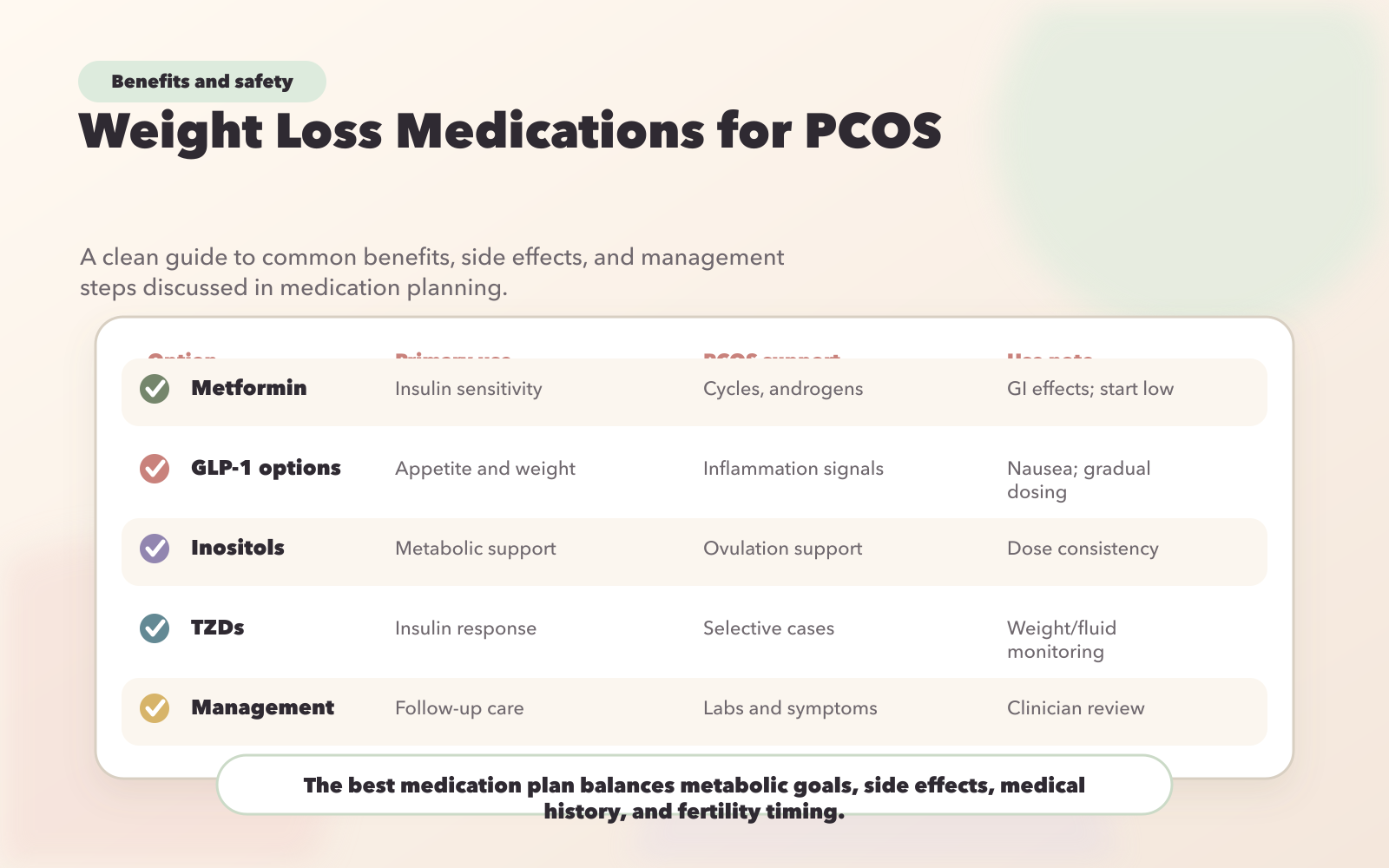
Weight Loss Medications for PCOS: Benefits, Side Effects, and Management
Main Benefits of Weight Loss Medications
Weight loss medications can provide both metabolic and hormonal advantages for women managing PCOS. For instance, GLP-1 receptor agonists are known to improve insulin sensitivity and reduce insulin resistance, as shown by lower HOMA-IR scores. These medications specifically target visceral fat, leading to reduced inflammation and better overall outcomes. This reduction in inflammation complements the hormonal benefits, creating a more comprehensive approach to managing PCOS.
On the hormonal side, these medications can lower the Free Androgen Index (FAI) and total testosterone levels, directly addressing hyperandrogenism - a key factor behind symptoms like unwanted facial hair and acne. Research also highlights an average increase of 2.64 menstrual cycles, which improves ovulation rates. Additionally, cardiovascular health may see improvements, as combination therapies involving GLP-1 RAs and metformin have been linked to better lipid profiles, including reductions in cholesterol and triglycerides.
"Weight reduction as little as 5–10% (or in some cases, as little as 3%) can improve both adiposopathy ('sick fat disease') and fat mass disease."
- Harold E Bays, MD, Louisville Metabolic and Atherosclerosis Research Center
A weight loss of just 5% to 10% can significantly enhance both metabolic and reproductive health for PCOS patients. Considering that obesity affects about 50% to 80% of women with PCOS, these medications offer a valuable option when lifestyle changes alone don't deliver the desired results.
That said, the benefits come with potential risks that need careful consideration.
Possible Side Effects and Risks
While weight loss medications offer clear advantages, they can also bring side effects, which vary depending on the drug.
- GLP-1 Receptor Agonists: These are commonly associated with gastrointestinal symptoms like nausea, vomiting, constipation, and dizziness. Starting with a low dose and gradually increasing it can help manage these issues.
- Orlistat: By blocking fat absorption, this drug can cause oily rectal discharge, gas, and fecal urgency. It may also raise the risk of calcium oxalate kidney stones due to increased intestinal oxalate absorption.
- Phentermine/Topiramate: This combination can lead to paresthesias (tingling sensations), altered taste, and a higher risk of kidney stones (calcium phosphate). It’s also unsafe during pregnancy because of the risk of oral clefts.
- Naltrexone/Bupropion: These medications may elevate blood pressure and cause gastrointestinal discomfort. They are not suitable for individuals with seizure disorders.
| Medication Class | Common Side Effects | Key Contraindications | Management Strategy |
|---|---|---|---|
| GLP-1 RAs | Nausea, vomiting, constipation | Personal or family history of medullary thyroid cancer | Start with a low dose; increase gradually |
| Orlistat | Oily discharge, gas, fecal urgency | Malabsorption disorders | Follow a low-fat diet; stay hydrated |
| Phentermine/Topiramate | Paresthesias, altered taste, kidney stones | Contraindicated in pregnancy (risk of oral clefts) | Use effective contraception; stay hydrated |
| Naltrexone/Bupropion | Nausea, elevated blood pressure | Seizure disorders | Monitor blood pressure regularly |
Women of reproductive age should use reliable contraception while on these treatments, especially since medications like topiramate increase the risk of oral clefts during the first trimester. Additionally, for PCOS patients already on insulin or sulfonylureas, healthcare providers should adjust doses to prevent hypoglycemia when starting weight loss medications.
Managing PCOS with these medications also requires a focus on long-term strategies.
Long-Term Considerations
Weight loss medications are most effective when combined with sustainable lifestyle changes. Since obesity in PCOS is a chronic condition, many women experience weight regain after stopping these medications. This doesn’t mean the treatment has failed - it highlights the importance of a well-rounded, long-term management plan that includes nutrition, regular exercise, and behavioral adjustments.
"Weight loss interventions were associated with improvements in some important features of PCOS and should be considered as a routine treatment option for people with PCOS."
- Jadine Scragg, MSci, PhD, University of Oxford
Think of these medications as tools that complement healthy habits. The "four pillars" of PCOS management - nutrition, physical activity, and behavioral changes - are essential for lasting success. Women who maintain dietary improvements and consistent exercise while on medication often achieve better long-term outcomes, including reduced inflammation and fewer PCOS-related symptoms.
Conclusion
Weight loss medications, especially GLP-1 receptor agonists like liraglutide and semaglutide, have been shown to reduce visceral fat and lower inflammatory markers such as IL-6 and TNF-α in women with PCOS. Studies reveal that even a 5% to 10% reduction in body weight can significantly improve insulin sensitivity, decrease androgen levels, and enhance both metabolic and reproductive health for those managing PCOS. Clinical trials consistently report that these medications lead to greater weight loss compared to placebo treatments.
For the best results, these medications should be combined with nutrition, exercise, and behavioral changes, as weight regain is a common challenge without a long-term management strategy. It’s also important to note that weight loss medications may cause side effects and are not suitable during pregnancy, making reliable contraception essential for women of reproductive age. This aligns with the evidence linking visceral fat reduction to decreased inflammation in PCOS.
"Available evidence suggests that GLP-1 receptor agonists, particularly liraglutide, might represent the pharmacotherapy of choice in overweight/obese patients with PCOS."
- Christodoula Kourtidou, Aristotle University of Thessaloniki
These findings emphasize the importance of weight loss medications as part of a comprehensive PCOS management plan. To determine the most suitable treatment, consult a healthcare provider. For those seeking specialized support, Oana Health offers telehealth services with licensed professionals who can prescribe evidence-based treatments, including GLP-1 medications, delivered directly to your home with free shipping.
Ultimately, managing PCOS isn’t just about weight loss - it’s about adopting a sustainable, long-term plan that enhances overall health and quality of life.
FAQs
Can GLP-1 drugs reduce PCOS inflammation without significant weight loss?
GLP-1 drugs might offer benefits for reducing PCOS-related inflammation, even in cases where there isn't substantial weight loss. Studies suggest these medications can enhance metabolic health and address insulin resistance on their own, without requiring major changes in body weight.
Which PCOS symptoms improve most with GLP-1 medications?
GLP-1 medications play a key role in managing weight loss and hormonal balance for individuals with PCOS. These medications are known to help reduce testosterone levels and promote a more regular menstrual cycle, tackling some of the primary symptoms linked to the condition.
How long do I need to stay on weight loss meds to keep PCOS benefits?
Current studies indicate that weight loss medications, such as GLP-1 receptor agonists, can help improve metabolic and inflammatory markers in individuals with PCOS. However, the optimal length of treatment needed to maintain these benefits remains uncertain. Research hints that continued use might be necessary to preserve the positive effects.