
Lean PCOS Patients: Is Metformin Effective?
Metformin can help manage lean PCOS symptoms. It improves insulin sensitivity, lowers androgen levels, and restores ovulation in many cases. Lean PCOS, affecting individuals with a BMI ≤25, is less common but still involves hormonal imbalances and ovulatory dysfunction. While lifestyle changes like diet and exercise are crucial, Metformin has shown promising results in addressing insulin resistance and improving fertility for lean PCOS patients.
Key Takeaways:
- What is Lean PCOS? PCOS in individuals with a BMI ≤25, featuring irregular periods, high androgen levels, and subtle metabolic issues.
- How Metformin Helps: Improves insulin sensitivity, reduces androgens, and restores ovulation in up to 66.67% of lean PCOS patients.
- Other Options: Lifestyle changes, combination therapies (e.g., Metformin + Spironolactone), and supplements like myo-inositol.
- Challenges: Limited research for lean PCOS compared to overweight cases; treatment plans should be personalized.
Metformin is a strong starting point, but combining it with other treatments may be necessary for some. For tailored care, telehealth services like Oana Health offer convenient, personalized solutions.
Lean PCOS vs Obese PCOS - Why Treatment Is Completely Different! | Dr. Aditya Nimbkar
sbb-itb-6dba428
Does Metformin Work for Lean PCOS Patients?
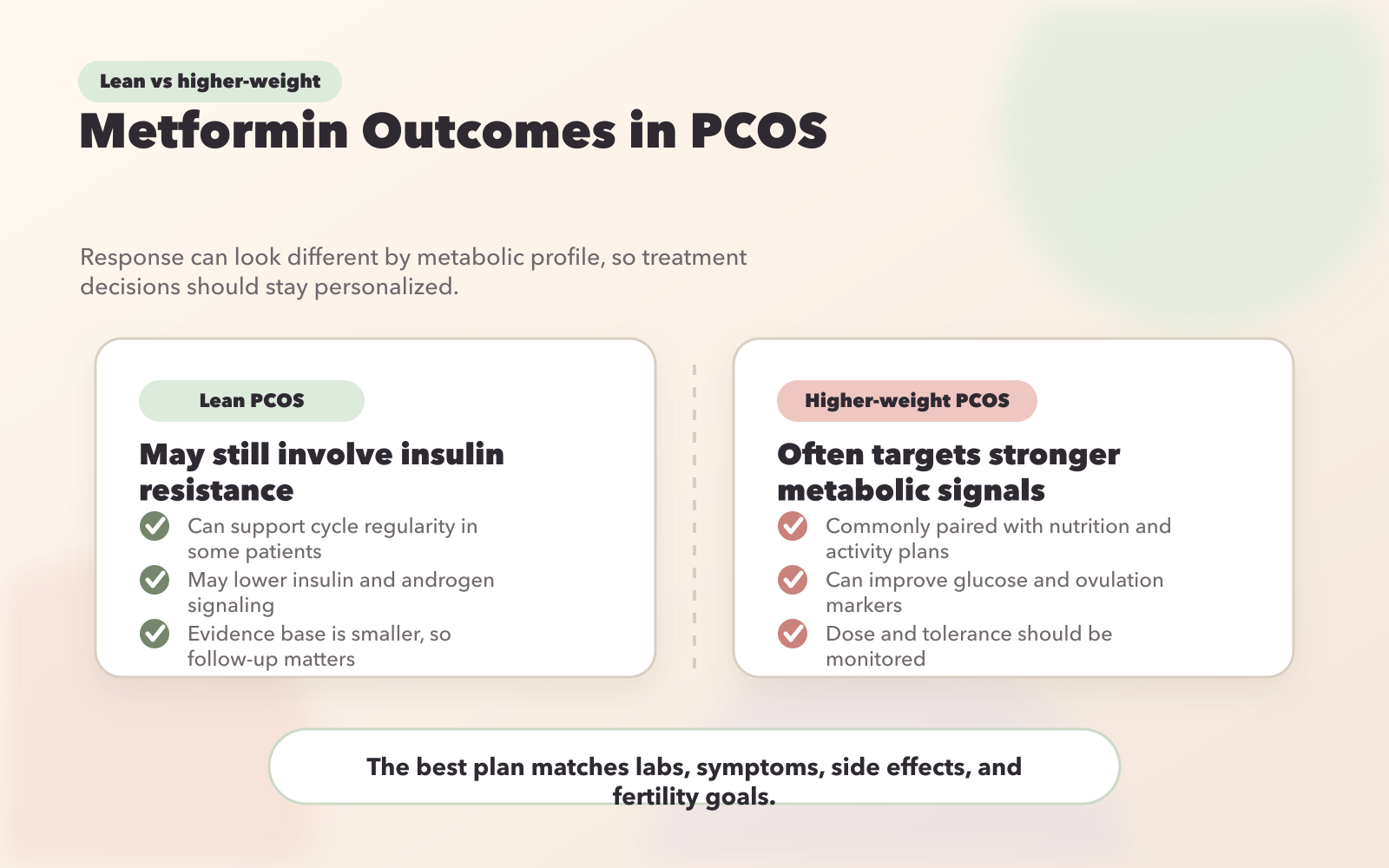
Metformin Treatment Outcomes: Lean vs Overweight PCOS Patients Comparison
What Research Shows About Metformin in Lean PCOS
A clinical trial involving normal-weight PCOS patients revealed that metformin monotherapy restored menstrual cycles in 66.67% (12 out of 18 participants) after 12 weeks. This outcome can be attributed to metformin's ability to lower insulin levels, which, in turn, reduces ovarian P450c17α activity and serum androgen levels. Additionally, it helps normalize elevated LH levels and the LH/FSH ratios that are commonly observed in lean PCOS patients.
"Insulin resistance seemed inherent in PCOS independent of obesity." - Joseph M. Pappachan, Department of Endocrinology, Diabetes & Metabolism
Beyond improving ovulation, metformin has been shown to reduce total testosterone levels in lean women, which helps alleviate hyperandrogenic symptoms. However, the current body of evidence supporting treatment for lean PCOS is still considered limited. Larger, more robust randomized controlled trials are necessary to develop clearer guidelines. Next, let’s explore how metformin’s effects differ between lean and overweight PCOS patients.
Metformin Results: Lean vs. Overweight PCOS Patients
When comparing lean and overweight PCOS patients, some notable differences emerge. Research shows that insulin resistance affects up to 75% of normal-weight PCOS patients, compared to approximately 95% of overweight and obese patients. Lean patients are more likely to exhibit elevated LH levels and higher LH/FSH ratios, while overweight patients often face more pronounced hyperinsulinemia and metabolic syndrome.
"Metformin effectively reduced testosterone levels in both normal and overweight women with PCOS." - Journal of Ovarian Research
Interestingly, metformin also contributed to significant weight loss in normal-weight patients (p=0.0204). While overweight patients often combine metformin with weight loss strategies, lean patients focus more on maintaining their weight while relying on insulin-sensitizing treatments as a cornerstone of their care.
Benefits and Limitations of Metformin
Metformin offers several benefits: it tackles insulin resistance, restores ovulation, and reduces hyperandrogenic symptoms. It can be used effectively as a monotherapy or alongside other treatments tailored to specific symptoms.
However, there are limitations to keep in mind. The available evidence is still considered low to moderate in quality, leaving some uncertainty around the best dosing strategies and treatment durations for lean patients. Furthermore, individual responses to metformin vary, and not all patients experience restored ovulation. For those who don’t see results, assisted reproductive technologies may be required. Treatment plans should be personalized, focusing on weight maintenance rather than weight loss when using insulin-sensitizing medications. These factors naturally lead to exploring complementary and alternative treatment options for lean PCOS.
Other Treatment Options for Lean PCOS
Diet and Exercise for Lean PCOS
Even though lean PCOS patients may not struggle with weight issues, many still deal with insulin resistance. This makes lifestyle changes just as important, though the focus shifts to maintaining a healthy weight and improving insulin sensitivity. Incorporating complex carbohydrates like quinoa, brown rice, and sweet potatoes into meals can help maintain stable blood sugar levels. Planning meals ahead of time also helps regulate energy levels and reduces the likelihood of unnecessary snacking.
"Physical activity, regardless of what form it takes, is the greatest insulin-sensitizing agent - even if it doesn't result in weight loss." - Monica Moore, MSN, APRN, Illume Fertility
When it comes to exercise, consistency is key. Activities such as walking, swimming, running, or participating in group fitness classes can enhance insulin sensitivity, even if they don’t lead to weight loss. Stress management also plays a critical role, as chronic stress can worsen inflammation and disrupt hormonal balance. Simple practices like deep breathing, journaling, or even gardening can help restore hormonal harmony. These foundational lifestyle adjustments pave the way for more advanced treatments if needed.
Combining Metformin with Other Medications
For lean PCOS patients, addressing insulin resistance and hyperandrogenism often requires more than lifestyle changes. When metformin alone isn’t enough, combining it with anti-androgenic medications can tackle both issues simultaneously. This approach is particularly beneficial for patients who don’t respond well to oral contraceptives or for those who cannot take estrogen-containing pills due to an increased risk of blood clots.
"The combined use of metformin and medications with anti-androgenic effects targets two different aspects of PCOS pathophysiology i.e. insulin resistance with the former and hyperandrogenism with the latter." - Springer Nature
Medications like spironolactone or clomiphene can complement metformin by improving ovulation and reducing hyperandrogenic symptoms. Studies show that metformin can lower insulin levels, regulate menstrual cycles, support ovulation, and even boost pregnancy rates. If symptoms persist after six months of standard treatment, patients should consult their healthcare provider about combination therapy options. These combined approaches offer a more comprehensive plan for managing PCOS symptoms.
New Treatment Approaches and Personalized Care
Emerging treatments are offering more precise solutions for lean PCOS. Myo-inositol supplements, for instance, are frequently used to enhance ovarian function and boost fertility. Letrozole has also gained attention as an alternative to clomiphene for stimulating ovulation. For those who experience gastrointestinal issues with oral metformin, topical formulations may be a gentler option.
Certain supplements can also provide added support. Omega-3 fatty acids may help reduce inflammation, while vitamin D has been linked to better metabolic health. For specific symptoms, eflornithine cream can slow facial hair growth, and oral minoxidil may combat scalp hair loss. Platforms like Oana Health are making personalized care more accessible. Through telehealth services, licensed professionals can create tailored treatment plans based on individual health histories and deliver medications directly to patients' homes. This kind of customized approach ensures that treatments are aligned with each patient's unique hormonal needs and symptoms.
Choosing the Right Treatment for Lean PCOS
Treatment Comparison: What Works Best
Managing lean PCOS effectively means tackling both metabolic and hormonal imbalances. A 2025 network meta-analysis of 29 randomized controlled trials with 1,476 participants found that Metformin significantly improves insulin resistance, reducing HOMA-IR scores by 3.36 points compared to Orlistat. While Metformin addresses metabolic issues, patients with elevated testosterone levels may respond better to Orlistat, which was shown to reduce testosterone more effectively (standardized mean difference of 2.32).
For enhanced results, combining Metformin with GLP-1 receptor agonists can lead to additional benefits, such as lowering BMI by 2.05 points, as well as reducing body weight and fasting blood glucose levels when compared to Metformin alone.
Although most studies focus on participants with a median BMI of 35.9, lean PCOS - defined by a BMI under 25 - requires a tailored approach. Treatments should not only address metabolic markers but also consider adrenal androgen effects, which are more subtle in lean PCOS. Supplements like Inositol may be a better choice for some, as they help manage symptoms without triggering stress hormone spikes often caused by calorie restriction.
These findings highlight the need for personalized treatment plans that consider the unique challenges of lean PCOS. Telehealth has emerged as a practical way to deliver such individualized care.
How Telehealth Makes PCOS Treatment Easier
Oana Health provides a telehealth service that connects patients with licensed professionals to develop tailored lean PCOS treatment plans. By leveraging insights into treatments like Metformin, the platform ensures care is both informed and customized.
Oana Health offers a variety of affordable options, with transparent pricing. For instance:
- Oral Metformin ER: Starts at $22 per month
- Combination therapy with Metformin and Spironolactone: Available for $32 monthly
- Oral GLP-1 and Metformin combination: Priced at $199 per month for advanced metabolic support
All medications are delivered directly to your doorstep, ensuring consistent and convenient access to treatment. This approach simplifies the management of lean PCOS, making it easier than ever to stay on track.
Conclusion
Understanding Metformin for Lean PCOS
Metformin plays a key role in improving ovulation for lean PCOS patients (BMI ≤25) by increasing insulin sensitivity and reducing androgen levels. Since insulin resistance impacts 83.3% of lean PCOS patients, addressing this issue can help restore ovulatory function.
While Metformin is effective in regulating menstrual cycles and ovulation, its impact on metabolic factors in lean patients is typically less pronounced compared to those who are overweight. Additionally, lean PCOS patients often exhibit higher LH/FSH ratios and unique hormonal patterns, highlighting the need for individualized treatment approaches rather than a universal solution.
For many, exploring additional strategies like inositol beyond Metformin can further enhance hormonal balance.
Exploring Alternative Treatments
Due to the distinct characteristics of lean PCOS, personalized care is essential. Lifestyle changes, such as adopting nutrient-rich diets and staying active, can help improve androgen levels and insulin sensitivity, potentially reversing symptoms in some cases. Unlike overweight PCOS patients, the focus for lean individuals is often on maintaining a healthy weight rather than losing it.
Services like Oana Health offer convenient telehealth consultations with licensed professionals who can create treatment plans tailored to your hormonal profile and symptoms. Whether Metformin alone or a combination of treatments is recommended, consulting with experts ensures a scientific and personalized approach. A thoughtful treatment plan - whether it involves medication, lifestyle changes, or both - remains the cornerstone of managing lean PCOS effectively.
FAQs
How long does metformin take to restore ovulation in lean PCOS?
The time it takes for metformin to help restore ovulation in lean PCOS patients can differ from person to person. Studies indicate that noticeable hormonal and metabolic changes may start within a few months of treatment. However, some effects might take several months to a year to become evident. The results largely depend on individual circumstances and how long the treatment is continued.
What metformin dose is typical for lean PCOS patients?
For individuals with lean PCOS, metformin is often prescribed in doses ranging from 850 mg to 1700 mg per day. However, some studies indicate that the effectiveness of metformin might not be tied to the dosage, meaning lower doses could be an option to help minimize potential side effects. It’s essential to consult with a healthcare provider to find the dosage that works best for your specific situation.
What are the best options if metformin doesn’t work for lean PCOS?
If metformin doesn’t work for lean PCOS, there are other options to consider. These include lifestyle adjustments, adding micronutrient supplements, and incorporating resistance exercises. Medications like letrozole or clomiphene citrate can help induce ovulation. In some cases, procedures such as laparoscopic ovarian drilling, intrauterine insemination (IUI), or assisted reproductive techniques (ART) may be recommended. It’s essential to consult with a healthcare provider to determine the most suitable approach for your situation.