
Managing PCOS: Anti-Androgens and Family Planning
Polycystic ovary syndrome (PCOS) affects 6%–12% of individuals with ovaries in the U.S. and is often linked to excess male hormones (hyperandrogenism). Symptoms include acne, unwanted hair growth, and fertility challenges. Anti-androgen medications like spironolactone, flutamide, and finasteride help manage these symptoms by reducing androgen activity but must be discontinued before trying to conceive due to risks to male fetal development.
Key points:
- Anti-androgens: Spironolactone, flutamide, and finasteride reduce symptoms like acne and hirsutism.
- Contraception: Essential during anti-androgen use to prevent pregnancy risks.
- Fertility treatments: Ovulation-inducing drugs (e.g., letrozole) and lifestyle changes improve chances of conception after stopping anti-androgens.
- Emerging options: New therapies like enzyme inhibitors (e.g., resveratrol, curcumin) show promise in targeting androgen production.
Managing PCOS while planning for pregnancy requires careful adjustments to treatment. Collaborate with healthcare providers to balance symptom control and fertility goals.
PCOS and Fertility: What Treatment Actually Works (Backed by Science)
sbb-itb-6dba428
Anti-Androgen Medications for PCOS
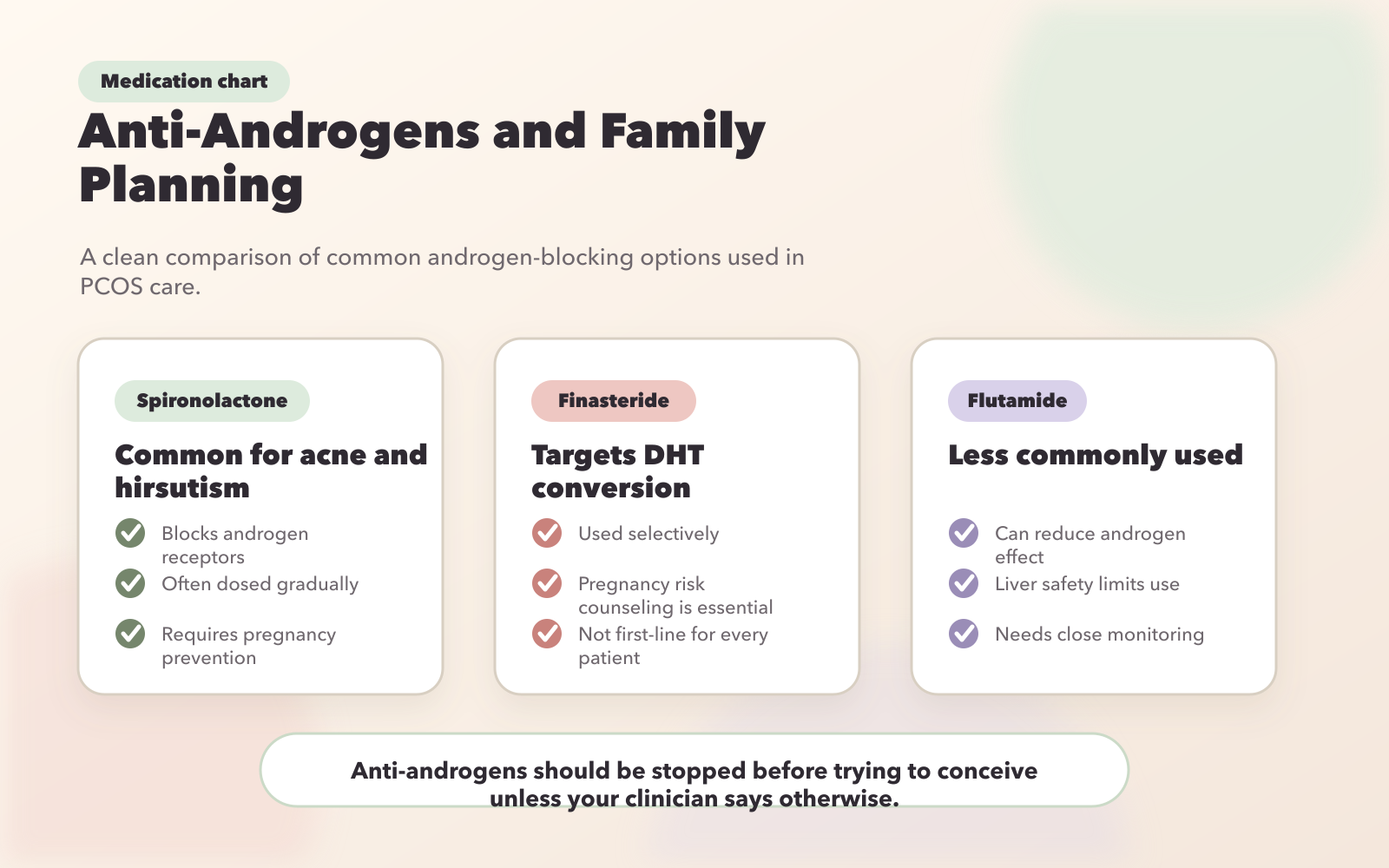
PCOS Anti-Androgen Medications Comparison Chart
Managing PCOS symptoms often involves anti-androgen medications, which work in various ways to counteract the effects of excess androgens. The choice of treatment depends on the specific symptoms, potential side effects, and individual health considerations.
Spironolactone for Hirsutism and Acne
Spironolactone is one of the most commonly prescribed medications in the U.S. for managing PCOS-related symptoms like unwanted hair growth and acne. It works by blocking androgen receptors in the skin and hair follicles, reducing the impact of testosterone. Typical doses range from 50–200 mg daily, often starting at a lower dose to assess tolerance.
"The most commonly used anti-androgen for hirsutism treatment is spironolactone (Aldactone, CaroSpir). The results are modest and take at least six months to be seen." - Mayo Clinic
Studies show that acne improves by 40–50% within three treatment cycles and by 80–90% after nine cycles. For those with seborrhea, spironolactone can reduce sebum production by 30%, with 80% of patients reporting improvement. While side effects like menstrual irregularities, breast tenderness, and fatigue can occur, serious risks like hyperkalemia (high potassium) are rare in healthy individuals. Monitoring potassium and kidney function is recommended, especially for patients with pre-existing renal conditions.
Oana Health offers spironolactone through their telehealth service, providing prescriptions from licensed professionals and free home delivery.
Other medications, such as flutamide and finasteride, provide alternative options for addressing PCOS symptoms.
Flutamide and Finasteride
Flutamide is a strong non-steroidal androgen receptor blocker that works at the cellular level to reduce androgen effects. While effective for hirsutism and improving insulin sensitivity, its use is limited due to a significant risk of liver toxicity. Typical doses range from 62.5–250 mg daily, and liver function must be closely monitored. Because of these risks, flutamide is usually reserved for cases where other treatments have failed. Additionally, strict contraception is necessary due to its potential teratogenic effects.
Finasteride works differently by inhibiting the 5-alpha-reductase enzyme, which prevents testosterone from converting into its more potent form, dihydrotestosterone (DHT). This makes it effective for managing hair loss and hirsutism, with doses typically ranging from 1–5 mg daily. However, finasteride doesn't help with acne since it doesn't reduce sebum production. While generally well-tolerated, some patients may experience mood changes or sexual side effects. Like flutamide, it requires reliable contraception.
Over 40% of women with facial hair see improvement within nine months of starting combined anti-androgen treatments. However, results take time, so patience is key.
Topical Anti-Androgen Options
For those worried about systemic side effects, topical treatments offer a more localized approach. FDA-approved eflornithine cream (Vaniqa) is applied twice daily to slow facial hair growth, though it doesn’t remove existing hair. Oana Health provides eflornithine at 12% concentration for $69 per month.
Topical spironolactone is another option, particularly for hair loss. Applied directly to the scalp, it targets hair follicles while minimizing systemic absorption. Oana Health offers topical spironolactone for $43 per month, making it a good choice for those who prefer to avoid oral medications.
Clascoterone (Winlevi) is a newer topical medication specifically approved for acne. Applied as a 1% cream, it blocks androgen activity locally, with minimal systemic effects. Some users may experience mild skin irritation, but it’s a promising option for those looking for targeted acne treatment.
These topical solutions are ideal for individuals concerned about the risks associated with oral medications or for those focusing on specific areas of treatment. They also align well with different reproductive plans, offering flexibility in managing PCOS symptoms.
Using Anti-Androgens While Planning for Pregnancy
When the focus shifts to fertility, adjusting anti-androgen therapy becomes a key step. Moving from managing symptoms to preparing for conception means rethinking how these treatments are used.
Pregnancy Risks and Contraception Requirements
Medications like spironolactone, finasteride, and flutamide are known teratogens, meaning they can interfere with fetal androgen development. Specifically, these drugs can feminize male fetuses, potentially leading to ambiguous genitalia and even affecting fetal brain development. Because of these risks, it's essential to use effective contraception, such as birth control pills or an intrauterine device (IUD), while taking these medications. This precaution ensures a safe transition when it's time to discontinue anti-androgens in preparation for pregnancy.
When to Stop Anti-Androgens Before Pregnancy
Once conception becomes the goal, a clear plan for stopping anti-androgens is necessary. Given their teratogenic nature, these medications must be discontinued before trying to conceive. The timeline for stopping treatment varies depending on the specific drug and individual health factors. Collaborating with your healthcare provider is crucial to create a tailored plan. Your body will need time to eliminate the medication and return to normal hormonal function. Scheduling a preconception consultation can help make this transition smoother and set the stage for fertility-focused treatments.
Improving Fertility After Stopping Anti-Androgens
After discontinuing anti-androgens, several approaches can help restore ovulation and support conception:
- Ovulation Induction Medications: Medications like letrozole or clomifene can stimulate ovulation, with letrozole often being the preferred option.
- Metformin Therapy: This can enhance insulin sensitivity and restore ovulation within 2–3 months. When continued into early pregnancy, it may also lower the risk of miscarriage and gestational diabetes.
- Laparoscopic Ovarian Drilling (LOD): For those who don’t respond to oral medications, LOD can be an option. This procedure targets androgen-producing ovarian tissue using heat or lasers and induces ovulation in up to 80% of cases.
- Lifestyle Changes: Losing just 5% of body weight can significantly improve symptoms of PCOS and boost fertility. A diet rich in whole grains, lean proteins, fruits, and vegetables, combined with regular exercise, can improve insulin sensitivity and support ovarian function.
- Nutritional Supplements: Adding supplements like inositol, folate, and CoQ10 early in the process may benefit reproductive health. For instance, studies show that myo-inositol supplementation during IVF resulted in a fertilization rate of 58.3%, compared to 42.6% in a control group.
Navigating the challenges of PCOS treatment while planning for pregnancy can feel overwhelming, but expert guidance can make all the difference. Oana Health offers telehealth consultations with licensed professionals specializing in PCOS and hormonal health. These services can help you safely adjust your treatment and maximize your chances of achieving your fertility goals.
New Treatment Approaches for PCOS
Emerging treatments for PCOS are now focusing on directly targeting androgen production. This approach tackles hyperandrogenism at its source while aiming to minimize side effects.
Steroidogenic Enzyme Inhibitors
A promising area of research involves medications that disrupt the enzymes responsible for producing androgens. One standout example is artemisinins, originally developed to treat malaria. These compounds have shown potential in managing PCOS by breaking down CYP11A1, the enzyme that initiates androgen synthesis. As Qi-Qun Tang explains, "Quantitative proteomics analysis revealed CYP11A1, the enzyme catalyzing the initial step of androgen synthesis, as the most significantly decreased protein affected by artemisinins".
Additionally, natural compounds are being studied for their ability to lower androgen levels. For instance:
- Resveratrol: Clinical trials using 1,000 mg of resveratrol over three months demonstrated its ability to reduce androgen production by inhibiting the CYP12 and CYP21 enzymes.
- Curcumin: Administering 500 mg of curcumin three times daily has been linked to significant reductions in DHEA levels and fasting plasma glucose in PCOS patients.
These plant-based options are gaining attention due to their gentler side effect profiles. Combining these enzyme inhibitors with existing treatments could further improve outcomes for patients.
Combining Anti-Androgens with Other Treatments
Pairing anti-androgens with other therapies allows for a more comprehensive approach to managing PCOS. For example, combining metformin and anti-androgens can address both insulin resistance and hyperandrogenism. This combination is particularly beneficial for patients dealing with obesity or for those who cannot use combined oral contraceptives due to thromboembolic risks.
A 2023 meta-analysis even found that anti-androgens combined with lifestyle changes were more effective at reducing hirsutism than metformin paired with lifestyle modifications. For women who don’t see results from oral contraceptives after six months, adding an anti-androgen can further help with acne and unwanted hair.
Researchers are also exploring whether combining systemic and topical anti-androgens - like topical spironolactone - can maximize effectiveness while minimizing systemic side effects.
As with any treatment, these combinations must be tailored to individual needs, especially for those with family planning goals. While these new approaches improve symptom management, they also align with broader strategies for safe and effective family planning.
If you’re exploring these options, working with a PCOS specialist can help you create a customized treatment plan. Platforms like Oana Health offer telehealth consultations with licensed professionals who can incorporate both established and cutting-edge therapies into a plan tailored to your specific symptoms and goals.
Conclusion
Managing PCOS effectively requires carefully balancing anti-androgen treatments with future fertility goals. Medications like spironolactone, finasteride, and flutamide are highly effective for addressing symptoms such as hirsutism, acne, and hair loss. However, these drugs are strictly off-limits during pregnancy due to the risk of under-virilization in male fetuses. Because of this, using reliable contraception is non-negotiable while on these medications. Transitioning from anti-androgen therapy to fertility-focused treatments is a crucial step when planning for pregnancy.
When the goal shifts from symptom control to conception, the treatment approach changes significantly. Ovulation induction medications like letrozole, combined with lifestyle adjustments, take center stage. Even modest weight loss - just 5% to 10% of body weight - can lead to noticeable improvements in both metabolic health, PCOS-related inflammation, and reproductive outcomes. These lifestyle changes become a cornerstone of preparing your body for pregnancy.
Partnering with knowledgeable healthcare providers is key to navigating this transition safely. As highlighted in the Gynecological and Reproductive Endocrinology & Metabolism journal, "Treatment plans should consider each patient's unique characteristics, their metabolic status, manifestations of hyperandrogenism, and personal goals". This personalized approach ensures that your care aligns with both your immediate needs and long-term aspirations.
Building a cohesive care team is essential as you move from managing symptoms to preparing for pregnancy. A multidisciplinary approach, involving specialists like reproductive endocrinologists, dermatologists, and nutritionists, can provide well-rounded support tailored to your needs. Regular monitoring, such as preconception screening with a 75-g oral glucose tolerance test (OGTT), is vital for managing risks like gestational diabetes and other pregnancy-related complications common in women with PCOS.
For those seeking tailored PCOS care that adapts to their family planning timeline, platforms like Oana Health offer access to licensed professionals who can design personalized treatment plans. Whether you're focused on managing current symptoms or preparing for future pregnancy, working with specialists ensures your care is both safe and effective.
FAQs
How long before trying to conceive should I stop spironolactone or finasteride?
When planning to conceive, it's advised to discontinue spironolactone around two months beforehand, as this timeframe typically allows fertility and menstrual cycles to return to normal. For finasteride, stopping the medication several months prior is often recommended. However, the exact timing can vary, so it’s crucial to consult your healthcare provider to determine the best plan tailored to your situation.
What birth control works best while taking anti-androgens for PCOS?
If you're managing PCOS with anti-androgens, combined oral contraceptives (COCs) are often the most effective birth control choice. Specifically, COCs that contain anti-androgenic progestins - such as CPA (cyproterone acetate), dienogest, or nomegestrol acetate - can be particularly helpful.
These options not only provide contraception but also assist in reducing androgen levels, which can help alleviate common PCOS symptoms like acne and excessive hair growth.
What can I use for acne or facial hair after stopping anti-androgens for pregnancy?
Managing acne and facial hair after discontinuing anti-androgens for pregnancy can involve several approaches, including topical treatments, hormonal therapies, or dermatological procedures. Each option depends on your specific situation, so it's crucial to consult a healthcare professional who can provide personalized advice and recommend the best course of action for your needs.