
Pharmacogenomics and PCOS Treatment
If you’ve struggled with PCOS treatments that don’t work or come with unpleasant side effects, pharmacogenomics could change that. This approach uses your genetic profile to predict how your body will respond to specific medications, addressing the root causes of PCOS rather than just the symptoms. With genetics influencing up to 70% of PCOS development, treatments like metformin, hormonal contraceptives, and anti-androgens can be tailored to your unique needs, saving you time, money, and frustration.
Here’s what you need to know:
- PCOS affects 5–26% of women globally, costing the U.S. healthcare system $4 billion annually.
- Genetic testing can identify markers like DENND1A and CYP2C9, which influence medication effectiveness and side effects.
- Tailored treatments can help overcome common issues like insulin resistance, clomiphene resistance, and androgen overproduction.
- Companies like Oana Health are already offering personalized PCOS treatment plans starting at $14/month, delivered straight to your door.
Pharmacogenomics is shifting PCOS care from trial-and-error to precision medicine, helping women access treatments that work better for their specific genetic and metabolic profiles.
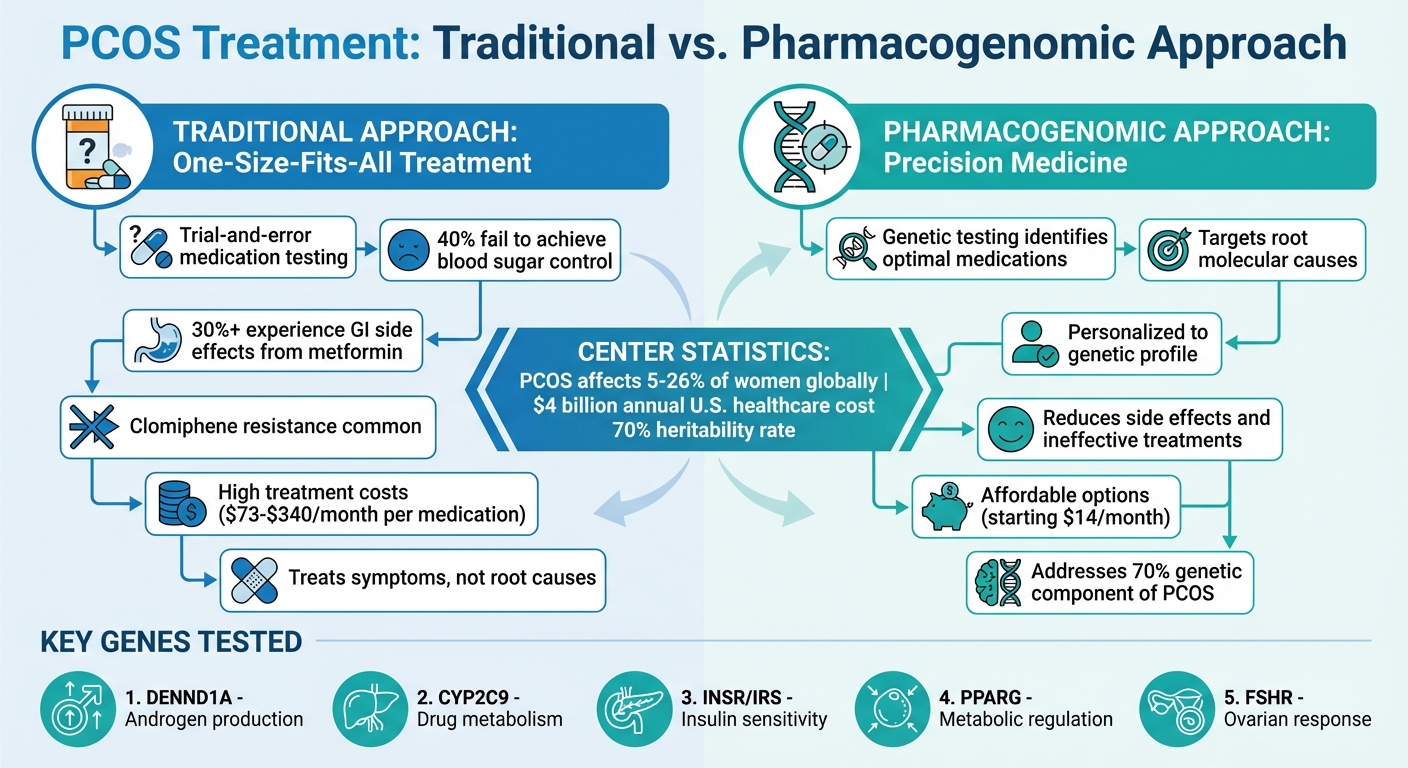
Traditional vs Pharmacogenomic PCOS Treatment Approaches
Why Standard PCOS Treatments Often Fall Short
Standard treatments for PCOS often fail to consider the unique genetic and metabolic differences between individuals. PCOS is a highly varied condition, affecting women in different ways based on their genetic makeup, metabolic profile, and specific symptoms. Most conventional treatments focus on managing individual symptoms - like irregular periods or excess hair growth - without addressing the root causes, which can differ significantly from person to person. This one-size-fits-all approach often leads to inconsistent results, as responses to treatments are deeply tied to genetic factors.
This explains why many women find themselves trying multiple medications before discovering something that works. As Dr. Richard S. Legro from Penn State College of Medicine puts it:
"The search for the single unifying theory to this disorder will hopefully yield the single best treatment, but this quest remains one of the Holy Grails of reproductive endocrinology."
Adding to the challenge, genome-wide studies have uncovered numerous genetic markers linked to PCOS, but they account for less than 10% of the condition’s heritability. This complexity means that treatments effective for one woman might be ineffective - or even harmful - for another.
How Genetic Differences Affect Treatment Response
Genetic variations play a significant role in how individuals respond to medications. Take metformin, for instance, which is widely prescribed for managing insulin resistance in PCOS. Genetic differences in how the liver processes metformin can greatly reduce its effectiveness in lowering blood sugar for certain individuals. In fact, around 40% of patients fail to achieve adequate blood sugar control with standard oral medications due to these genetic factors.
Other medications are similarly affected by genetic variations. For example:
- Variants in the CYP2C9 gene can alter how quickly the body metabolizes sulfonylureas, potentially leading to excessive insulin secretion or dangerous drops in blood sugar.
- For thiazolidinediones like pioglitazone, the effectiveness in regulating fatty acid storage and glucose metabolism depends on specific PPARγ gene variants.
- Women with certain DENND1A gene variants experience persistent androgen overproduction in their ovaries, making hormonal suppression therapies less effective.
- Those with risk variants in the TBC1D4 gene face a tenfold higher risk of insulin resistance compared to non-carriers.
Without genetic testing, doctors often rely on trial and error, which can be frustrating and time-consuming for patients.
Treatment Side Effects and Drug Resistance
Side effects from standard PCOS medications are another common hurdle. For example, over 30% of metformin users report gastrointestinal issues, such as nausea and diarrhea. Combined oral contraceptive pills (COCPs), frequently prescribed to regulate menstrual cycles and treat acne, come with risks like venous thromboembolism and mood disturbances. Spironolactone, used to manage excess hair growth, requires monitoring for hyperkalemia and is unsafe during pregnancy. While GLP-1 agonists show promise for weight management, they often lead to significant weight regain after discontinuation.
Resistance to certain treatments adds yet another layer of complexity. For instance, some women experience "clomiphene resistance" when trying to conceive, forcing them to turn to more expensive second-line options like gonadotropins or letrozole. This resistance is often linked to a "vicious feedback loop", where excess androgens exacerbate insulin resistance, which in turn stimulates even more androgen production. Obesity further complicates this cycle by reducing the effectiveness of both hormonal treatments and metformin.
The financial strain of PCOS treatments is substantial. While generic metformin costs about $73 per month, brand-name letrozole (Femara) can cost approximately $340 monthly. Considering the trial-and-error nature of finding the right treatment, many women end up spending hundreds or even thousands of dollars before seeing meaningful relief.
These challenges highlight the urgent need for treatment approaches that are tailored to each individual’s genetic and metabolic profile.
What Is Pharmacogenomics and How Does It Work?
Standard treatments for PCOS often rely on trial and error, but pharmacogenomics offers a more precise alternative. This approach matches medications to an individual’s unique genetic profile, shifting PCOS treatment toward addressing its root molecular causes.
Your genetic code plays a crucial role in how your body processes medications, produces hormones, and manages insulin. Since PCOS is heavily influenced by genetic factors, identifying specific genetic variants early on can help eliminate much of the guesswork. This means doctors can select treatments with a higher likelihood of success, tailored specifically to your genetic makeup.
Recent breakthroughs in understanding PCOS genetics have been game-changing. For instance, a 2025 multi-ancestry meta-analysis uncovered 94 genetic loci associated with PCOS, with 73 of these findings being entirely new. While over 100 candidate genes have been studied in relation to PCOS, the focus has primarily been on genes linked to cellular metabolism, reproductive hormones, and chronic inflammation. As highlighted in Nature Genetics:
"Our genetics-driven drug discovery approach revealed multiple drug targets and repurposing opportunities, enabling personalized treatment strategies."
This kind of targeted research paves the way for identifying genetic variants that can directly inform PCOS therapies.
Genetic Variants That Influence PCOS
Certain genes have a significant impact on PCOS symptoms and how individuals respond to treatment. For instance, genes like INSR, IRS-1, and IRS-2 are central to insulin signaling and sensitivity. These genes play a role in how effective insulin-sensitizing drugs, such as metformin, will be. Considering that around 70% of women with PCOS experience insulin resistance, variations in these genes can explain why some treatments work better for certain individuals.
Androgen production is another key area influenced by genetics. Genes like CYP17 and CYP11A1, which regulate androgen biosynthesis, can impact hyperandrogenism and how well hormonal therapies perform. Additionally, the DENND1A gene has been identified as a marker for increased androgen production and is associated with a specific PCOS-related theca cell phenotype. Women with certain DENND1A variants might benefit from anti-androgen treatments tailored to their genetic profile.
Other genes also play essential roles:
- SHBG: Regulates sex hormone-binding globulin levels, affecting hormone balance.
- AMH: Influences follicle development and overall PCOS progression.
- PPARG: Helps regulate metabolism and can predict responses to insulin-sensitizing drugs.
- KCNQ1: Linked to insulin secretion and type 2 diabetes risk, connecting it to the metabolic challenges of PCOS.
Emerging research is also focusing on granulosa cells, which may hold promise for future drug development. These genetic insights are already being used to refine treatment strategies.
Using Genetic Testing to Select PCOS Treatments
Genetic testing is revolutionizing how PCOS is managed. Instead of treating symptoms, doctors can now address the condition's molecular roots. By examining genetic variants like FTO (associated with obesity) or CYP17 (linked to androgen production), clinicians can determine whether a patient might benefit more from lifestyle changes, anti-androgen therapies, or insulin-sensitizing medications.
This approach also helps distinguish between different PCOS subtypes, such as metabolic versus reproductive. For example, genetic variations in gonadotropins and their receptors can influence how the hypothalamic-pituitary-ovarian axis responds to hormonal treatments. This is particularly valuable for patients who don’t respond to standard therapies. In cases where clomiphene fails, genetic data on LHCGR and FSHR can predict ovarian responses to ovulation induction drugs, potentially avoiding the need for more expensive second-line treatments.
Pharmacogenomics is transforming PCOS care into a more personalized science. As Dr. Richard S. Legro of Penn State College of Medicine explained:
"The GWAS findings support that PCOS is a complex genetic trait... identifying regions of the genome associated with gonadotropin production or action."
PCOS Treatments Based on Genetic Data
Matching Medications to Genetic Profiles
The traditional "one-size-fits-all" approach to treating PCOS often falls short. Thanks to advancements in genetics, healthcare providers can now personalize treatments by analyzing genetic markers to predict how well a patient will respond to specific therapies.
Take insulin resistance as an example: genetic variants can influence how effectively a patient metabolizes metformin. For instance, those with certain CYP2C9 variants may experience slower drug clearance and higher insulin secretion, making dosage adjustments critical. Similarly, women with DENND1A variants often respond better to anti-androgen treatments like spironolactone.
When it comes to weight management, genetic insights play a pivotal role. For example, TCF7L2 variants suggest that some patients may benefit more from a Mediterranean diet instead of a low-fat one. Screening for conditions like G6PD deficiency is also essential, as it can help prevent complications such as hemolytic anemia. Additionally, PPARγ variants can indicate which patients are likely to see the most improvement in blood glucose levels when using insulin-sensitizing medications.
These genetic insights are transforming PCOS care, making treatments more precise and effective.
Oana Health's Personalized PCOS Treatment Plans

Genetic profiling isn't just a theory - it’s shaping real-world treatments. Companies like Oana Health are at the forefront, offering tailored, prescription-based therapies for PCOS. Through their telehealth platform, patients can connect with licensed medical professionals who review their health history and recommend treatments that align with their unique genetic and medical profiles. This approach brings pharmacogenomics into everyday healthcare.
Oana Health provides several targeted treatment options:
- Metformin & Spironolactone combination ($32/month): This plan addresses both metabolic dysfunction and hyperandrogenism. Metformin improves insulin sensitivity, while spironolactone helps reduce symptoms like hirsutism and acne. Together, these medications offer enhanced symptom relief and better patient compliance.
- Oral GLP-1 & Metformin plan ($199/month): Designed for patients needing more advanced metabolic support, this combination includes GLP-1 receptor agonists like semaglutide. These medications have been shown to deliver greater weight loss and improved insulin sensitivity compared to metformin alone. This plan is especially beneficial for individuals with severe obesity or those who haven’t seen results from lifestyle changes alone.
- Standalone Metformin ER ($22/month): Ideal for patients focused on managing insulin resistance.
- Standalone Spironolactone ($14/month): Suitable for those targeting unwanted hair growth or acne.
All medications are delivered directly to patients' homes with free shipping, making personalized care not only effective but also convenient. With these options, Oana Health is making it easier than ever for individuals to access treatments tailored to their specific needs.
sbb-itb-6dba428
What's Next for Pharmacogenomics in PCOS Care
Combining Genetic, Epigenetic, and Microbiome Data
The future of PCOS treatment is moving toward a deeper understanding of how different biological systems work together. Researchers are now exploring "multi-omics" approaches, which combine genetic information with epigenetic markers (showing how genes are activated or silenced), protein levels, metabolic data, and microbiome profiles. This layered approach builds on existing genetic findings and uncovers how environmental and lifestyle factors influence treatment outcomes.
For instance, epigenetic changes like granulosa cell hypermethylation - often linked to obesity - can significantly impact gene activity. By integrating these data layers, healthcare providers could eventually predict not only the best medications for a patient but also how external factors like diet or stress might affect their response to treatment.
"Our genetics-driven drug discovery approach revealed multiple drug targets and repurposing opportunities, enabling personalized treatment strategies." – Nature Genetics
This method has already helped identify four distinct PCOS subtypes: Hyperandrogenic (HA-PCOS), Obesity-related (OB-PCOS), High-SHBG (SHBG-PCOS), and High-LH/AMH (LH-PCOS). Each subtype carries unique metabolic and reproductive risks. For example, women with OB-PCOS show a 7.9% prevalence of Type 2 Diabetes, while those with HA-PCOS face a 7.32 times higher risk of second-trimester pregnancy loss. By using this multi-omics approach, genetic testing could soon become a routine part of PCOS care.
Making Genetic Testing Standard Practice
Despite its potential, genetic testing is still not widely used in PCOS management. While genetics play a significant role in the condition, current testing methods capture only a fraction of its complexity.
That said, change might be on the horizon. Tools like PcosX (www.pcos.org.cn) now allow clinicians to classify patients into specific subtypes using just nine common clinical variables. This approach offers a more accessible way to predict treatment responses without the need for expensive testing. As these tools become more integrated into routine care - and as the cost of genetic testing continues to drop - this technology could become as standard as checking blood sugar or hormone levels.
With PCOS costing the U.S. healthcare system an estimated $8 billion annually, early diagnosis and personalized treatments could not only improve care but also reduce overall costs.
"In the era of precision medicine, it is important to establish more precise and interpretable subtypes of the disease enabling distinct diagnosis and personalized therapy." – Nature Medicine
Conclusion
Pharmacogenomics is changing the way we approach PCOS care by tailoring treatments to individual genetic profiles. For years, PCOS treatment has often involved a frustrating process of trial and error, leaving many women to endure medications that don’t work or come with unpleasant side effects. By focusing on specific genetic variants - such as DENND1A, INSR, AR, and FSHR - that influence treatment outcomes, pharmacogenomics offers a more targeted and effective approach [23–25]. Considering that the heritability of PCOS is estimated to exceed 70%, this genetic insight allows healthcare providers to address the root causes of the condition, rather than just managing its symptoms.
"When we understand the genetic pathways that are involved, we can develop drugs to target them... we may be able to come up with ways to alter the increase in DENND1A activity that happens in PCOS and treat the disease itself and even cure a number of patients." – Dr. Andrea Dunaif, Icahn School of Medicine at Mount Sinai
This approach not only reduces exposure to ineffective medications and their associated side effects but also directly addresses challenges such as subfertility, insulin resistance, and hyperandrogenism.
Oana Health is at the forefront of this transformation, offering personalized PCOS care through its telehealth platform. Licensed medical professionals carefully review each patient’s health history to recommend treatments tailored to their needs. Whether it’s oral metformin for managing insulin resistance or spironolactone for addressing unwanted hair growth, Oana ensures these therapies are delivered directly to patients’ homes with free shipping.
As genetic testing becomes more accessible and affordable, pharmacogenomics is set to revolutionize PCOS care, replacing the outdated one-size-fits-all approach with truly individualized treatment. This shift could also help alleviate the $4 billion annual burden that PCOS places on the U.S. healthcare system.
FAQs
How does pharmacogenomics help improve PCOS treatment?
Pharmacogenomics is reshaping the way we approach PCOS treatment by customizing hormone therapies based on an individual’s genetic profile. This method pinpoints genetic variations that influence how the body metabolizes medications like oral contraceptives, insulin sensitizers, or anti-androgens. By tailoring treatments to a patient’s genetics, it not only boosts effectiveness but also minimizes unwanted side effects.
For example, pharmacogenomics can uncover genetic factors that impact hormone metabolism or insulin sensitivity. With this insight, healthcare providers can fine-tune dosages or choose medications that align best with the patient’s needs. This precision reduces the guesswork often involved in managing PCOS and addresses a range of symptoms, from hormonal imbalances to metabolic challenges and skin concerns, leading to improved outcomes.
How can genetic markers help personalize PCOS treatments?
Genetic markers are essential for tailoring treatments for PCOS, as they reveal individual variations that impact hormone regulation and metabolic functions. Some of the key genetic factors include variations in genes tied to steroidogenesis, insulin signaling, and gonadotropin regulation, all of which are closely associated with the hormonal imbalances characteristic of PCOS.
Take the AMH (anti-Müllerian hormone) gene, for instance. Variations here can influence ovarian function and follicle development. Additionally, genome-wide studies have uncovered other genes linked to androgen excess and metabolic difficulties. By analyzing these genetic markers, healthcare providers can customize hormone therapies to align more closely with a patient's genetic profile, resulting in more effective treatments and better outcomes.
How can genetic testing make PCOS treatment more affordable and accessible?
Genetic testing holds promise for making PCOS treatment more affordable and easier to access by paving the way for personalized medicine. As researchers pinpoint more gene variants associated with PCOS, these findings can lead to genetic screening tools designed to tailor treatment plans. This approach minimizes the trial-and-error process, which not only saves time but also reduces overall healthcare costs.
On top of that, advancements in technology - like machine learning - are helping cut the costs of genetic analysis. By automating complex processes and boosting efficiency, these tools make testing more economical. Policy changes can also play a critical role, especially those that push for insurance coverage of genetic testing. When combined with greater public awareness about its advantages, these shifts could make genetic testing for PCOS a more accessible and budget-friendly option for many.