
Short-Term vs. Long-Term BHRT: Key Differences
Bioidentical Hormone Replacement Therapy (BHRT) helps manage menopause symptoms like hot flashes and mood swings. But how long should you use it? Here’s the breakdown:
- Short-Term BHRT (up to 5 years): Focuses on quick relief from symptoms like hot flashes, night sweats, and sleep issues. It uses the lowest effective dose to minimize risks.
- Long-Term BHRT (5+ years): Aims to prevent age-related issues like osteoporosis, heart disease, and cognitive decline. It requires ongoing medical monitoring due to increased risks over time.
Quick Comparison
| Feature | Short-Term BHRT | Long-Term BHRT |
|---|---|---|
| Duration | Up to 5 years | 5+ years |
| Focus | Symptom relief | Chronic health support |
| Risks | Lower | Higher |
| Monitoring | Minimal | Regular assessments |
| Key Benefits | Quick symptom relief | Bone, heart, and brain health |
Short-term use is safer and effective for immediate symptom relief, while long-term therapy may offer broader health benefits but comes with added risks. Regular check-ups are essential for both approaches.
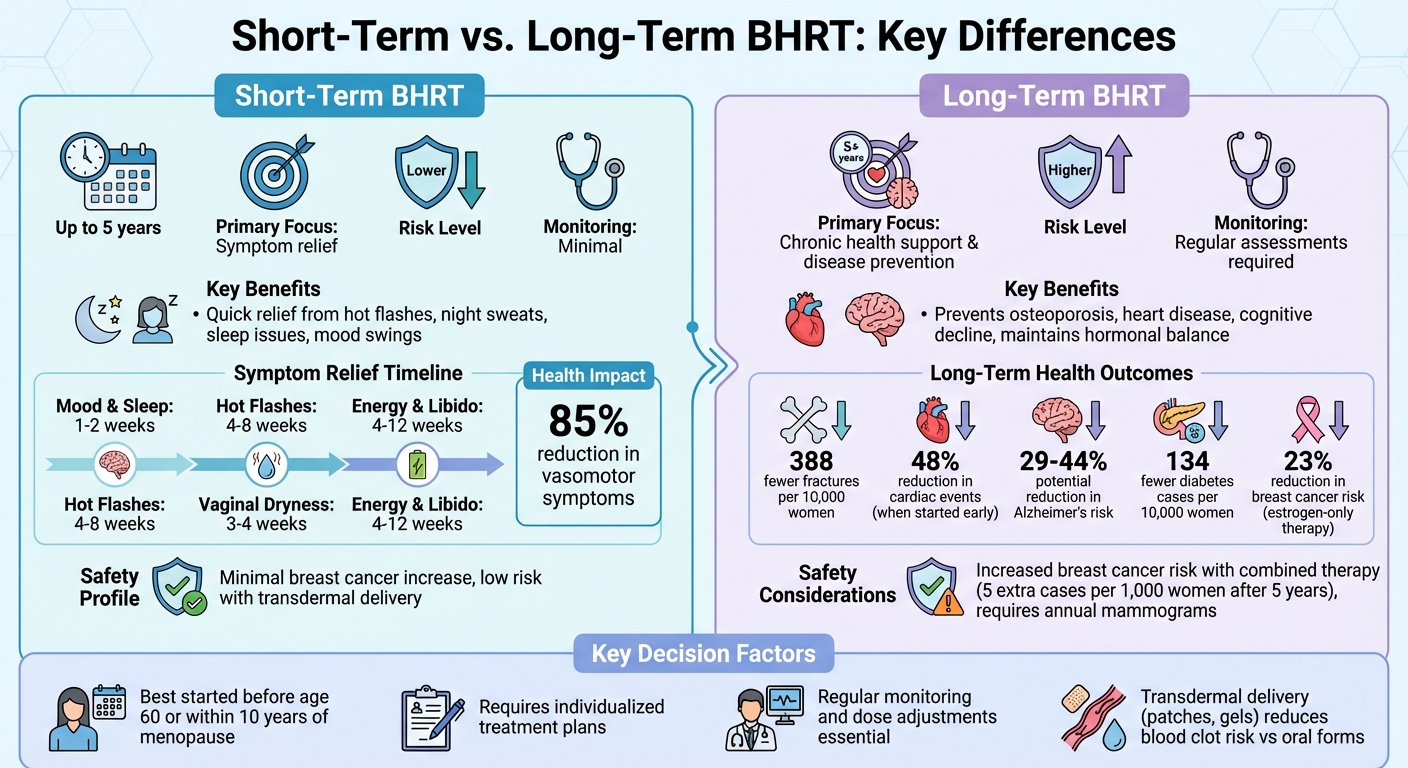
Short-Term vs Long-Term BHRT Comparison Chart
Hormone Replacement After 65 | Life Changing Tool or Dangerous?
Symptom Relief: Short-Term vs. Long-Term BHRT
The effects of Bioidentical Hormone Replacement Therapy (BHRT) on menopause symptoms can differ depending on how long the treatment lasts. Short-term therapy is designed to quickly ease the most disruptive symptoms, while long-term therapy focuses on maintaining hormonal balance to prevent symptoms from returning. Here’s a closer look at how each approach works.
Short-Term BHRT: Quick Relief for Acute Symptoms
Short-term BHRT is all about tackling the immediate challenges of menopause, such as hot flashes, night sweats, mood swings, and sleep issues. Most women notice improvements in their sleep and mood within 1–2 weeks, while hot flashes tend to decrease significantly within 4–8 weeks.
Studies have shown that hot flashes are dramatically reduced after short-term BHRT compared to placebo treatments. To achieve this, short-term therapy often starts with higher doses during perimenopause to counteract the rapid decline in estrogen levels. Once symptoms stabilize, the dosage is gradually reduced to the lowest effective level.
Long-Term BHRT: Sustaining Hormonal Balance
After the initial relief from acute symptoms, long-term BHRT focuses on maintaining hormonal stability to prevent symptoms from returning. Typically, after the first 3–6 months, the treatment shifts to addressing ongoing issues like vaginal dryness and discomfort during intercourse, which tend to worsen with age.
However, symptoms can return after stopping therapy. For example, a study involving over 8,000 women found that more than half experienced a recurrence of hot flashes and night sweats after discontinuing hormones, even after an average of six years of use. Long-term BHRT often transitions to lower, stabilized doses once women reach post-menopause, as hormonal fluctuations settle down. For some, localized vaginal treatments may be introduced to address persistent genitourinary symptoms. This sustained approach not only keeps symptoms at bay but also supports overall well-being.
Comparison Table: Symptom Relief
| Symptom Type | Short-Term Relief | Long-Term Management |
|---|---|---|
| Hot Flashes & Night Sweats | 1–4 weeks with significant reduction by 8 weeks | Prevents recurrence and maintains temperature regulation |
| Mood & Sleep | 1–2 weeks for noticeable improvement | Supports ongoing emotional stability and quality of life |
| Vaginal Dryness | 3–4 weeks for initial improvement | Reverses tissue thinning and alleviates discomfort during intercourse |
| Energy & Libido | 4–12 weeks for a noticeable boost | Helps sustain metabolic health and sexual wellness |
Health Outcomes: Short-Term vs. Long-Term BHRT
While short-term BHRT focuses on easing immediate discomforts, its long-term use addresses more profound health concerns that emerge post-menopause. The effects of BHRT vary depending on how long the therapy is maintained. Initially, the emphasis is on improving daily life, but over time, the focus shifts to tackling chronic health risks.
Short-Term BHRT: Immediate Health Improvements
In the early weeks of BHRT, many women experience noticeable changes in their daily well-being. Within 7 to 10 days, symptoms like "brain fog" often begin to lift, leading to sharper focus and increased energy. By the end of the first month, improvements in sexual health, such as better vaginal lubrication and a return of libido, are frequently reported. Sleep quality also gets a boost, thanks to progesterone's calming effects, which help regulate sleep cycles.
"BHRT can make a huge difference, making menopause a positive, life-affirming transition rather than an unwanted change to be endured." - Plano Women's Healthcare
Physical changes are equally encouraging. Skin elasticity improves due to collagen stimulation, and hair and nails often become stronger. Short-term BHRT also addresses moderate-to-severe vasomotor symptoms, such as hot flashes and night sweats, which affect 40% to 60% of women seeking treatment. These symptoms can be as disruptive as housing insecurity, according to research. Once these immediate improvements are achieved, the focus of therapy shifts toward long-term health benefits.
Long-Term BHRT: Disease Prevention Benefits
The long-term benefits of BHRT extend beyond symptom relief and into the realm of chronic disease prevention. One of the most critical effects is on bone health. BHRT is FDA-approved as a primary treatment for preventing postmenopausal osteoporosis. For example, the Women's Health Initiative trial found that estrogen-only therapy led to 388 fewer fractures per 10,000 women over a 7.2-year period.
Heart health is another major area of impact, though timing is key. According to the "Timing Hypothesis", starting BHRT within 10 years of menopause or before age 60 offers the most significant cardiovascular protection. The 2012 Danish Osteoporosis Prevention Study tracked 1,006 recently menopausal women for over 15 years and found that early hormone therapy reduced cardiac events by 48%.
"MHT initiated early in menopause appears to slow the progression of atherosclerotic disease, thereby reducing the risk of cardiovascular disease and mortality." - Dr. Richa Sood, Division of General Internal Medicine, Mayo Clinic
Long-term BHRT also supports metabolic health, reducing abdominal fat and improving insulin resistance, which lowers the risk of type 2 diabetes. Estrogen-only therapy was linked to 134 fewer cases of diabetes per 10,000 women over 7.1 years. Observational studies even suggest that starting BHRT early could lower the risk of Alzheimer's disease by 29% to 44%. For women who have had a hysterectomy, long-term estrogen-only therapy has been shown to reduce breast cancer risk by 23% and breast cancer deaths by 63% when used for 5 to 9 years.
Comparison Table: Health Outcomes
| Health Outcome | Short-Term BHRT Impact | Long-Term BHRT Impact |
|---|---|---|
| Vasomotor Symptoms | 85% reduction in hot flashes and night sweats | Continuous management of recurring symptoms |
| Bone Health | Initial stabilization of bone turnover | 388 fewer fractures per 10,000 women |
| Cardiovascular | Improved lipid profiles and blood vessel function | 48% reduction in cardiac events when started early |
| Cognitive Function | Rapid clearing of brain fog and improved focus | Potential 29-44% reduction in Alzheimer's risk |
| Diabetes Risk | Improved blood sugar control and insulin sensitivity | 134 fewer cases per 10,000 women |
| Sexual Health | Increased lubrication and libido within weeks | Long-term maintenance of vaginal health |
Safety and Risks: Short-Term vs. Long-Term BHRT
When it comes to bioidentical hormone replacement therapy (BHRT), the risks and safety considerations depend heavily on how long the treatment lasts. The duration of therapy plays a big role in determining potential complications and how closely patients need to be monitored. Short-term use (typically less than 5 years) is generally associated with fewer risks, while long-term use introduces additional concerns that require careful attention.
Short-Term BHRT: A Safer Window
BHRT used for up to 5 years is generally considered to have a lower risk profile. During this period, studies show that the risk of breast cancer does not significantly increase, with most experts agreeing that short-term therapy is a relatively safe option for many women. For women under 60 who start treatment within 10 years of menopause, the benefits often outweigh the risks.
The method of hormone delivery matters. Transdermal options like patches, gels, and sprays avoid the liver, reducing the risk of blood clots and strokes compared to oral tablets. Women with a uterus, however, need to pair estrogen with progestin to protect against endometrial cancer, keeping this risk low during short-term treatment.
"The benefits of hormone therapy outweigh the risks for most healthy symptomatic women who are aged younger than 60 years and within 10 years of menopause onset."
For addressing localized symptoms such as vaginal dryness, low-dose vaginal estrogen is considered safe even for extended use, as only a minimal amount enters the bloodstream. However, long-term use of systemic BHRT requires a more cautious approach, as outlined below.
Long-Term BHRT: Increased Risks and Vigilant Monitoring
Extending BHRT beyond 5 years brings additional risks. For instance, combined estrogen and progestin therapy has been linked to a higher risk of breast cancer compared to estrogen-only therapy. Research indicates that 5 years of combined HRT use leads to about 5 extra cases of breast cancer per 1,000 women. Another study found up to 8 additional cases per 10,000 women per year for those on combined therapy compared to non-users.
Estrogen-only therapy, on the other hand, shows a different trend. Data from the Women's Health Initiative revealed that long-term estrogen-only therapy reduced breast cancer incidence by 23% and breast cancer deaths by 40% over a 20-year period. However, this option is only suitable for women who have had a hysterectomy.
The risks linked to prolonged use don’t stop at breast cancer. For example, using HRT for 5 years in 1,000 women aged 50 results in one additional case of ovarian cancer. The good news? The increased risk of breast cancer typically returns to baseline within 3 years after stopping treatment.
"Because of the potential risks with long-term use of hormone therapy, clinicians should prescribe the lowest effective dosage for the shortest duration necessary to improve symptoms."
Women on long-term BHRT should have annual reassessments to ensure the benefits still outweigh the risks. Regular mammograms and prompt reporting of unusual symptoms, such as vaginal bleeding, are essential. The table below highlights the risks and recommended monitoring strategies.
Comparison Table: Safety and Risks
| Risk Factor | Short-Term BHRT (<5 Years) | Long-Term BHRT (>5 Years) | Recommended Monitoring |
|---|---|---|---|
| Breast Cancer | Minimal increase | Increased risk with combined therapy | Annual mammograms and clinical breast exams |
| Blood Clots (VTE) | Low risk with transdermal delivery | Risk increases with age and duration | Watch for leg swelling or shortness of breath |
| Stroke | Very low risk for women under 60 | Slightly increased risk with oral forms | Monitor blood pressure and review lifestyle |
| Endometrial Cancer | Low risk with progestin | Risk remains low with combined therapy | Report unusual vaginal bleeding immediately |
| Ovarian Cancer | Minimal risk | Risk increases with duration of use | Regular pelvic exams and symptom monitoring |
sbb-itb-6dba428
Choosing Between Short-Term and Long-Term BHRT
When deciding how long to continue bioidentical hormone replacement therapy (BHRT), several factors come into play: your age, medical history, the severity of your symptoms, and your overall treatment goals. Research suggests that BHRT is generally safest when started before age 60 or within 10 years of menopause. However, initiating therapy more than 10 to 20 years after menopause or beyond age 60 may increase cardiovascular risks.
Your personal health history is also a crucial consideration. Conditions like stroke, heart attack, blood clots, liver disease, or breast cancer can make systemic BHRT unsuitable. Lifestyle choices, such as smoking or obesity, further amplify risks - especially blood clots. For instance, women who smoke have nearly a sixfold higher risk of blood clots when taking oral combined hormone therapy. Additionally, your cardiovascular health matters; systemic BHRT is typically avoided if your 10-year ASCVD risk exceeds 10%.
Factors to Consider When Choosing BHRT Duration
The duration of BHRT should align with your specific treatment goals. If your primary concern is short-term relief from vasomotor symptoms, a course of 3 to 5 years may be sufficient. However, if symptoms persist or you face a high risk of osteoporosis, long-term therapy might be more appropriate. Notably, about 75% of women experience vasomotor symptoms during menopause.
For women with an intact uterus, combining estrogen with progestogen is necessary to prevent endometrial cancer. Those who have had a hysterectomy can use estrogen alone. The method of administration also matters. Transdermal options, like patches or gels, bypass the liver, reducing the risk of blood clots and stroke. This makes them a better choice for individuals dealing with obesity, hypertension, or metabolic concerns. On the other hand, if localized symptoms like vaginal dryness are your main issue, low-dose vaginal estrogen is a safer long-term option due to its minimal systemic absorption. These factors not only influence the length of treatment but also underscore the importance of regular monitoring.
The Importance of Monitoring and Treatment Adjustments
BHRT isn’t a set-it-and-forget-it approach - it requires consistent management. Regular follow-ups help tailor your treatment to your changing health needs and symptoms. During the first 90 days, schedule check-ins every 6 to 8 weeks. After that, annual evaluations are essential to adjust dosages and ensure the therapy continues to meet your needs.
"Treatment should be individualized using the best available evidence to maximize benefits and minimize risks, with periodic reevaluation of the benefits and risks of continuing therapy."
- North American Menopause Society
Lab tests play a key role in monitoring your hormone levels, ensuring they stay within a healthy range comparable to a 30-year-old’s baseline. Many patients report feeling their best when their hormone levels fall in the third quartile (50% to 75% of the reference range). Your healthcare provider should aim to use the lowest effective dose to manage symptoms and adjust as needed based on your response and any side effects.
As you age, or if your health status changes, your treatment plan may need to evolve. This could involve switching from oral to transdermal delivery, modifying the dosage, or even discontinuing therapy if the risks begin to outweigh the benefits. Women over 65 can continue BHRT if they still experience significant symptoms or have a high risk of fractures, but this requires careful and ongoing monitoring of cardiovascular and breast health.
How Oana Health Supports Personalized BHRT

Telehealth for Convenient BHRT Management
Oana Health simplifies managing bioidentical hormone replacement therapy (BHRT) with its telehealth platform, connecting you to licensed hormonal health physicians - all from the comfort of your home. The process starts with biomarker testing that checks over 40 markers, including hormones and other key health indicators. You can complete the testing at home or at a nearby lab, whichever works best for you.
Once your lab results are ready, you’ll consult with a licensed physician to develop a BHRT plan tailored to your needs. Your doctor will guide you in choosing between systemic options like patches, gels, or pills, and local treatments such as vaginal creams or rings, depending on your symptoms. To make it even easier, prescribed medications are shipped directly to your doorstep, and shipping is always free.
Oana Health’s care doesn’t stop there. Regular follow-ups ensure your dosage is adjusted for optimal results. This ongoing monitoring helps alleviate short-term symptoms like hot flashes and night sweats while also addressing long-term concerns, such as reducing the risks of osteoporosis and heart disease. It’s a proactive approach that prioritizes your overall hormonal health.
Comprehensive Hormonal Health Support
Beyond BHRT, Oana Health provides solutions for a wide range of hormonal health challenges. Whether it’s weight management, PCOS, or mental health issues tied to hormonal imbalances, Oana’s platform offers treatments backed by science. This holistic approach recognizes that hormonal imbalances often come with multiple symptoms - up to 80% of women experience several menopausal symptoms at the same time.
For menopausal weight gain, Oana Health offers weight loss treatments that include GLP-1 options. If hair thinning is a concern, they provide access to oral minoxidil or topical solutions. Affordable mental health support is also available, ensuring emotional well-being is part of the care plan. With all treatments prescribed by licensed medical professionals and adjusted through regular check-ins, Oana Health makes it easy to address multiple hormonal concerns on one streamlined platform.
Conclusion: Understanding Short-Term and Long-Term BHRT
Choosing the right duration for Bioidentical Hormone Replacement Therapy (BHRT) depends on how your symptoms evolve over time. Short-term BHRT, typically lasting three to five years, focuses on tackling immediate concerns like hot flashes, night sweats, and sleep disturbances. Studies show it can reduce vasomotor symptoms by about 85%. On the other hand, long-term BHRT shifts its focus to broader health benefits, such as preserving bone density, managing ongoing symptoms, and lowering the risk of chronic conditions when started early.
The cornerstone of effective BHRT is personalized care paired with regular evaluations. Treatment should align with your unique hormonal needs, and early initiation often provides the most benefit. As your body and symptoms change, annual check-ins help ensure you're using the lowest effective dose to address your needs while minimizing risks like blood clots or stroke. This tailored approach allows for both immediate symptom relief and long-term health support.
"Treatment should be individualized to identify the most appropriate HT type, dose, formulation, route of administration, and duration of use, using the best available evidence to maximize benefits and minimize risks, with periodic reevaluation." - The North American Menopause Society
For some, BHRT may act as a short-term solution during menopause, while others with persistent symptoms or significant bone loss may benefit from extended use under close supervision. Maintaining open communication with your healthcare provider is essential to fine-tune your treatment as your needs change. Whether your goal is quick symptom relief or long-term health protection, the best BHRT plan evolves with you, keeping your overall well-being as the priority.
FAQs
What are the benefits and risks of using BHRT long-term?
Long-term bioidentical hormone replacement therapy (BHRT) can be a game-changer for managing menopause symptoms such as hot flashes and night sweats. Beyond that, it plays a role in supporting bone health, which can help lower the risk of osteoporosis. These benefits are especially pronounced for women under 60 or those within 10 years of entering menopause, as the balance of potential advantages and risks is generally more favorable during this window.
That said, long-term BHRT isn’t without its concerns. It may increase the likelihood of cardiovascular issues, such as strokes or blood clots, and there’s a possible connection to dementia, particularly when therapy begins later in life or continues for many years. Factors like the type of hormones used, the dosage, and the method of delivery all play a part in shaping these risks. To stay on the safe side, it’s crucial to work closely with a healthcare provider, regularly reviewing your treatment plan to ensure the benefits continue to outweigh the risks.
How does the way hormones are delivered impact the safety of BHRT?
Hormone delivery methods significantly impact the safety and effectiveness of bioidentical hormone replacement therapy (BHRT). For instance, oral delivery can pose cardiovascular risks. This is because the hormones must pass through the liver, which can lead to increased systemic exposure and a higher chance of side effects.
In contrast, non-oral options like topical creams, transdermal patches, or vaginal applications are often seen as safer alternatives. These methods bypass the liver entirely, resulting in lower systemic hormone levels and reducing the likelihood of adverse effects. Due to this safer profile, non-oral delivery is frequently recommended for patients, especially for long-term treatment plans.
When should I start BHRT to get the most health benefits?
The ideal moment to consider bioidentical hormone replacement therapy (BHRT) is when symptoms of hormonal imbalance - such as hot flashes, difficulty sleeping, or a decreased libido - start to interfere with your everyday life. Specialists generally advise beginning BHRT within 10 years of menopause or before turning 60, as this timeframe is associated with the most favorable results.
Starting BHRT earlier often provides more effective symptom relief and may reduce the risk of certain health issues. That said, everyone’s situation is different, so it’s crucial to work with a qualified healthcare provider to decide the best timing and treatment approach for your individual needs.