
How Skin Tone Affects Laser Hair Removal Safety
Laser hair removal works by targeting melanin, the pigment in hair and skin, using laser energy. While effective for finding permanent solutions for unwanted hair, the process poses unique challenges based on skin tone. Here's what you need to know:
- Lighter Skin (Fitzpatrick I–III): Lower melanin levels result in fewer risks, with common side effects like redness, swelling, and mild pain. Lasers like Ruby (694 nm) and Alexandrite (755 nm) are most effective, typically requiring 4–6 sessions.
- Darker Skin (Fitzpatrick IV–VI): Higher melanin levels increase risks like burns, hyperpigmentation, and scarring. The Nd:YAG laser (1064 nm) is the safest option, bypassing surface melanin to target hair follicles. Longer pulse durations and cooling methods reduce complications, though 8–10 sessions may be needed for optimal results.
Key Takeaway: Matching the right laser technology to your skin type is critical for safety and effectiveness. A consultation with a qualified provider and proper skin assessment can help minimize risks and achieve the best outcomes. For those with hormonal conditions, combining laser with spironolactone can further enhance results.
Laser Hair Removal Risks by Skin Tone
Risks for Lighter Skin Tones (Fitzpatrick 1-3)
For those with lighter skin tones (Fitzpatrick types 1–3), the lower melanin levels in the skin mean there’s less competition for laser energy. This reduces the likelihood of burns. Common side effects include perifollicular edema (swelling around hair follicles), erythema (redness), and mild pain. To manage discomfort, applying a topical anesthetic cream 30–60 minutes before the procedure can help.
"Light skin of Fitzpatrick skin types I-IV with dark hair achieve the best results due to the lack of melanin in the skin and the abundance of melanin to absorb laser energy in the hair follicles."
- Tanvi Vaidya, Author, StatPearls
While serious complications are uncommon, they can include blistering, crusting, and purpura (bruising). Another rare issue is paradoxical hypertrichosis, where excessive hair growth occurs instead of reduction. This phenomenon is more likely in Fitzpatrick Type 3 individuals, particularly when using Intense Pulsed Light (IPL) systems. For lighter skin tones, Ruby (694 nm) and Alexandrite (755 nm) lasers are highly effective, often delivering results after 4 to 6 sessions spaced 4 to 6 weeks apart.
Darker skin tones, however, bring unique challenges due to higher melanin levels.
Risks for Darker Skin Tones (Fitzpatrick 4-6)
Darker skin tones (Fitzpatrick types 4–6) present a higher risk for laser hair removal complications. The increased melanin in the epidermis absorbs more laser energy, leading to a greater chance of thermal injuries. This can result in burns, blistering, and permanent skin damage. Additionally, darker skin has larger melanosomes and more reactive skin cells, which elevate the risks of post-inflammatory hyperpigmentation (PIH) (reported in 45–87% of cases), scarring, and blistering.
"Longer wavelengths, conservative fluences, longer pulse durations and appropriate cooling methods are necessary to minimize untoward side effects and maximize efficacy."
- Eliot F. Battle Jr. MD, Cultura Cosmetic Dermatology and Laser Center
Shorter pulse durations (up to 300 microseconds) can harm the skin’s surface, while longer pulses allow heat to dissipate safely. This is why the choice of laser technology is critical. The Nd:YAG laser (1064 nm) is widely regarded as the safest and most effective option for Fitzpatrick types IV–VI. Its longer wavelength bypasses the melanin in the epidermis and targets deeper hair follicles. To reduce the risk of PIH, pre-treatment with hydroquinone and the use of cooling methods like cryogen spray or contact cooling are recommended to suppress melanocyte activity.
sbb-itb-6dba428
Laser Hair Removal by Skin Type [Dr. Ellern Explains How to Make Yours Safe & Effective]
Modern Laser Technology for Different Skin Tones
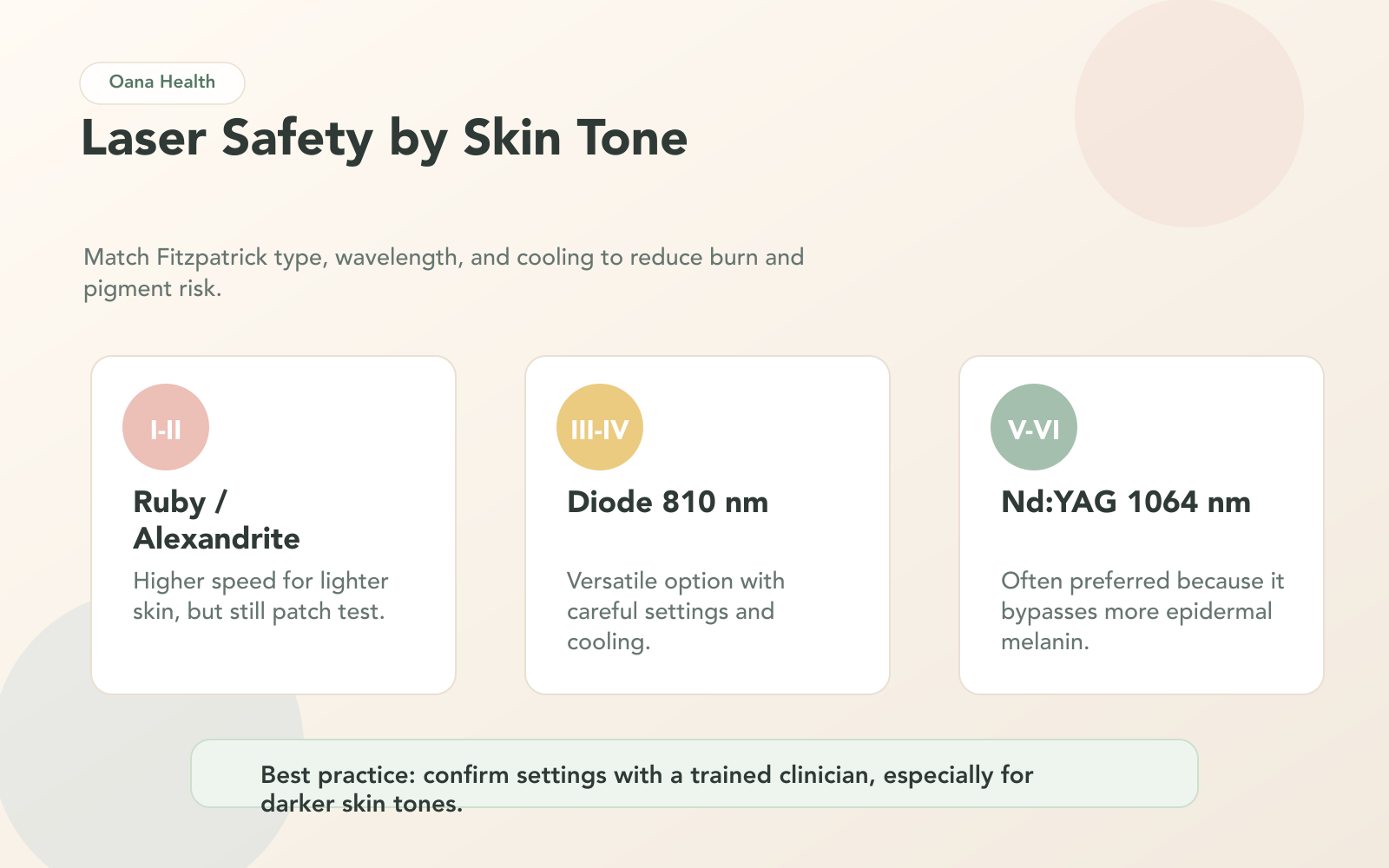
Laser Hair Removal Safety Guide by Skin Tone and Laser Type
Nd:YAG Lasers for Darker Skin Tones
The Nd:YAG laser has revolutionized laser hair removal for individuals with darker skin tones. Operating at a 1,064 nm wavelength, it’s designed to bypass the melanin-rich surface of the skin and target hair follicles in deeper layers. This approach minimizes risks like burns and hyperpigmentation, especially for Fitzpatrick skin types IV–VI, by reducing energy absorption in the epidermis.
"By using a laser or light source with a longer wavelength, deeper penetration, and with less melanin absorption, such as 1,064-nm light, less energy is absorbed by epidermal melanin and can be preferentially delivered to deeper dermal structures like the hair follicle."
- C. Stanley Chan MD and Jeffrey S. Dover MD
Safety is further enhanced with longer pulse durations (20–30 milliseconds or more) and advanced cooling systems, such as cryogen sprays or sapphire contact tips. These features allow the skin's surface to cool while the hair follicle heats to the necessary temperature for destruction, keeping the skin below 113°F (45°C) to avoid thermal damage. Clinical studies have shown that Nd:YAG treatments can achieve 41% to 46% facial hair reduction after just three sessions for skin types V–VI. Additionally, it has the lowest rate of adverse effects for darker skin compared to other laser technologies.
These benefits make the Nd:YAG laser a standout choice for treating darker skin tones, setting a benchmark for comparing other laser systems.
Comparing Laser Types by Skin Tone
The effectiveness and safety of laser hair removal depend heavily on the laser's wavelength. Ruby (694 nm) and Alexandrite (755 nm) lasers, for example, are highly effective for lighter skin tones (Fitzpatrick I–III) due to their strong melanin absorption. However, these same properties make them risky for darker skin, with potential complications like burns, blistering, and permanent dyspigmentation. Diode lasers (810 nm) offer a more balanced option, providing deeper penetration than Alexandrite lasers and working safely for skin types I–V when paired with long pulse durations and aggressive cooling.
For patients with darker skin tones, practitioners should conduct test spots and wait at least 48 hours before proceeding with full treatment to monitor for delayed dyspigmentation. Fitzpatrick types IV–VI typically require at least 8 sessions to achieve desired outcomes, compared to the 4 to 6 sessions often needed for lighter skin. Each session generally reduces hair count, color, and diameter by 10% to 20%.
| Laser Type | Wavelength | Recommended Skin Types | Safety Profile for Dark Skin | Primary Use Case |
|---|---|---|---|---|
| Ruby | 694 nm | I–III | High risk; contraindicated | Light skin with dark hair |
| Alexandrite | 755 nm | I–III | High risk of burns/dyspigmentation | Rapid treatment for light skin |
| Diode | 810 nm | I–V | Moderate; safe with proper cooling | Versatile for most skin types |
| Nd:YAG | 1064 nm | I–VI | Highest safety; bypasses epidermal melanin | Gold standard for skin of color |
| IPL | 500–1200 nm | I–IV | Variable; less effective than true lasers | General hair reduction; higher risk |
Research Findings on Skin Tone and Laser Hair Removal
Clinical Trials on Darker Skin Groups
Recent studies affirm that laser hair removal is a safe and effective option for individuals with darker skin tones (Fitzpatrick types IV–VI), provided the right techniques are used. A detailed meta-analysis of 12 clinical trials highlighted the effectiveness of the long-pulsed Nd:YAG laser, showing an odds ratio of 0.26 for both hair count reduction and a lower risk of post-inflammatory hyperpigmentation. Additionally, the analysis found Alexandrite lasers to be more effective than IPL systems for hair reduction, though they demand extra caution when treating darker skin tones.
"Laser hair removal, previously contraindicated in patients with ethnically dark (phototypes IV-VI) or sun-tanned skin, is now recognized as a safe and effective method of permanent hair reduction in all patients."
- PubMed Abstract
For patients with Fitzpatrick skin types IV–VI, optimal Nd:YAG laser settings include a 3-ms pulse duration, a 12-mm spot size, and fluence levels between 24–32 J/cm². To protect the skin from thermal damage, dynamic cryogen spray cooling is critical, with a 50-ms spray followed by a 20-ms delay. By 2010, non-Caucasian ethnicities accounted for about 30% of all cosmetic procedures in the U.S., reflecting the increasing accessibility and safety of these treatments. These findings not only confirm the procedure's safety but also highlight its potential long-term benefits compared to short-term discomforts.
Short-Term vs. Long-Term Results
Although clinical trials consistently demonstrate safety and effectiveness, patient experiences often vary between immediate side effects and cumulative benefits over time. Short-term effects include higher pain levels during treatment (compared to IPL systems) and temporary redness (erythema), which typically resolves within hours or days. Because darker skin contains more melanin, it is more prone to immediate thermal reactions. However, these short-term issues are balanced by the long-term advantages of significant hair reduction. Practitioners should wait at least 48 hours after performing test spots before starting full treatments, as pigmentary changes may not appear immediately.
The long-term results are where the benefits truly shine. For Fitzpatrick types IV–VI, patients often experience a 10% to 20% reduction in hair count, color, and thickness after each session, with optimal outcomes requiring at least 8 treatments. Laser hair removal also addresses conditions like pseudo-folliculitis barbae (razor bumps), post-inflammatory pigmentation issues, and excess facial hair from PCOS. Treatment areas vary in responsiveness: arms and legs typically need 3 to 6 sessions, while more resistant areas like the lip and chin may require additional treatments. While short-term care focuses on managing immediate side effects like pain and redness, the long-term goal is permanent hair reduction and the resolution of follicular skin concerns without causing lasting pigment changes. These findings emphasize the importance of tailoring treatment settings to individual skin types, proving that effective and safe results are achievable for all Fitzpatrick categories.
Conclusion: Safe Laser Hair Removal for All Skin Tones
Laser hair removal can be both safe and effective when matched to your Fitzpatrick skin type. The key lies in choosing the correct combination of wavelength, pulse duration, energy density, and cooling method.
Clinical studies confirm that darker skin tones (Fitzpatrick IV–VI) achieve the best results with the 1,064-nm Nd:YAG laser, while lighter skin tones (Fitzpatrick I–III) can safely use shorter wavelengths like Alexandrite or Diode lasers. The first step in ensuring safety and success is an accurate assessment of your skin type, which determines the ideal laser system and treatment parameters.
Using conservative energy levels and longer pulse durations helps minimize risks by allowing heat to dissipate while still effectively targeting hair follicles. For individuals at higher risk, pre-treatment with hydroquinone and consistent use of broad-spectrum sunscreen are essential safeguards.
Whether your goal is cosmetic or to treat conditions like pseudofolliculitis barbae, combining the right laser technology with a personalized treatment plan makes permanent hair reduction possible for every Fitzpatrick type. At Oana Health, we rely on research-driven methods and tailored care to ensure safe, effective results for all skin tones.
FAQs
How do I figure out my Fitzpatrick skin type?
To figure out your Fitzpatrick skin type, pay attention to how your skin responds to sun exposure - does it burn easily, tan gradually, or develop pigmentation? Many dermatology clinics and online resources offer visual charts to help with self-assessment. However, for the most precise results, it's best to consult a professional. They can accurately determine your skin type and suggest laser treatment options tailored to your skin's sensitivity.
What questions should I ask during a laser hair removal consult for my skin tone?
During your consultation, it’s essential to address safety, device compatibility, and any risks specific to your skin tone. Here are some important questions to guide your discussion:
- What laser device works best for my skin tone?
- How do you adjust laser settings for darker or varying skin tones?
- What are the chances of hyperpigmentation or burns for someone with my skin tone?
- Do you have experience treating clients with skin tones similar to mine?
How can I lower my risk of hyperpigmentation after treatment?
To minimize the chances of hyperpigmentation after laser treatment, start by prioritizing sun protection - wear sunscreen daily and avoid direct sun exposure as much as possible. Steer clear of harsh skincare products, like those containing strong acids or exfoliants, as they can irritate the skin. It's also crucial to choose a skilled provider who has experience working with darker skin tones, as this can significantly impact your results.
While hyperpigmentation is usually temporary, it can take time to fade. With proper aftercare and guidance from your provider, your skin can recover more effectively. Always consult your provider for tailored advice based on your specific needs.