
Spironolactone and Birth Defects: What Studies Show
Spironolactone, a common medication for conditions like acne, PCOS, and hypertension, raises concerns during pregnancy due to its potential impact on male fetal development. Studies suggest its anti-androgenic effects may interfere with male sexual differentiation, especially in the first 6–8 weeks of gestation. While animal studies often show risks like feminization at high doses, human data is limited and inconsistent. Some case reports indicate no adverse effects, while others suggest potential risks, including genital anomalies.
Key points:
- FDA Warnings: Spironolactone is not recommended during pregnancy due to potential risks to male fetuses.
- Animal Studies: High doses often cause feminization; effects at lower doses are less clear.
- Human Data: Limited and mixed, with some cases showing no harm and others raising concerns.
- Medical Advice: Women of childbearing age should use contraception while on spironolactone. Pregnancy-safe alternatives are available for conditions like hypertension and acne.
If you're pregnant or planning to become pregnant, consult your healthcare provider about safer options.
The half life of spironolactone is 1.4 hours; stop it one month before trying to conceive!
How Spironolactone Works
Spironolactone is classified as a nonselective mineralocorticoid receptor antagonist. According to the FDA drug label:
"Spironolactone is a specific pharmacologic antagonist of aldosterone, acting primarily through competitive binding of receptors at the aldosterone-dependent sodium-potassium exchange site in the distal convoluted renal tubule."
Once taken, spironolactone itself clears from the body in about 12 hours. However, its active metabolites can remain effective for up to 100 hours. More than 90% of spironolactone and its metabolites bind to plasma proteins, and food intake nearly doubles its bioavailability . These pharmacokinetic properties explain its versatility in treating a range of medical conditions, as detailed below.
Uses in Hormonal Treatment
Spironolactone plays a key role in managing hormonal imbalances by blocking DHT (dihydrotestosterone) from binding to androgen receptors. This mechanism is particularly useful in treating acne, as it reduces sebocyte activity, which in turn lowers sebum production. Additionally, the drug decreases testosterone levels and enhances its clearance, making it effective for women dealing with hirsutism (unwanted facial and body hair).
Women with PCOS (polycystic ovary syndrome) often experience elevated androgen levels that contribute to acne, excessive hair growth, and hair loss. Spironolactone helps alleviate these symptoms by reducing the overall activity of androgens . It is also commonly prescribed for female-pattern hair loss, offering relief for conditions driven by hormonal imbalances.
Telehealth platforms, such as Oana Health, make access to spironolactone more convenient by connecting patients with licensed medical professionals for science-backed care.
While spironolactone offers effective solutions for managing hormonal issues like PCOS and acne, its mechanism of action also raises concerns when used during pregnancy.
Why Pregnancy Creates Concerns
Despite its benefits, spironolactone's use during pregnancy is a topic of concern due to its effects on fetal development. Testosterone plays a critical role in male sexual development, and spironolactone’s DHT-blocking action can interfere with testosterone-dependent male morphogenesis during key stages of fetal growth .
Pfizer Medical Information highlights this issue:
"Because of its antiandrogenic activity and the requirement of testosterone for male morphogenesis, ALDACTONE may have the potential for impairing male sex differentiation during embryogenesis."
Beyond its hormonal effects, spironolactone’s diuretic properties may reduce placental perfusion, limiting blood flow to the developing fetus. Diuretics are typically avoided during pregnancy as they can compromise fetal blood supply and are not effective for managing pregnancy-related high blood pressure . These combined risks make spironolactone particularly concerning during the first 6–8 weeks of pregnancy - a critical window for male sexual differentiation. Upcoming sections will explore the research that addresses these risks.
What Research Shows About Birth Defects
Animal Studies on Fetal Development
Animal studies have consistently shown that spironolactone can feminize male offspring due to its antiandrogenic properties. A systematic review revealed that 6 out of 9 animal studies reported feminization in male offspring exposed to the drug. For example, in rats, high doses (200 mg/kg/day) consistently caused feminization, while even lower doses (50–100 mg/kg/day) led to permanent, dose-dependent reproductive changes. However, mice showed no adverse effects at lower doses, and rabbits experienced increased fetal resorptions at similar levels. It's worth noting that 5 out of these 9 studies involved dosages exceeding the human equivalent of 200 mg/day, suggesting that the most concerning effects occurred at exposure levels much higher than those typically prescribed in clinical settings.
These mixed results in animal studies highlight the need to examine human data for further clarity.
Human Case Reports and Studies
When it comes to humans, the data is limited and inconsistent. Researchers from Wenling Maternal and Child Health Care Hospital emphasize that "human data remain scarce and largely inconclusive".
Case reports offer mixed outcomes. For instance, in July 2024, a 25-year-old pregnant woman accidentally took 240 mg/day of spironolactone for one week at 16 weeks gestation due to a pharmacy error. She later delivered a healthy male infant weighing about 7.5 pounds (3,400 grams) at 38 weeks, with normal external genitalia. Similarly, Groves and Corenblum documented a woman with Bartter's syndrome who took up to 400 mg/day during her first and second trimesters and delivered two healthy male infants with no signs of feminization.
On the other hand, some cases have raised concerns. Shah reported a male newborn with feminization following maternal spironolactone use from early pregnancy through the fifth week of gestation. Levy et al. described genital anomalies in a newborn whose mother had taken spironolactone along with dutasteride until eight weeks of gestation. Additionally, a Michigan Medicaid surveillance study (1985–1992) found that among 31 newborns exposed to spironolactone during the first trimester, 6.5% (2 out of 31) had major birth defects, including one case of an oral cleft. Timing appears to be a critical factor, as external genitalia development in human fetuses is typically completed by 14 weeks of gestation. Exposure before this period may carry a higher risk.
These varied outcomes in human studies underscore the need for more comprehensive research.
Gaps in Current Research
Several limitations make it difficult to draw definitive conclusions about spironolactone's safety during pregnancy. The lack of robust human data means most of the understanding comes from animal studies and isolated case reports. Even animal studies face challenges, as they often use doses much higher than human equivalents and rely on genetically inbred strains that don't reflect human diversity. As Sura Alwan and Kimberly S. Grant explain:
"Extrapolating data from these [animal] experiments to humans can be challenging because of basic differences in reproduction and development." – Sura Alwan and Kimberly S. Grant
Long-term effects, such as cognitive and behavioral outcomes, remain largely unexplored. Additionally, confounding factors make it challenging to isolate the potential teratogenic effects of spironolactone from the influence of underlying maternal conditions like hypertension or endocrine disorders. Many case studies also fail to measure hormone levels in the placenta or amniotic fluid, leaving critical gaps in understanding endocrine interactions during fetal development. Moreover, identifying the teratogenic effects of a new medication can take over a decade on average.
Closing these research gaps is crucial to improving clinical guidelines for spironolactone use during pregnancy.
sbb-itb-6dba428
Medical Guidelines and Recommendations
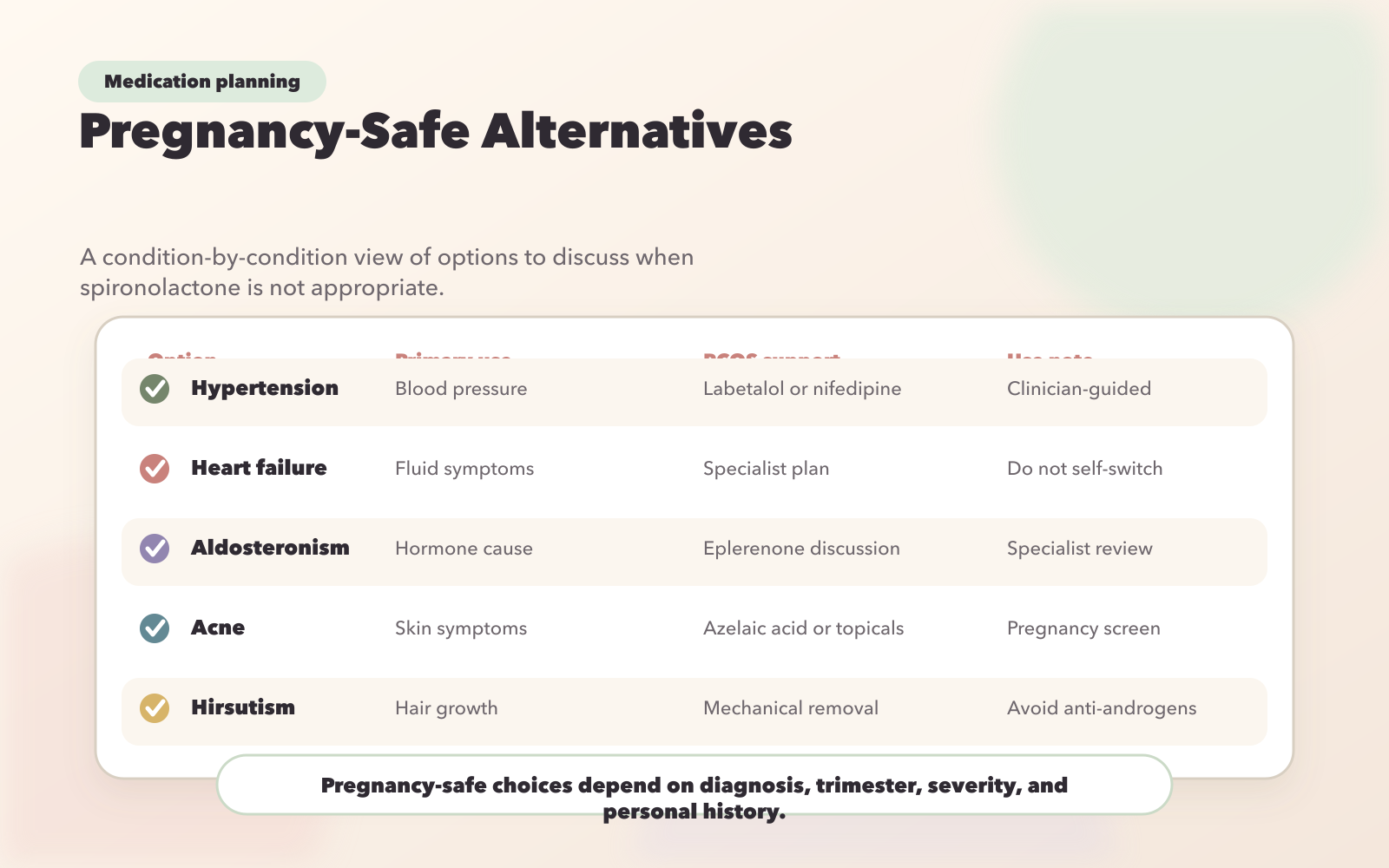
Pregnancy-Safe Alternatives to Spironolactone by Medical Condition
When it comes to spironolactone use during pregnancy, regulatory agencies and healthcare professionals have established detailed guidelines. These are based on evidence from both animal studies and human clinical data, aiming to minimize risks to the developing fetus.
FDA Classification and Warnings
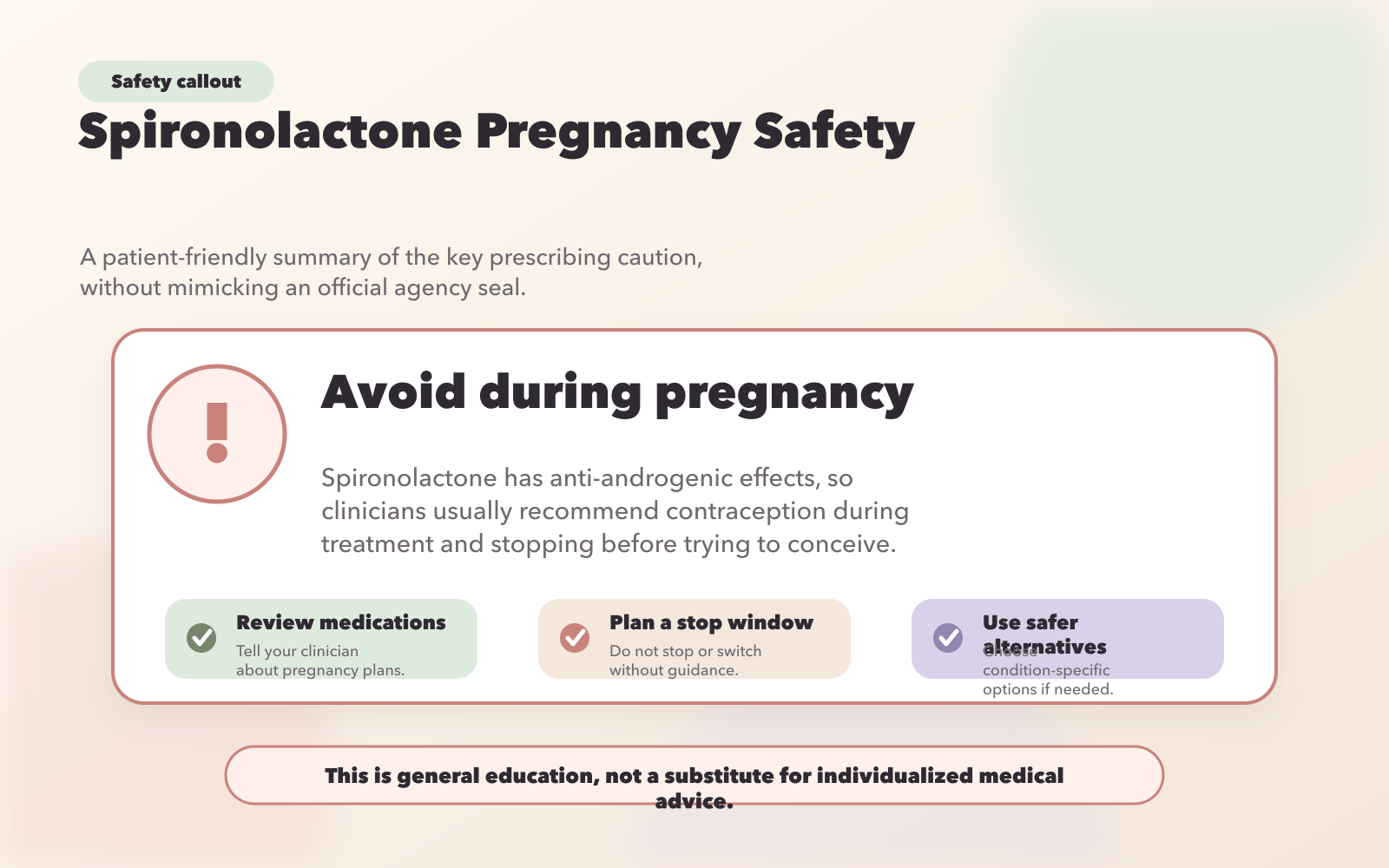
The FDA previously categorized spironolactone as a Pregnancy Category C drug. Under updated labeling standards, the FDA now strongly advises against its use during pregnancy due to potential risks to the fetus. The primary concern lies in spironolactone's anti-androgenic effects, which can interfere with fetal sex differentiation.
Animal studies have shown concerning outcomes. For instance, female rats exposed to spironolactone in utero experienced reproductive tract abnormalities and long-term endocrine disruptions, with the effects worsening at higher doses. To provide context, the general risk of major birth defects in the U.S. ranges from 2% to 4%, while the risk of miscarriage in clinically recognized pregnancies is between 15% and 20%. Pfizer Medical Information highlights this risk:
"Because of the potential risk to the male fetus due to anti-androgenic properties of spironolactone and animal data, avoid spironolactone in pregnant women or advise a pregnant woman of the potential risk to a male fetus".
These warnings play a critical role in shaping clinical decisions about medication use during pregnancy.
Healthcare Provider Recommendations
For women taking spironolactone, healthcare providers emphasize the importance of effective contraception. If pregnancy is planned or detected, discontinuation of the drug is advised immediately.
In cases where spironolactone is used to manage conditions such as hypertension or heart failure, physicians recommend switching to safer alternatives like hydralazine, long-acting nitrates, or β-1-selective blockers. For primary aldosteronism, eplerenone (classified as FDA Category B) is often the preferred substitute since it does not share spironolactone's anti-androgenic effects. In more severe cases, such as unilateral adrenal adenomas, laparoscopic adrenalectomy may be an option during the second trimester if medical therapy proves inadequate. For patients using spironolactone off-label for acne or hirsutism, alternative treatments should be discussed as soon as pregnancy is confirmed or planned. Additionally, diuretics are generally avoided for gestational hypertension, as they can worsen maternal hypovolemia.
The table below outlines pregnancy-safe alternatives for various conditions:
| Condition | Recommended Pregnancy-Safe Alternatives |
|---|---|
| Hypertension | Methyldopa, Labetalol, Hydralazine, Long-acting Nifedipine |
| Heart Failure | Hydralazine and long-acting nitrates, β-1-selective blockers |
| Primary Aldosteronism | Eplerenone (Category B), Adrenalectomy (2nd trimester) |
| Acne / Hirsutism | Consult provider for pregnancy-safe dermatological options |
Conclusion
Research highlights that spironolactone's anti-androgenic effects raise concerns about fetal development, particularly in male fetuses. Animal studies show a consistent pattern of feminization in male fetuses at high doses. While there’s no conclusive evidence linking spironolactone to congenital defects in humans, the potential risks call for caution. Both the FDA and medical guidelines recommend avoiding spironolactone during pregnancy due to its possible effects on male fetal development.
For women of childbearing age, using effective contraception while on spironolactone is critical. If pregnancy is planned or occurs, the medication should be stopped immediately - especially during the 6–8 week period when sexual differentiation is most sensitive. Safer alternatives are available for managing conditions like hypertension and heart failure during pregnancy.
For those using spironolactone to treat acne or hirsutism, it’s important to discuss any pregnancy concerns with a healthcare provider. Telehealth platforms like Oana Health offer personalized hormonal treatment options, including topical spironolactone, which may reduce systemic exposure. Their licensed professionals can evaluate your medical history and recommend treatments tailored to your needs.
Do not make medication changes without consulting a healthcare professional. Conditions like severe hypertension or heart failure, if left untreated, can pose serious risks to both mother and baby. A healthcare provider can help balance the risks and benefits, ensuring a safe transition plan throughout your pregnancy.
FAQs
I took spironolactone before I knew I was pregnant - what now?
If you used spironolactone before realizing you were pregnant, it’s important to stop taking the medication right away. Spironolactone can carry risks, such as potential effects on male fetal development and other possible complications. Reach out to your healthcare provider as soon as possible to get personalized guidance and discuss the best steps moving forward.
When is spironolactone exposure most risky in pregnancy?
Spironolactone poses the highest risk during late embryogenesis, particularly between gestation days 13–21. During this critical window, its anti-androgenic properties can result in the feminization of male fetuses.
Are there pregnancy-safe alternatives for acne or hypertension?
Yes, there are safer ways to manage acne and hypertension during pregnancy. For acne, combined oral contraceptives (COCs) are often considered a better hormonal option. When it comes to hypertension, other diuretics and specific antihypertensive medications are typically recommended. It’s important to consult your healthcare provider to find the right treatment tailored to your situation.