
Ultimate Guide to Spironolactone Interactions and Safety
Spironolactone is a medication used to treat conditions like heart failure, high blood pressure, fluid retention, and hormonal issues such as acne and PCOS. While effective, it requires careful monitoring due to potential risks like high potassium levels (hyperkalemia) and kidney issues.
Key points:
- Uses: Treats heart conditions, hormonal acne, PCOS, and more.
- Risks: Avoid if you have high potassium, advanced kidney disease, or certain other conditions.
- Interactions: Can interact dangerously with potassium supplements, ACE inhibitors, NSAIDs, and more.
- Side Effects: Common ones include dizziness, nausea, and muscle cramps. Serious issues like irregular heartbeat or kidney failure require immediate attention.
- Monitoring: Regular blood tests for potassium and kidney function are essential.
- Pregnancy: Not safe for pregnant women due to potential risks to male fetal development.
For safer use:
- Take it consistently (with or without food).
- Avoid potassium-rich foods and salt substitutes.
- Consult your doctor about any new medications or supplements.
Spironolactone can be highly effective when used responsibly under medical supervision. Services like Oana Health offer telehealth options for managing hormonal conditions with spironolactone, ensuring professional oversight and convenient access.
Spironolactone uses and side effects| 17 MUST KNOW tips!
Who Should Not Take Spironolactone
While spironolactone can be highly effective for many, there are specific conditions where its use is not safe. Knowing these contraindications is essential to avoid serious health risks.
Conditions That Prevent Spironolactone Use
One key condition is hyperkalemia (elevated potassium levels). If your potassium exceeds 5.0 mEq/L, spironolactone is off the table. Why? It can push potassium levels even higher, potentially leading to life-threatening heart issues like arrhythmias or cardiac arrest.
"Hyperkalemia may be fatal. It is critical to monitor and manage serum potassium in patients with severe heart failure receiving spironolactone." – FDA Label/DailyMed
Another major concern is advanced kidney impairment. For men, spironolactone is not recommended if serum creatinine levels are above 2.5 mg/dL; for women, the threshold is 2.0 mg/dL. Additionally, if your estimated glomerular filtration rate (eGFR) drops below 30 mL/min, the drug becomes unsafe. Poor kidney function can cause spironolactone to build up in the body, heightening the risk of acute kidney failure.
Patients with Addison's disease should also avoid spironolactone. This condition already disrupts electrolyte balance, and the drug’s potassium-raising effects could be dangerous. Similarly, individuals with anuria (lack of urine production) cannot safely eliminate potassium, making spironolactone a risky choice .
Taking spironolactone alongside eplerenone or other potassium-sparing diuretics (like triamterene) is another no-go. Combining these medications greatly increases the chances of developing hyperkalemia .
While these are absolute contraindications, there are other scenarios where spironolactone use requires extra care.
When Spironolactone Requires Extra Caution
Pregnancy is one such scenario. Spironolactone is classified as a category C drug during pregnancy because of its anti-androgenic properties. These effects might interfere with the development of male fetuses, particularly during later stages of pregnancy.
"Avoid spironolactone in pregnant women or advise a pregnant woman of the potential risk to a male fetus." – FDA Prescribing Information
For breastfeeding mothers, a doctor’s advice is crucial. While spironolactone itself typically doesn’t appear in breast milk, small amounts of its active metabolite (canrenone) have been found.
Patients with severe liver disease also need to tread carefully. Although spironolactone can help manage ascites in cirrhosis, it may cause rapid shifts in fluids and electrolytes, potentially leading to dangerous complications like hepatic encephalopathy or coma. In such cases, treatment is usually initiated under close hospital supervision .
Elderly individuals are another group requiring close monitoring, as kidney function naturally declines with age. Similarly, those with diabetes mellitus face a higher risk of hyperkalemia and need regular blood tests to monitor potassium and kidney health. Other conditions that call for extra caution include gout, hyponatremia (low sodium), and hypomagnesemia (low magnesium).
Next, we’ll explore how spironolactone interacts with other medications to ensure safe and effective use.
Spironolactone Drug Interactions
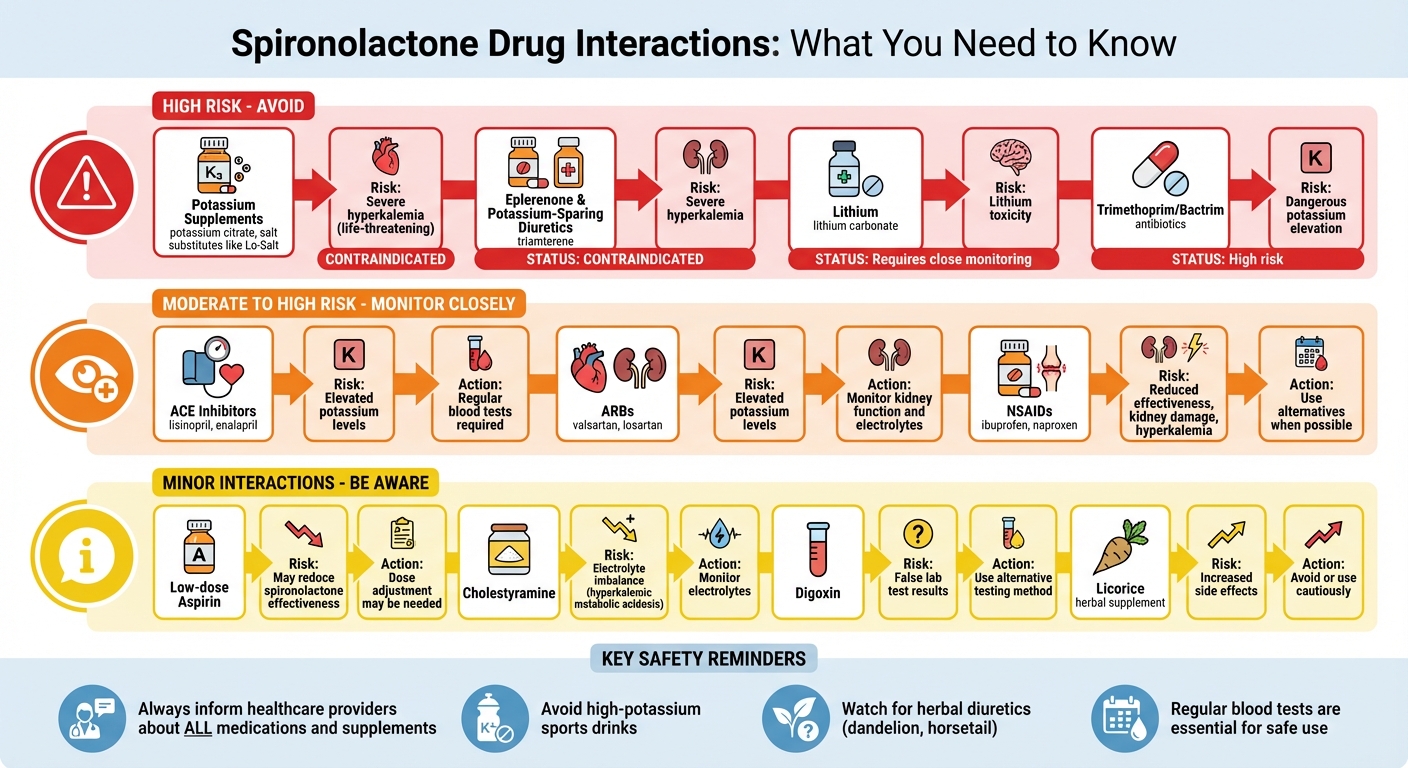
Spironolactone Drug Interactions Risk Levels and Safety Guide
Spironolactone can interact with various medications, potentially increasing risks or reducing its effectiveness.
Dangerous Drug Combinations
The most concerning interactions occur with medications that raise potassium levels. Potassium supplements and salt substitutes like Lo-Salt should be avoided, as they can cause severe hyperkalemia, a potentially life-threatening condition.
"Concomitant administration of ALDACTONE with potassium supplementation or drugs that can increase potassium may lead to severe hyperkalemia." – Pfizer Medical
Certain blood pressure medications, such as ACE inhibitors (e.g., lisinopril) and ARBs (e.g., valsartan), can also increase potassium levels when combined with spironolactone. If these drugs are prescribed together, close monitoring of kidney function and electrolyte levels is crucial.
NSAIDs like ibuprofen and naproxen can interfere with spironolactone's blood pressure-lowering effects while increasing the risk of kidney damage and hyperkalemia. Even high doses of aspirin may reduce its effectiveness.
Spironolactone can slow the clearance of lithium, raising the risk of toxicity. Similarly, the antibiotic trimethoprim (found in medications like Bactrim) can lead to dangerous potassium spikes.
| Medication Type | Examples | Risk Level | Main Concern |
|---|---|---|---|
| Potassium Supplements | Potassium citrate, salt substitutes | High (Contraindicated) | Severe hyperkalemia |
| ACE Inhibitors | Lisinopril | Moderate to High | Elevated potassium; careful monitoring |
| NSAIDs | Ibuprofen, naproxen | Moderate to High | Reduced efficacy; kidney damage |
| Lithium | Lithium carbonate | High | Increased risk of lithium toxicity |
| Antibiotics | Trimethoprim, Bactrim | High | Dangerous potassium elevation |
Minor Drug Interactions
Not all interactions pose immediate danger, but they still require attention. For instance, low-dose aspirin might reduce spironolactone's effectiveness, which may necessitate dose adjustments.
Spironolactone can also interfere with some lab tests for digoxin, leading to falsely elevated results. If you're taking digoxin, ask your doctor to use a testing method that avoids this issue.
The cholesterol-lowering drug cholestyramine may lead to an electrolyte imbalance called hyperkalemic metabolic acidosis when combined with spironolactone. Similarly, herbal supplements like licorice and over-the-counter medications such as loperamide could increase the likelihood of side effects.
Even everyday items like high-potassium sports drinks or herbal diuretics (e.g., dandelion or horsetail) can interact with spironolactone. Always inform your healthcare provider about every medication, supplement, or over-the-counter product you're using.
Knowing these potential interactions is crucial before exploring strategies to manage and monitor side effects effectively.
sbb-itb-6dba428
Monitoring and Managing Side Effects
Blood Tests for Potassium and Electrolytes
When you're on spironolactone, regular blood tests are a must. These tests help keep an eye on your serum potassium levels since the medication can lead to hyperkalemia (high potassium). Doctors typically prescribe spironolactone for heart failure patients only if their potassium levels are below 5 mEq/L.
In addition to potassium, your doctor will monitor kidney function using serum creatinine and estimated glomerular filtration rate (eGFR) tests. A full electrolyte panel will typically measure sodium, magnesium, calcium, and chloride levels. Other tests might track uric acid and blood sugar.
Stick to all scheduled lab appointments - these are crucial for catching electrolyte imbalances early. If you’re taking spironolactone alongside ACE inhibitors, ARBs, or beta-blockers, you may need more frequent blood tests due to a higher risk of hyperkalemia. Make sure to let lab personnel know you’re on spironolactone before any tests or procedures.
How to Handle Common Side Effects
Once your monitoring is in place, you can take steps to manage any side effects that might crop up.
Dizziness and lightheadedness often happen when standing up too quickly, as spironolactone can lower blood pressure. To avoid this, stand up slowly, and if you feel dizzy, sit down until it passes. It’s also best to avoid driving or operating heavy machinery if you’re feeling this way.
"If spironolactone makes you feel dizzy when you stand up, try getting up very slowly or stay sitting down until you feel better." – NHS
For nausea and stomach upset, try taking the medication with or right after a meal. Eating bland foods can also help reduce nausea. If you’re experiencing fatigue, maintain a consistent sleep schedule and take your dose in the morning to avoid nighttime urination that might disrupt your sleep.
Muscle cramps are another common side effect, often linked to changes in fluid and electrolyte levels. Staying hydrated, massaging the affected area, or taking a warm shower can provide relief. Most mild side effects tend to fade within a few days or weeks as your body adjusts. If they persist or worsen, consult your healthcare provider about adjusting your dosage.
Warning Signs of Serious Side Effects
While most side effects are manageable, some symptoms signal a need for urgent medical attention.
Call 911 immediately if you experience symptoms like swelling of the lips, tongue, or throat, difficulty breathing, or if your skin or lips turn blue or pale.
Be on the lookout for signs of hyperkalemia, such as a slow or irregular heartbeat, muscle weakness, tingling in your hands, feet, or lips, shortness of breath, or heaviness in your legs. Liver issues may show up as yellowing skin or eyes (jaundice), dark urine, clay-colored stools, or pain in the upper right part of your stomach.
Signs of kidney failure include a significant drop in urination, dark or strong-smelling urine, confusion, drowsiness, and nausea. Severe dehydration can cause extreme thirst, dizziness, and unsteadiness. If you vomit blood, notice material that looks like coffee grounds, or pass bloody, black, or tarry stools, seek emergency care immediately.
| Severity Level | Symptoms | Recommended Action |
|---|---|---|
| Critical (Emergency) | Swelling of throat/tongue, gasping for air, blue/pale skin, fainting, seizures | Call 911 immediately |
| Serious (Immediate) | Irregular heartbeat, jaundice, vomiting blood, bloody stools, inability to move limbs | Contact a doctor or urgent care immediately |
| Common (Monitor) | Dizziness, nausea, breast tenderness, irregular periods, leg cramps | Consult a doctor if severe or persistent |
Doctors usually recommend checking potassium levels within a week of starting spironolactone or after adjusting the dose. To avoid dangerous hyperkalemia, steer clear of low-sodium salt substitutes like Lo-Salt, as they contain high levels of potassium.
Safety Tips and Treatment Options
How to Take Spironolactone Safely
To get the most out of spironolactone, take it at the same time every day, either with or without food - just be consistent. If you miss a dose, take it as soon as you remember. But if it’s almost time for your next dose, skip the missed one - never take two doses at once.
Your diet matters, too. Follow your doctor’s advice about avoiding potassium-rich salt substitutes and high-potassium foods . Staying hydrated is key, and cutting back on alcohol can help lower the chances of dizziness or fainting.
If side effects like dizziness occur, try standing up slowly from sitting or lying down. Taking the medication with or right after a meal might ease nausea. Also, hold off on driving or using heavy machinery until you’re sure how spironolactone affects you.
Be cautious about drug interactions. For instance, spironolactone shouldn’t be taken with eplerenone. Always check with your doctor before starting new medications, and let all healthcare providers, including your dentist, know you’re on spironolactone before any procedures.
Regular monitoring of your electrolytes is essential while on this medication. These steps, combined with earlier interaction guidelines, help ensure safe and effective treatment.
Getting Spironolactone Through Oana Health

For those looking for a streamlined treatment option, telehealth offers a convenient way to access spironolactone. Oana Health provides a telehealth service tailored to conditions like PCOS, acne, and hirsutism. Licensed professionals review your medical history and design personalized treatment plans based on scientific research. These plans address PCOS symptoms such as hormonal acne and unwanted facial hair, with medications shipped directly to your home - shipping is free.
The telehealth approach also ensures professional oversight, which is crucial for a medication like spironolactone that requires regular monitoring of potassium levels and kidney function. Oana Health makes it easier to maintain consistent care without needing in-person appointments. Besides spironolactone, they offer treatments for related issues like insulin resistance, weight management, and hair loss. All prescriptions come from FDA-regulated pharmacies.
With plans starting at $14 per month, Oana Health combines affordability with medical safety, using telemedicine and compounding pharmacies to keep costs low while ensuring high standards of care.
Conclusion
Spironolactone has proven to be an effective option for managing PCOS symptoms. Studies show that 75.5% of patients experience significant improvement in facial acne, while unwanted hair growth typically decreases within 2 to 6 months of treatment . However, success relies heavily on following safety protocols closely.
One of the most important safety concerns is hyperkalemia, a condition where potassium levels become dangerously high, potentially leading to irregular heartbeats or muscle weakness. To mitigate this risk, regular blood tests are necessary to monitor potassium levels and kidney function . Avoiding potassium-rich salt substitutes and limiting high-potassium foods can also help prevent complications . Additionally, potential drug interactions require careful oversight .
"Spironolactone improves clinical outcomes and is well tolerated for many adult women with acne using it for an extended duration." - Journal of the American Academy of Dermatology
For women of childbearing age, effective contraception is essential while using spironolactone. This is because the drug can interfere with normal male fetal development . Combined oral contraceptives offer dual benefits: they provide necessary protection and help reduce menstrual irregularities, with an odds ratio of 0.23 compared to those not using them. These factors highlight the need for expert medical guidance throughout treatment.
To ensure proper supervision and accessibility, Oana Health offers telehealth consultations starting at $14 per month. Their licensed professionals create personalized treatment plans, provide ongoing monitoring, and ship medications directly to your door. This approach makes it easier to maintain consistent, safe care for managing PCOS symptoms effectively, without the need for in-person visits.
FAQs
What should I do if I experience serious side effects from spironolactone?
If you experience severe side effects while taking spironolactone - like intense dizziness, trouble breathing, or swelling - seek medical care immediately. Reach out to your healthcare provider promptly to discuss your symptoms and determine the appropriate course of action.
In the case of a life-threatening reaction, call 911 or head to the nearest emergency room without delay. Your well-being comes first, so act quickly if something feels off.
What dietary changes can help prevent high potassium levels while taking spironolactone?
To reduce the risk of hyperkalemia (elevated potassium levels) while using spironolactone, try cutting back on foods that are naturally rich in potassium. Examples include bananas, oranges, potatoes, spinach, and avocados. Instead, aim for a well-rounded diet that fits the guidance provided by your healthcare provider.
Additionally, steer clear of potassium-based salt substitutes and supplements unless your doctor has explicitly approved them. Your doctor may suggest regular blood tests to keep an eye on your potassium levels and ensure your safety while taking this medication.
Why do you need regular blood tests while taking spironolactone?
Regular blood tests are essential when you're taking spironolactone. This medication can increase potassium levels in your body, and if those levels climb too high, it could lead to serious health problems. Monitoring helps keep things in check.
These tests also play a key role in spotting any other potential side effects early, ensuring the medication stays safe and works well as part of your treatment plan. Your doctor will let you know how often you’ll need these tests, tailoring the schedule to fit your specific health needs.