
Top 5 Safety Tips for Long-Term Spironolactone Use
Spironolactone is widely used to manage hirsutism, hormonal acne, and hair loss in women. While effective, long-term use requires careful monitoring to prevent risks like high potassium levels (hyperkalemia) and kidney issues. Here's what you need to know to stay safe:
- Monitor Potassium Levels: Regular blood tests are essential to track potassium and kidney function. Avoid potassium-rich diets and NSAIDs unless approved by your doctor.
- Use Reliable Contraception: Spironolactone can cause birth defects. Pair it with birth control like oral contraceptive pills or hormonal IUDs.
- Get Routine Blood Work: Baseline and periodic tests help detect changes in electrolytes and kidney health.
- Manage Side Effects: Dizziness, nausea, and menstrual irregularities are common but manageable. Watch for warning signs like irregular heartbeat or muscle weakness.
- Review Drug Interactions: Inform your doctor about all medications and avoid drugs like ACE inhibitors, ARBs, and certain antibiotics that can increase risks.
Consistency with testing, monitoring symptoms, and following medical advice ensures safe, long-term treatment.
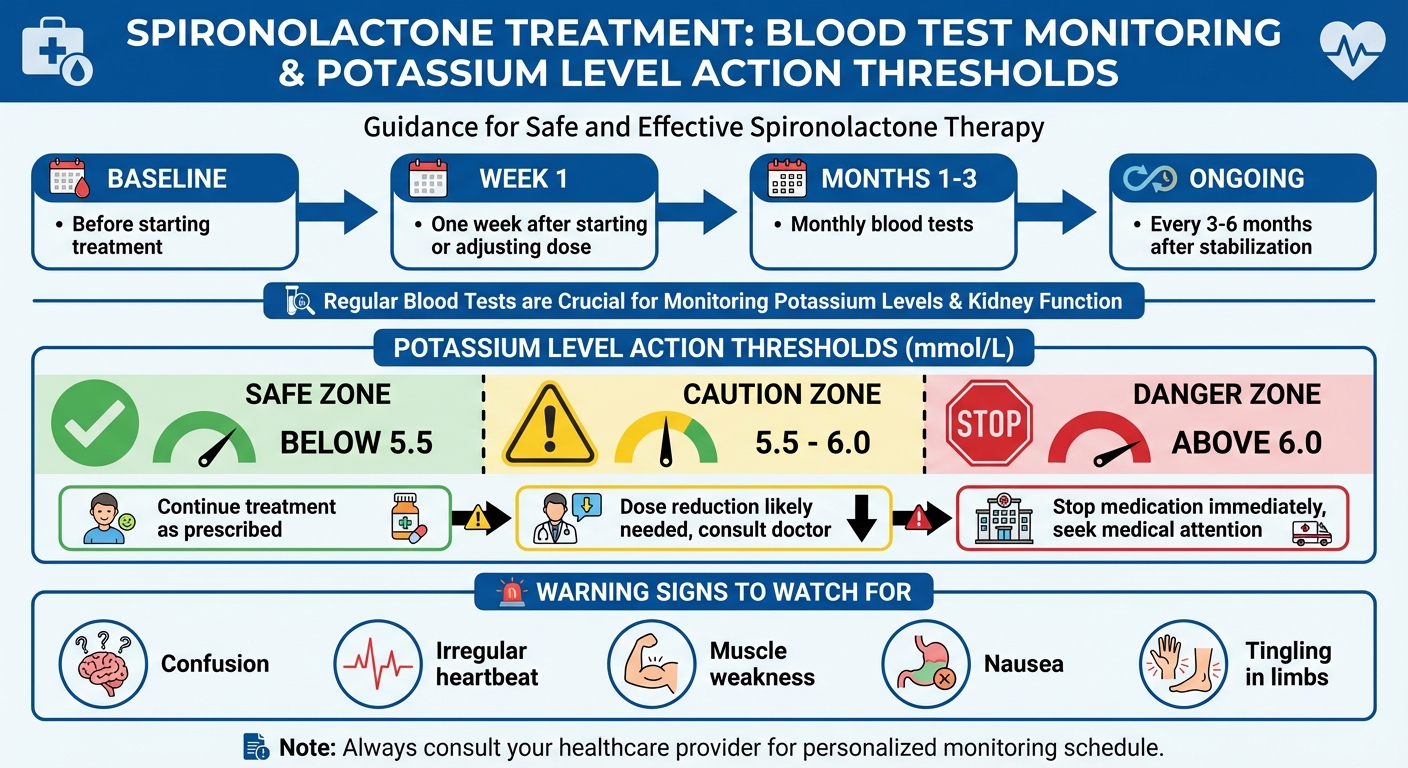
Spironolactone Blood Test Monitoring Schedule and Potassium Level Guidelines
THE TRUTH ABOUT ALDACTONE AND ITS BIZZARE SIDE-EFFECTS!
1. Monitor Potassium Levels Regularly
Spironolactone is a potassium-sparing diuretic, which means it can increase the risk of hyperkalemia - a condition where potassium levels in the blood become too high. This can lead to irregular heartbeats, muscle weakness, and even serious cardiac issues. Because of this, regular blood tests are crucial to ensure your potassium levels stay within a safe range.
Here’s how monitoring typically works: Start with a baseline test before beginning treatment. Then, schedule another test one week after starting or adjusting your dose. For the next three months, monthly tests are recommended. Once things stabilize, testing every three to six months should suffice.
It’s also important to understand your blood test results. If your potassium levels climb above 5.5 mmol/L, your doctor might lower your dose. If they exceed 6.0 mmol/L, you’ll likely need to stop the medication and consult your healthcare provider immediately.
Between tests, keep an eye out for warning signs like confusion, an irregular heartbeat, nausea, or a tingling sensation in your limbs. If you notice any of these symptoms, don’t wait for your next scheduled test - reach out to your doctor right away. Also, if you experience severe dehydration due to diarrhea, vomiting, or fever, skip your next dose and contact your prescriber for guidance.
Diet plays a big role in managing potassium levels. Avoid salt substitutes like Lo-Salt, as these often contain high amounts of potassium. You don’t need to completely avoid potassium-rich foods like bananas, avocados, nuts, or salmon, but it’s best to enjoy them in moderation. Additionally, steer clear of over-the-counter NSAIDs (like ibuprofen or naproxen) unless specifically approved by your doctor, as these can affect kidney function and disrupt potassium balance.
2. Use Reliable Contraception
If you're a woman of childbearing age and taking spironolactone, using dependable birth control is essential. This medication can lead to serious birth defects, including the feminization of a male fetus, making contraception a critical precaution.
Combined oral contraceptive pills (OCPs) are often the top choice. Not only do they effectively prevent pregnancy, but they also help manage side effects like irregular periods and breast tenderness. Dr. Julie Harper highlights that pairing OCPs with spironolactone reduces menstrual irregularities and lowers the risk of pregnancy. A study even showed that women using this combination experienced significantly fewer menstrual side effects, with an odds ratio of 0.23.
For women unable to take OCPs - like those over 35 or with a history of blood clots or stroke - hormonal IUDs offer a strong alternative for pregnancy prevention. While both methods are effective, OCPs can provide the added perk of improving hormonal acne in some cases.
Consistency is key when it comes to contraception. If you're on the pill, take it at the same time every day. In cases of vomiting or severe diarrhea, check the product instructions right away to ensure your protection isn't compromised.
If you're planning to conceive, stop spironolactone at least one month before trying to get pregnant. Should you become pregnant while on the medication, contact your healthcare provider immediately. While spironolactone may temporarily impact fertility, normal fertility typically returns about two months after stopping the treatment.
Taking these steps ensures you're safeguarding your health while managing the medication's potential risks.
3. Get Regular Blood Work and Kidney Function Tests
Keeping track of your blood work is crucial for spotting early changes in electrolyte levels and kidney function. These tests provide a clearer picture of how your treatment is affecting your body.
Before starting treatment, your healthcare provider will check baseline levels for potassium, creatinine, eGFR (estimated glomerular filtration rate), and urea. If your potassium level is higher than 5.0 mmol/L or your creatinine exceeds 220 micromol/L, your doctor might reconsider starting spironolactone. Regular blood tests during treatment help monitor these levels and ensure your kidneys and electrolytes stay balanced.
If your potassium level rises above 5.5 mmol/L or your eGFR drops below 30 mL/min/1.73m², your doctor might adjust your dose - for example, reducing it to 25 mg every other day. Treatment is typically stopped if potassium reaches 6.0 mmol/L or if creatinine goes above 310 micromol/L, at which point you would need specialist care.
Between appointments, pay attention to symptoms like muscle weakness, irregular heartbeat, confusion, or tingling in your hands and feet. If you experience severe vomiting, diarrhea, or a fever with heavy sweating, skip your spironolactone dose and contact your doctor right away. These symptoms could lead to dehydration, which can stress your kidneys and raise potassium levels.
Steer clear of NSAIDs like ibuprofen or naproxen unless your doctor specifically prescribes them. These medications can harm kidney function when combined with spironolactone. Following these steps can help keep your body in check while continuing treatment.
sbb-itb-6dba428
4. Manage Side Effects Early
Keeping an eye on side effects and addressing them promptly is key to using spironolactone safely. Over 1% of patients report issues like dizziness, nausea, fatigue, breast tenderness, and irregular periods. These side effects often appear when starting the medication but usually improve as your body adjusts.
Dizziness is a common concern. If you feel lightheaded, lie down immediately to avoid fainting. When getting up from bed or a chair, take it slow - pause in a sitting position before fully standing. Until the dizziness passes, avoid driving or using heavy machinery. Alcohol can make dizziness worse, so try to limit your intake to no more than 14 units per week.
For nausea or an upset stomach, take spironolactone with food or right after a meal to keep your body’s absorption steady. Opt for plain, non-spicy foods while your system adjusts.
Hormonal side effects, like breast tenderness or irregular periods, can be frustrating but manageable. Talk to your doctor about hormonal contraceptives to help ease breast pain and regulate your cycle. To combat fatigue, focus on quality sleep, light exercise, and a nutrient-rich diet.
Be alert for warning signs that require immediate medical attention. Symptoms like muscle weakness, an irregular heartbeat, tingling sensations, or yellowing of the skin or eyes could indicate high potassium levels or liver problems. If you experience any of these, contact your doctor right away.
5. Review Drug Interactions and Health Conditions
Spironolactone has the potential to interact with various medications and can also exacerbate certain health conditions. To minimize risks, it’s crucial to inform your healthcare provider about all the medications you’re taking, including prescription drugs, over-the-counter remedies, vitamins, and herbal supplements, before starting treatment.
Some medications, such as nonsteroidal anti-inflammatory drugs (NSAIDs) like ibuprofen, naproxen, and aspirin, can reduce the effectiveness of spironolactone. Blood pressure medications - including ACE inhibitors (like lisinopril) and ARBs (like losartan) - may increase potassium levels in the blood, which could lead to dangerous hyperkalemia. Other drugs requiring caution include the antibiotic trimethoprim, blood thinners such as heparin, lithium for mood disorders, and digoxin, which is used to manage heart conditions.
Here’s an overview of common drug interactions:
| Drug Category | Examples | Potential Interaction Effect |
|---|---|---|
| ACE Inhibitors | Lisinopril, Enalapril, Ramipril | Increased risk of dangerous hyperkalemia |
| ARBs | Losartan, Valsartan, Candesartan | Elevated potassium levels and heart risks |
| NSAIDs | Ibuprofen, Naproxen, Aspirin | Reduced diuretic effectiveness |
| Blood Thinners | Heparin, Enoxaparin | Higher potassium levels |
| Antibiotics | Trimethoprim | Potential for life-threatening hyperkalemia |
| Mood Stabilizers | Lithium | Increased risk of lithium toxicity |
| Heart Medications | Digoxin | Elevated digoxin levels, increasing toxicity risk |
In addition to drug interactions, lifestyle factors and dietary choices play a role. Avoid potassium supplements and potassium-based salt substitutes to prevent electrolyte imbalances. Herbs with diuretic effects or high potassium content should also be avoided, as should foods containing licorice extract, which may interfere with spironolactone's action.
It’s equally important to consider your existing health conditions. Spironolactone is not recommended for individuals with Addison's disease, severe kidney issues (eGFR below 30 mL/min), or potassium levels exceeding 5.0 mEq/L. For those with moderate kidney impairment (eGFR between 30–50 mL/min), a lower starting dose - such as 25 mg every other day - is often advised. Patients with liver cirrhosis should begin treatment under close supervision, with gradual dose adjustments. Women with type 2 diabetes should be carefully monitored for hyperkalemia, underscoring the importance of regular testing.
If you’re planning any surgeries or dental procedures, make sure your healthcare team is aware of your spironolactone use. For tailored advice, Oana Health offers telehealth consultations with licensed professionals who can review your full medical history and medication list to ensure your treatment is both safe and effective.
Conclusion
Managing hirsutism with spironolactone over the long term requires careful attention to safety and regular monitoring. Key steps include routine potassium testing, reliable contraception, scheduled blood work, managing side effects early, and reviewing potential drug interactions. Without proper monitoring, this potassium-sparing diuretic can lead to complications like hyperkalemia or kidney function issues.
Annual medication reviews are a crucial part of long-term spironolactone therapy. These check-ins give your doctor the chance to evaluate how your body is responding, make dosage adjustments if necessary, and identify any emerging issues before they escalate. It’s worth noting that visible changes in hair growth may take up to six months, so patience and consistent follow-ups are key.
If you experience new symptoms such as irregular heartbeat, muscle weakness, or changes in urination, contact your healthcare provider right away. Addressing these concerns early allows for timely adjustments that can prevent complications and keep your treatment plan on track.
For women looking for convenient and personalized hormonal care, Oana Health provides telehealth consultations with licensed professionals who specialize in PCOS and hormonal treatments. Their service includes prescription delivery straight to your door, making long-term management easier. Oral spironolactone is available starting at $14 per month, while topical formulations are offered at $43 per month, giving you flexible options tailored to your needs.
FAQs
What symptoms might indicate high potassium levels while taking spironolactone?
High potassium levels, or hyperkalemia, can occasionally happen when taking spironolactone. Watch for symptoms like an irregular heartbeat, muscle weakness, or severe nausea. If you notice any of these, reach out to your healthcare provider right away, as untreated hyperkalemia can lead to serious complications.
Why is it important to use birth control while taking spironolactone?
When taking spironolactone, using birth control is essential because this medication can cause severe harm to a developing fetus if pregnancy occurs. It’s not considered safe during pregnancy, as it may disrupt normal fetal development.
If you're sexually active and able to become pregnant, discuss reliable contraception methods with your healthcare provider. Choosing effective birth control protects both your health and the well-being of a potential pregnancy.
What are the best ways to handle common side effects of spironolactone?
Managing the side effects of spironolactone can be straightforward with a few practical adjustments. For dizziness, try getting up slowly from a sitting or lying position. If you do feel lightheaded, lying down can help prevent fainting. To tackle nausea, take the medication with food and sip on water throughout the day to stay comfortable. Experiencing muscle cramps? Keep an eye on them, and if they persist or feel out of the ordinary, reach out to your doctor.
It's also important to steer clear of potassium-rich foods like bananas and avocados to lower the risk of hyperkalemia, a potentially serious side effect, especially with long-term use. Staying hydrated is equally important. Make sure to schedule regular check-ups and blood tests to keep tabs on your potassium levels and kidney health. If any severe or lingering symptoms arise, don’t hesitate to contact your healthcare provider for advice.